How Driver Behaviour Impacts Fuel Costs
Improve fleet fuel efficiency by cutting aggressive driving, idling, speeding and poor routing; use telematics and coaching to save ~7.6% fuel and reduce costs.
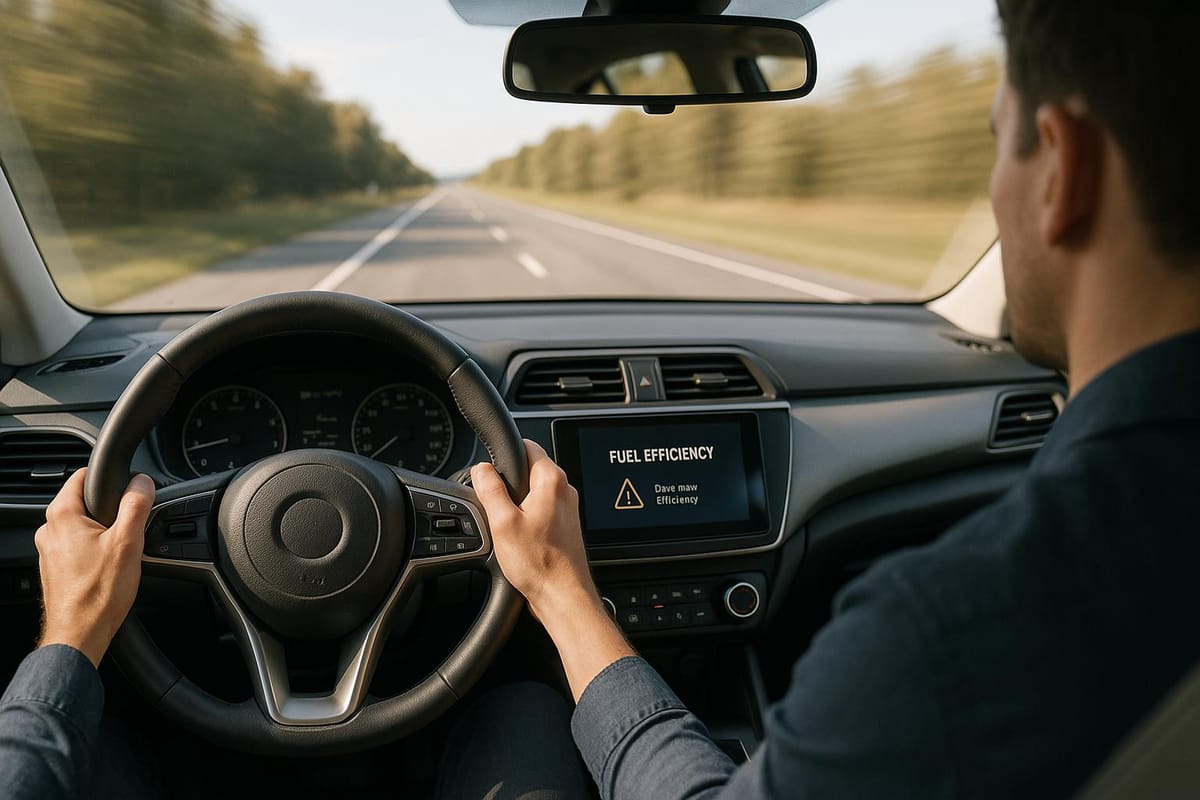
Driver behaviour can account for nearly 46% of fleet expenses, making it a major factor in fuel, maintenance, and insurance costs. Simple changes, like reducing aggressive driving, idling, and speeding, can lead to significant savings. For example:
- Aggressive driving: Increases fuel costs by up to 166% and adds £287 annually in maintenance per vehicle.
- Speeding: Driving at 80 mph uses 25% more fuel than at 70 mph.
- Idling: Wastes fuel unnecessarily, costing fleets £56 per vehicle annually.
- Excess weight: Carrying an extra 50 kg raises fuel consumption by 1–2%.
- Route inefficiencies: Poor planning increases fuel use and wear.
Telematics systems help monitor and correct these behaviours, offering real-time feedback and data for coaching. Fleets using telematics and training see an average 7.6% drop in fuel costs and £360 in annual savings per vehicle. For a fleet of 100 vehicles, this could mean £19,000 saved annually. Small changes in habits, supported by technology, can transform fleet performance.
Driving Habits That Increase Fuel Consumption
Aggressive Acceleration and Braking
Flooring the accelerator or slamming on the brakes might feel like a time-saver, but it wreaks havoc on fuel efficiency. Telematics data has shown that these "maximum throttle events" force engines to work harder and less efficiently. A study of nearly 2,200 vehicles over two years revealed that frequent aggressive driving habits can cause a staggering 166% increase in fuel costs per mile. On top of that, it adds an extra £287 annually in maintenance costs per vehicle. In urban areas, where stop-and-go traffic is the norm, this behaviour not only wastes fuel but also accelerates wear and tear on the vehicle.
Excessive Idling and Its Impact
Leaving the engine running while stationary - whether during loading, unloading, or simply waiting - burns through fuel unnecessarily. This is especially common in urban delivery operations, where idle times can be significant. Prolonged idling not only increases fuel consumption but also contributes to local pollution levels. A straightforward fix? Turn off the engine during expected delays. Fleet managers can take this a step further by implementing policies to curb idling, supported by telematics systems that track and minimise idle times. These measures can lead to noticeable fuel savings and a cleaner environment.
Driving at High Speeds
Pushing the speedometer higher doesn’t just get you to your destination faster - it also burns a lot more fuel. Aerodynamic drag increases significantly at high speeds, with driving at 80 mph consuming up to 25% more fuel than maintaining a steady 70 mph. Ignoring speed limits in urban areas compounds the issue, as it leads to higher fuel use and increased costs. The solution is simple: aim for a consistent, moderate speed and avoid the rapid acceleration-braking cycle.
Poor Route Planning
It’s not just how you drive - it’s also where you drive. Poorly planned routes can lead to unnecessary miles, frequent stops, and constant backtracking, all of which amplify fuel consumption. Urban driving, with its congestion and traffic lights, makes this even worse. Interestingly, sometimes a slightly longer route that allows for smooth, uninterrupted driving can be more fuel-efficient than a shorter, congested one. Modern route optimisation tools can analyse traffic, road conditions, and schedules to pinpoint the most efficient paths. This not only saves fuel but also reduces wear and tear on vehicles.
How to Drive Fuel-Efficiently: Practical Tips for Fleets
Smooth Driving Techniques
Fuel-efficient driving starts with maintaining steady speeds and avoiding abrupt changes in momentum. Gradual acceleration and consistent speeds help keep the engine running efficiently, saving fuel in the process.
For instance, reducing your speed from 80 mph to 70 mph can cut fuel consumption by around 25%. Dropping further to 60 mph can save an additional 10% on fuel costs. Anticipating traffic lights and slowing down smoothly, rather than braking hard, not only saves fuel but also reduces wear on brake components.
For drivers of manual vehicles, shifting gears early can make a noticeable difference. Moving from third to fourth gear can save 19% on fuel, while shifting from fourth to fifth saves up to 25%. Additionally, fleets equipped with driver advisory tools have seen an average 7.6% improvement in fuel consumption. These tools also encourage less aggressive driving, with a reduction of 16.4% in such behaviours. By consistently practising these smooth driving techniques, fleets can achieve substantial savings over time.
Pairing these habits with reduced idling can further enhance fuel efficiency.
Reducing Idling Time
Idling burns fuel unnecessarily when the vehicle isn’t moving. If you’re stopped for an extended period, it’s best to switch off the engine - especially if the delay is uncertain.
Modern start-stop systems are particularly helpful, but for older vehicles, drivers can manually turn off the engine during loading, unloading, or longer stops. Fleet managers can encourage this behaviour by setting clear policies on idling. Not only does this save fuel, but it also reduces local air pollution, which is especially beneficial in busy urban areas.
When combined with efficient driving and smart route planning, reducing idling can lead to even greater savings.
Route Optimisation with Technology
Efficient route planning is another critical factor in cutting fuel costs. Choosing routes that minimise stops and avoid congestion can significantly reduce fuel consumption.
Telematics systems are a valuable tool in this regard. These systems analyse driving data to suggest routes that reduce unnecessary acceleration and braking. They also consider real-time traffic conditions, speed limits, and road types, helping drivers make smarter decisions behind the wheel.
One example is GRS Fleet Telematics, which offers tools for route planning integrated with real-time GPS tracking, geofencing, and fuel efficiency monitoring. This system provides detailed analytics on fleet performance, including fuel usage and eco-driving habits. With plans starting at £7.99 per vehicle per month (excluding VAT), the potential savings often outweigh the cost.
Additionally, removing excess weight from vehicles can make a difference. Carrying an extra 50 kg increases fuel consumption by 1–2%. When combined with efficient routing and driving practices, these strategies can deliver significant savings across an entire fleet.
Using Telematics to Monitor and Improve Driver Behaviour
Real-Time Monitoring of Driving Habits
Telematics systems are like a window into a driver's habits, capturing key details about how they operate their vehicles. These devices keep tabs on things like hard braking, sudden acceleration, excessive idling, speeding, and engine revving. What's more, they provide instant feedback - both audible and visual - helping drivers recognise and adjust inefficient or unsafe behaviours as they happen.
For fleet managers, this technology offers a goldmine of data. It reveals which driving habits are driving up fuel costs, such as heavy throttle use, and links these behaviours directly to increased expenses per mile. It also tracks other critical metrics, like over-revving and adherence to speed limits.
Take GRS Fleet Telematics, for example. This system combines real-time GPS tracking with behaviour monitoring, speed oversight, and geofencing. Fleet managers can spot inefficient routes, unauthorised detours, or reckless driving patterns - all of which waste fuel and time. The eco-driving analytics dig even deeper, analysing patterns to flag fuel-draining habits. By pairing this with detailed reports, managers can turn vague terms like "aggressive driving" into concrete issues that can be addressed with precision coaching. This kind of insight makes it possible to drive measurable improvements in both behaviour and efficiency.
Providing Feedback and Setting Goals
Data alone isn't enough to change habits - it needs to be paired with clear, timely feedback. Driver advisory tools that offer real-time alerts, both visual and audible, help drivers correct inefficient behaviours on the spot.
Fleet managers can take this one step further by using telematics data to tailor coaching sessions. Instead of generic training, they can pinpoint specific issues for each driver, like speeding, idling, or harsh braking, and set measurable improvement goals. Regular check-ins to review progress help keep drivers motivated and on track.
One study highlighted how impactful this approach can be. After identifying that drivers who frequently used maximum throttle also had higher costs, a coaching programme was introduced. Over three years, this led to savings of £360 per vehicle annually, along with reduced claims costs. By comparing individual driver metrics to fleet averages, managers can personalise coaching, addressing whether a driver struggles with acceleration, braking, or route efficiency.
To make the most of telematics, managers should build a dashboard that tracks key metrics like harsh braking or acceleration events per 100 kilometres, time spent idling, and fuel costs per mile. This data not only highlights problem areas but also shows drivers the financial impact of their habits, making the case for improvement crystal clear.
Integrating Telematics into Fleet Operations
Once goals are set and data is flowing, integrating telematics into daily operations becomes seamless. Start by clearly defining objectives, like cutting fuel consumption by a specific percentage or reducing maintenance costs, and communicate these to drivers.
It's important to position telematics as a supportive tool rather than just a monitoring device. Highlight how better driving habits benefit everyone - from lowering vehicle wear and tear to potentially reducing insurance premiums. Training sessions can help drivers understand how to interpret the feedback and what steps they can take to improve.
GRS Fleet Telematics offers a robust system featuring both hardwired and Bluetooth trackers, ensuring uninterrupted data collection. Starting at £7.99 per vehicle per month (excluding VAT), the package includes real-time tracking, driver monitoring, speed alerts, geofencing, eco-driving analytics, and fuel efficiency tracking.
One real-world test of a driver advisory device involved 15 vehicles over 39,000 km. The results were impressive: a 7.6% improvement in fuel consumption across the fleet and a 16.4% reduction in aggressive driving. For electric vehicles, the changes were even more striking, with a 40% boost in energy recovery through improved braking and a 32% increase in distance travelled per kWh.
Sustaining these improvements over time is the real challenge. Research shows that consistent feedback is key to preventing drivers from slipping back into old habits. Telematics dashboards allow fleet managers to monitor trends, spotting when performance starts to dip. Regular review meetings can reinforce good habits, celebrate progress, and ensure that fuel efficiency gains are maintained. This ongoing process transforms driver management into a continuous practice, delivering lasting financial and operational benefits.
Calculating the Impact of Improved Driver Behaviour on Fuel Costs
Estimating Fuel Cost Savings
To start, establish a baseline by reviewing fuel data from telematics systems or receipts over a three-to-six-month period. Once you have this, apply expected improvement percentages based on the behaviours you aim to address.
Studies show that driver behaviour management programmes can lead to an average 7.6% reduction in fuel consumption. The exact savings, however, depend on the specific habits being corrected. For instance, reducing speed from 80 mph to 70 mph can save around 25%, with an additional 10% saved by lowering it further to 60 mph. Similarly, tackling harsh acceleration and braking - actions that make up just 6% of total travel distance but account for 20% of fuel usage - can bring notable reductions in fuel costs.
Let’s break it down with an example: a vehicle with an annual fuel cost of £2,500 could save about £190 per year with a 7.6% improvement. For a vehicle consuming £3,000 in fuel annually, the savings increase to roughly £228.
Other factors also play a role. For example, carrying excess weight can increase fuel consumption by 1–2% for every additional 50 kg. Idling is another culprit - 30 minutes of daily idling can waste around 37.5 litres of fuel annually. At a fuel price of £1.50 per litre, this adds approximately £56 to a vehicle’s yearly fuel costs.
When scaled up across an entire fleet, these savings become even more impactful.
Projecting Savings Across a Fleet
Once you understand the savings per vehicle, you can calculate the total impact across your fleet. The formula is straightforward:
Fleet Annual Fuel Savings = (Average Annual Fuel Cost per Vehicle) × (Number of Vehicles) × (Expected Improvement Percentage)
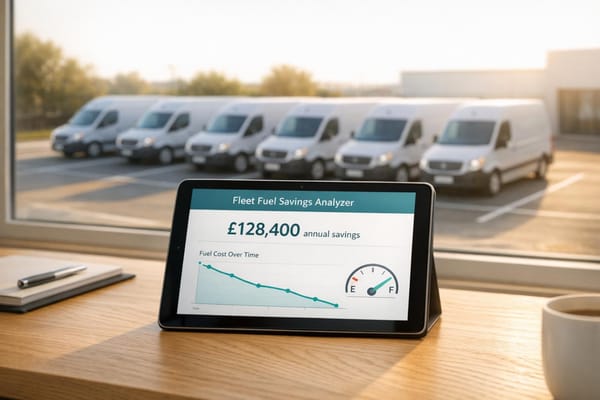
For example, a fleet of 50 vehicles with an average annual fuel cost of £2,500 per vehicle could save roughly £9,500 annually with a 7.6% improvement. A fleet of 100 vehicles might save around £19,000, while a 1,000-vehicle fleet with an average fuel cost of £3,000 per vehicle could achieve savings of approximately £228,000 per year.
It’s worth noting that the operating environment of your fleet affects potential savings. Urban fleets, where stop-and-go traffic leads to more idling and frequent acceleration and braking, often see greater improvements compared to fleets operating primarily on motorways.
Understanding ROI from Driver Training and Telematics
Improving driver behaviour doesn’t just lower fuel costs - it also reduces maintenance and insurance expenses, directly contributing to your return on investment (ROI).
Research shows that on-road coaching programmes can save about £360 per vehicle annually over three years. Aggressive driving, such as frequent maximum throttle usage, can significantly increase costs. It has been linked to a 160% rise in two-year maintenance expenses and an additional £287 in annual maintenance costs per vehicle. Furthermore, drivers who frequently use maximum throttle are twice as likely to file insurance claims, with claims averaging £1,074 compared to £384 for other drivers.
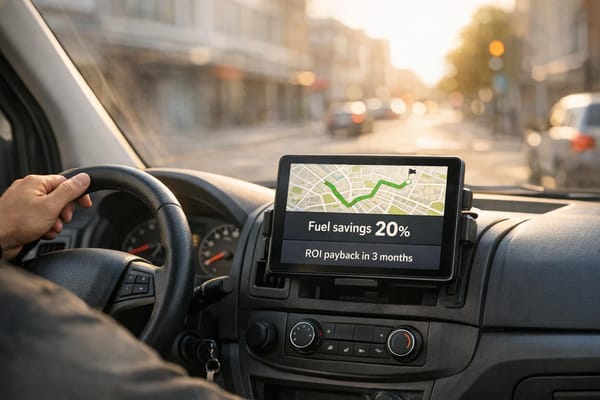
To calculate ROI, start by identifying your total investment. For example, GRS Fleet Telematics offers systems starting at £7.99 per vehicle per month (excluding VAT). A 100-vehicle fleet opting for the Enhanced hardware option at £79 per vehicle, combined with the monthly subscription, would incur a first-year cost of (£79 × 100) + (£7.99 × 100 × 12) = £17,488. Including driver training, a total investment of around £1,500 per vehicle is reasonable. With annual savings of £360 per vehicle, the payback period would be approximately 4.2 years, with continued savings thereafter.
For fleets with electric or hybrid vehicles, the benefits extend further. Improved braking techniques can recover 40% more energy, while better driving habits can increase the distance travelled per kWh of battery energy by 32%.
To maximise ROI, focus on high-impact drivers first. Telematics data can pinpoint drivers with costly behaviours like excessive throttle use, speeding, or harsh braking. Personalised coaching for these individuals often delivers quicker results than fleet-wide initiatives. Post-training metrics - such as harsh acceleration events per 100 km, time spent speeding, or over-RPM occurrences - can help confirm the effectiveness of your investment and highlight areas for additional coaching.
Conclusion
Key Takeaways for Fleet Managers
Driver behaviour has a massive impact on fleet expenses, influencing around 46% of total vehicle ownership costs. This includes fuel consumption, maintenance, insurance premiums, and collision-related expenses. Fleets that adopt structured behaviour management programmes often see an average 7.6% drop in fuel consumption, with real-time feedback cutting aggressive driving by 16.4%.
For context, if a fleet vehicle spends £2,500 annually on fuel, this equates to savings of about £190 per vehicle each year. Multiply that by 100 vehicles, and your annual savings could reach £19,000 just on fuel. But it doesn’t stop there - drivers with aggressive habits can increase maintenance costs by up to 160%, while insurance claims more than double.
Key areas to address include harsh acceleration, heavy braking, excessive idling, speeding, and inefficient route planning. Telematics systems are invaluable for identifying these behaviours and driving long-term improvements. Real-time monitoring pinpoints drivers who need extra coaching, while tracking their progress with clear metrics. Programmes combining on-road coaching with telematics have shown impressive results, with fleets saving approximately £360 per vehicle annually over three years. The secret lies in pairing training with consistent monitoring to ensure good driving habits stick.
With these insights, here’s how you can start creating lasting change.
Next Steps for Implementing Change
To make the most of these benefits, fleet managers should act quickly:
- Deploy telematics now to gather baseline data over the next three to six months.
- Identify the most costly behaviours using this data - urban fleets should focus on smooth acceleration and braking, while motorway fleets should prioritise speed management.
- Set measurable goals based on telematics data, such as fuel efficiency per kilometre, braking frequency, or speed compliance rates.
- Provide regular feedback and rewards to encourage positive change and keep drivers motivated.
GRS Fleet Telematics offers tailored solutions for UK fleet operators aiming to cut costs and improve driver performance. With hardware starting at just £35 and monthly subscriptions from £7.99 per vehicle (excluding VAT), their system covers real-time driver monitoring, eco-driving analytics, speed tracking, fuel efficiency insights, geofencing, and route optimisation.
Why wait? Book a live demo to see how telematics can transform your fleet. The investment often pays for itself within the first year through fuel savings alone - plus, you’ll benefit from reduced maintenance costs, lower insurance premiums, and fewer accidents. With free installation available when paired with fleet branding services, now’s the perfect time to assess your fleet’s driving habits and start making impactful changes.
Save Big on Fuel: Must-Have Telematics Features for Fleet Managers
FAQs
How can telematics help monitor driver behaviour and lower fuel costs?
Telematics systems offer the ability to monitor and evaluate driving behaviours like speeding, idling, and harsh braking - factors that can have a major effect on fuel consumption. By pinpointing areas where drivers can improve, companies can promote safer and more fuel-efficient driving habits.
GRS Fleet Telematics equips businesses with tools to track driver behaviour and create in-depth reports on fuel usage and overall performance. These insights enable organisations to cut down on avoidable fuel costs while encouraging more responsible driving across their fleet.
What driving habits increase fuel consumption, and how can they be improved?
Certain driving habits can quietly drain your fuel tank, but a few tweaks can make a noticeable difference. Rapid acceleration, prolonged idling, and driving at high speeds are some of the biggest offenders. Instead, try accelerating gently, switching off the engine if you're stationary for an extended time, and sticking to speed limits to keep fuel consumption in check.
On top of that, keeping your tyres properly inflated, clearing out any unnecessary weight from your car, and planning routes to avoid stop-start traffic can go a long way in boosting fuel efficiency. These adjustments not only save you money at the pump but also help reduce wear and tear on your vehicle.
How can fleet managers estimate savings by improving driver behaviour?
Fleet managers can pinpoint areas for cost savings by examining driver behaviours, fuel usage, and vehicle performance. Keeping an eye on these factors can reveal inefficient habits like excessive idling, harsh braking, or speeding - all of which can drive fuel expenses up.
With tools like GRS Fleet Telematics, managers gain the ability to monitor driver performance in real time. This data allows them to make informed decisions and encourage fuel-saving practices. Rolling out these changes fleet-wide can result in meaningful cost savings and smoother operations.