Custom Fleet Trackers vs Standard Systems
Compare custom and standard fleet tracking: costs, security, integrations, scalability and when to choose each for small or large fleets.
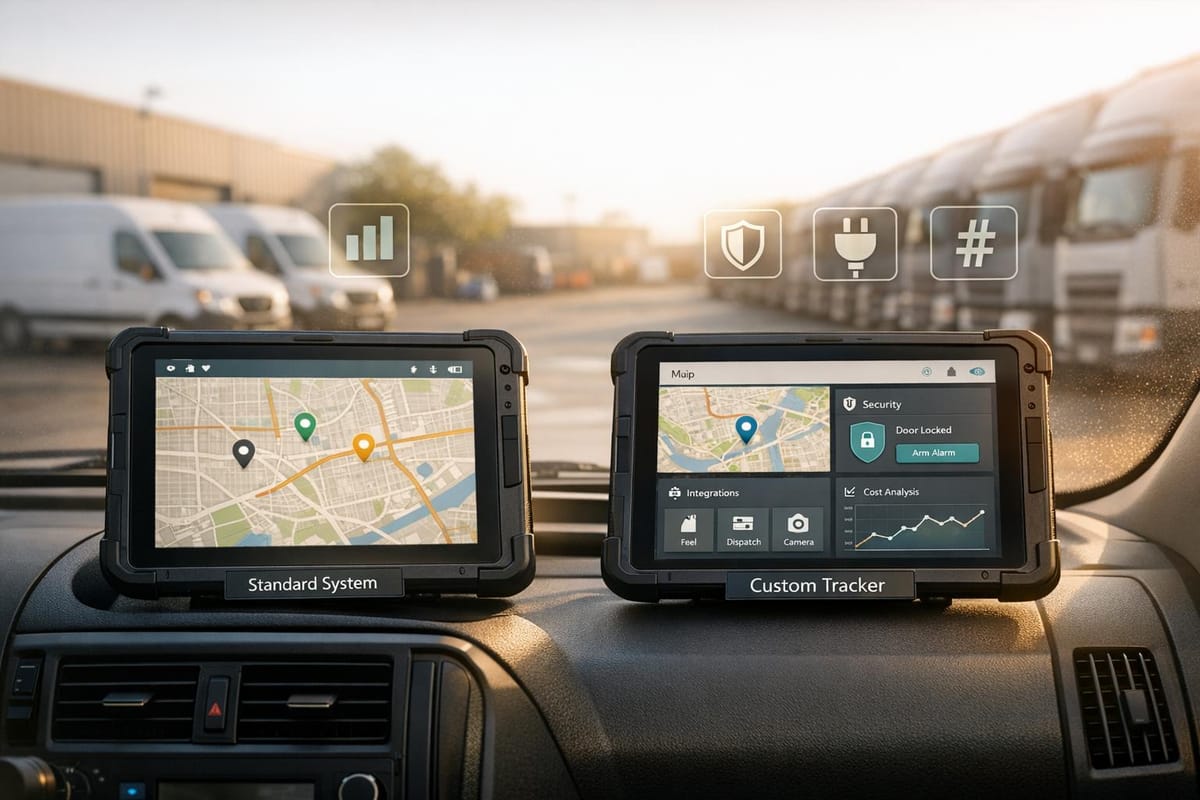
When choosing a fleet tracking system, the decision often comes down to custom solutions versus standard systems. Here's a quick breakdown:
- Custom Fleet Trackers: Tailored to meet specific business needs, these systems integrate seamlessly with existing tools, offer advanced security (dual-tracker tech, remote immobilisation), and scale with your fleet. However, they come with higher upfront costs and longer implementation times.
- Standard Systems: Affordable and quick to set up, these systems are ideal for small fleets with basic needs. They provide essential tracking features but lack advanced options, making them less suitable for growing or complex operations.
Key Differences:
- Custom Trackers: Higher costs, advanced security, scalable, tailored integrations.
- Standard Systems: Lower costs, basic features, limited scalability, faster setup.
Quick Comparison:
| Feature | Custom Fleet Trackers | Standard Systems |
|---|---|---|
| Security | Dual-tracker, remote immobilisation | Single GPS tracker, basic alerts |
| Cost | £79–£99 hardware, £15–£25/month | £34–£85 hardware, £7.99–£25/month |
| Integration | Open APIs, ERP/CRM compatibility | Limited integration |
| Scalability | Grows with your fleet | Fixed platform, may require overhaul |
| Setup | Professional installation required | Plug-and-play, DIY setup |
The best choice depends on your fleet size, budget, and long-term goals. Custom systems suit large or high-risk fleets like car rentals, while standard systems work well for small businesses needing a quick, affordable solution.
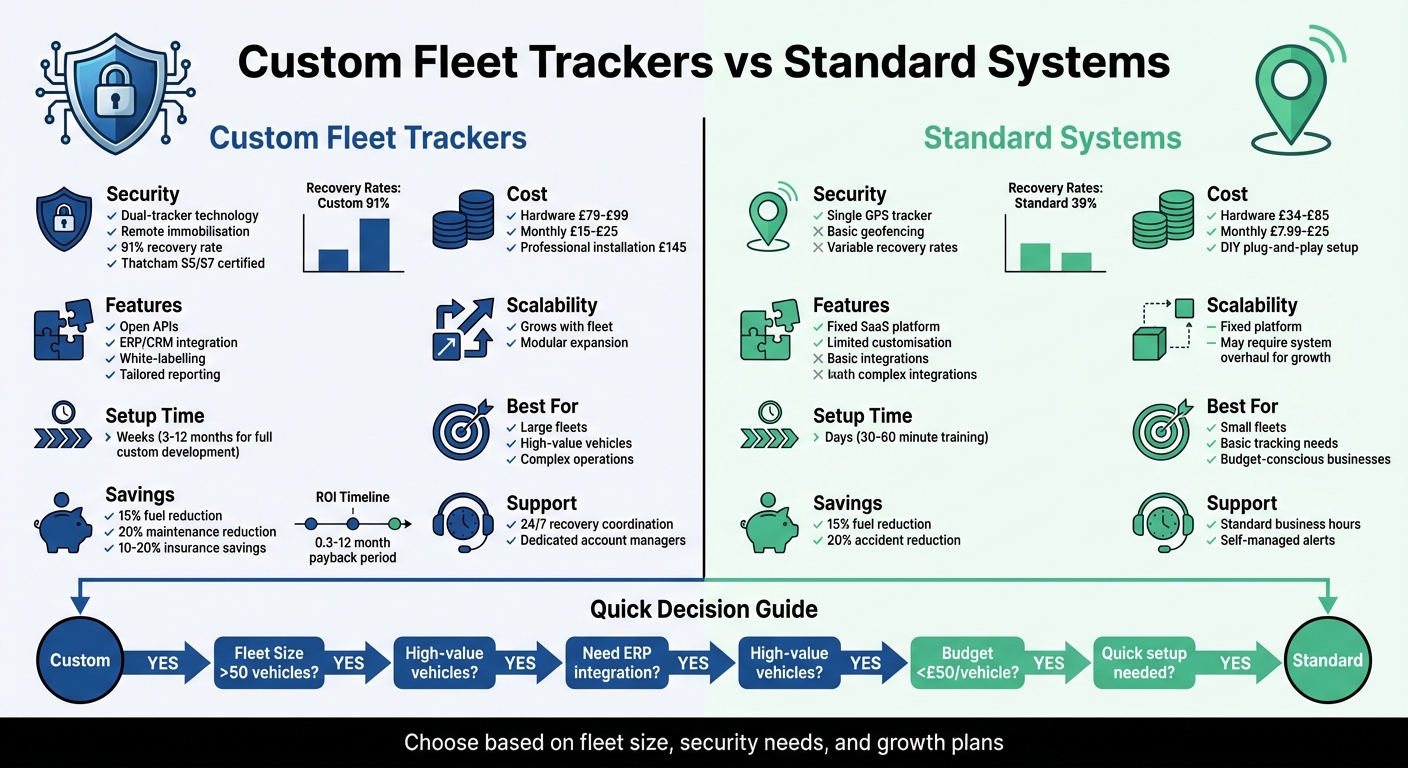
Custom vs Standard Fleet Tracking Systems Comparison
Main Differences Between Custom and Standard Fleet Tracking Systems
Customisation Options and Flexibility
Custom fleet tracking systems provide features like white-labelling, tailored reporting, and configurable user roles for drivers, dispatchers, and managers. These systems allow you to adjust alerts, dashboards, and user roles to suit specific workflows, whether it’s waste collection or last-mile delivery tasks.
In contrast, standard systems come with fixed features designed for basic tracking needs, offering little room for adjustment.
Custom trackers also include advanced features such as dual-tracker technology and remote immobilisation. These additions improve security and personalisation while ensuring smoother integration with existing systems. On the other hand, standard trackers typically rely on a single GPS unit, which can be easier to disable.
Scalability and System Integration
Custom fleet tracking systems excel in integrating with existing business tools. Using open APIs, they connect seamlessly with ERPs, billing software like Xero, CRMs, or HRMS platforms. They also support over 1,000 GPS and sensor types, making it easier to expand and integrate new software with existing hardware as your fleet grows.
Standard systems, however, are more limited in connectivity. They often function as standalone platforms and typically offer basic integrations, such as Google Maps. As your business grows or your needs evolve, these systems may struggle to keep up, lacking the ability to incorporate specialised workflows or industry-specific templates.
Costs and Implementation Requirements
Standard systems are appealing for their lower upfront costs. Basic wired or plug-and-play trackers are priced around £34–£35, with monthly subscriptions starting at just £7.99 per vehicle. Installation is simple, often using OBDII plug-and-play connections that don’t require professional assistance.
Custom systems, however, come with higher initial costs. Advanced hardware, such as dual-tracker setups, starts at £79, while units with remote immobilisation features can cost up to £99. Professional hardwired installation typically costs £145 per vehicle, though some providers include this as part of a service package, such as fleet branding. Monthly fees for custom systems also begin at £7.99, but enterprise-level features can raise this to between £15 and £25 or more.
Despite the higher costs, the benefits of custom systems can outweigh the investment. Fleet operators in the UK using advanced GPS tracking have reported up to 15% savings on fuel and a 20% reduction in maintenance expenses. Route optimisation alone can cut fuel costs by 10–20% within the first year, while systems with Thatcham S5 or S7 certification can lower insurance premiums by 5–20%. For example, one UK courier company successfully recovered two stolen vans within 24 hours using dual-tracker technology, avoiding losses of over £40,000.
Benefits of Custom Fleet Trackers
Advanced Security and Theft Recovery
Custom fleet trackers bring a strong layer of security through dual-tracker setups. These systems combine a hardwired primary unit with a hidden Bluetooth or RF/GSM backup, ensuring tracking continues even if the main device is tampered with or disabled. Features like remote immobilisation and geofencing - where virtual boundaries send alerts if a vehicle moves out of designated zones - can boost recovery rates by as much as 45%.
Take GRS Fleet Telematics, for example. Their system achieves a 91% vehicle recovery rate, often recovering stolen vehicles within 24 hours. This is possible thanks to their 24/7 recovery service working in close coordination with law enforcement. Additionally, Thatcham-certified trackers (S5 and S7 models) meet strict UK security standards. These certifications not only add peace of mind but could also lower your insurance premiums by 5% to 20% annually.
Better Fleet Efficiency and Performance
Custom trackers aren't just about security - they also make fleets more efficient. Real-time route optimisation, powered by live traffic data, can cut fuel costs by 10–20% in the first year alone. These systems also monitor driver behaviour, tracking actions like harsh braking, rapid acceleration, and excessive idling. With this data, you can provide targeted coaching, potentially reducing accident rates by up to 30%. And here's a practical example: just five minutes of idling burns 0.2 litres of fuel, which could translate to savings of over £800 per vehicle annually.
Proactive maintenance features also play a big role. They can reduce unplanned repairs by 25% and overall maintenance costs by 20%. Thanks to CAN Bus integration, fleet managers get detailed engine diagnostics and fuel consumption data without needing manual input. When you add up all these benefits, the annual savings could reach £1,000–£3,000 per vehicle for UK fleet operators.
Scalable Solutions for Expanding Businesses
Custom fleet tracking systems are designed to grow with your business. Open APIs allow seamless integration with workforce management tools, accounting software, or CRM systems. You can start small with basic tracking features and expand to include advanced security options as your fleet grows. Flexible contracts and modular hardware options make this process straightforward.
For businesses operating in remote areas, multi-network roaming GSM technology ensures uninterrupted tracking. And as your operations scale, automated compliance tools simplify adherence to regulations like DVSA and GDPR, saving time and reducing administrative headaches.
Benefits of Standard Systems
Lower Costs for Small Fleets
For businesses keeping an eye on their budgets, standard fleet tracking systems offer a practical and cost-effective solution. These systems provide immediate benefits, such as improved resource management, making them ideal for small fleets. Some providers even include free hardware with longer contracts, removing the need for upfront investment.
In the UK, businesses using standard tracking systems have reported impressive savings: a 15% reduction in fuel costs and a 20% drop in accidents within just one year. For example, a small UK business using the GRS Guardian tracking system saved approximately £1,224.52 per month, which adds up to £14,694.25 annually. They managed to recoup their investment in just 0.3 months. Additionally, Thatcham-approved trackers can lower insurance premiums by 5% to 30%, often offsetting the subscription costs entirely. These savings, combined with an effortless setup, make standard systems highly appealing.
Simple Setup and Quick Deployment
Beyond affordability, standard systems are known for their ease of setup and rapid deployment. Many rely on plug-and-play OBDII devices that connect directly to a vehicle's diagnostic port in minutes. This eliminates the need for professional installation, saving time and avoiding vehicle downtime. For sole traders or micro-businesses, this is especially helpful as they can't afford to have their vehicles off the road.
"Self-fit plug-and-play units minimise install costs and downtime." - Expert Market
Once installed, activation is straightforward via web platforms or mobile apps, and the user-friendly dashboards are designed to be intuitive. Training sessions, often conducted remotely, take just 30 to 60 minutes. Small fleets can become fully operational in a matter of days, unlike the weeks required for more complex enterprise systems. For businesses needing a quick solution - such as a tradesperson dealing with a stolen van - this speed can be a game-changer.
Drawbacks of Custom and Standard Systems
Drawbacks of Custom Fleet Trackers
Custom fleet tracking systems come with hefty upfront costs and long development timelines, which can stretch resources thin. Depending on the scope, development can take anywhere from 3 to 12 months. For a fleet of 100 vehicles, the first year alone can bring steep expenses, including software, hardware, installation, and training costs.
These systems also involve ongoing expenses that often exceed those of standard solutions. Premium support packages can add 15–25% to annual software costs, while training sessions may range between £500 and £2,000 each. Additionally, processing real-time data from GPS and IoT sensors demands specialised expertise, further increasing operational complexity.
"Custom software development often comes with a higher price tag due to the extensive work involved in tailoring features to your specific needs." – Anvesha Pandey, Communication Specialist, TrackoBit
Drawbacks of Standard Systems
While standard systems are simpler and more budget-friendly upfront, they come with compromises in both security and scalability.
Many standard van tracker systems fall short on theft protection. Features like dual-tracker technology, remote immobilisation, and comprehensive theft alerts are often missing, leading to lower vehicle recovery rates - around 39% compared to up to 98% for systems with advanced security measures. This gap in protection poses a financial risk, especially for fleets with high-value vehicles.
Scalability is another sticking point. Standard systems often lack open APIs, which are essential for integrating third-party software. As businesses grow, this limitation could necessitate a complete system overhaul. These systems typically offer only basic data, such as location and speed, without advanced diagnostics or tailored reporting capabilities that could help cut fuel costs. The lack of predictive maintenance tools - known to reduce vehicle breakdowns by 30–50% - can result in unplanned downtime, with each day of inactivity costing approximately £727 per vehicle.
Feature Comparison Table
Comparison Categories
This table highlights the differences between custom fleet trackers and standard systems across five key areas: security and recovery, driver monitoring, pricing, scalability, and support.
| Category | Custom Fleet Trackers | Standard Systems |
|---|---|---|
| Security/Recovery | Dual-tracker technology (GPS combined with Bluetooth, RF, or satellite); remote immobilisation; 91% recovery rate; Thatcham S5/S7 certification | Single GPS/GSM tracker; basic geofencing and theft alerts; variable recovery rates; typically not certified |
| Driver Monitoring | Eco-driving analytics; harsh braking and acceleration tracking; bespoke scorecards; tailored safety coaching | Basic speed monitoring; standard location tracking; simple idling reports |
| Pricing Structure | Hardware: £35–£99; Monthly: from £7.99 per vehicle; professional installation often required | Hardware: £34–£85 (plug-and-play); Monthly: £9–£25 per vehicle; DIY installation available |
| Scalability | Open APIs for third-party integration; white-labelling; bespoke reporting; scales without system overhauls | Fixed SaaS platform; limited customisation; easy device addition but may require a system revamp for complex needs |
| Support | 24/7 recovery coordination; dedicated account managers; tailored maintenance | Self-managed alerts; standard business-hour technical support |
The table underscores the distinct advantages that custom systems bring to fleet management, particularly in security and integration. Custom solutions use dual-tracker technology, which combines GPS with secondary signals like Bluetooth, RF, or satellite. This not only enhances connectivity but also meets Thatcham S5/S7 certification standards, potentially reducing insurance costs by 5% to 20%. In contrast, standard systems rely on single GPS/GSM trackers, often installed via OBDII ports. While these offer basic theft alerts and geofencing, they are more prone to tampering.
When Custom Fleet Trackers Are the Better Choice
Custom Solutions for Maximum Security
For businesses managing high-risk fleets, custom fleet trackers are a must-have, especially when theft prevention is a top priority. Industries like construction, landscaping, and plant hire often operate high-value vans, making them prime targets for organised vehicle theft. To counter this, dual-tracker systems offer a robust solution. These systems pair a primary hardwired GPS unit with a hidden backup tracker, ensuring the vehicle's location is always traceable - even if the main device is tampered with. Features like remote immobilisation add another layer of protection, allowing the engine to be disabled instantly if unauthorised movement is detected.
A great example of this approach is GRS Fleet Telematics' dual-tracker technology, which boasts a 91% recovery rate. This is vital for businesses where a single theft could result in losses exceeding £40,000. Additionally, these systems often come with Thatcham S5 certification and professional hardwired installation, which not only boosts security but can also lead to annual insurance savings of 5% to 20%.
But it’s not just about security - custom solutions offer flexibility and scalability, making them ideal for more complex fleet operations.
Tailored Features for Large Fleet Operations
Beyond security, large fleets benefit greatly from the adaptability and integration capabilities of custom tracking systems. Unlike standard platforms with fixed features, custom solutions often include open APIs. These APIs enable seamless integration with existing ERP or management software, eliminating the need for manual data entry.
Customisation extends to dashboards, which can be tailored to highlight metrics specific to your industry. For instance, logistics managers can focus on route optimisation and precise ETAs, while construction companies might prioritise geofencing alerts and equipment usage monitoring. For businesses offering tracking services to clients or managing multiple divisions, white-label platforms allow them to brand these services as their own - a valuable feature for B2B resellers.
Perhaps the biggest advantage is scalability. Custom systems grow with your fleet, letting you start with essential features and expand as your needs evolve, without requiring a complete system overhaul.
7 Best Fleet Management Software Systems 2026 (Full Demo & Comparison)
Conclusion
Standard GPS tracking systems work well for smaller fleets with basic needs, offering simplicity and lower upfront costs. On the other hand, custom solutions cater to businesses managing high-value vehicles or complex operations, providing advanced features like dual-tracker technology, remote immobilisation, and seamless ERP integration. The right choice depends on assessing your fleet size, risk exposure, integration requirements, and future growth plans.
"Choosing a GPS fleet tracking solution is no longer a simple procurement decision; it is a critical, high-stakes investment in your operational efficiency, compliance, and long-term profitability." - Amit Agrawal, Founder & COO, Developers.dev
When comparing options, each system serves distinct operational needs. GRS Fleet Telematics stands out with enterprise-level features, including dual-tracker technology and scalable solutions, all at competitive pricing. With real-time tracking updates every 60 seconds and monthly software subscriptions starting at £7.99 per vehicle, businesses can enhance security without breaking the bank. Whether managing three vans or three hundred, the system scales effortlessly and even offers white-label options for companies wanting to brand the service as their own.
In short, the right tracking solution can significantly impact theft prevention, operational efficiency, regulatory compliance, and profitability for UK businesses. Carefully consider total ownership costs, integration capabilities, and compliance with UK standards. With projections showing that over 70% of UK fleet operators are likely to adopt telematics by 2025, selecting a system that aligns with your fleet's specific needs and goals will position your business for success in an evolving landscape.
FAQs
What are the advantages of custom fleet trackers compared to standard systems?
Custom fleet trackers provide more adaptability and personalised features to align with your business's unique requirements. Unlike off-the-shelf options, these tailored systems can prioritise areas like route planning, monitoring driver performance, and implementing advanced security protocols, offering a solution that fits your operations more precisely.
They can also integrate smoothly with your existing software and even incorporate your branding, making workflows more efficient while improving the experience for your customers. Plus, with the flexibility to adjust as your business evolves, custom trackers can help increase efficiency, enhance security, and reduce costs over time.
How do custom fleet trackers improve security compared to standard systems?
Custom fleet trackers provide a higher level of security, making them an excellent choice for businesses focused on protecting their vehicles. Using advanced technology like dual-tracker systems, these devices combine cellular and satellite networks to ensure continuous tracking. This setup helps eliminate blind spots, even in hard-to-reach areas like tunnels or remote locations, significantly improving vehicle recovery rates.
Key features include instant theft alerts, geofencing, and remote immobilisation, all designed to help fleet managers act swiftly in the event of unauthorised activity. For instance, geofencing can alert you if a vehicle crosses a pre-set boundary, while remote immobilisation allows you to disable the vehicle remotely, preventing theft or misuse. With customisable options to suit specific fleet requirements, these trackers boast an impressive recovery success rate of up to 91%.
In the UK, these advanced tracking systems not only safeguard your assets but also provide peace of mind - all starting at an affordable price of £7.99 per month.
What should I consider when choosing between custom and standard fleet tracking systems?
When choosing between custom and standard fleet tracking systems, it’s essential to weigh how each aligns with your business needs. Custom solutions offer a high level of flexibility, allowing you to adapt features and integrations to suit specific operational demands. This makes them a strong option for businesses with unique or more complex fleet operations, as well as those planning for future growth. On the other hand, standard systems are generally quicker to set up and simpler to manage, making them a practical fit for smaller or less complicated fleets.
Cost is another crucial consideration. Custom systems often require a larger upfront investment and ongoing maintenance, but they can deliver a strong return by boosting efficiency and aligning seamlessly with your processes. Standard systems, meanwhile, tend to have lower initial costs and need less technical expertise, though they may lack advanced features that could optimise performance.
Don’t overlook security features, either. Options like dual-tracker technology and theft recovery capabilities can safeguard your vehicles and even help lower insurance costs. Ultimately, the best choice will depend on your priorities, whether that’s scalability, ease of use, or how well the system supports your long-term goals.