Custom Dashboards vs. Pre-Built Solutions: Pros and Cons
Compare custom and pre-built fleet dashboards by setup time, cost, flexibility, maintenance and scalability to find which fits your fleet.

When choosing fleet management dashboards, you face two options: custom dashboards or pre-built solutions. Here's a quick breakdown:
- Custom Dashboards: Fully tailored to your needs, offering control over metrics, layout, and integrations. Ideal for specialised workflows or growing fleets but requires significant time (months) and money (developer rates can exceed £750/day). Maintenance and updates are your responsibility.
- Pre-Built Solutions: Ready to use within hours, with standard metrics, vendor-managed updates, and lower costs (starting at £75/month). However, limited flexibility, potential data silos, and vendor lock-in can be drawbacks.
Quick Comparison:
| Factor | Custom Dashboards | Pre-Built Solutions |
|---|---|---|
| Setup Time | Months | Hours to weeks |
| Cost | High upfront costs | Affordable subscription model |
| Flexibility | Fully configurable | Limited to vendor options |
| Maintenance | Internal responsibility | Vendor-managed |
| Scalability | Unlimited | Vendor-dependent |
Choosing depends on your priorities: custom dashboards suit fleets with specific needs and long-term goals, while pre-built solutions work for teams needing quick, cost-effective access to standard metrics.
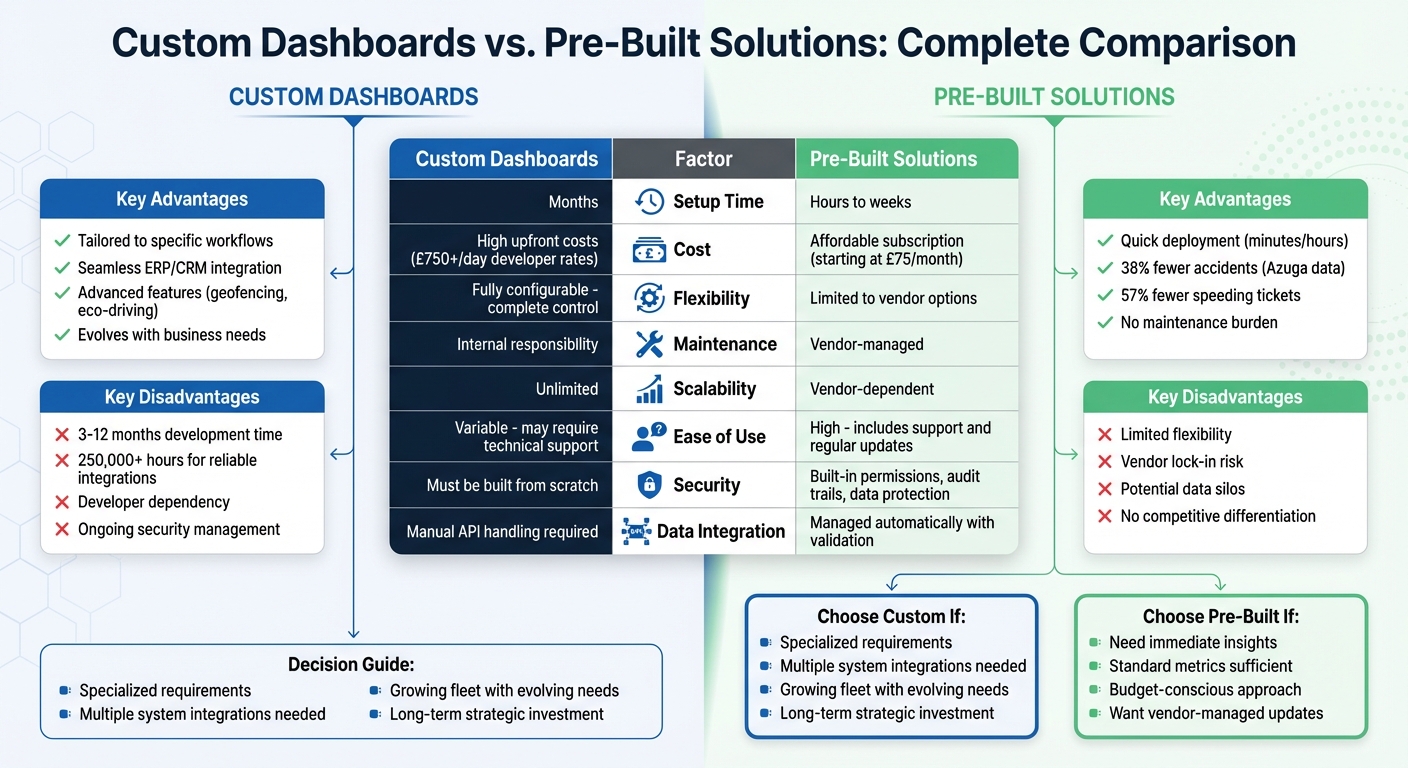
Custom Dashboards vs Pre-Built Solutions: Complete Comparison Guide
Custom Dashboards: Advantages and Disadvantages
Advantages of Custom Dashboards
Custom dashboards stand out by offering a tailored approach to managing fleet data, giving you control over what information is displayed and how it’s organised. You can decide which metrics are most important, define how calculations are handled, and prioritise tasks like overdue maintenance or insurance renewals. This level of control ensures urgent issues are front and centre when needed.
Another key benefit is how these dashboards align with your specific workflows. Instead of forcing you to adapt to a one-size-fits-all system, custom dashboards can be designed to fit your unique needs. For example, if your operations require specialised maintenance schedules or detailed driver behaviour tracking, you can create a system that does exactly that. The interface can also be adjusted for different roles - drivers might use a simple mobile view for inspections, while managers access in-depth analytics across the fleet.
Custom solutions also integrate seamlessly with other systems like ERP, CRM, or financial platforms, consolidating all your data into one place. As your business grows, you can add advanced features such as geofencing, eco-driving metrics, or real-time telematics without being limited by vendor-imposed restrictions. This adaptability ensures the system evolves with your needs rather than holding you back.
However, while these benefits are compelling, custom dashboards come with their own set of challenges.
Disadvantages of Custom Dashboards
The most notable drawbacks are time and cost. Developing a custom dashboard can take anywhere from three to twelve months, which isn’t ideal for businesses needing quick insights. Additionally, hiring skilled developers can be expensive, with daily rates exceeding £800 (as of 2026). One dashboard provider even reported spending 250,000 hours over 15 years on building and maintaining reliable data integrations - a clear indication of the significant upfront investment required.
Technical complexity is another hurdle. Fleet operations often rely on a mix of hardware such as GPS devices, telematics units, and IoT sensors, all of which need to work together seamlessly. This requires specialised expertise to integrate and manage. Beyond that, handling real-time data, addressing API changes, and ensuring robust security measures add layers of complexity. For instance, when APIs are updated, it can cause system downtime until the changes are manually addressed.
"Building and maintaining integrations is ongoing work, not a one-off task." - Geckoboard
There’s also the issue of developer dependency. You’ll need to rely on engineers for updates, bug fixes, and new features, which can divert resources from other high-priority projects. Over time, this creates an opportunity cost that can’t be ignored. Without a dedicated focus on rigorous development, security vulnerabilities may arise, such as weak API keys or inadequate access controls, potentially exposing sensitive data like location and financial details.
While custom dashboards offer unmatched flexibility, these challenges highlight the importance of weighing the pros and cons carefully before committing to this approach.
Pre-Built Solutions: Advantages and Disadvantages
Advantages of Pre-Built Solutions
Pre-built dashboards offer a quick and efficient way to access fleet data without the delays of custom development. Instead of waiting months to build a tailored system, you can start analysing vehicle locations, driver habits, or maintenance schedules within minutes or hours. This speed is especially handy when immediate insights are critical for decision-making.
Cost is another major plus. Subscription-based dashboard software starts at around £75 per month, spreading development costs across a large user base. This model eliminates the hefty upfront investment usually associated with custom solutions, making it a far more budget-friendly option.
Ease of use is another standout feature. These systems come with pre-configured settings and intuitive designs, so your team can hit the ground running without requiring extensive training or IT expertise. Maintenance, updates, and bug fixes are handled by the vendor, which often includes built-in security measures like permissions, audit trails, and data protection. Replicating these features in a custom-built system would be both time-consuming and expensive.
The operational benefits are hard to ignore. For instance, Azuga users reported 38% fewer accidents and 57% fewer speeding tickets thanks to built-in driver behaviour tracking and gamification tools. Karl Davidson from St Austell Brewery highlights the practical benefits, saying:
"Quartix is all about seeing what your vehicles are doing and getting the best driving style out of your drivers. It enables you to reduce accident costs, maintenance costs and see a better fuel economy."
However, while these advantages are compelling, pre-built solutions do come with their own set of drawbacks.
Disadvantages of Pre-Built Solutions
Despite the convenience and affordability, pre-built dashboards have limitations. The most significant is their lack of flexibility. These systems are designed to suit a wide range of users, which means they may not fully align with the specific needs of your fleet. For example, if your operations require custom maintenance schedules, unique performance metrics, or specialised compliance tracking, you might find yourself adapting your processes to fit the software rather than the other way around.
Another issue is vendor lock-in. Relying on a single provider can leave you vulnerable to price hikes, discontinued services, or limited support options. Many pre-built solutions also restrict reporting to data from a single source, making it difficult to combine information such as fuel card data with GPS tracking or maintenance logs. This can create data silos and limit your ability to gain a comprehensive view of operations.
Scaling can also be a challenge. While these solutions are cost-effective initially, adding more advanced analytics or expanding to manage a larger fleet often comes with extra fees, reducing the long-term affordability. Some systems may also have limitations on how frequently data is updated, which can be a problem for businesses requiring real-time monitoring. Compatibility issues can arise as well, particularly if your fleet relies on specialised hardware or software that the pre-built solution doesn’t support.
Lastly, pre-built dashboards rarely provide a competitive edge. Since they’re available to anyone, they don’t offer the unique insights or proprietary tools that could set your operations apart from competitors.
Side-by-Side Comparison
Comparison Table
Here’s a breakdown of how custom dashboards stack up against pre-built solutions in fleet management:
| Factor | Custom Dashboards | Pre-Built Solutions |
|---|---|---|
| Setup Time | Slow (several months) | Very fast (minutes to weeks) |
| Flexibility | High – complete control over features and design | Moderate – limited to vendor-provided widgets and filters |
| Upfront Cost | High (development, planning, and testing) | Low (subscription-based) |
| Maintenance | High – internal responsibility for updates and fixes | Minimal – vendor-managed |
| Scalability | Unlimited – adapts to any changes in data needs | Managed by vendor; easy to add users but may have feature limits |
| Ease of Use | Variable – depends on design and may require technical support | High – includes support, forums, and regular updates |
| Security | Must be built from scratch | Built-in permissions, audit trails, and data protection |
| Data Integration | Requires manual handling of APIs, pagination, and schema inconsistencies | Managed automatically with built-in validation and normalisation |
Key Takeaways
The table highlights critical differences in how these two options perform, especially in areas like setup time, costs, and scalability. Pre-built dashboards are all about speed and convenience. They let fleet managers dive into key metrics - such as fuel consumption, driver behaviour, and accident costs - almost immediately after deployment. This quick turnaround is invaluable for teams needing rapid insights to respond to operational challenges.
Custom dashboards, on the other hand, shine when it comes to tailored functionality. They allow you to create highly specialised tools, but this comes with a trade-off: a longer development timeline. This delay can slow down access to actionable insights, which might not be ideal for teams needing immediate results.
Cost Considerations
The financial side of things also plays a huge role in decision-making. Custom dashboards demand significant upfront investment, with developer rates often exceeding £750 per day. Conversely, pre-built solutions are much lighter on the wallet, with subscriptions starting at around £75 per month. This subscription model spreads out costs, making it easier for businesses to budget while benefiting from vendor-provided updates and support.
Adapting to Change
For fleets adopting new technologies, the choice becomes a bit more complex. Custom dashboards are incredibly adaptable, making it easier to integrate new data sources or advanced analytics as your needs evolve. Pre-built solutions, while easier to maintain, can sometimes fall short if they don’t support a specific integration. This limitation could lead to data silos, making it harder to maintain a holistic view of operations.
Ultimately, the decision boils down to balancing immediate needs with long-term goals. Both options have their strengths, and understanding these nuances can help align your choice with your fleet’s current operations and future growth.
Create your Dashboard in under 5 Minutes!
Choosing Between Custom Dashboards and Pre-Built Solutions
Selecting the right dashboard comes down to balancing your operational needs with factors like development time, cost, and scalability.
When to Choose Custom Dashboards
Custom dashboards work best for fleets with specialised requirements that off-the-shelf software can't meet. For instance, if your operations rely on integrating data from multiple systems, a custom solution can consolidate this data and eliminate silos.
These dashboards are particularly suited to growing fleets because they can evolve alongside your data needs. Whether you're adding new data sources, implementing advanced analytics, or scaling up for more users, custom dashboards offer the flexibility to adapt. They're especially useful for businesses with proprietary processes, like unique eco-driving algorithms or customer-facing analytics integrated into core products.
However, custom development doesn't come cheap. Expert developers can charge upwards of £750 per day, and there's also the opportunity cost of diverting your technical team from other critical projects. Beyond development, you'll need to manage ongoing maintenance, including API updates, security patches, and bug fixes.
Each choice comes with trade-offs, particularly in terms of flexibility, cost, and timeline.
When to Choose Pre-Built Solutions
If you need a dashboard quickly and at a lower initial cost, pre-built solutions are often the better option. For fleets requiring immediate access to standard metrics, these dashboards can be deployed in days or weeks, rather than months. Plus, their subscription-based pricing is far more affordable than the upfront expense of a custom build.
Pre-built dashboards are designed for efficient KPI monitoring. With vendors handling integrations, updates, and security, your team can stay focused on operations. Many modern platforms also offer configurable features, letting you prioritise specific KPIs - like harsh braking or seat belt usage - without the need for a fully custom solution. This "customisation within limits" approach makes them a practical choice for fleets with standard operational needs.
Conclusion
Deciding between custom dashboards and pre-built solutions comes down to balancing flexibility with your fleet's operational priorities. Custom dashboards provide complete control over data modelling and proprietary logic, making them a strong choice if analytics are customer-facing or integral to your product. On the other hand, pre-built solutions offer quicker deployment, built-in security, and managed integrations - ideal for internal KPIs and executive reporting without the hassle of ongoing maintenance.
As Geckoboard points out, maintaining integrations is a continual process. This reality often makes the hidden costs of custom development outweigh the price of subscription-based platforms. It's one of the reasons many fleet managers now lean towards pre-built solutions that automatically manage API changes, security updates, and rate limits.
GRS Fleet Telematics bridges the gap by offering solutions tailored to both approaches. Whether you opt for the simplicity of our standard platform or the fully branded customisation of our white-label solution, you’ll enjoy features like real-time tracking, dual-tracker technology, and an impressive 91% recovery rate for stolen vehicles.
Our pricing is designed to be accessible, starting at just £7.99 per vehicle per month, with tiered options for different fleet sizes and flexible arrangements to fit your budget. With 35 years of expertise and UK-based support, GRS delivers enterprise-grade technology at a price point that works for businesses of all sizes - whether you need a standard dashboard or a bespoke platform.
FAQs
What should I consider when choosing between custom dashboards and pre-built solutions for fleet management?
When deciding between custom dashboards and pre-built solutions for fleet management, it’s essential to consider factors like how adaptable the solution is, the overall costs, and how quickly it can be implemented.
Custom dashboards are designed to fit your specific needs. They let you incorporate tailored metrics and integrate with systems like CRM or ERP, aligning perfectly with your operational requirements. However, this level of personalisation comes with higher initial costs, demands more resources, and requires ongoing maintenance.
Pre-built solutions, by contrast, are faster to set up and usually more budget-friendly. They’re a great choice for businesses looking for a straightforward approach without the need for extensive customisation.
Your decision should hinge on your fleet's complexity, available budget, and long-term objectives. If your operations demand specialised data and integrations, the investment in a custom dashboard could pay off. But for a simpler and quicker setup, pre-built solutions can provide an effective and economical option while covering the core needs of fleet management.
How do custom dashboards compare to pre-built solutions when integrating with existing systems?
Custom dashboards are crafted to work effortlessly with your current systems - whether it's a CRM, ERP, or fleet management tool - through tailored development. This personalised approach brings all your critical data sources together in one place, giving you the flexibility to adjust as your business needs change.
In contrast, pre-built solutions often rely on standard integration methods, like APIs or pre-configured connectors. These can make the setup process simpler but may not align perfectly with your unique systems or offer the same level of customisation. In essence, custom dashboards focus on delivering a more tailored and adaptable experience, while pre-built solutions prioritise straightforward implementation.
What are the long-term costs of choosing a custom dashboard compared to a pre-built solution?
Opting for a custom dashboard often means a higher initial cost and longer implementation time, but it can lead to substantial savings and operational advantages over the long term. These dashboards are designed specifically for your needs, giving you complete control over data integration and the ability to scale as required. While the upfront investment and development process may seem daunting, the payoff comes in the form of reduced future expenses, as you'll avoid the need for frequent upgrades or replacements.
In contrast, pre-built solutions are more budget-friendly upfront, typically costing between £8 and £22 per month, and they’re quicker to set up. However, they might not offer the flexibility you need and could result in extra costs for customisation or updates down the line. For businesses dealing with complex or changing fleet management requirements, a custom dashboard's flexibility often makes it the smarter financial choice in the long term, sidestepping recurring licensing fees and the limitations of ready-made options.