Cross-Border Compliance FAQs for Fleet Managers
2026 compliance essentials for fleet managers: licences, SMT2 tachographs, AETR hours, cabotage, ICS2 customs and ADR dangerous-goods rules.
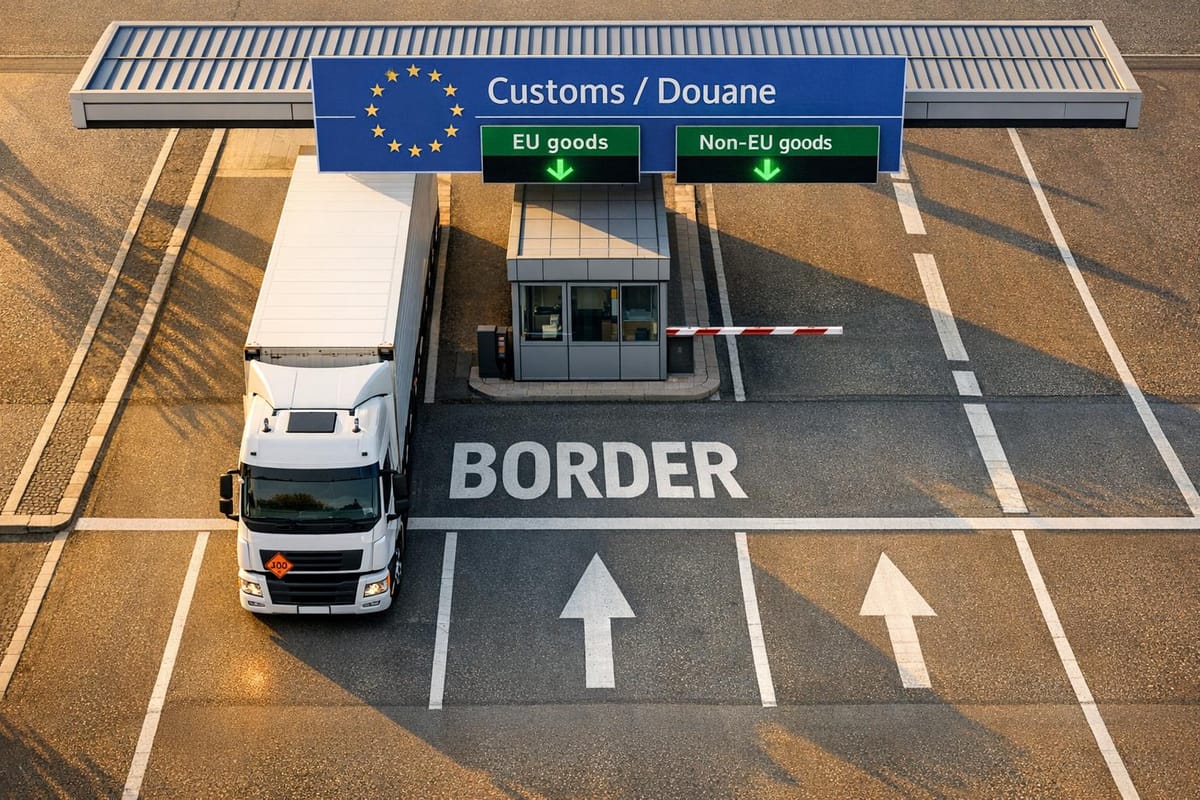
Navigating cross-border fleet operations in 2026 is no small task. With stricter regulations, updated tachograph rules, and new customs procedures, staying compliant is critical to avoid fines, delays, and operational disruptions. Here's what you need to know:
- Operator Licences: UK fleets transporting goods internationally must have a Standard International Operator Licence and, for EU trade, a UK Licence for the Community.
- Tachograph Updates: From 18 August 2025, HGVs must use Smart Tachograph 2 (SMT2). Vans (2.5–3.5 tonnes) used internationally must comply by 1 July 2026. Drivers need to present 56 days of tachograph records for checks.
- Cabotage Rules: UK hauliers can perform one cabotage operation in an EU Member State within seven days of completing an international delivery. Strict documentation is required.
- ICS2 Customs Changes: From February 2026, shipments to the EU must use ICS2 version 3 messaging, with detailed descriptions and accurate HS codes mandatory.
- ADR Regulations: New rules for dangerous goods include a standardised inspection checklist and expanded liability across the supply chain.
Fleet managers must act now to update systems, train staff, and implement van tracking solutions for real-time tracking, geofencing, and compliance monitoring. Staying informed and proactive ensures smooth operations and avoids costly penalties.
Top 5 Cross-Border Trucking Fines ...And How to Avoid Them
Legal Requirements for Cross-Border Fleet Operations
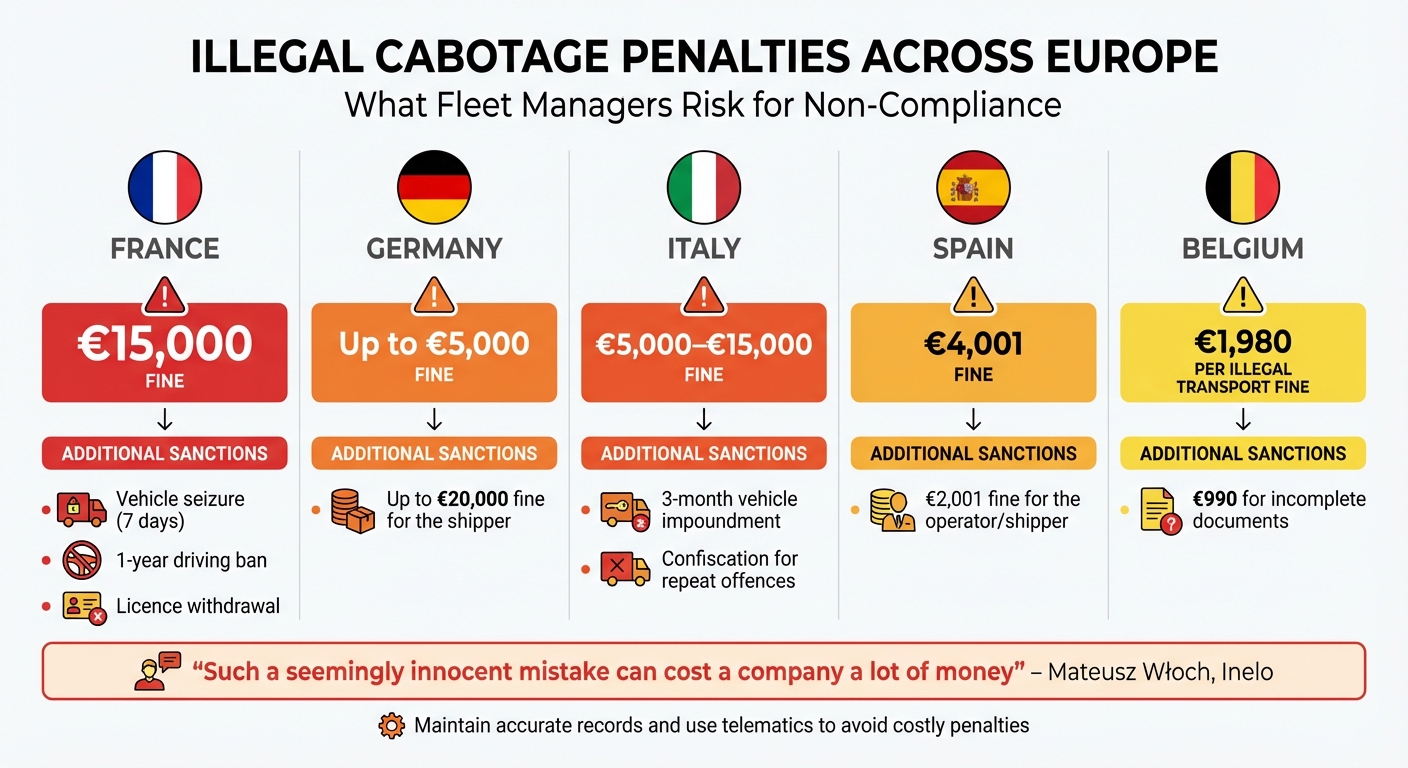
EU Cabotage Penalties by Country: Fines and Sanctions for Fleet Operators 2026
Operator Licences and Permits
If you're managing a UK fleet and need to transport goods across borders, you'll require a Standard International Operator Licence. Since May 2022, this rule also applies to vans and light goods vehicles with a maximum authorised mass (MAM) between 2.5 and 3.5 tonnes when operating commercially in the EU. Additionally, you'll need a UK Licence for the Community to trade within or transit through EU member states, Liechtenstein, and Switzerland. The good news? If you already hold a standard international licence, there's no extra fee for this.
Drivers must carry a certified physical copy of the UK Licence for the Community whenever operating in the EU. Not having it on hand during checks is against the law. To obtain or upgrade to a standard international licence, you'll also need a transport manager with a Certificate of Professional Competence (CPC). Financial standing requirements include access to £8,000 for the first vehicle, £4,500 for each additional HGV, and £800 for each van or car and trailer. For trailers over 750kg, registration is mandatory before towing through most EU countries.
It's equally important to stay updated on tachograph regulations that impact driver hour limits during international journeys.
Tachograph and Driver Hour Rules
From 21st April 2025, the UK adopted AETR rules for all international HGV and PSV journeys, replacing the previous EU regulations. Drivers are now required to present tachograph records covering the current day and the previous 56 days for international trips - double the earlier 28-day requirement. For UK domestic journeys, GB-specific rules remain unchanged.
AETR rules introduce stricter measures compared to EU regulations. For instance, the "return to base" exemption - which allowed drivers to exceed limits to return home for weekly rest - is no longer valid. Similarly, weekly rest periods cannot be interrupted on ferries or trains under AETR, unlike EU rules. Key limits include a maximum of 9 driving hours per day (extendable to 10 hours twice a week), a 56-hour weekly cap, and a 90-hour limit over two consecutive weeks. Breaches can result in on-the-spot fines of up to £300 per offence.
"The 56-day record keeping requirement for HGV drivers is potentially a real trap." – Backhouse Jones
All international vehicles must be equipped with Smart Tachograph 2 (SMT2) by 18th August 2025 if older models are currently in use. For vans weighing between 2.5 and 3.5 tonnes used for international hire or reward, the deadline is 1st July 2026. Update tachograph software to store 56 days of data, and train drivers on AETR differences, especially the end of "return to base" flexibility.
Proper documentation is another key factor for seamless cabotage operations.
Cabotage and Transport Documentation
UK hauliers are allowed to perform one cabotage operation in an EU Member State within seven days of completing an international delivery. This seven-day period begins at midnight the day after unloading and ends at 23:59 on the seventh day. Additionally, hauliers can carry out up to two "cross-trade" journeys - laden trips between two different EU Member States - after a delivery from the UK. Northern Ireland-based hauliers have a unique allowance: they may perform two cabotage operations in the Republic of Ireland within seven days of a delivery from NI.
Before starting cabotage work in the EU, you must submit a posting declaration through the EU's integrated portal. Drivers are required to carry proof of each international and cabotage operation, typically a CMR consignment note. Penalties for non-compliance are steep: in France, fines can reach €15,000 and may include imprisonment, while Spain imposes fines of €4,001. In Italy, repeat offences can lead to vehicle confiscation for six months. Using tools like telematics and GPS tracking can help monitor vehicle movements and ensure compliance with legal limits. Switching to electronic consignment notes (e-CMR) can also simplify roadside checks by making all required information instantly accessible.
| Country | Fine for Illegal Cabotage | Additional Sanctions |
|---|---|---|
| France | €15,000 | Vehicle seizure (7 days), 1-year driving ban, licence withdrawal |
| Germany | Up to €5,000 | Up to €20,000 fine for the shipper |
| Italy | €5,000–€15,000 | 3-month vehicle impoundment; confiscation for repeat offences |
| Spain | €4,001 | €2,001 fine for the operator/shipper |
| Belgium | €1,980 per illegal transport | €990 for incomplete documents |
"Such a seemingly innocent mistake [miscalculating periods] can cost a company a lot of money." – Mateusz Włoch, Training and Development Expert, Inelo (part of Eurowag Group)
These examples underline the financial and operational risks of non-compliance. Keeping precise records and leveraging technology can help fleet managers avoid hefty fines and disruptions.
2026 Compliance Updates and Regulatory Changes
New Tachograph Requirements for Vans Crossing EU Borders
Starting 1 July 2026, vans weighing between 2.5 and 3.5 tonnes used for international goods transport or cabotage will need to be equipped with second-generation smart tachographs (G2V2). This change extends driving time and rest period rules - currently applied to heavy goods vehicles - to these lighter commercial vehicles.
Under the new rules, drivers can drive up to 9 hours daily, with a maximum of 10 hours allowed twice a week. Weekly driving is capped at 56 hours, with a two-week limit of 90 hours. Drivers must take a 45-minute break after 4.5 hours of driving and have at least 11 uninterrupted hours of rest every day. Additionally, fleet operators must download driver card data every 28 days and vehicle unit data every 90 days. The cost of a G2V2 device is estimated at approximately £850, excluding installation and calibration fees.
"For many companies, this means the need to retrofit vans with a second-generation smart tachograph (G2V2), implement new procedures, and get the settlement of van drivers' working time in order." – Wojciech Kukuła, PR and Leading Project Manager, Cartrack
Fleet managers should act now to identify which vehicles in their fleet exceed the 2.5-tonne threshold using van tracker systems and operate internationally. Early retrofitting is key to avoiding workshop delays. Drivers will need training on manual tachograph entries and updated rest-time protocols. It’s also worth checking if any operations qualify for "own-account" exemptions - this applies when driving accounts for less than 30% of a driver’s monthly working time. Vans used solely within the UK are not subject to these rules.
While these tachograph requirements focus on managing driver hours, other changes, like updated hazardous materials regulations, bring additional compliance challenges.
Updated ADR Regulations for Dangerous Goods
The Delegated Directive (EU) 2025/1801 aligns EU regulations with ADR 2025 by introducing a standardised inspection checklist for enforcement authorities across member states. This checklist ensures consistency in assessing vehicle suitability, tank integrity, hazard markings, safety equipment, and documentation.
Violations are now categorised into three levels of risk:
- Category I: High risk, requiring immediate vehicle immobilisation.
- Category II: Medium risk, requiring prompt corrective action.
- Category III: Low risk, allowing corrections post-inspection.
Liability for compliance has been expanded to include all parties in the supply chain, such as shippers, loaders, packers, fillers, and unloaders - not just the carrier.
To stay compliant, fleet operators should conduct pre-departure checks using the new EU checklist. This includes inspecting fire extinguishers, personal protective equipment (PPE), and hazard markings like orange plates. Training for drivers, dispatchers, and warehouse staff is essential to ensure they understand their responsibilities under the updated chain-of-responsibility rules. Digital transport documents are now allowed, provided they are accessible during inspections, so investing in a certified digital platform for managing ADR certificates and documentation is worth considering.
These changes in dangerous goods regulations are part of a broader shift, which also includes new customs documentation requirements.
ICS2 and Customs Changes for EU-Bound Freight
From 3 February 2026, the EU’s Import Control System 2 (ICS2) will operate exclusively on version 3 (v3) messaging. Any shipments using version 2 (v2) will be rejected outright. Entry Summary Declarations (ENS) will become mandatory for all road and rail shipments entering the EU.
"This isn't a soft deadline or a gradual phaseout - it's a technical hard stop that affects every road and rail shipment entering EU territory." – Anna Marszalek, Independent Freight Solutions
To comply, generic descriptions like "machine parts" will no longer suffice. Filings must include:
- A minimum 6-digit HS code.
- Valid EORI numbers for all EU-based parties.
- Detailed descriptions specifying the materials and intended use of the goods.
The final phase of implementation for Croatia, Latvia, Poland, Romania, and Slovakia begins on 1 June 2026.
Fleet managers must ensure their IT systems or third-party software are fully compatible with ICS2 v3 messaging standards. Review commodity databases for accurate HS codes and detailed descriptions, and establish clear agreements with logistics partners regarding ENS responsibilities. Keep an eye on system feedback for "low-quality data" flags and address any issues quickly.
Using Telematics for Cross-Border Compliance
Telematics systems have become an essential part of maintaining compliance in cross-border operations.
Real-Time Tracking and Geofencing
With telematics, fleet managers can track vehicle locations in real time, even as they cross borders. This makes it easier to stay on top of regulations. The added feature of geofencing allows managers to set virtual boundaries around specific countries or regions. When a vehicle enters or exits these zones, the system sends instant alerts. This is especially useful for managing cabotage operations, as it simplifies documentation by automatically recording border crossings with precise timestamps.
Monitoring Driver Behaviour and Hours
Beyond location tracking, monitoring driver behaviour plays a critical role in compliance. Telematics systems collect data on driving patterns like speed, harsh braking, and extended driving times - factors that directly affect regulatory adherence. For tachograph compliance, these platforms flag when drivers approach their legal limits, giving managers the chance to intervene early. While telematics doesn’t replace tachograph data, it acts as an additional layer of oversight, helping managers identify potential issues and focus training efforts where needed. GRS Fleet Telematics offers plans that integrate these features, making them accessible and cost-efficient.
GRS Fleet Telematics Plans for Compliance
GRS Fleet Telematics offers three hardware plans designed to support cross-border compliance.
- The Essential plan (£35 hardware) includes a single wired tracker, perfect for fleets prioritising basic real-time location tracking.
- The Enhanced plan (£79 hardware) adds a secondary Bluetooth backup tracker, providing dual-tracking capabilities for added security during cross-border shipments.
- The Ultimate plan (£99 hardware) comes with both trackers and includes vehicle immobilisation for maximum protection.
All plans come with a £7.99 per vehicle monthly software subscription, covering SIM and data costs along with access to the telematics platform. Enhanced and Ultimate plans feature dual-tracker technology, contributing to a 91% recovery rate for stolen vehicles - an invaluable feature for fleets operating internationally. Additionally, GRS Fleet Graphics offers free installation when these systems are combined with fleet branding services.
| Plan | Hardware Cost | Key Features | Best For |
|---|---|---|---|
| Essential | £35 | Single wired tracker, real-time location | Cost-efficient border tracking |
| Enhanced | £79 | Primary tracker plus Bluetooth backup | Dual tracking for theft protection |
| Ultimate | £99 | Dual trackers plus immobilisation | Maximum security |
Each plan includes tools like geofencing and driver monitoring, making it easier to comply with regional regulations. For fleets preparing for new tachograph rules, these features provide an extra safeguard by tracking driving patterns and sending timely alerts.
Best Practices for Cross-Border Compliance
Stay Informed About Regulatory Updates
Keeping up with regulatory changes is crucial for avoiding border delays and penalties. Fleet managers should frequently consult official government transport websites and customs authorities to stay current. For instance, as of 31 December 2024, HGV drivers on UK-EU international routes must provide 56 days of records, and the use of Smart Tachograph 2 is now mandatory for these journeys. Missing such updates can lead to unnecessary complications, including fines or border hold-ups.
It's also essential to understand the specific requirements of each port of entry before dispatching vehicles. Regulations often vary depending on the type of cargo and the overseeing authority, so a universal approach rarely works. Analysing border crossing data, such as expected wait times, can help with route planning and scheduling, ensuring smoother operations. This level of awareness also aids in preparing for effective monitoring and staff training.
Implement Monitoring and Reporting Systems
Staying informed is just the first step; implementing robust monitoring systems ensures compliance is consistently maintained. Transitioning from paper-based records to digital systems can reduce errors and speed up audits. Digital records – such as vehicle maintenance logs, driver qualifications, and cargo details – should be well-organised and easy to access. This simplifies inspections and helps demonstrate compliance when needed.
Solutions like those offered by GRS Fleet Telematics include tools for monitoring and managing compliance more efficiently. These systems enable seamless record-keeping and reporting, making it easier to meet regulatory requirements and avoid disruptions.
Train Drivers and Staff on Compliance Protocols
Monitoring systems are only effective when paired with regular training to ensure that drivers and staff understand and follow compliance protocols. Training keeps drivers informed about cross-border requirements and helps them adapt to specific regulations. For example, PSV drivers must be trained on AETR rules, which differ significantly from UK regulations, particularly regarding weekly rest periods and procedures for unexpected situations.
Training should also include guidance on communicating with border patrol agents, understanding emissions standards in different countries, and managing stress during long delays or unfamiliar routes. Drivers enrolled in FAST programmes, for instance, need specialised training to use these systems effectively, helping to minimise wait times and streamline border crossings. Regular and targeted training ensures that drivers are not only compliant but also confident in navigating the complexities of international routes.
Conclusion
Managing cross-border fleet operations in 2026 demands a careful balance of staying informed about regulations, leveraging dependable technology, and investing in thorough training. The challenge of working with various national agencies, each with its own set of rules and procedures, means fleet managers must stay alert and adaptable.
Using real-time GPS tracking, managers can keep an eye on wait times and adjust routes to steer clear of congested border points. Features like geofencing add another layer of precision, helping ensure smoother and faster border clearances. Tools like GRS Fleet Telematics offer advanced monitoring solutions that not only aid compliance but also enhance overall fleet performance.
Beyond tracking, simplifying customs procedures plays a key role in improving efficiency. Programmes like FAST (Free and Secure Trade) can significantly reduce wait times for pre-approved drivers and vehicles. Centralised systems that integrate maintenance schedules, driver records, and cargo data further streamline operations, enabling quicker responses during inspections.
However, technology and process improvements alone aren’t enough - supporting drivers is equally important. Training sessions that cover navigating new routes, managing inspections, and communicating with border agents are essential. Additionally, fostering driver well-being through regular training on cross-border protocols and cultural awareness can help avoid unnecessary delays or misunderstandings. By combining cutting-edge technology, effective training, and strategic planning, fleet managers can confidently tackle the challenges of cross-border compliance and ensure smooth operations.