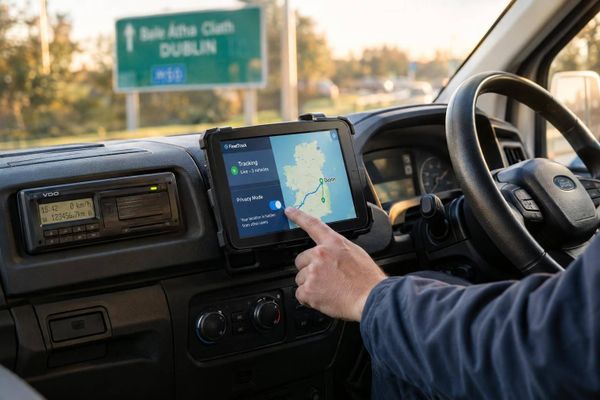
Cost vs. Benefits of Fleet Tracking Systems
Breaks down fleet tracking setup, monthly fees and hidden costs, plus fuel, theft and maintenance savings and 6–12 month ROI.

Managing a fleet in the UK is challenging, with rising fuel prices, traffic, and strict safety rules. Fleet tracking systems, which combine GPS and cloud-based tools, help businesses monitor vehicles, drivers, and performance in real-time. But are they worth the cost? Here's a quick breakdown:
- Set-Up Costs: GPS hardware ranges from £35 to £450 per vehicle, with installation fees of £50–£150. GRS Fleet Telematics offers affordable options starting at £35.
- Monthly Fees: Subscriptions cost £7–£35+ per vehicle. GRS Fleet Telematics is competitively priced at £7.99, including features like real-time tracking and data connectivity.
- Hidden Costs: Watch for de-installation fees (£50–£75) or "free hardware" deals tied to higher monthly charges.
Key Benefits:
- Fuel Savings: Monitoring driver habits can reduce fuel costs by 10–15%.
- Theft Protection: Dual-tracker systems achieve a 91% recovery rate for stolen vehicles.
- Reduced Downtime: Maintenance alerts prevent costly breakdowns.
- Compliance Support: Helps meet UK safety and environmental regulations.
Fleet tracking systems often pay for themselves within 6–12 months through savings on fuel, theft prevention, and maintenance. For smaller fleets, basic tracking features may suffice, while larger operations benefit from advanced analytics and security. Always assess costs over 3–5 years to gauge long-term value.
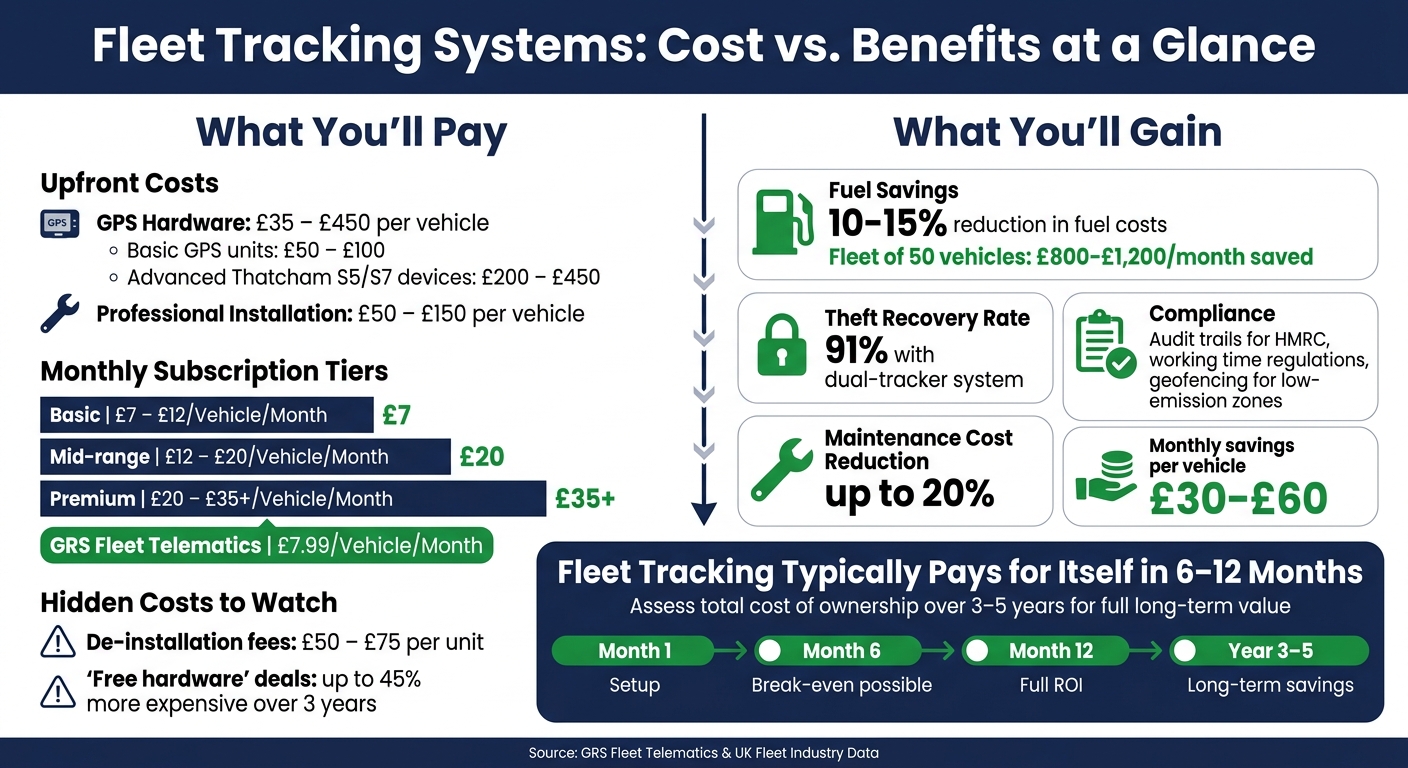
Fleet Tracking Systems: Cost vs. Benefits at a Glance
Cost Breakdown: Setup and Recurring Fees
Fleet tracking expenses typically fall into two main categories: upfront costs, which include hardware and installation, and recurring fees, such as subscriptions and connectivity. Let’s break down these costs in more detail.
Hardware and Installation
The biggest initial expense comes from hardware. Basic GPS units are priced between £50 and £100, while more advanced Thatcham-approved S5/S7 security devices - often required by insurers for higher-value vehicles - range from £200 to £450 per unit. On top of this, professional installation costs can vary from £50 to £150 per vehicle, depending on complexity.
For example, GRS Fleet Telematics offers three hardware options:
- Essential: Single tracker at £35
- Enhanced: Dual-tracker setup at £79
- Ultimate: Includes immobilisation for £119
If you also use GRS Fleet Graphics for vehicle branding, installation is included at no extra cost, which can result in significant savings when equipping a fleet.
Now, let’s move on to ongoing monthly fees.
Monthly Subscriptions
Here’s a look at typical subscription costs:
| Tier | Monthly Fee (Per Vehicle) | Key Features |
|---|---|---|
| Basic (Generic Market) | £7 – £12 | Real-time GPS, geofencing |
| Mid-range (Generic Market) | £12 – £20 | Driver behaviour monitoring, fuel tracking |
| Premium (Generic Market) | £20 – £35+ | AI diagnostics, HGV compliance |
| GRS Fleet Telematics | £7.99 | Real-time tracking, SIM/data, account manager, platform access |
GRS Fleet Telematics offers competitive entry-level pricing at £7.99 per vehicle per month, which includes SIM and data connectivity.
Watch Out for Hidden Costs
Hidden fees can catch businesses off guard, so it’s important to be aware of them. Common examples include de-installation fees, which typically range from £50 to £75 per unit if you terminate a contract early. Another potential pitfall is "free hardware" deals. While these may seem appealing, they often come with higher monthly fees - sometimes £25 or more. Over a three-year contract, this can end up being about 45% more expensive than purchasing the hardware outright.
Here’s a helpful tip: if you choose to buy hardware outright, it might qualify for the Annual Investment Allowance (AIA). This allows you to deduct the full cost from your taxable profits in the year of purchase. Be sure to check with your accountant to determine whether buying or leasing is the better option for your business.
sbb-itb-499a7f0
Financial and Operational Benefits
Telematics systems offer more than just upfront cost advantages. For UK fleets, they deliver ongoing savings and improved efficiency in four main areas: fuel management, theft protection, reduced downtime, and compliance.
Fuel and Driver Behaviour
Fuel is often one of the biggest expenses for van fleets. Telematics systems tackle this by tracking driving habits like harsh acceleration, speeding, and unnecessary idling. Addressing these behaviours can trim fuel costs by 10–15%, translating to savings of £800–£1,200 per month for a fleet of 50 vehicles. Additionally, detailed idle-time reports help identify excessive engine running, which is particularly useful in busy urban settings like London or Birmingham.
Theft Prevention and Vehicle Recovery
Van and equipment theft is a major concern in the UK, often leading to losses worth tens of thousands of pounds when factoring in missed jobs, lost tools, and increased insurance premiums. GRS Fleet Telematics addresses this with a dual-tracking system. If one tracker is disabled, a secondary device continues to send real-time location updates. This approach has resulted in a 91% recovery rate for stolen vehicles, significantly reducing asset loss and downtime. These security measures not only protect vehicles but also ensure operations can continue with minimal disruption.
| Feature | Benefit with GRS Fleet Telematics |
|---|---|
| Tracking Hardware | Dual-tracker system ensures continuous monitoring even if one device is compromised. |
| Recovery Rate | 91% recovery rate helps minimise financial and operational losses. |
| Real-Time Monitoring | Alerts for movement, tampering, or out-of-hours activity improve security. |
| Maintenance | Automated alerts can reduce maintenance costs by up to 20%. |
Downtime and Maintenance
In addition to security, telematics supports proactive maintenance to keep fleets running smoothly. Unplanned breakdowns can cost hundreds of pounds per day, but telematics systems help avoid this by sending alerts based on mileage and engine hours. These alerts flag service needs before a breakdown occurs, keeping vehicles on the road. Real-time data also allows fleet managers to assign the closest available vehicle to urgent jobs, improving response times and efficiency.
Compliance and Duty of Care
Telematics systems also play a critical role in meeting UK compliance standards while enhancing safety. They provide a detailed audit trail of journeys, driving hours, and driver behaviour, which is essential for adhering to working time regulations and ensuring accurate HMRC mileage claims. Unsafe driving patterns can be identified and addressed promptly. Additional features like geofencing help confirm vehicles stay within authorised zones, such as low-emission areas - a vital function for fleets operating in cities with strict environmental regulations.
Pros and Cons
Fleet tracking systems come with a mix of benefits and trade-offs, particularly when weighing up security, analytics, and cost. The table below compares key aspects of a van-specialist solution with more general fleet tracking systems.
| Aspect | GRS Fleet Telematics | Generic Fleet Tracking |
|---|---|---|
| Cost | Starting at £7.99/month per vehicle, with three hardware options ranging from £35 to £119. Pricing is upfront and transparent, and installation is free when combined with fleet branding. | Initial prices may seem lower, but essential features like security alerts and recovery support are often add-ons, increasing the overall cost. |
| Security Features | Dual-tracker technology, a 91% recovery rate, and 24/7 support. | Generally limited to single-device GPS tracking. Features like tamper alerts and immobilisation are often optional, and professional recovery coordination is rarely included. |
| Maintenance & Analytics | Includes automated service reminders based on mileage, diagnostic alerts, and driver behaviour tracking, helping reduce maintenance costs. | Ranges from basic odometer tracking to more advanced dashboards for driver scoring, but the depth of analytics varies widely. |
| Fleet Fit | Designed specifically for UK commercial vans, with an easy rollout for van-based trades and delivery fleets. | Often supports a broader range of assets, such as HGVs, cars, and plant machinery, making it better suited for mixed fleets. |
| Long-term Value | Excellent for fleets focusing on theft prevention and vehicle recovery, with predictable per-vehicle pricing that scales easily. | The value depends on the chosen tier, with richer analytics and integration features available at higher price points. |
A van-specialist system, like GRS Fleet Telematics, excels in tailored security features and ease of implementation for commercial van fleets. The dual-tracker technology and 91% recovery rate, combined with dedicated 24/7 support, make it a strong choice for businesses prioritising theft prevention and vehicle recovery. Additionally, the predictable pricing model ensures costs remain manageable as the fleet grows.
However, this approach may lack flexibility for mixed fleets that include HGVs, trailers, or specialised machinery. Similarly, businesses requiring complex integrations with ERP or logistics systems might find broader solutions more suitable. For fleets focused on driver safety or collision reduction, systems offering detailed crash data and insurer-linked driver scoring could provide added benefits, particularly for insurance savings. The decision ultimately hinges on the fleet's specific needs and priorities.
Conclusion
For most UK fleets, the initial investment in telematics systems often pays for itself within 6–12 months. With fuel savings of 10–15%, fewer accidents, and less unauthorised vehicle use, monthly savings of £30–£60 per vehicle can far exceed the typical subscription costs of £7.99–£25.
Every fleet is different, so choosing a telematics solution that matches your specific needs is crucial. For smaller trades or service van operators, simple features like live tracking, basic journey history, and straightforward driver behaviour reports are usually sufficient. On the other hand, larger fleets handling time-sensitive deliveries or field engineers benefit from mid-tier systems offering route optimisation, maintenance alerts, and driver scoring. Even minor efficiency improvements can add up significantly when applied across a larger number of vehicles.
For fleets operating in urban areas with high-value assets, advanced security features can be invaluable, potentially preventing thefts that could cost more than several years' worth of subscription fees.
When assessing telematics, don’t just focus on monthly costs. Consider the total cost of ownership over three to five years to fully understand the long-term benefits. Many UK insurers now take telematics data into account when calculating fleet risks, so systems with strong security and driver behaviour monitoring could also help reduce insurance premiums.
The best approach? Be proactive. Start with a pilot programme for a small number of vehicles, compare results against your current benchmarks, and expand from there.
FAQs
How do I calculate ROI for fleet tracking over 3–5 years?
To figure out ROI over a 3–5 year period, use this formula:
((Total Savings – Total Investment) ÷ Total Investment) × 100%
When calculating, make sure to include all relevant costs, such as:
- Hardware
- Installation
- Subscriptions
- Training
Then, compare these costs to the potential savings you could achieve. For instance:
- Reduced fuel consumption
- Lower maintenance expenses
- Insurance discounts
- Increased productivity
To make your projections as accurate as possible, consider performing a sensitivity analysis. This means evaluating your ROI under three different scenarios: best case, base case, and conservative case. This approach helps ensure your estimates are realistic and well-rounded.
What hidden fees should I check before signing a tracking contract?
Before committing to a fleet tracking contract, make sure to ask for a detailed breakdown of all possible costs. Some common hidden fees to watch for include charges for installation, hardware replacement, data storage, SIM cards, or connectivity. Additional expenses might include setup fees, staff training, premium reporting features, extra user access, or penalties for early termination. For example, GRS Fleet Telematics provides a clear pricing model with a £7.99 monthly subscription that includes data, platform access, and management.
Which tracking features matter most for a small UK van fleet?
For small UK fleets, the right features blend security with efficiency. Real-time GPS tracking offers live updates on vehicle locations, while geofencing keeps tabs on arrivals, departures, and any unauthorised movements. To bolster security, dual-tracker technology ensures recovery is possible even if the main tracker is tampered with. Monitoring driver behaviour - such as idling or harsh braking - not only cuts fuel and maintenance costs but also streamlines operations and reduces the chances of theft.