Top 5 Compliance Challenges in Fleet Planning
Five key UK fleet planning compliance challenges — changing rules, emissions, driver hours, roadworthiness and data — and how telematics helps simplify them.
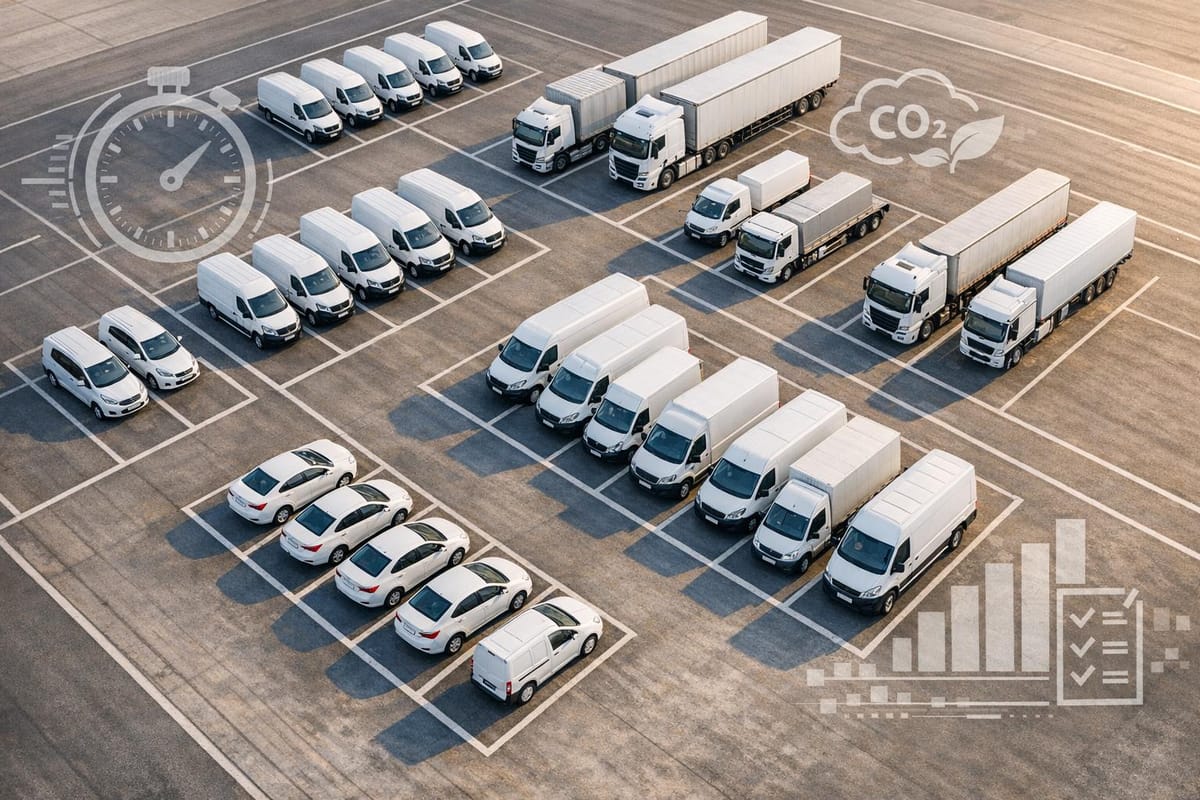
Fleet planning in the UK comes with a complex web of legal requirements. From roadworthiness and emissions to driver hours and data accuracy, non-compliance can lead to hefty fines, licence revocation, or operational disruptions. Here's what you need to know:
- Changing Regulations: New rules, like the 2025 Data (Use and Access) Act, impact fleet management. Local restrictions (e.g., Clean Air Zones) add further complications.
- Emissions Rules: Clean Air Zones and sustainability reporting demand fleets to adopt greener vehicles and track detailed emissions data.
- Driver Hours & Duty of Care: Strict limits on working hours and rest periods directly affect fleet capacity.
- Vehicle Roadworthiness: Maintenance records and daily checks are essential to keep vehicles compliant and operational.
- Audit Readiness: Accurate records across all compliance areas are critical to avoid penalties during inspections.
Telematics systems simplify compliance by automating data collection, monitoring vehicle health, and ensuring adherence to regulations. These tools help fleets stay compliant while reducing admin burdens and improving efficiency.
What is DVSA compliance?
1. Keeping Up with Changing UK and Local Regulations
Fleet regulations in the UK are constantly shifting, and each update can have a direct impact on capacity planning. For example, on 15 May 2025, the UK introduced assimilated rules to replace EU drivers' hours. This required fleet managers to adjust how they monitor driving time and rest periods. Another major change came in May 2022, when operators using vans or car-and-trailer combinations (weighing over 2.5 tonnes but under 3.5 tonnes) for international work were required to obtain a standard international goods vehicle licence. Without this licence, vehicles cannot legally operate across borders, reducing international fleet capacity.
The Data (Use and Access) Act 2025, which became law in June 2025, brought new rules for automated decision-making and subject access requests. These changes affect how driver data is managed in systems like automated dispatch and route planning software. Additionally, the Traffic Commissioners for Great Britain updated their audit framework, placing a greater focus on independent audits to ensure systems are compliant with safety and legal standards. These evolving regulations play a key role in shaping how fleet capacity is allocated.
Impact on Fleet Capacity
Local restrictions further complicate the picture. Clean Air Zones, Low Emission Zones, and specific road restrictions based on weight or width can limit where vehicles are allowed to operate. Emissions or weight-based restrictions mean that fleet managers must carefully assign vehicles to suitable zones. Heavier vehicles, for instance, may be entirely prohibited from certain routes, requiring careful navigation of these limitations to maintain operational efficiency.
Compliance Data or Records Required
Auditors need access to a range of up-to-date records, including VOL details, tachograph data, working time records, and maintenance logs covering at least four scheduled inspections, ideally retained for 15 months. Fleet managers are also expected to keep evidence of any infringements alongside these records to demonstrate compliance.
Effectiveness of Telematics or Digital Tools in Addressing the Challenge
Telematics systems have proven to be a game-changer for compliance. For instance, 64% of fleet operators report that integrating telematics has improved adherence to tachograph and regulatory requirements. Automated tachograph downloads help ensure compliance with the updated drivers' hours rules, while geofencing alerts prevent vehicles from entering restricted zones. Remote compliance checks, conducted via tools like Teams or Skype, further simplify the process.
To stay ahead of new regulations, fleet managers are encouraged to subscribe to GOV.UK alerts from the DVSA and Department for Transport. Regularly reviewing the Operator Compliance Risk Score (OCRS) can also help identify and address potential issues before they escalate into formal investigations.
Advanced telematics solutions, such as those offered by GRS Fleet Telematics (https://grsft.com), take compliance to the next level. These systems provide real-time tracking, automated data downloads, and detailed reporting tools that make it easier to meet regulatory requirements effectively.
2. Emissions and Sustainability Reporting in Capacity Plans
Sustainability reporting plays a critical role under the Renewable Transport Fuel Obligation (RTFO), which applies to suppliers handling over 450,000 litres of fuel annually. Once this threshold is reached, registration becomes mandatory, and detailed greenhouse gas emissions reporting must undergo independent verification. These regulations directly shape decisions surrounding vehicle allocation and overall fleet capacity.
Impact on Fleet Capacity
Emissions regulations have a direct impact on where and how vehicles can operate. Clean Air Zones (CAZ), Ultra Low Emission Zones (ULEZ), and the London Congestion Charge all limit the use of high-emission vehicles, while offering exemptions for many Zero Emission Vehicles (ZEVs). These restrictions have prompted some fleets to scale down or turn to specialised pool vans to maintain operational capacity.
Take Manchester City Council, for example. In April 2021, they invested £10 million in 27 fully electric refuse vehicles from Electra. This shift is projected to save around 900 tonnes of CO₂ emissions annually, cutting approximately 3% of the council's direct emissions. Similarly, Swale Borough Council upgraded their fleet by replacing nine diesel vans with electric models for environmental and parking services. They also included electric vehicle requirements in their grounds maintenance contracts starting January 2022.
Compliance Data or Records Required
Accurate sustainability reporting hinges on detailed data collection. Key metrics include fuel consumption, idling time (which contributes to emissions), and mileage optimisation. For fleets adopting electric vehicles, additional data points like battery health, range predictions, and charging schedules become essential. Operators also need to distinguish between private and professional mileage for tax and usage reporting. Metrics such as miles per kWh and the carbon intensity of electricity are vital for demonstrating compliance. These data requirements are not just about meeting regulations - they also drive operational decisions, linking sustainability efforts to fleet capacity planning.
Relevance to Fleet Sustainability and Operational Efficiency
In 2021, transport accounted for 26% of the UK’s total emissions, with vans contributing 17% of that figure. Shifting to an all-electric fleet can cut energy use by up to 75% compared to petrol or diesel equivalents. This transition also significantly reduces CO₂e emissions and lowers maintenance costs, as electric vehicles (EVs) typically require 40% less maintenance. These benefits enhance both compliance efforts and fleet capacity efficiency.
Effectiveness of Telematics or Digital Tools in Addressing the Challenge
Telematics systems are a game-changer when it comes to tackling the challenges of emissions and sustainability reporting. These tools can track emissions, reduce idle time (G4S reported a 43% reduction in idle time), and improve overall fleet efficiency. Solutions like those from GRS Fleet Telematics provide real-time data and detailed reporting.
"Telematics systems can provide high quality fleet data. You can use this to monitor your fleet and this can help you transition to zero emission vehicles." – Energy Saving Trust
Digital tools also automate the collection of critical data, such as fuel usage and idling times, easing the administrative burden. When integrated with van tracking and fuel card systems, they can verify vehicle locations during refuelling and calculate precise MPG metrics. Advanced telematics solutions even offer reporting features that simplify compliance processes while optimising routes for maximum efficiency.
3. Driver Hours, Working Time, and Duty of Care Requirements
Managing driver hours and working time regulations is a major challenge when it comes to fleet capacity planning. Mobile workers are limited to an average of 48 hours per week over a reference period of 17 or 26 weeks. However, individual weeks can go up to 60 hours. Night work complicates things further - if any work takes place between midnight and 4 a.m., the total working time is capped at 10 hours in any 24-hour period, unless a collective or workforce agreement allows otherwise. These restrictions directly reduce the number of driving hours available, which has a knock-on effect on fleet capacity.
Impact on Fleet Capacity
Break requirements also cut into productive time. Drivers are required to take breaks after six consecutive hours of work. For shifts lasting between six and nine hours, a 30-minute break is mandatory, while shifts exceeding nine hours require a 45-minute break. These mandated breaks reduce the effective working hours in a shift, forcing fleet managers to recalibrate their capacity planning to meet operational needs.
Compliance Data or Records Required
From 24th December 2025, all newly registered goods vehicles must have a "full smart 2" tachograph installed. These devices automatically record border crossings and vehicle locations, enabling stricter enforcement of regulations. Operators are required to download data from driver cards every 28 days and from vehicle units every 90 days to ensure compliance. Additionally, working time records must be retained for a minimum of two years. Non-compliance can lead to steep penalties: failing to maintain records may result in a Level 4 fine, while falsifying entries with intent to deceive could attract a Level 5 fine or even up to two years in prison.
Effectiveness of Telematics or Digital Tools in Addressing the Challenge
Telematics systems simplify compliance by automating the collection of tachograph data, ensuring deadlines for the 28-day and 90-day downloads are met. They also provide real-time alerts when drivers approach their legal working limits, allowing managers to intervene before any violations occur. Industry surveys reveal that 64% of fleet operators expect telematics to improve tachograph and regulatory compliance, while 67% believe it will boost productivity. Solutions like those offered by GRS Fleet Telematics deliver automated monitoring and reporting, eliminating the need for manual timesheets. This not only reduces administrative work but also minimises the risk of human error.
"Telematics for fleet management provides UK businesses with far more than vehicle tracking; it delivers a comprehensive view of driver and vehicle activity." – Pocket Box
4. Vehicle Roadworthiness, Maintenance, and Record Keeping
Keeping vehicles roadworthy is a cornerstone of fleet management in the UK, especially with evolving regulations and a growing focus on sustainability. Ensuring roadworthiness goes beyond passing MOTs - it demands meticulous record-keeping to demonstrate compliance with UK standards. These records are far-reaching, covering safety inspections that must detail the operator, date, vehicle identity, inspection outcomes, and any repair work carried out. Additionally, driver defect reports and related documents must be archived for a minimum of 15 months, even for vehicles that are no longer part of the fleet. Non-compliance with these requirements can have immediate and significant consequences, including the removal of vehicles from operation.
Impact on Fleet Capacity
When a vehicle is deemed defective, it must be taken out of service immediately, which directly impacts fleet capacity until repairs are completed and certified. Unroadworthy vehicles can result in roadside checks, with penalties reaching up to £4,000 per day. In recent years, many light goods vehicles have been flagged for issues like overloading or mechanical faults, particularly tyre-related problems, further straining fleet operations. Maintaining accurate and comprehensive records isn't just about compliance - it's crucial for keeping the fleet running smoothly and efficiently.
Compliance Data or Records Required
Drivers are required to carry out daily 24-hour walkaround checks. If any defects are identified, they must be reported in writing, including details such as the date, vehicle identification, the nature of the defect, and the corrective actions taken. Operators must also maintain a detailed maintenance schedule, planning inspections at least six months in advance. Walkaround and 'nil' defect reports serve as evidence of compliance and should be retained for at least three months, even though 'nil' reporting isn't always mandatory. For newly acquired, hired, or leased vehicles, a first-use inspection is required before they hit public roads.
Effectiveness of Telematics or Digital Tools in Addressing the Challenge
"Electronic vehicle maintenance systems can provide effective management of all the required information including safety inspections, maintenance scheduling and driver defect reporting." – DVSA Guide to Maintaining Roadworthiness
Telematics systems are game-changers for fleet maintenance, offering real-time insights into vehicle health. By connecting to a vehicle's OBD-II port, telematics devices can access Diagnostic Trouble Codes (DTCs) and engine performance data, enabling early detection of minor issues before they escalate into major problems. These systems also automate service reminders, MOT alerts, and safety inspection schedules based on actual mileage or engine hours, eliminating the guesswork of manual tracking. Digital tools simplify defect reporting, ensuring that even 'nil' reports are logged for compliance purposes. For example, GRS Fleet Telematics provides real-time tracking, driver safety monitoring, and centralised maintenance record management starting at just £7.99 per month. These tools not only keep fleets audit-ready but also reduce administrative burdens, making compliance more manageable.
5. Data Accuracy and Audit Readiness Across the Fleet
Fleet managers face growing challenges in maintaining accurate records across various compliance areas. In fact, 29% of companies identify regulatory compliance as one of their top business hurdles. The mountain of documentation required - ranging from tachograph data to maintenance records - comes with strict retention rules, making this task even more daunting. For instance, when UK Traffic Commissioners conduct audits, fleets with over 101 vehicles must provide at least 10 vehicle record checks and 10 driver record checks. Any gaps in these records can lead to hefty penalties or even licence suspensions.
Compliance Data or Records Required
To ensure audit readiness, fleets must maintain comprehensive and accessible records. This includes a detailed paper trail for both vehicles and drivers. For vehicles, records should cover safety inspection reports (PMIs), MOT certificates, proof of Vehicle Excise Duty (VED), insurance documents, and first-use inspections for hired or leased vehicles. On the driver side, compliance involves valid UK driving licences (checked annually or every three months for those with six or more penalty points), Certificate of Professional Competence (CPC) qualifications, and medical fitness declarations.
Operational logs must document driver working hours, rest periods, and tachograph data. Additionally, management records need to confirm that the correct legal entity holds the operator licence and that all operating centres are authorised. Forward-planning schedules should also account for at least six months of upcoming inspections and calibrations. Without these records, compliance can quickly fall apart.
Relevance to Fleet Sustainability and Operational Efficiency
Accurate data isn’t just about staying on the right side of regulations - it’s also a cornerstone of fleet efficiency and sustainability.
"Overlooking any area of fleet compliance can result in severe financial penalties, and comprise how your fleet works and effectively how well your business is doing as a result." – Beth Twigg, Content Marketing Manager, Corparison
For example, fuel costs are a major concern for 47% of companies. With precise telematics data, fleet managers can monitor idling patterns, optimise routes, and improve driver behaviour, all of which help cut fuel consumption and lower carbon emissions. Accurate maintenance records also allow managers to calculate "maintenance yield", or the remaining useful life of vehicle components. This prevents unnecessary maintenance, reduces downtime, and ensures vehicles are available when needed. In short, reliable data supports smarter decision-making, helping fleets operate more efficiently while meeting sustainability targets.
Effectiveness of Telematics or Digital Tools in Addressing the Challenge
Digital tools like telematics have revolutionised compliance management, making audit preparation far less burdensome. Telematics systems automate tasks such as tachograph downloads and provide instant access to maintenance logs, insurance certificates, and safety inspection reports through cloud-based platforms. This eliminates the risk of missed deadlines, which could otherwise result in fines of up to £5,000.
Mobile apps further simplify the process by allowing drivers to complete digital walkaround checks with timestamps, instantly meeting DVSA audit requirements. For example, GRS Fleet Telematics offers a centralised system for managing records and sends automated alerts for upcoming MOTs and licence renewals. Starting at just £7.99 per month, this tool helps fleets stay audit-ready without the headache of manual tracking. By integrating these digital solutions, fleet managers can not only maintain compliance but also enhance operational efficiency, ensuring their fleets are always ready for the road.
Comparison Table
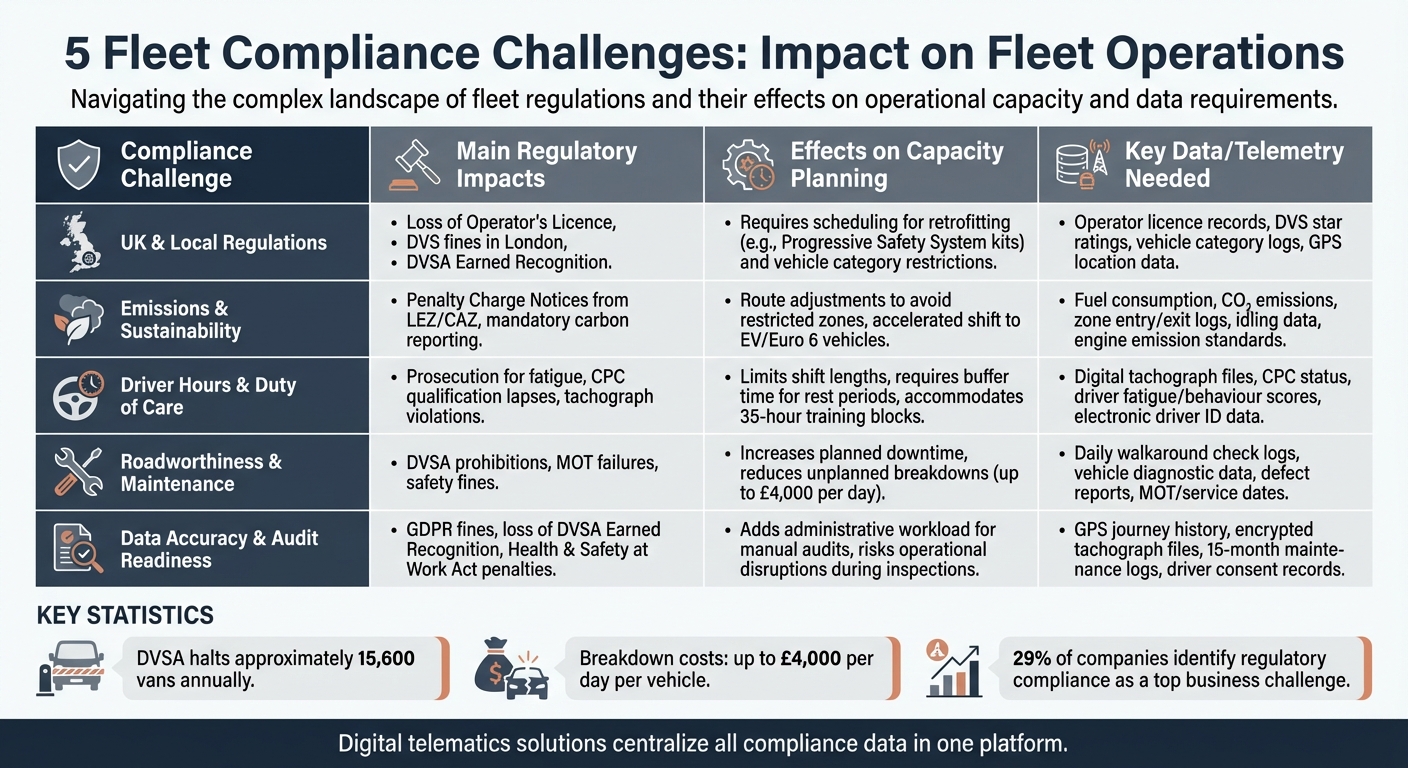
5 Fleet Compliance Challenges: Impacts, Requirements & Solutions
The table below summarises how various compliance challenges impact fleet capacity planning. It outlines the key regulatory issues, their operational consequences, and the essential data required to stay compliant. This overview is designed to help fleet managers prioritise their needs and make informed decisions about investing in digital tools.
| Compliance Challenge | Main Regulatory Impacts | Effects on Capacity Planning | Key Data/Telemetry Needed |
|---|---|---|---|
| 1. UK & Local Regulations | Loss of Operator's Licence, DVS fines in London, and DVSA Earned Recognition [39,33] | Requires scheduling for retrofitting (e.g., Progressive Safety System kits) and vehicle category restrictions | Operator licence records, DVS star ratings, vehicle category logs, and GPS location data |
| 2. Emissions & Sustainability | Penalty Charge Notices from LEZ/CAZ and mandatory carbon reporting [39,10] | Necessitates route adjustments to avoid restricted zones and accelerates the shift to EV/Euro 6 vehicles | Fuel consumption, CO₂ emissions, zone entry/exit logs, idling data, and engine emission standards [39,10] |
| 3. Driver Hours & Duty of Care | Prosecution for fatigue, CPC qualification lapses, and tachograph violations [39,40] | Limits shift lengths, requires buffer time for rest periods, and accommodates 35-hour training blocks [39,3] | Digital tachograph files, CPC status, driver fatigue/behaviour scores, and electronic driver ID data [39,34] |
| 4. Roadworthiness & Maintenance | DVSA prohibitions, MOT failures, and safety fines [39,40] | Increases planned downtime while reducing costly unplanned breakdowns, which can reach up to £4,000 per day | Daily walkaround check logs, vehicle diagnostic data, defect reports, and MOT/service dates [39,33] |
| 5. Data Accuracy & Audit Readiness | GDPR fines, loss of DVSA Earned Recognition, and Health & Safety at Work Act penalties [39,33,40] | Adds administrative workload for manual audits and risks operational disruptions during inspections [33,34] | GPS journey history, encrypted tachograph files, 15-month maintenance logs, and driver consent records [39,40] |
This table highlights how specific challenges, like driver hours and duty of care, directly impact workforce capacity, while roadworthiness issues can sideline vehicles entirely. For example, the DVSA halts approximately 15,600 vans each year, with breakdown costs climbing to £4,000 per day per vehicle. Similarly, emissions regulations shape route planning, and maintaining accurate data is critical for audit readiness [33,34].
Telemetry tools such as GPS tracking, vehicle diagnostics, and digital tachograph systems are essential for managing compliance effectively. Platforms like GRS Fleet Telematics bring all this data together into one streamlined system, starting at just £7.99 per month. This centralised approach simplifies compliance management and keeps your fleet on track.
Conclusion
Fleet compliance is far more than just meeting regulations - it’s about safeguarding your business’s financial health and ensuring smooth operations. The risks of non-compliance are steep, with potential penalties including hefty fines, increased insurance costs, and even operational shutdowns.
Digital compliance management systems can make a world of difference by reducing paperwork and minimising human error. Tools like automated tachograph downloads, digital inspections, and real-time monitoring ensure your fleet stays compliant without the usual headaches. As Heather Waters from Teletrac Navman aptly states:
Getting compliance right costs money; getting it wrong costs even more.
Telematics takes compliance to the next level by shifting from a reactive to a proactive approach. It automates data collection, improves fleet visibility in real time, and optimises key areas like route planning, fuel consumption, and driver safety. The result? Lower costs and fewer disruptions.
For those seeking an all-in-one solution, GRS Fleet Telematics offers a platform tailored to simplify compliance management. Starting at just £7.99 per month per vehicle, this tool centralises everything from GPS journey tracking to maintenance logs, making it easier to meet regulatory demands while boosting fleet efficiency.
FAQs
What steps can fleet managers take to stay compliant with UK regulations?
Staying on top of UK fleet regulations means being both organised and proactive. A good starting point is setting up a centralised system to handle essential documents, such as vehicle roadworthiness records, driver licences, CPC certificates, and MOT test results. Regular reviews of these records are crucial to ensure they’re current and compliant with legal requirements. Keeping an eye on updates from the Driver and Vehicle Standards Agency (DVSA) is equally important, as their guidelines dictate standards for roadworthiness, driver qualifications, and emissions compliance.
Using automation tools can make compliance management much simpler. Modern telematics systems can automatically track driver hours, vehicle diagnostics, and tachograph data. These systems also send handy reminders for upcoming MOTs or licence renewals, so nothing slips through the cracks. For example, GRS Fleet Telematics provides advanced van-tracking solutions, capturing compliance data in real time. This helps fleet managers stay on top of regulatory changes while keeping all records well-organised. With a mix of streamlined documentation and real-time insights, managing the UK’s regulatory requirements becomes far less daunting.
How can telematics systems help ensure fleet compliance?
Telematics systems are a game-changer for fleets aiming to meet compliance standards more efficiently. By converting vehicle data into actionable insights, these systems track critical metrics like location, speed, mileage, fuel consumption, engine diagnostics, and even driver habits such as harsh braking or idling. This information is then automatically aligned with legal requirements, including tachograph hours, emissions thresholds, and maintenance schedules, eliminating the need for manual record-keeping.
For fleet operators in the UK, telematics offers even more. Real-time alerts can flag issues like exceeding driving-time limits, missed inspections, or emissions that fall short of DVSA (Driver and Vehicle Standards Agency) standards. These automated updates not only help fleets avoid costly penalties but also ensure adherence to the DVSA Earned Recognition standards.
GRS Fleet Telematics takes things a step further with its advanced van-tracking solutions. These systems not only capture compliance-related data but also enhance security with dual-tracker technology, boasting an impressive 91% recovery rate for stolen vehicles. By integrating telematics into a centralised dashboard, fleet managers can simplify compliance processes, maintain precise records, and promote safer, more efficient operations.
How do emissions regulations impact fleet planning decisions?
Fleet planning is heavily influenced by emissions regulations, pushing businesses towards adopting low-emission or zero-emission vehicles. For fleet managers, this means juggling several key considerations, including vehicle replacement schedules, the right mix of vehicles, and the initial investment. Thankfully, government grants or incentives can often help offset those upfront costs.
This transition might also impact the size and composition of fleets needed to meet operational needs while staying compliant. Forward-thinking planning is essential to maintain operational efficiency, minimise environmental impact, and adhere to legal standards.