5 Benefits of Biometric Driver Authentication for Fleets
Biometric driver authentication boosts fleet security, speeds vehicle handovers, improves driver accountability, reduces costs and aids UK GDPR compliance.
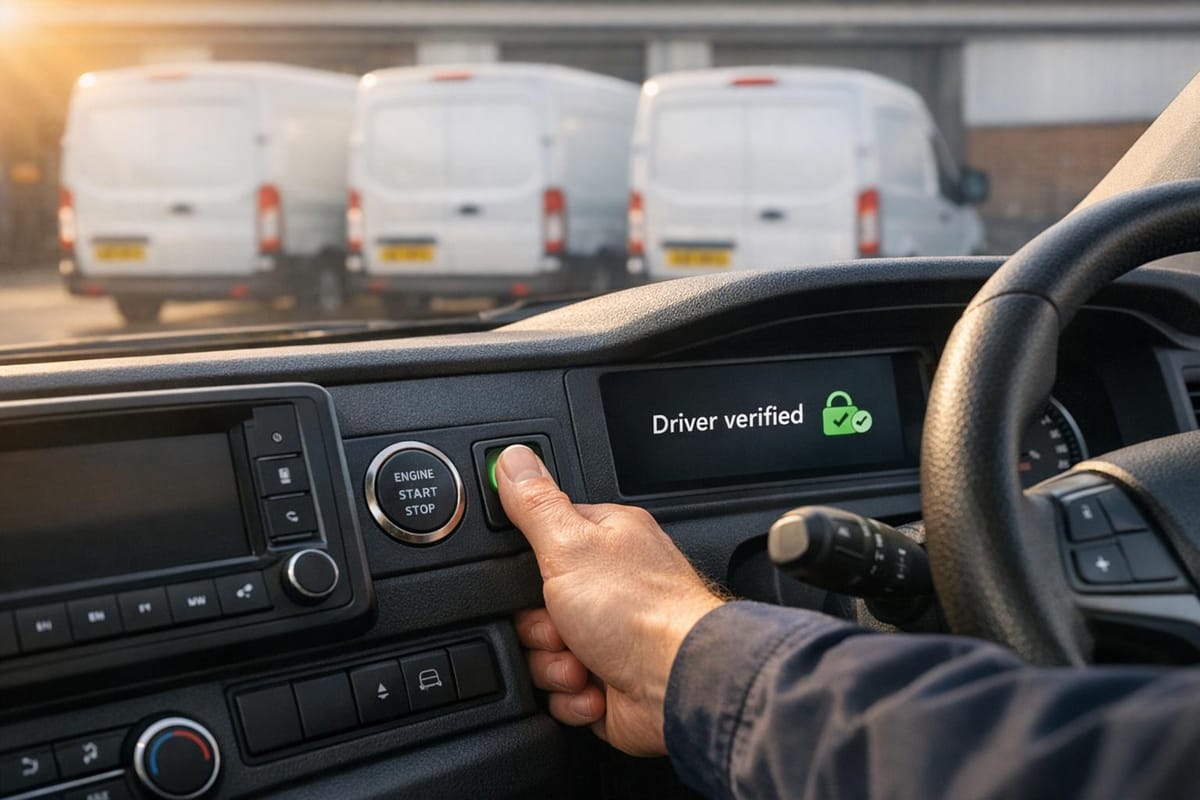
Biometric driver authentication is transforming fleet management by combining security, efficiency, and accountability. It replaces outdated methods like keys and PIN codes with fingerprint or facial recognition, ensuring only authorised drivers can access vehicles. Here's a quick breakdown of the benefits:
- Fraud Prevention: Fingerprints and facial recognition make it almost impossible for others to misuse vehicles.
- Faster Access: Drivers can unlock and start vehicles in seconds, cutting delays and reducing paperwork with integrated van tracking solutions.
- Improved Accountability: Driver-specific access tracks behaviour, promoting safer habits and protecting assets.
- Cost Savings: Automating processes and reducing risks lowers expenses on fuel, insurance, and admin tasks.
- Data Security: Biometric systems comply with UK GDPR, safeguarding personal and fleet data.
With the UK rolling out digital driving licences secured by biometrics in 2025, fleets adopting this technology now will stay ahead in security and compliance.
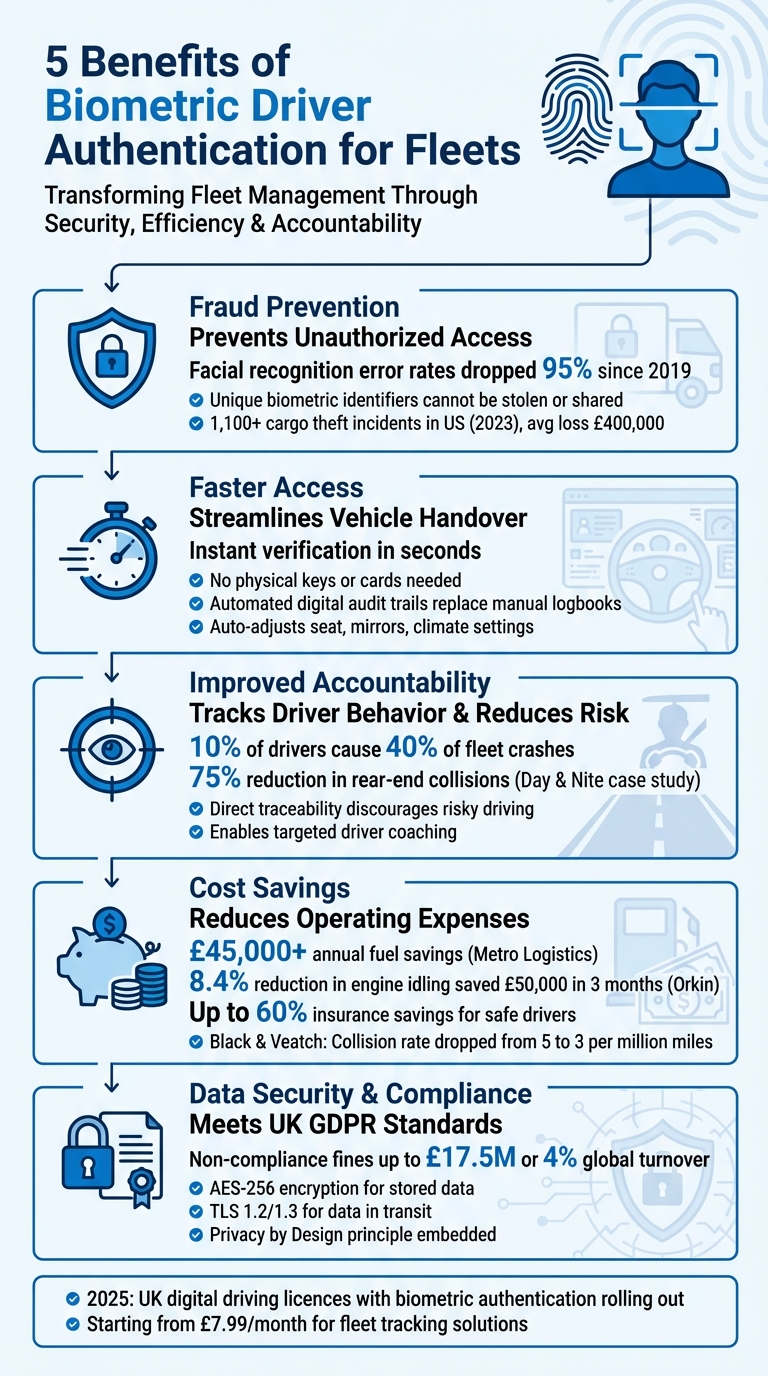
5 Key Benefits of Biometric Driver Authentication for Fleet Management
FleetBio31: Secure & Efficient Biometric Access for Vehicles Forklifts, Trucks, Cranes, Buses & More
1. Prevents Fraud and Verifies Driver Identity
Biometric authentication ensures that only the right person gets behind the wheel. Unlike PIN codes or RFID cards - which can be misplaced, stolen, or shared - fingerprints and facial features are entirely unique to each individual. This makes it nearly impossible for unauthorised individuals to gain access to fleet vehicles.
To strengthen security, multi-point verification is often used. This might include facial recognition cameras on the B-pillar or door handle, fingerprint scanners, or Driver Monitoring System cameras on the dashboard. These systems verify the driver’s identity before the vehicle can start. Some advanced setups even go a step further with behavioural biometrics, tracking things like driving style, seat adjustments, or pedal pressure to detect if someone else takes over mid-journey. These layers of verification are already being applied in real-world settings.
For example, in January 2026, Cox Automotive's Central Dispatch introduced biometric verification for its 60,000 users to tackle fraud in automotive logistics. Lainey Sibble, Head of Central Dispatch, explained the importance: “When you ship a car, you want to know that the specific person doing the job is verified – not just the company”. This is especially critical given that cargo theft incidents in the United States surpassed 1,100 in 2023, with average losses exceeding £400,000 per case.
"By tying access privileges (whether digital login or physical entry) to a person's fingerprint or face, businesses can prevent stolen passwords or fake IDs from allowing breaches." - Perfect Planner
Facial recognition technology has become incredibly reliable, with error rates dropping by over 95% since 2019. For fleet managers dealing with valuable cargo, combining fingerprint scans with facial recognition is an effective way to prevent fictitious pickups, where imposters pose as legitimate carriers to steal shipments.
2. Speeds Up Vehicle Handover and Cuts Paperwork
Biometric systems do more than boost security - they simplify and accelerate fleet operations.
Traditional processes can be sluggish. Think about it: drivers waiting in line to collect keys, signing logbooks, presenting ID cards, and manually adjusting seats and mirrors before they even hit the road. These steps create delays that add up. Biometric authentication, however, removes these roadblocks.
With this technology, drivers can walk up to their assigned vehicle and gain access almost instantly. The system verifies their identity in seconds, unlocks the doors, and enables ignition - no need for physical keys or cards that can be misplaced, stolen, or misused. This quick access paves the way for smoother operations overall.
The benefits don’t stop there. Biometric systems also cut down on tedious admin work. Digital audit trails replace manual logbook entries, providing accurate data for payroll, compliance, and insurance purposes. This automation ensures precision and saves time for everyone involved.
Driver comfort is another area where these systems shine. Once a driver is recognised, the vehicle adjusts settings like seat position, mirrors, and climate controls to match their saved preferences. This personalisation happens instantly, shaving off valuable minutes during each handover. Across fleet tracking solutions for different industries with multiple shifts, these small time-savings quickly add up.
"When you ship a car, you want to know that the specific person doing the job is verified – not just the company. This is another way we're further securing the experience and giving our clients more tools to protect themselves." - Lainey Sibble, Head of Central Dispatch, Cox Automotive
3. Increases Driver Accountability and Protects Assets
When vehicle access is tied to a specific individual, it brings a new level of accountability to fleet operations. With biometric authentication, there's no room for ambiguity - fleet managers always know exactly who is behind the wheel. This transparency discourages risky driving behaviours, like speeding or harsh braking, because drivers are fully aware that their actions are directly traceable to them.
The numbers highlight the importance of this approach: just 10% of drivers are responsible for 40% of all fleet crashes. Combining telematics with biometric verification allows fleet managers to pinpoint high-risk drivers and provide targeted coaching. A great example of this is Day & Nite, a commercial refrigeration and HVAC services company. In 2024, they introduced AI-enabled video dash cameras with real-time feedback on driver habits. The result? A 75% drop in rear-end collisions within six months.
This level of accountability doesn't just improve safety - it also protects valuable fleet assets. Biometric systems prevent unauthorised use by ensuring the engine only starts for the assigned driver. They can even track metrics like pedal pressure and steering patterns to detect unauthorised use or signs of fatigue.
"When designed thoughtfully, driver scorecards motivate positive habits rather than serving as punitive measures and can improve the driver experience." - Sherry Calkins, Senior Vice President of Global Strategic Accounts, Geotab
There are also clear financial upsides. For instance, Orkin's telematics-based driver contest led to an 8.4% reduction in engine idling, saving around £50,000 in fuel costs in just three months. When drivers know their performance is monitored fairly, they adopt safer and more efficient habits.
Providers like GRS Fleet Telematics are at the forefront of this integration, helping ensure vehicles are operated responsibly while safeguarding fleet assets.
4. Reduces Costs Through Better Efficiency
Biometric authentication helps cut costs by streamlining operations and reducing admin tasks. For instance, biometrics speed up processes like vehicle handovers and enhance productivity. Digital systems replace the need for paper-based vehicle checks, allowing drivers to complete inspections directly on their smartphones while giving managers instant access to data in real time. This improved efficiency also translates into lower fleet expenses.
Real-world examples highlight these savings. In December 2024, Black & Veatch leveraged Geotab technology to create a scorecard system that improved safety scores and reduced collision rates - from over 5 to 3 collisions per million miles - resulting in significant cost reductions. Similarly, South Staffordshire Plc used live tracking and driver behaviour reports to train employees more effectively, achieving a 20% improvement in driving performance.
Automated coaching is another cost-saving tool. These systems activate training sessions immediately when risk thresholds are exceeded, cutting down on administrative workload.
"AI simplifies processes and provides real-time insights, helping you make faster, smarter decisions to boost productivity and cut costs." - Deana Beltsis
The ripple effect of these efficiency improvements is clear. For example, Metro Logistics, under Fleet Manager Robert Jenkins, introduced an eco-driving programme using GRS Fleet Telematics, which lowered its carbon footprint by 34% and reduced annual fuel expenses by over £45,000. Additionally, with UK fleet insurance costs soaring by 50% in 2024, data-driven safe driving practices can help younger drivers save as much as 60% on insurance premiums. These changes directly reduce operating costs across the board.
5. Protects Data and Supports Compliance
Biometric authentication adds a layer of security to data management while helping organisations meet strict UK regulations. Fleet systems deal with substantial volumes of personal data, such as GPS locations, driver behaviour, and timestamps - all of which fall under the UK GDPR and the Data Protection Act 2018. Non-compliance can result in severe penalties, with fines reaching up to £17.5 million or 4% of global annual turnover, whichever is higher.
These systems align with the Privacy by Design principle, embedding data protection into fleet management processes from the very beginning. Biometric tools complement other critical security measures, like Role-Based Access Control (RBAC), which restricts data access to only those who need it, ensuring data minimisation. Data encryption methods, such as AES-256 for stored data and TLS 1.2 or 1.3 for data in transit, meet the requirements outlined in GDPR Article 32.
Fleet operators must also consider broader legal frameworks, including the Human Rights Act 1998 (Article 8), which safeguards privacy, and the Protection of Freedoms Act 2012, which governs surveillance practices. The newer Data (Use and Access) Act 2025 further shapes how driver data is handled in applications like dispatch and route planning.
"It will be essential for fleet operators to keep audit trails to evidence that specific and unambiguous consent was freely given." - BVRLA
To stay compliant, fleet operators should take practical steps such as conducting Data Protection Impact Assessments (DPIAs) for high-risk activities, maintaining detailed audit logs, and regularly updating access permissions to reflect changing team roles. Location data retention should generally not exceed 12 months unless legal or insurance obligations require otherwise. Additionally, starting 24th December 2025, all newly registered goods vehicles must feature "full smart 2" tachographs, designed to enhance monitoring of border crossings and location tracking.
Conclusion
Biometric driver authentication is transforming how UK fleets manage security, accountability, and efficiency. By swapping traditional keys, fobs, and PINs for fingerprint scans, facial recognition, or iris scanning, businesses can create an unalterable record of who operates each vehicle and when. This not only prevents unauthorised use but also helps cut down on theft-related losses.
The benefits go beyond just security. By combining biometric data with telematics systems, fleet managers can deliver precise, data-driven driver coaching. Whether it’s tackling harsh braking, excessive speeding, or route deviations, the insights are clear and indisputable.
From a cost perspective, the advantages are equally compelling. Reduced fraud, quicker vehicle handovers, and streamlined operations all contribute to measurable savings. For instance, GRS Fleet Telematics offers advanced tracking tools and real-time alerts starting from just £7.99 per month, making this technology accessible even for smaller fleets. These financial gains complement the operational improvements, creating a strong case for adoption.
Looking to the future, the introduction of digital driving licences with biometric authentication and increasingly sophisticated vehicle software will set new industry benchmarks. Fleet operators who adopt biometric systems today will be well-prepared for these advancements, benefiting from improved security, compliance, and efficiency.
Whether you’re managing a small fleet or a large-scale logistics operation, biometric verification strengthens security, holds drivers accountable, and streamlines operations across the UK.
FAQs
How is biometric data stored and protected?
Biometric data is kept safe through encryption, protecting it from unauthorised access and maintaining privacy. Physical features like fingerprints or facial scans are transformed into encrypted digital templates, which are then used for verification purposes.
To ensure secure handling of biometric information in fleet management systems, several measures are crucial: using strong encryption methods like AES-256, enforcing strict access controls, conducting regular system monitoring, and adhering to GDPR regulations. These practices help maintain data integrity and confidentiality at all times.
What happens if biometric login fails or a driver’s appearance changes?
Biometric login systems can sometimes face challenges. For instance, if a driver’s appearance changes significantly or the system fails to recognise their biometric data, it may require the driver to re-authenticate or switch to an alternative method. Since these systems rely on physical traits, factors like temporary changes or variations in those traits can occasionally result in mismatches.
How does biometric authentication integrate with telematics and driver coaching?
Biometric authentication, like facial or fingerprint recognition, works hand-in-hand with telematics to confirm driver identity. This ensures that only approved individuals can access and operate vehicles, adding an extra layer of security. By tying telematics data to specific drivers, it becomes easier to monitor and manage safety while cutting down on unauthorised vehicle use.
Beyond security, biometric integration also aids in real-time driver coaching. By using authenticated profiles, telematics systems provide tailored feedback to drivers. This personalised approach helps improve safety, boosts accountability, and enhances overall performance. The result? Fewer accidents, better operational efficiency, and reduced costs.