Best Tools for Healthcare Fleet Data Analytics
Compare top UK healthcare fleet analytics tools for real-time tracking, route optimisation, fuel savings, safety monitoring and GDPR/NHS compliance.
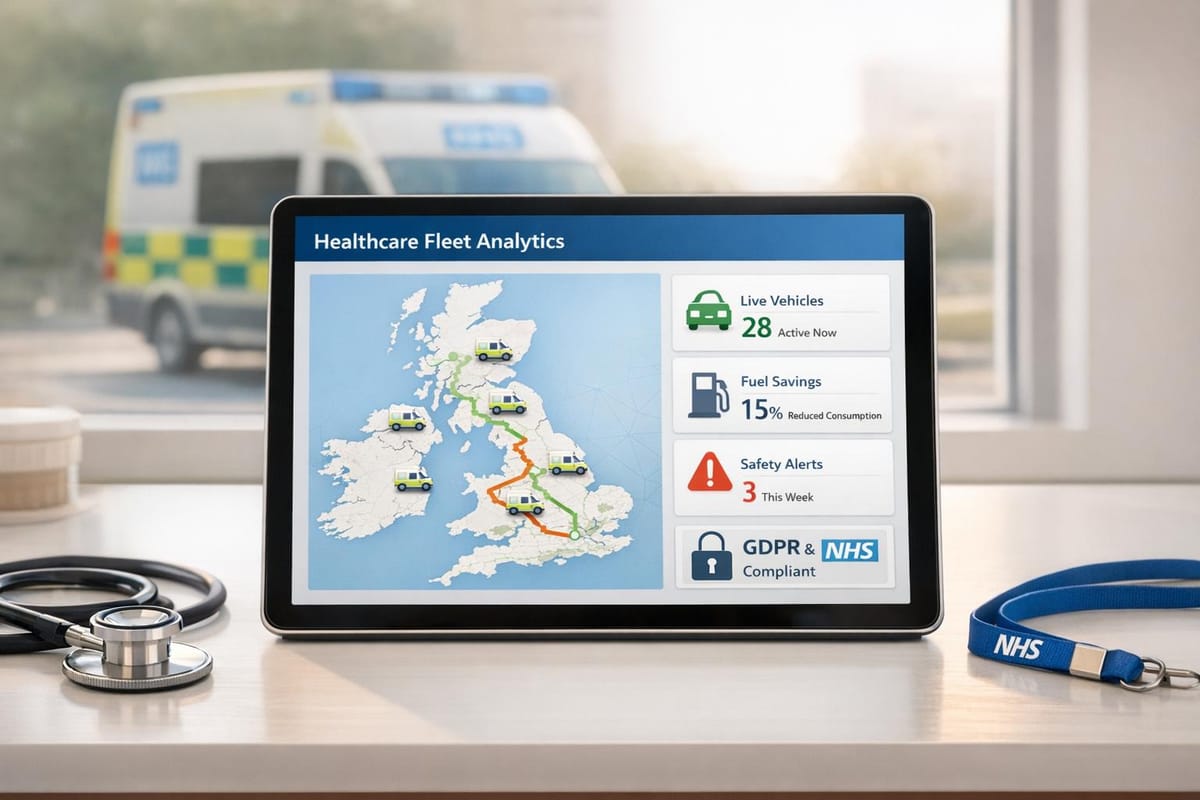
Healthcare fleets in the UK face challenges like patient transport delays, rising costs, and strict NHS regulations. Data analytics tools are transforming how fleets operate, offering solutions such as real-time route planning, improved fuel efficiency, and enhanced safety monitoring. For example, HATS Group reduced incidents by 78% and cut costs significantly using telematics and AI-powered dash cameras. Whether it’s optimising routes, reducing emissions, or ensuring compliance, these tools help healthcare providers improve patient care while cutting expenses.
Key Takeaways:
- Real-Time Insights: Tools like Geotab and Teletrac Navman enable faster dispatch and route planning.
- Fuel Savings: Analytics can improve fuel efficiency by up to 15%.
- Safety Monitoring: AI cameras and driver coaching reduce accidents and insurance premiums.
- Compliance: Automates tasks like tachograph monitoring and ensures adherence to UK laws.
- Cost Efficiency: Platforms like GRS Fleet Telematics offer budget-friendly options starting at £7.99/month.
Quick Comparison
| Feature | GRS Fleet Telematics | Geotab MyGeotab | Teletrac Navman |
|---|---|---|---|
| Real-Time Tracking | GPS with dual backup | Near real-time (ProPlus) | Real-time route updates |
| Safety Features | Driver monitoring | AI dash cams, scorecards | Driver scorecards |
| Special Features | High-value security | EV assessments, add-ons | Job allocation tools |
| Monthly Pricing | £7.99/vehicle | Tiered (Base/Pro/Plus) | Custom pricing |
Choosing the right tool depends on your fleet's size, goals, and budget. For smaller providers, GRS offers affordable tracking, while larger NHS trusts may benefit from Geotab’s advanced analytics. Always ensure compliance with GDPR and NHS standards when implementing these systems.
The Benefits of Fleet Analytics
Benefits of Data Analytics for Healthcare Fleets
Data analytics is reshaping the way healthcare fleets operate by increasing efficiency, cutting costs, and enhancing safety. With real-time insights, fleet managers can make smarter decisions that not only improve patient care but also optimise operational budgets. Here's a closer look at how these tools are making a difference.
Real-Time Dispatching and Route Planning
Modern analytics platforms offer dispatchers a bird's-eye view of vehicle locations, enabling quicker responses for patient transport and medical supply deliveries. These tools use route optimisation models that consider factors like fuel costs, maintenance needs, and patient schedules. The result? A potential reduction in planning costs of up to 55%. In emergencies, real-time rerouting ensures patients reach appointments without delay and critical supplies arrive when needed.
Fuel Efficiency and Emissions Reduction
Analytics tools play a key role in cutting fuel waste by monitoring both driver behaviour and vehicle performance. For example, these systems can flag excessive idling at hospitals or care facilities, prompting immediate action. Coaching programmes address habits like speeding, harsh braking, and rapid acceleration - factors that significantly drive up fuel consumption. Implementing such programmes can lead to a 15% improvement in fuel efficiency.
A great example of this is Moove Cars, which used Geotab's fleet optimisation technology to save over £3,000,000 annually through data-driven insights. Pete Hodgson, UK & European Fleet Manager at Acorn Mobility, shared his experience:
Choosing Lightfoot was an absolute no-brainer; there is real beauty in its simplicity. By engaging drivers in a fun and rewarding way, we have seen huge benefits, both to the business and our drivers.
Additionally, analytics support the transition to electric vehicles (EVs) by offering Electric Vehicle Suitability Assessments (EVSA). These assessments identify routes that are ideal for EVs, taking into account range and charging needs.
Safety Monitoring and Compliance
Safety is a top priority for healthcare fleets, especially given the strict regulatory requirements in the UK, such as the Health and Safety at Work Act 1974, Road Traffic Act 1988, and DVSA roadworthiness standards. Analytics platforms simplify compliance by automating tasks like digital vehicle inspections, tachograph monitoring, and tracking driver hours. In-cab alerts warn drivers about risky behaviours like speeding or not wearing seatbelts, allowing immediate self-correction. AI-powered dash cameras further enhance safety by detecting distractions, such as mobile phone use. These measures have led to a 59% reduction in severe accidents for healthcare fleets.
Jon Trotter, Head of All Insurance at HATS Group, highlighted the impact of these tools:
With Geotab, I now have the data and footage to be able to argue with insurers that our premiums should come down.
For temperature-sensitive medical transport, specialised sensors ensure compliance with cold chain requirements. These sensors provide real-time monitoring to keep medicines, samples, and organs within safe temperature ranges during transit.
Best Tools for Healthcare Fleet Data Analytics
The right analytics platform can make a world of difference in healthcare fleet operations. These tools offer real-time tracking, driver safety monitoring, and predictive maintenance - all crucial for managing the fast-paced, time-sensitive demands of medical services in the UK. Below are some of the top platforms helping healthcare fleets operate more efficiently.
GRS Fleet Telematics
GRS Fleet Telematics delivers reliable tracking and security through real-time GPS paired with dual-tracker technology, boasting a 91% recovery rate for stolen vehicles. This is especially useful for fleets transporting high-value medical equipment or temperature-sensitive supplies. The platform also includes eco-driving analytics to monitor harsh braking, rapid acceleration, and unnecessary idling, promoting safer and more fuel-efficient driving. With 24/7 recovery support available for just £7.99 per month, this solution is an affordable choice for NHS trusts and private healthcare providers looking to enhance fleet visibility and patient care.
Geotab MyGeotab
Geotab's platform processes an impressive 100 billion data points daily, offering detailed benchmarking insights and driver safety scorecards to help healthcare organisations optimise fleet performance. It integrates with digital tachographs to ensure compliance with UK driver hours regulations and provides idling analysis to identify and address fuel wastage. The GO9+ device also includes 2GB of monthly data connectivity, and the system is rated 4.5/5 for usability.
One UK-based patient transport provider shared their experience:
"It's the perfect solution for our business as we now have complete visibility of our fleet, so we've been able to improve our daily operations and dispatch jobs as efficiently as possible. This has had a really positive impact on our patients too, as we're able to provide excellent, reliable customer service."
These features contribute directly to improving both operational efficiency and patient care.
Teletrac Navman
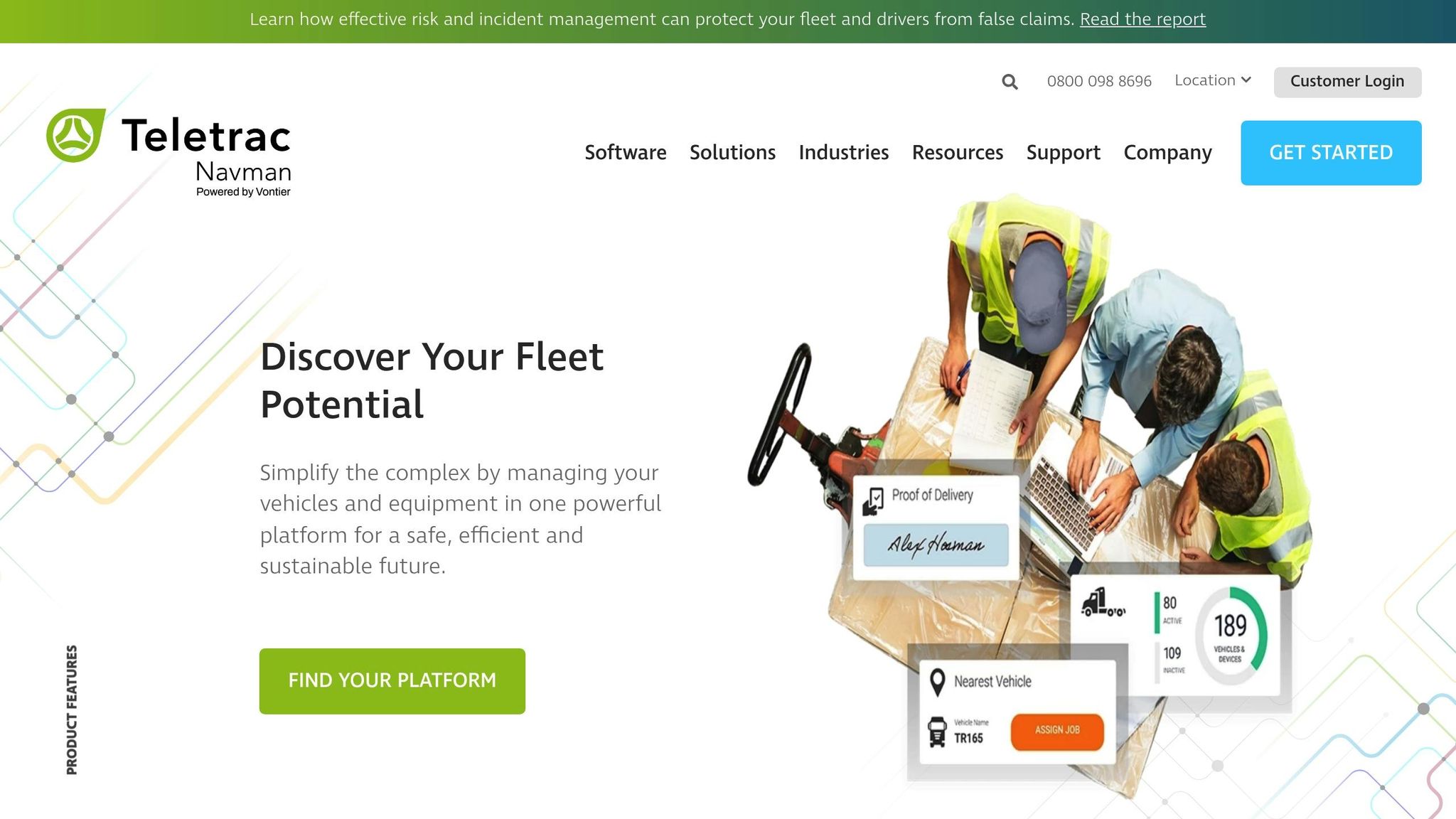
Teletrac Navman excels in digital job allocation and route planning, making it ideal for patient transport services. The platform simplifies dispatch by providing drivers with real-time routing updates, helping to minimise delays for patient pickups and medical appointments. Additionally, its driver management tools, including performance scorecards, enable healthcare organisations to monitor driving behaviours while meeting their Duty of Care responsibilities. These functionalities not only speed up patient transport but also ensure compliance with UK safety standards.
Feature Comparison
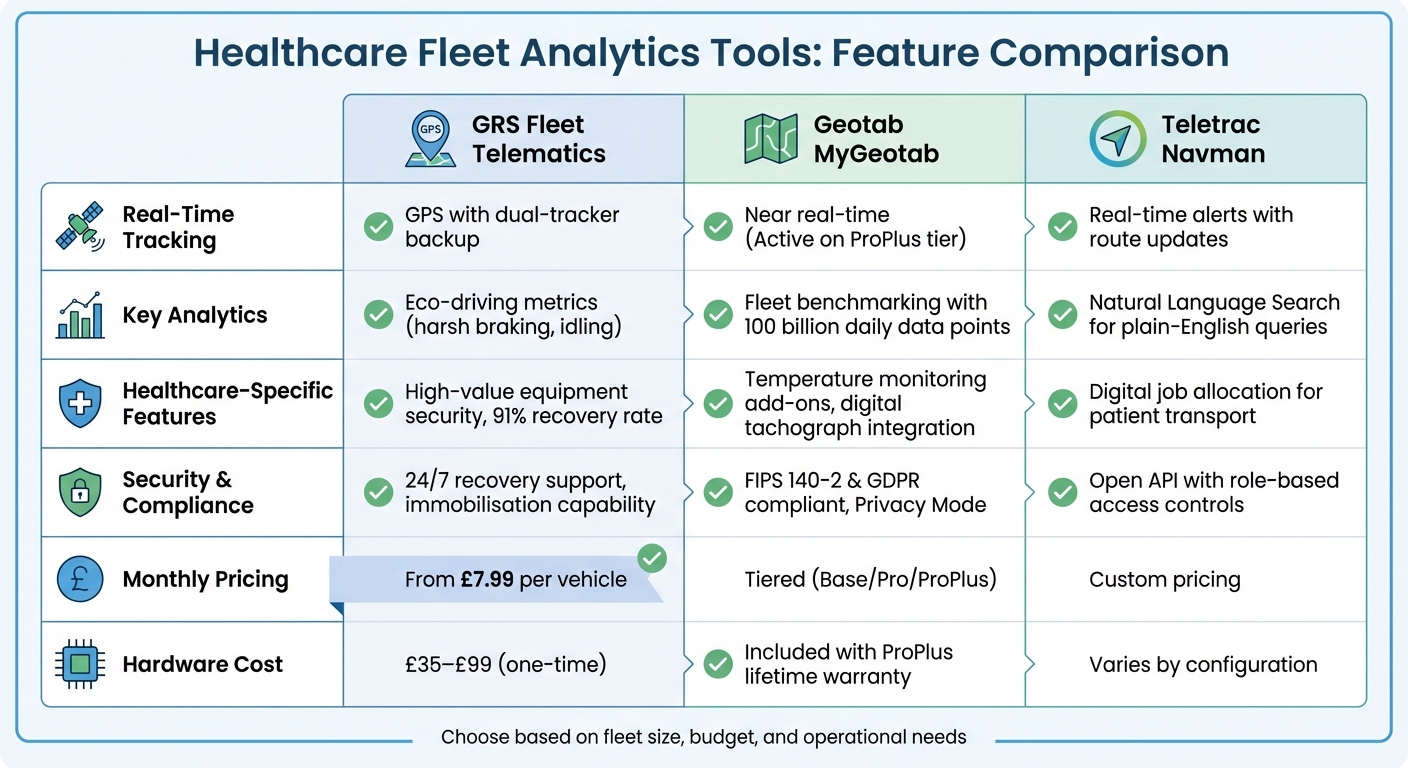
Healthcare Fleet Analytics Tools Comparison: GRS vs Geotab vs Teletrac Navman
In healthcare fleet operations, selecting the right analytics platform is crucial. The following table outlines the key features of three leading platforms, helping you identify the best fit for your fleet's needs.
| Feature | GRS Fleet Telematics | Geotab MyGeotab | Teletrac Navman |
|---|---|---|---|
| Real-Time Tracking | GPS with dual-tracker backup | Near real-time (Active on ProPlus tier) | Real-time alerts with route updates |
| Key Analytics | Eco-driving metrics (e.g., harsh braking, idling) | Fleet benchmarking with 100 billion daily data points | Natural Language Search for plain-English queries |
| Healthcare-Specific Features | High-value equipment security, 91% recovery rate | Temperature monitoring add-ons and digital tachograph integration [6,14] | Digital job allocation for patient transport |
| Security & Compliance | 24/7 recovery support, immobilisation capability | FIPS 140-2 & GDPR compliant, Privacy Mode [6,7] | Open API with role-based access controls |
| Monthly Pricing | From £7.99 per vehicle | Tiered (Base/Pro/ProPlus) | Custom pricing |
| Hardware Cost | £35–£99 (one-time) | Included with ProPlus lifetime warranty | Varies by configuration |
Key Differences
Tracking Frequency
GRS Fleet Telematics and Teletrac Navman provide continuous updates, while Geotab's base plans offer near real-time tracking. To enable active updates, Geotab requires a ProPlus upgrade. For emergency vehicles, this distinction can be critical.
Analytics
Each platform takes a unique approach to analytics. Geotab leverages over 100 billion daily data points to benchmark fleet performance. Teletrac Navman simplifies data access with a Natural Language Search feature, while GRS Fleet Telematics focuses on eco-driving metrics that enhance safety and efficiency.
Healthcare-Specific Features
For medical transport, Geotab's Marketplace offers over 399 partner integrations, including temperature monitoring for pharmaceutical transport [6,14]. GRS Fleet Telematics prioritises vehicle security with dual-tracker technology and immobilisation, ideal for fleets carrying high-value medical equipment. Teletrac Navman stands out in patient transport operations with its digital job allocation and real-time routing capabilities.
Cost Considerations
GRS Fleet Telematics offers straightforward pricing starting at £7.99 per vehicle, with one-time hardware costs ranging from £35 to £99. Geotab employs a tiered pricing structure, with its ProPlus package including a lifetime warranty on hardware. Teletrac Navman uses custom pricing based on configuration. For NHS trusts and smaller providers, understanding total ownership costs is essential to align budgets with operational needs.
This comparison underscores the importance of evaluating features, tracking capabilities, and costs to ensure the chosen platform meets the specific demands of healthcare fleet management.
How to Choose the Right Tool for Your Healthcare Fleet
When it comes to selecting the right tool for your healthcare fleet, it’s all about understanding your specific needs. Factors like fleet size, budget, and operational goals play a big role. For example, larger NHS trusts may need advanced features like predictive analytics for maintenance, while smaller community care providers might only require basic real-time tracking. The key is to identify what your fleet needs to boost both patient care and operational efficiency.
Compliance with GDPR and NHS standards is non-negotiable. Any tool you choose must adhere to the UK GDPR and the Data Protection Act 2018. Look for features like secure data storage, individual login credentials, Privacy Mode, and Open APIs or SDKs. These ensure data security, prevent silos, and make cross-departmental reporting seamless.
Cost is another crucial factor, especially given the NHS’s tight budgets. Between 2019 and 2021, Lightfoot demonstrated how their driver coaching system improved fuel efficiency by 15% and reduced accidents by 40%, as validated by Allianz Insurance Plc. Providers offering flexible financing options - such as subscription-based models or lease-hire contracts - can help manage upfront costs. GRS Fleet Telematics, for instance, offers clear and straightforward pricing, making it easier for fleet managers to plan financially.
Scalability and future-readiness are also essential. Choose platforms that can grow with your fleet, whether you manage a handful of vehicles or thousands. Tools that support EV assessments and range monitoring are particularly valuable as healthcare providers work towards net-zero goals. Features like EV Suitability Assessments (EVSA) can guide your electrification strategy and ensure your fleet is ready for the future.
Lastly, transparency with staff is critical. UK law requires managers to inform employees about tracking, explaining what data is collected and why. Opt for platforms with clear privacy controls and driver-focused features, such as performance scorecards and real-time alerts for events like speeding or harsh braking. These not only build trust but also allow for quick adjustments in dispatching, improving overall fleet performance.
Conclusion
Data analytics plays a key role in healthcare fleet management, leading to noticeable gains in efficiency, safety, and compliance. Proactive maintenance, for instance, has been shown to reduce costs by up to 20%. These improvements ripple through the system, resulting in better patient care, lower running costs, and more dependable service for organisations like the NHS and private healthcare providers.
A well-designed analytics platform does much more than track vehicles. It can optimise routes, monitor driver behaviour, and use real-time engine diagnostics to identify problems early - potentially saving as much as £20,000 per engine. For those aiming to meet net-zero goals, analytics also supports the shift to electric vehicles by keeping tabs on range, charging habits, and battery performance. These tools are central to efficient and cost-effective fleet management.
GRS Fleet Telematics offers a practical and budget-friendly solution for healthcare fleet managers, with subscription plans starting at just £7.99 per vehicle per month. The platform includes dual-tracker security, real-time tracking, and driver safety monitoring. With a 91% recovery rate for stolen vehicles and scalable options that adapt to fleet growth, it provides a straightforward yet effective alternative to more complex and expensive enterprise systems.
FAQs
How does data analytics help improve the efficiency of patient transport in healthcare fleets?
Data analytics plays a key role in making patient transport more efficient by offering clear insights into fleet operations. By keeping tabs on real-time vehicle locations, observing driver behaviour, and anticipating maintenance needs, fleet managers can ensure vehicles remain dependable and ready for patient transfers.
With advanced analytics, route optimisation and schedule adjustments become possible, factoring in live traffic and operational conditions. This helps minimise delays and improves response times - an essential factor in healthcare, where timely transport can significantly affect patient outcomes. Beyond this, data insights help pinpoint inefficiencies, cut down on fuel usage, and reduce operational costs, all while prioritising safety.
By using these tools, healthcare fleets can run more smoothly, leading to quicker patient transfers, reduced waiting times, and better overall service quality.
How do AI-powered dash cameras improve fleet safety?
AI-powered dash cameras bring a new level of safety to fleet management by merging real-time video recording with artificial intelligence. These devices can identify risky driving habits, spot potential hazards, or detect incidents as they happen. When such situations arise, they can instantly notify drivers or fleet managers, allowing for timely action to help avoid accidents.
Beyond prevention, these cameras capture high-definition footage that proves useful for investigations, driver training, and handling insurance claims. Features like automatic incident detection and driver behaviour analysis make them an essential tool for encouraging safer driving and enhancing fleet performance overall.
Why is it important for fleet data analytics tools to comply with GDPR and NHS standards in the UK?
Compliance with GDPR (General Data Protection Regulation) and NHS standards is crucial for fleet data analytics tools in the UK. These regulations ensure sensitive data, such as personal details, driver information, and vehicle locations, is managed securely and lawfully - especially in the healthcare sector, where confidentiality is paramount.
Following GDPR safeguards individuals' privacy rights and minimises the risk of data breaches or unauthorised access. Non-compliance can lead to hefty legal and financial penalties. Likewise, NHS standards, including the NHS Data Security and Protection Toolkit, set strict guidelines to protect patient information and uphold public trust in healthcare organisations.
By embedding these compliance protocols into their systems, healthcare fleets can enhance their operations while prioritising data security, avoiding fines, and maintaining a reputation for ethical and secure data handling.