Best Practices for Driver Behaviour Controls
Practical guidance on policies, telematics setup, alerts, training and daily management to reduce accidents, costs and ensure compliance.
Driver behaviour controls combine policies, telematics, and monitoring tools to improve driving safety, reduce costs, and ensure legal compliance. These systems address key issues like speeding, harsh braking, rapid acceleration, idling, and fatigue. Telematics can cut collisions by up to 40%, while better driving habits lower fuel consumption, vehicle wear, and insurance premiums. Crashes, on the other hand, can cost businesses three to five times more in indirect expenses than repairs.
Key Takeaways:
- Safety Policies: Focus on speed limits, rest breaks, and mobile phone restrictions.
- Telematics Setup: Track behaviours like speeding and harsh braking with tools like geofencing and AI-enabled dashcams.
- Driver Training: Provide free training on safety checks, defensive driving, and telematics use.
- Daily Management: Use telematics data for performance reviews and immediate incident response.
- Long-Term Improvement: Adjust thresholds, reward safe driving, and integrate data into maintenance and HR workflows.
Fleet managers can achieve safer roads, lower costs, and higher compliance by implementing these controls effectively.

5-Stage Driver Behaviour Controls Implementation Framework
Setting Up Driver Behaviour Controls
Creating Policies and Rules
Start by establishing a clear fleet safety and driver behaviour policy. This should address key issues like speeding, harsh braking, rapid acceleration, and mobile phone use. The policy should align with the Highway Code and drivers' hours regulations, which include mandatory rest periods (e.g., a 15-minute break every two hours). Extra caution is needed during high-fatigue times, such as 2 am–6 am and 2 pm–4 pm. It’s essential to ensure that delivery targets never push drivers into taking unnecessary risks. As GOV.UK guidance highlights:
You cannot pay your employees based on speed of delivery, distance travelled or the amount of goods carried if this encourages drivers to break the rules.
The policy should strictly ban the use of handheld phones while driving and limit hands-free calls to essential communications only.
Introduce a formal incident reporting system that allows staff to report road incidents, near misses, and dangerous situations. This system should feed into ongoing safety improvements. Clearly outline how telematics data will be used - for coaching, performance reviews, and, if necessary, disciplinary actions. Communicate these expectations early through driver handbooks, induction sessions, and toolbox talks.
| Policy Type | Key Rule/Requirement | Legal/Regulatory Reference |
|---|---|---|
| Drivers' Hours | Maintain records for at least one year; monitor working time | GB Domestic/AETR Rules |
| Journey Planning | Plan routes to allow safe driving within speed limits | HSE Guidelines |
| Mobile Phones | No handheld use for calls, texting, or browsing | UK Road Traffic Law |
| Vehicle Safety | Daily checks on lights, tyres, and load security | DVSA/HSE |
Once these policies are in place, focus on preparing both drivers and vehicles to meet these standards.
Preparing Drivers and Vehicles
To ensure compliance, verify drivers’ licences, health records, and overall fitness to drive. Drivers should be trained to conduct daily safety checks on their vehicles, including lights, tyres, and wheel fixings, and report any faults immediately. Provide training at no cost to drivers, covering areas like defensive driving, load security, and how to use in-vehicle technology effectively. Use group meetings and toolbox talks to explain telematics, including what data will be collected and how it will be used.
Implement GDPR-compliant data policies that respect employee privacy while meeting operational needs. Be transparent about the scope of tracking, and consider privacy switches for personal vehicle use.
For insurance purposes, many UK insurers require Thatcham-approved trackers and professional installation documentation to validate coverage or secure discounts on premiums. Professionally installed, hardwired telematics units not only meet these requirements but also reduce tampering risks and ensure continuous operation.
Setting Up Telematics Systems
With your policies in place and drivers ready, the next step is configuring your telematics system to monitor key behaviours. Focus on tracking activities like speeding, harsh braking, idling, and signs of fatigue. HSE guidance advises monitoring only the indicators necessary to manage risks effectively. Align telematics settings with your policies to create a seamless system for managing driver behaviour. For instance, set alert thresholds based on UK speed limits - such as triggering notifications for speeds over 70 mph on motorways or 30 mph in urban areas.
Choose hardware that meets your security needs. GRS Fleet Telematics offers tiered solutions: Essential (£35), Enhanced (£79), and Ultimate (£99), each with additional features. Dual-tracker systems, for example, boast a 91% recovery rate for stolen vehicles, compared to around 50% for basic systems.
You can also set up geofencing to monitor vehicle movements around depots, customer sites, or restricted zones. This triggers automatic alerts when vehicles enter or leave designated areas. Additionally, configure in-cab alerts for behaviours like harsh braking or speeding. These alerts should be clear but not distracting.
Setting Up Behaviour Alerts and Controls
Speed Monitoring and Compliance Alerts
Set speed thresholds aligned with UK road classifications - 30 mph in urban areas, 60 mph on rural roads, and 70 mph on motorways - using GPS-to-map matching. A good telematics system will compare driver speeds against a database of actual posted limits, tracking not just whether a driver exceeded the limit but also noting how long and how severely the infraction occurred.
To avoid overwhelming drivers and managers with too many notifications, use graded alert levels that escalate based on the severity of the infraction. Once speed compliance is under control, shift your attention to addressing aggressive driving behaviours.
Harsh Driving and Eco-Driving Controls
Set G-force thresholds for harsh braking, rapid acceleration, and sharp cornering, tailoring these settings to the type of vehicle in your fleet. For instance, light vans may require more sensitive thresholds compared to heavier vehicles. You can also enable idling alerts to notify drivers after a specific period of inactivity, helping to reduce fuel waste and emissions. Businesses that implement these controls have reported fuel cost savings of up to 10%.
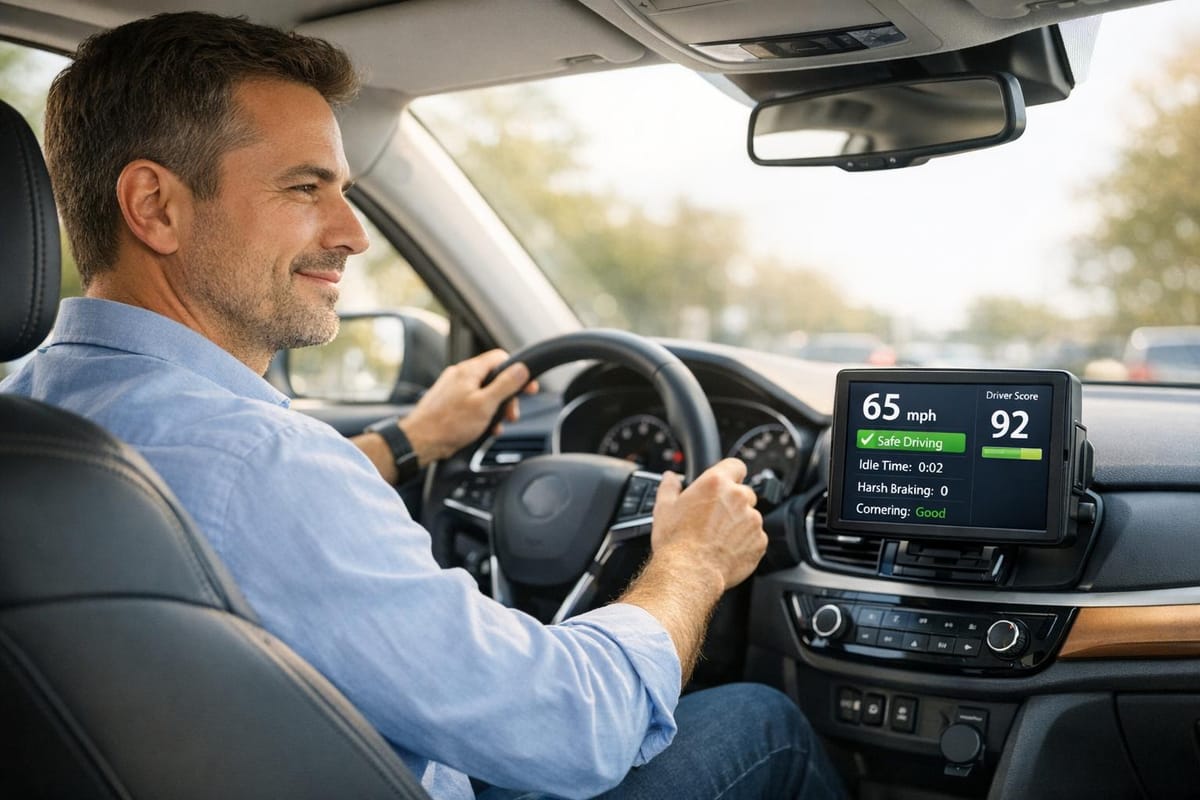
Eco-driving scorecards are another effective tool. These scorecards track metrics such as acceleration, braking smoothness, and fuel consumption, providing clear insights into driver performance and identifying areas for coaching. Interestingly, about 40% of drivers adjust their behaviour after receiving their first safety warning, highlighting the impact of these alerts.
Fatigue and Safety Monitoring
Monitoring driver alertness is just as important as tracking speed and manoeuvres. Set up alerts to flag extended driving periods without a 15-minute break every two hours, especially during high-risk times such as 2 am–6 am and 2 pm–4 pm. AI-enabled dashcams can also detect signs of fatigue, issuing real-time warnings to drivers. Distraction alerts, such as those for mobile phone use, are crucial as well - mobile phone-related distractions are estimated to contribute to 80% of road incidents.
However, it’s important to calibrate in-cab alerts carefully. Overloading drivers with too many stimuli can become a distraction in itself. The Health and Safety Executive advises focusing on the most critical indicators to manage risks effectively.
Geofencing and Security Controls
Geofencing allows you to set virtual boundaries around depots, customer sites, or high-risk areas. These boundaries can trigger instant alerts for boundary breaches or flag unauthorised usage outside of working hours, which is particularly useful for preventing theft. For added security, consider solutions like GRS Fleet Telematics' Ultimate package (£99), which includes remote immobilisation and a dual-tracker system boasting a 91% vehicle recovery rate .
You can also configure digital outputs to work with immobilisation relays, ensuring that only authorised drivers can operate the vehicle. By combining geofencing with these advanced security features, you can provide robust protection for high-value assets in your fleet.
Daily Management of Driver Behaviour Controls
Driver Training and Communication
Start each shift by analysing the previous day's telematics data. Use colour-coded scorecards to make performance trends immediately clear and to guide objective discussions about improvement areas. A great example of this approach in action comes from St Austell Brewery, where Karl Davidson introduced daily briefings in 2024. By leveraging telematics data, they achieved a 20% improvement in driving style across their fleet, with driver scores consistently ranging between 80 and 100.
Providing drivers with mobile access to their performance data is another effective way to encourage accountability and progress tracking. For those who struggle with specific behaviours - like harsh braking or excessive idling - offer tailored coaching. Addressing these issues with timely and constructive feedback often leads to noticeable behavioural shifts. This proactive method not only enhances performance but also helps ensure smoother incident management throughout the day.
Managing Alerts and Incidents
Real-time alerts are essential for monitoring key issues like speeding, harsh braking, sharp cornering, distracted driving, and unauthorised vehicle use. Keep a daily log of near misses and safety concerns, investigating them promptly to identify and address root causes. Pay special attention to severe alerts, such as mobile phone use, and act on these immediately, while minor issues can be scheduled for follow-up. Swift investigations are vital - not just for resolving problems but also for managing costs, which can be 3–5 times higher than the initial repair expenses if left unchecked.
Monitoring Metrics and Reporting
Daily tracking of key performance metrics is critical for boosting fleet efficiency and safety. Focus on a concise set of indicators, such as speeding incidents, harsh braking and acceleration, aggressive cornering, idle time, and fuel consumption. Driver league tables can add a competitive edge, motivating drivers to improve while recognising those who show the most progress over time.
It's also crucial to review tachograph data and driver hours daily to ensure compliance with rest break regulations. For example, the Highway Code advises a 15-minute break every two hours of driving. Pay extra attention to shifts during high-risk fatigue periods, such as 2 am–6 am and 2 pm–4 pm. Additionally, daily checks of digital pre-trip and post-trip inspection logs can help catch maintenance issues early, preventing them from escalating into safety risks.
| Metric Category | Key Daily KPIs | Reporting Method |
|---|---|---|
| Safety | Speeding, Harsh Braking, Cornering, Tailgating | Real-time Alerts, Daily Scorecards |
| Health/Fatigue | Yawning, Distraction, Drowsiness | AI Camera Dashboards |
| Efficiency | Idle Time, Fuel Waste, Total Miles | Executive Summary Reports |
| Compliance | Inspection Completion, Unauthorised Use | Digital Logs, Geofencing Alerts |
Improving Driver Behaviour Controls Over Time
Adjusting Thresholds and Settings
Driver behaviour controls aren't static - they need regular fine-tuning based on real-time data to address new risks as they emerge. A "one-size-fits-all" approach doesn't work here. For instance, a harsh braking alert suitable for a light van might not make sense for a heavy goods vehicle. To get it right, compare individual driver performance with team benchmarks and refine thresholds accordingly. Adjust the weight of specific events based on your current safety priorities - if speeding is a growing issue, give it more significance in driver score calculations. Aligning thresholds with maintenance data can also help reduce vehicle wear and tear. These tailored adjustments contribute to creating a proactive and safety-focused environment.
Building a Safety Culture
Providing consistent feedback is key to making long-term improvements in driver behaviour. Automated rewards programmes, driven by telematics data, are an excellent way to keep drivers motivated. League tables can add an element of healthy competition, acknowledging both top performers and those who show notable improvement.
"A positive approach such as this can be more effective than sanctions and punishment of drivers who fail to meet certain standards, although the latter may be necessary for persistent or serious safety breaches." - Teletrac Navman
The financial benefits of fostering a safety culture are hard to ignore. Companies that implement driver behaviour technology often see accident rates drop by more than a third, while fuel costs can decrease by up to 10%. And when you factor in that indirect crash costs - like litigation and lost productivity - can be three to five times higher than direct repair expenses, it becomes clear that investing in safety culture is a smart move.
Connecting with Other Fleet Processes
Once thresholds are optimised and a strong safety culture is in place, the value of driver behaviour data can extend across your entire fleet operation. For example, tracking aggressive driving behaviours - like harsh braking or rapid acceleration - can inform maintenance schedules, helping you address vehicle wear before it leads to downtime. Digital pre- and post-trip inspections can also link directly to Service, Maintenance, and Repair schedules, ensuring that any defects are resolved promptly.
Sharing safety scores and compliance data with insurers could lead to lower premiums, while driver scorecards can play a role in HR processes, such as performance reviews and tailored training programmes. If your fleet uses GRS Fleet Telematics, you can further align behaviour controls with security features like dual tracking and immobilisation to prevent unauthorised use. By integrating driver behaviour data into maintenance, insurance, and HR workflows, you create a cohesive system where every data point enhances safety, reduces costs, and strengthens compliance.
How Large Fleets Actually Use Telematics to Improve Driver Safety
Conclusion
Introducing driver behaviour controls is a smart way to safeguard your drivers, cut costs, and encourage a culture of safety. Businesses that adopt these measures can reduce accident rates by more than a third and lower fuel expenses by up to 10%. It's worth noting that the hidden costs of accidents, like legal fees and lost productivity, can be three to five times higher than the cost of repairs.
To sustain these benefits, it’s essential to view driver behaviour controls as an ongoing process. Start by establishing clear policies and setting up telematics systems correctly, then adjust your strategies based on the data you gather. For instance, St Austell Brewery improved driving performance by 20% using driver scoring and daily briefings. This kind of progress comes from continuously refining your approach rather than relying on a one-off solution.
GRS Fleet Telematics provides tools that offer real-time insights into speeding, harsh braking, idling, and unauthorised vehicle use. With dual-tracker technology, a 91% stolen vehicle recovery rate, and pricing starting at just £7.99 per month, these systems go far beyond basic tracking. The data collected can also optimise maintenance schedules, lower insurance premiums, and support HR initiatives like performance reviews and targeted training.
Interestingly, about 40% of drivers adjust their behaviour after receiving their first safety warning. This shows how impactful real-time feedback and consistent communication can be. By combining technology with driver engagement tools - such as scorecards, incentives, and regular coaching - you create a workplace where safe driving becomes second nature. This comprehensive approach ensures your fleet remains secure, compliant, and efficient, all while aligning with sustainability goals.
FAQs
How can telematics systems improve driver safety and reduce fleet costs?
Telematics systems play a key role in enhancing driver safety and cutting costs by tracking critical behaviours like speeding, harsh braking, and rapid acceleration. With features like real-time alerts and comprehensive performance reports, fleet managers can pinpoint risky driving patterns and provide personalised coaching to address them.
Beyond encouraging safer driving habits, telematics solutions streamline route planning, boost fuel efficiency, and minimise vehicle wear and tear. These benefits don't just reduce the likelihood of accidents - they also lead to savings on fuel, maintenance, and insurance, offering a cost-effective way to manage your fleet over the long term.
What are the essential elements of an effective driver behaviour policy?
An effective driver behaviour policy should centre on setting clear expectations, monitoring in real-time, and fostering ongoing improvement. Begin by establishing specific behavioural standards - things like adhering to speed limits, avoiding harsh braking or acceleration, and cutting down on unnecessary idling. These benchmarks should be measurable and tracked using telematics technology.
Real-time alerts play a key role by flagging issues as they happen, giving drivers the chance to correct their behaviour immediately. Regular performance reports and driver scoring provide an overview of progress, linking driving habits to outcomes like fuel efficiency and reduced wear on vehicles. Adding training sessions and constructive feedback ensures drivers have the tools to refine their performance. Meanwhile, introducing incentives and clear accountability measures - such as rewards for safe driving or consequences for repeated violations - encourages compliance and commitment.
By combining telematics insights with tailored training and a transparent rewards system, fleet managers can build a safety-first mindset, cut operational costs, and boost efficiency, all while staying in line with UK regulations and best practices.
How can driver behaviour data enhance fleet operations?
Driver behaviour data can play a big role in improving fleet operations when it's woven into daily processes. Metrics such as harsh acceleration, sudden braking, sharp cornering, and speed compliance provide insights that can shape fuel-saving strategies, schedule timely maintenance, and refine driver training programmes. For example, spotting frequent harsh braking could lead to a review of fuel consumption, a brake system check-up, or tailored coaching for the driver involved.
This kind of data also makes route planning smarter and safer. By steering drivers with lower safety scores away from high-risk areas, fleets can cut down on accident risks and insurance expenses. Maintenance teams, on the other hand, can rely on cumulative event data to predict equipment wear and arrange servicing before breakdowns occur.
When it comes to compliance, behaviour analytics can help fleet managers stay on top of regulations, such as emissions standards or driver work hours. Plus, it simplifies the creation of audit-ready reports. Platforms like GRS Fleet Telematics take raw data and turn it into practical insights, boosting efficiency across safety, maintenance, and compliance workflows.