Best Open-Source Tools for Fleet Tracking
Compare open-source fleet tracking tools for UK fleets, covering self-hosting, GDPR compliance, device support and hybrid security options.

Fleet tracking doesn't need to be costly or restrictive. Open-source tools like Traccar, OpenGTS, and OwnTracks let you manage your fleet without vendor lock-in or high fees. These platforms are free to use, customisable, and compatible with various GPS devices. They also allow self-hosting, so you can control your data and ensure compliance with UK GDPR.
Key Takeaways:
- Cost Savings: Avoid subscription fees (£7.99–£25 per vehicle/month) with free tools like Traccar and OpenGTS.
- Control & Flexibility: Self-host on UK-based servers for data sovereignty and compliance.
- Customisation: Tailor features, reports, and interfaces to your fleet's needs.
- Device Compatibility: Works with affordable and premium GPS trackers.
- UK-Specific Features: Track miles, comply with DVSA and HMRC guidelines, and monitor LEZ/ULEZ zones.
These tools suit businesses with in-house IT teams or technical expertise. For smaller fleets or those needing added security, hybrid solutions like pairing open-source tools with GRS Fleet Telematics offer a balance of simplicity and control.
Quick Comparison:
| Feature | Traccar | OpenGTS | OwnTracks |
|---|---|---|---|
| Ease of Use | Moderate | Complex | Developer-focused |
| Device Support | 2,000+ models | Limited brands | Smartphones primarily |
| Hosting | Self-host/cloud | Self-host only | Self-host/cloud |
| Best For | SMEs | Large fleets | Custom solutions |
Start with Traccar for a balanced, user-friendly option, explore OpenGTS for larger fleets, or use OwnTracks for highly tailored setups.
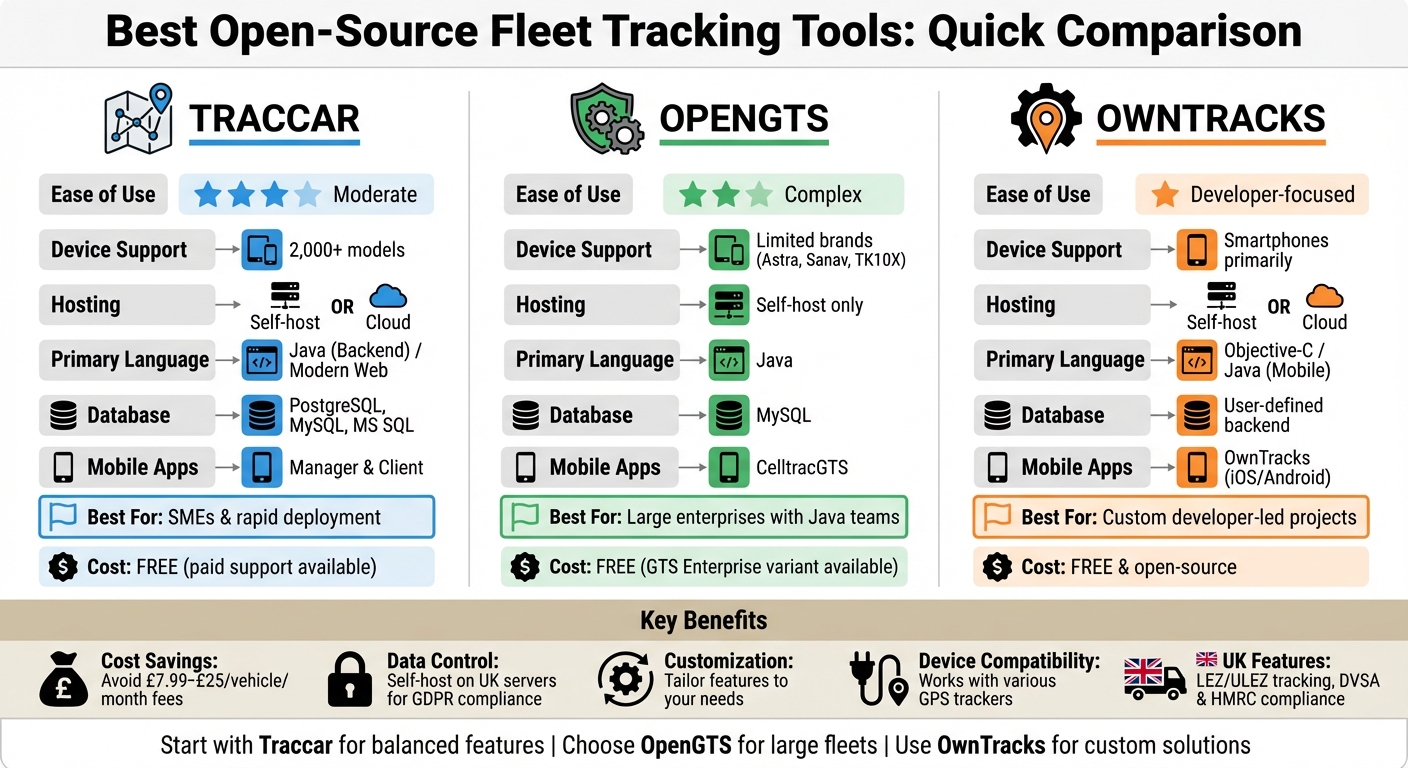
Open-Source Fleet Tracking Tools Comparison: Traccar vs OpenGTS vs OwnTracks
How to Choose Open-Source Fleet Tracking Tools
Main Evaluation Factors
When selecting an open-source fleet tracking platform, start by reviewing the licensing terms. Tools like Traccar and OpenGTS use the Apache License 2.0, which allows free distribution and customisation. This means you can modify the software and even use it commercially without worrying about legal restrictions. Understanding these terms is crucial for making informed comparisons between platforms.
Another key factor is device independence. The most versatile platforms support a wide range of communication protocols and hardware - from budget-friendly generic GPS trackers to premium brands. This flexibility not only reduces reliance on specific vendors but also helps keep hardware costs manageable. Make sure the platform you choose works with diverse hardware options.
Look for tools that integrate well with mapping services. Real-time tracking and satellite imagery should come as standard features. Additionally, integration capabilities are essential if you already use ERP or CRM systems. Platforms that offer open APIs can seamlessly connect with your existing software, avoiding operational inefficiencies.
While the platforms themselves may be free, don’t overlook costs like hosting and support. Managed hosting services may be necessary if your team isn’t experienced with Linux or Windows servers. Hosting fees can start at around £7.99 per vehicle per month, so factor this into your budget.
UK-Specific Requirements
For fleet managers in the UK, there are additional regulatory and operational considerations to keep in mind.
First, ensure the tool complies with GDPR. This means it should support data encryption and allow hosting on UK or EU-based servers. Keeping sensitive tracking data within local jurisdictions is essential for maintaining security and compliance.
The platform should also generate HMRC-compliant reports and help monitor DVSA-mandated driver hours and rest periods. If you’re aiming for insurance discounts, check whether the tool is compatible with hardware approved by Thatcham or TASSA.
Measurement standards are another important factor. Choose a platform that supports internationalisation, allowing you to switch between imperial (miles, mph) and metric units. The interface should display costs in GBP and use British English for localisation. For fleets operating in urban settings, it’s also helpful if the tool can monitor and alert for entry into Low Emission Zones (LEZ), Ultra Low Emission Zones (ULEZ), and Clean Air Zones, helping you avoid fines.
| UK Requirement | Evaluation Factor for Open-Source Tools |
|---|---|
| GDPR | Data encryption and UK/EU server hosting options |
| HMRC Compliance | Exportable Excel/XML reports for mileage and journey tracking |
| DVSA Standards | Tools for tracking driver hours, breaks, and rest periods |
| Insurance | Compatibility with Thatcham- or TASSA-approved hardware |
| Local Units | Support for miles, mph, and British English localisation |
7 Best Free And Open Source GPS Tracking Software
Best Open-Source Fleet Tracking Tools
Here’s a look at some of the top open-source platforms that cater to the diverse needs of UK fleet managers, offering flexibility and functionality.
Traccar
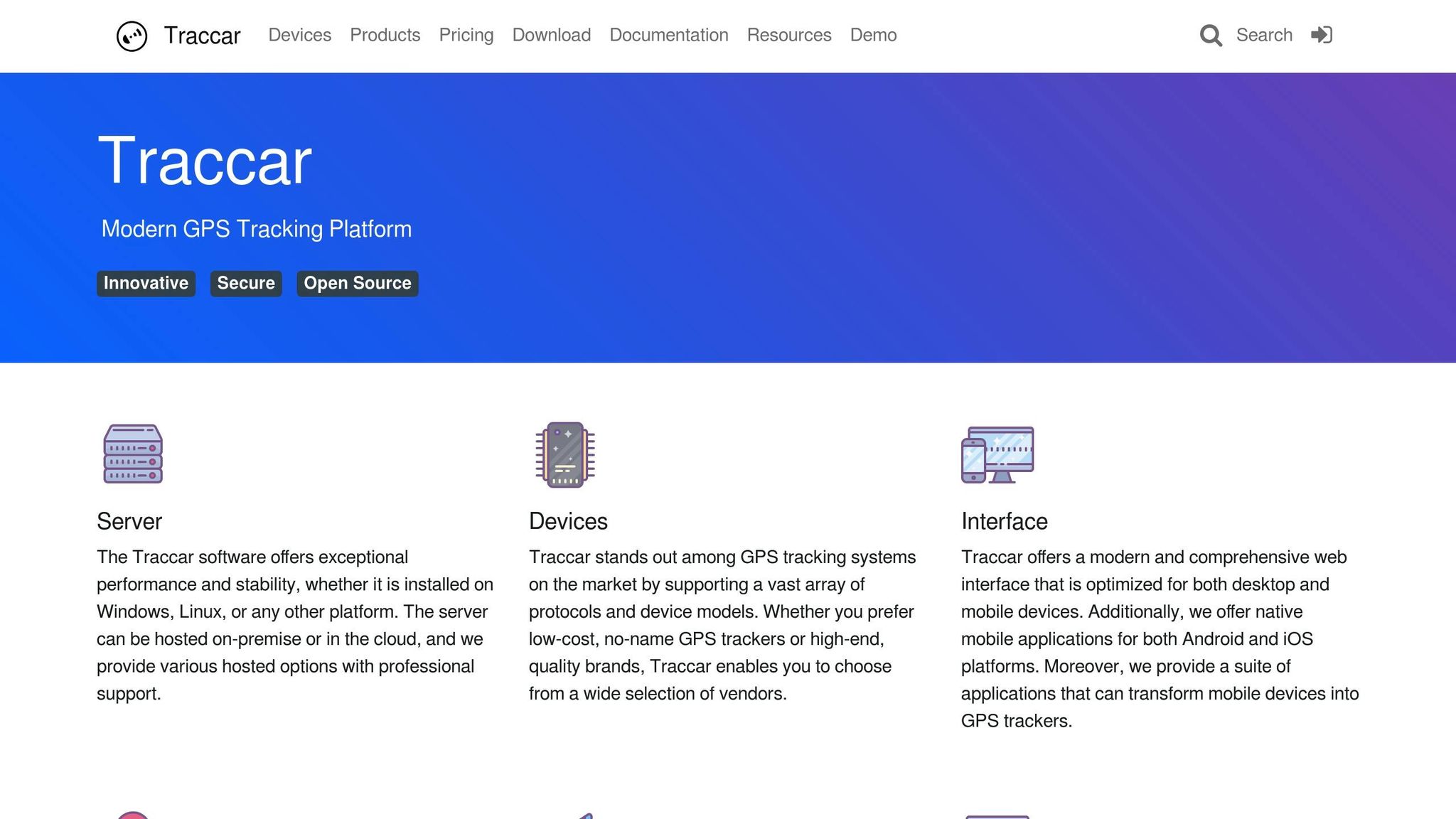
Traccar has been a reliable GPS tracking solution for over a decade. It supports more than 2,000 protocols and device models, ranging from budget-friendly trackers to high-end options. The platform includes a robust REST API for seamless integration with existing systems and offers mobile apps like 'Manager' for fleet monitoring and 'Client' to turn smartphones into trackers. Installation is straightforward, with options for Docker or native Windows/Linux setups, and self-hosting is possible in UK cloud regions such as AWS London for data residency compliance.
Traccar provides detailed trip, summary, and fuel reports, all exportable to Excel, and sends alerts for events like harsh driving, fuel drops, and maintenance schedules. While the software is free for commercial use, paid support and managed services are available. A standout feature is the Traccar SMS Gateway, which allows you to use an Android phone as an SMS API for notifications. For UK-based fleets looking for an easy-to-deploy, modern system, Traccar is a practical choice.
OpenGTS and GTS Enterprise
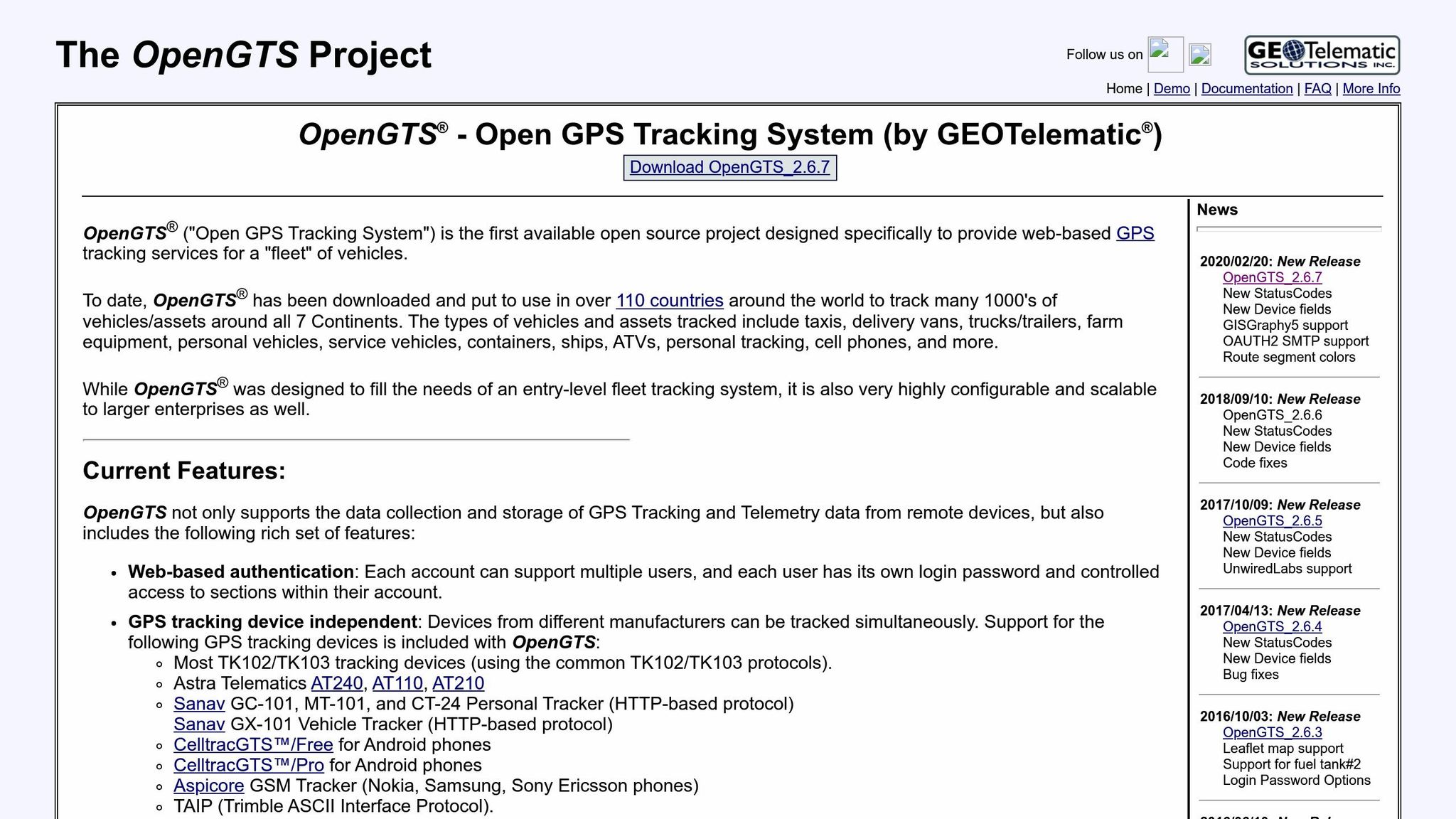
OpenGTS (Open GPS Tracking System) is a well-established, Java-based platform designed for web-based fleet tracking. Known for its reliability, it’s an excellent option for enterprises managing large vehicle fleets. The software runs on Apache Tomcat with MySQL and supports various hardware brands, including Astra Telematics devices like the AT240, AT110, and AT210, which are commonly used by UK fleets.
"OpenGTS is the first available open source project designed specifically to provide web-based GPS tracking services for a 'fleet' of vehicles." – OpenGTS Project
Its scalability and customisation options make it ideal for larger organisations with in-house Java expertise. Features include geofencing and an XML-based reporting engine for tailored historical data summaries. The platform is also i18n compliant, supporting over 15 languages, and is distributed under the Apache Software License, version 2, making it free to use and share. For those needing advanced features, the commercial GTS Enterprise variant is available. However, smaller teams without Java expertise might find it challenging to navigate.
OwnTracks and Custom Telemetry Solutions
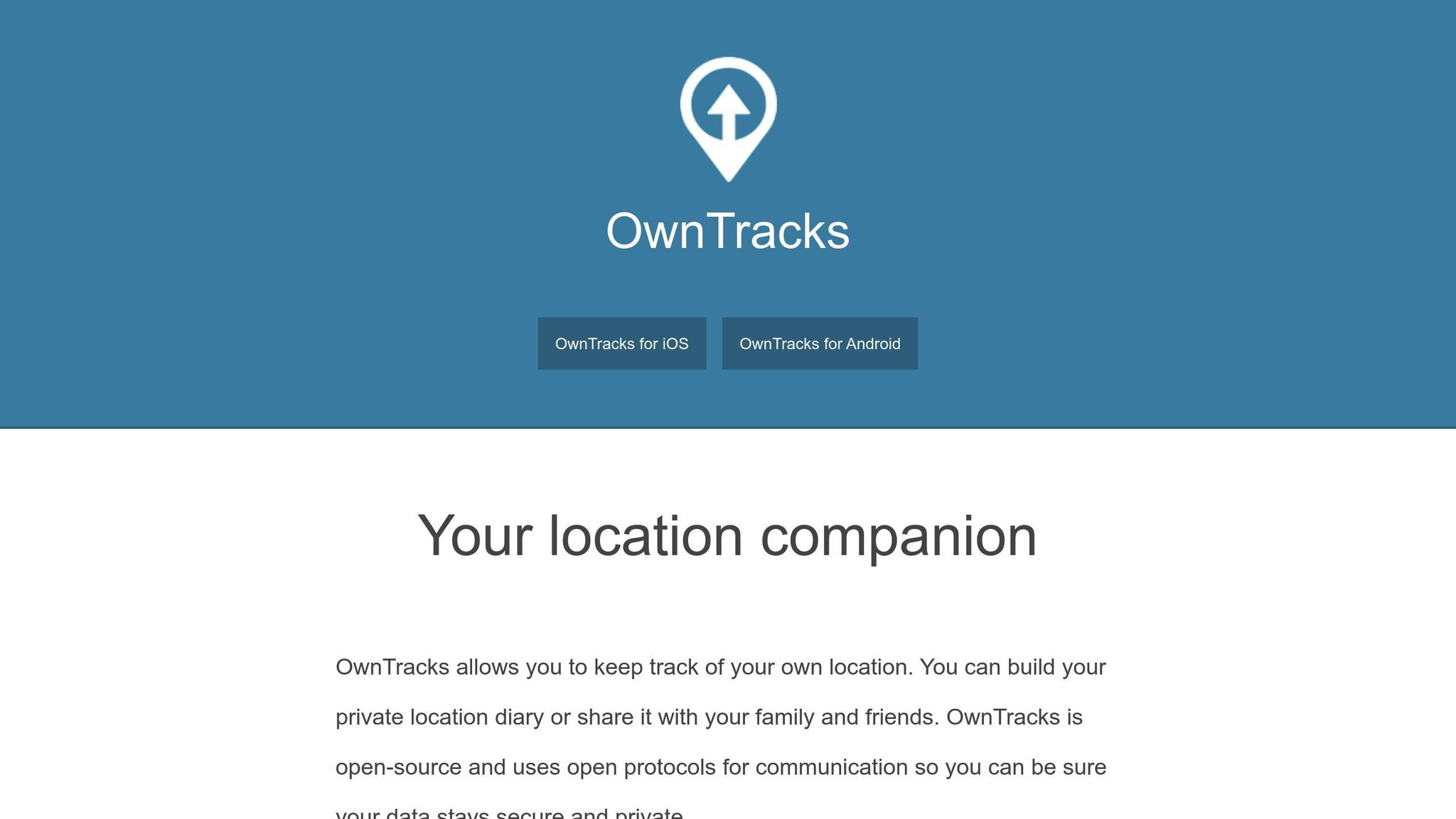
For UK fleets prioritising custom, secure reporting on GDPR-compliant systems, OwnTracks delivers unmatched flexibility. This MQTT-based platform emphasises privacy and custom data pipelines. Instead of a full fleet management interface, it focuses on sending location data to a user-controlled backend via open protocols like MQTT and HTTP, making it an excellent choice for developer-driven telemetry projects.
"OwnTracks is open-source and uses open protocols for communication so you can be sure your data stays secure and private." – OwnTracks
OwnTracks primarily offers mobile apps for iOS and Android, which can be used to create private location diaries or integrate tracking data into larger IoT systems. It pairs well with open-source databases like PostgreSQL or TimescaleDB and visualisation tools such as Grafana, enabling you to build custom dashboards that meet specific needs. While this approach requires technical expertise, it provides full control over data storage - whether on-premise or in UK cloud regions - ensuring compliance with GDPR and data sovereignty regulations. The software is entirely free and open-source, making it a flexible option for businesses with unique requirements.
The table below provides a side-by-side comparison of key features across these platforms:
| Feature | Traccar | OpenGTS | OwnTracks |
|---|---|---|---|
| Primary Language | Java (Backend) / Modern Web | Java | Objective-C / Java (Mobile) |
| Device Support | 2,000+ models / protocols | Specific brands (Astra, Sanav, TK10X) | Primarily smartphones |
| Database Support | PostgreSQL, MySQL, MS SQL | MySQL | User-defined backend |
| Best For | SMEs and rapid deployment | Large enterprises / Java teams | Custom developer-led projects |
| Mobile Apps | Traccar Manager & Client | CelltracGTS | OwnTracks (iOS/Android) |
Using Open-Source Tools with GRS Fleet Telematics
Benefits of a Hybrid Approach
Pairing open-source platforms with GRS Fleet Telematics offers enhanced security and efficient data management for fleets in the UK. GRS’s dual-tracker technology - boasting an impressive 91% recovery rate for stolen vehicles - works seamlessly alongside open-source monitoring solutions. This combination delivers robust hardware-level protection while enabling flexible data analysis. With this hybrid system, you retain complete control over your tracking data while benefiting from features like remote immobilisation and around-the-clock recovery support. It’s a setup designed to safeguard your fleet and simplify data integration.
For example, integrating GRS data into self-hosted open-source servers such as Traccar or OpenRemote allows you to store fleet information either on-premise or in UK-based cloud regions like AWS London. This setup also supports automation through rules engines, which can trigger alerts for events such as geofencing violations or exceeding speed limits.
Integration Options with GRS Fleet Telematics
Taking things a step further, linking GRS data with open-source analytics platforms can provide deeper operational insights. GRS Fleet Telematics data can be integrated using REST APIs or MQTT brokers. Platforms like Traccar enable real-time telemetry forwarding and replication of tracking data on secondary secure servers. This makes it possible to create tailored dashboards with tools like Grafana, where GRS-sourced data can be analysed alongside other business metrics - such as fuel usage during peak hours or route changes influenced by local weather conditions.
"OpenRemote correctly parses any parameter sent by the device, providing full support for data storage, monitoring, alerts, and parameter constraints." – Teltonika Telematics Wiki
For fleet operators in the UK with technical know-how, webhooks can be set up to automate real-time alerts for events like geofencing breaches or harsh driving behaviours detected by GRS trackers. To ensure secure data transmission, all integrations between GRS hardware and open-source servers should use SSL/TLS encryption. Additionally, GRS subscriptions include SIM data and platform access, making it easy to export tracking data to your chosen open-source system without incurring extra connectivity fees.
Choosing the Right Solution for Your Fleet
Matching Tools to Your Fleet Needs
Selecting the best fleet tracking solution depends on factors like fleet size, technical expertise, and security priorities. If your fleet has a dedicated IT team and existing server infrastructure, self-hosted open-source platforms such as Traccar or OpenGTS could be a strong choice. These options provide extensive control and are compatible with thousands of device models.
For smaller fleets or businesses without in-house IT, hybrid solutions strike a balance. For example, GRS Fleet Telematics offers plug-and-play hardware starting at £35, with monthly costs as low as £7.99 per vehicle. This type of solution eliminates the need for complex server management while still offering customisable reporting features.
"Traccar is a server software, so you need to have certain technical expertise to install and maintain it." – Traccar Documentation
If your fleet involves transporting high-value cargo, prioritising security is essential. While basic open-source systems are great for real-time tracking, they often lack theft prevention features. GRS’s Ultimate package (£99 hardware) includes advanced tools like dual-tracker technology and remote immobilisation, boasting a 91% recovery rate for stolen vehicles. With over 70% of UK fleet operators expected to use GPS tracking or telematics by 2025, adopting these systems early could give you a competitive advantage.
The next step is to weigh technical demands against cost, security, and operational flexibility.
Weighing Costs, Security, and Flexibility
Self-hosted platforms eliminate licensing fees but come with their own challenges, such as installation, database management, and ongoing security updates. You’ll also need a public IP address or VPS hosting to keep the system running smoothly.
Hybrid solutions, on the other hand, reduce technical complexity while maintaining control over your data. For instance, GRS subscriptions include SIM data and platform access, simplifying compliance with regulations like DVSA and GDPR. Plus, telematics-enabled route optimisation can cut fuel costs by 10–20% within the first year, making the monthly fees a cost-effective investment.
FAQs
How can I make sure my open-source fleet tracking system complies with UK GDPR?
To ensure your open-source fleet tracking system aligns with UK GDPR, start by mapping out all the ways data flows through your system. This includes tracking vehicle GPS data, cloud storage, and management dashboards. Clearly document the lawful basis for processing this information, whether it's tied to contract obligations or legitimate business interests. Develop customised data protection policies, maintain detailed records of processing activities, and establish a retention schedule tailored to the telemetry data you collect.
Designate a Data Protection Officer or assign a senior team member to oversee compliance efforts. Conduct a Data Protection Impact Assessment (DPIA) to evaluate and address any privacy risks within your system. Ensure that personal data, such as vehicle locations and driver identifiers, is encrypted both during transmission and when stored, using recognised encryption standards. Strengthen security further by implementing robust authentication methods, collecting only the data you absolutely need, and securely managing encryption keys. By combining meticulous data governance with strong security practices, your system can comply with UK GDPR while enabling efficient fleet tracking for UK businesses.
What skills are needed to set up and manage an open-source fleet tracking system?
Setting up and running an open-source fleet tracking system takes a fair bit of technical know-how, especially in system administration. To get started, you'll need to install and maintain the software on a dedicated server or virtual machine - usually running Linux or Windows. This involves configuring a web server (like nginx or Apache), setting up a database (such as MySQL or MariaDB), and ensuring everything is secure and regularly updated.
On top of that, you'll need to handle network configurations, including setting up firewall rules and port forwarding, so GPS devices can transmit data without a hitch. If you're comfortable with basic scripting or programming, you'll find it easier to customise integrations. Plus, understanding GPS telemetry standards will be essential when mapping coordinates onto UK-based services like Ordnance Survey Maps or OpenStreetMap. Tools like Docker or virtualisation platforms can make deploying and maintaining the system much more straightforward.
While it’s a rewarding endeavour, it does demand a strong technical foundation and a commitment to keeping the system running smoothly over time.
Can open-source fleet tracking tools integrate with ERP or CRM systems?
Most open-source fleet tracking tools are built to work smoothly with ERP or CRM systems. They often include features like RESTful APIs, webhooks, or standard data-export formats (such as CSV or JSON). These tools make it easy for businesses to integrate fleet data - like vehicle locations, fuel consumption, and maintenance alerts - directly into their existing workflows.
With this integration, logistics managers can view live fleet data alongside essential business information, such as purchase orders, invoices, or customer details, without needing to input data manually. Many of these tools can also be adjusted to meet UK-specific needs, such as displaying costs in GBP (£), using metric units for distance and fuel, and formatting dates in the British style (e.g., 25 Oct 2023). For instance, GRS Fleet Telematics supports API-based integration, allowing businesses to connect van-tracking data with their ERP or CRM systems, making operations more efficient.