5 Benefits of AI in Telematics Visualisation
AI telematics turns raw fleet data into clear, real-time insights—cutting costs, reducing incidents and simplifying fleet decisions.
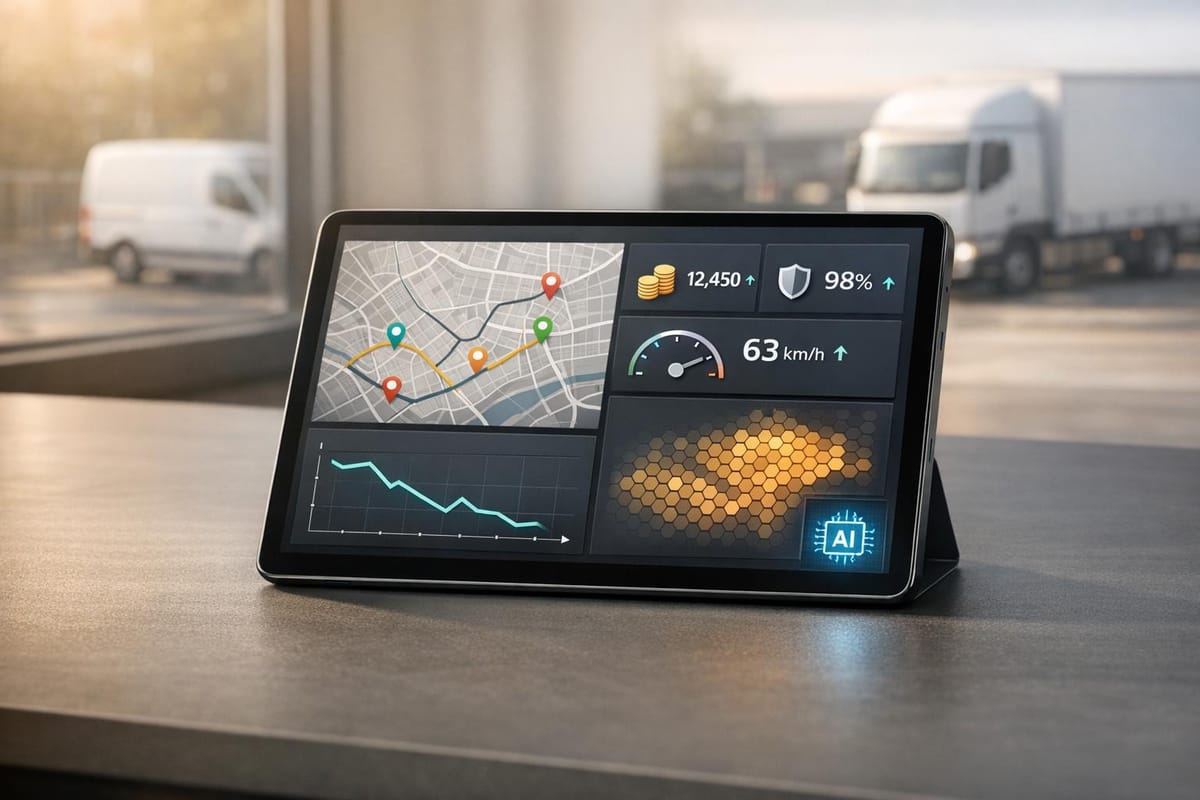
Fleet managers deal with overwhelming data daily - from vehicle performance to driver behaviour. AI simplifies this by turning raw data into clear, actionable insights. Here's how AI is transforming telematics visualisation:
- Real-Time Dashboards: Instant alerts and organised data help address issues like speeding or fuel wastage immediately.
- Automatic Pattern Detection: AI flags anomalies, such as harsh braking or unusual fuel use, saving analysis time.
- Predictive Analytics: Anticipates maintenance needs and risks, reducing downtime and costs.
- Driver Safety Monitoring: AI dash cams and scorecards help reduce accidents and risky behaviours.
- Efficient Route Planning: Dynamic adjustments based on traffic and weather cut delays and fuel use.
For example, HATS Group saw a 78% drop in traffic incidents using AI-powered tools. With platforms like GRS Fleet Telematics starting at £7.99/month, businesses can reduce costs, improve safety, and streamline operations.
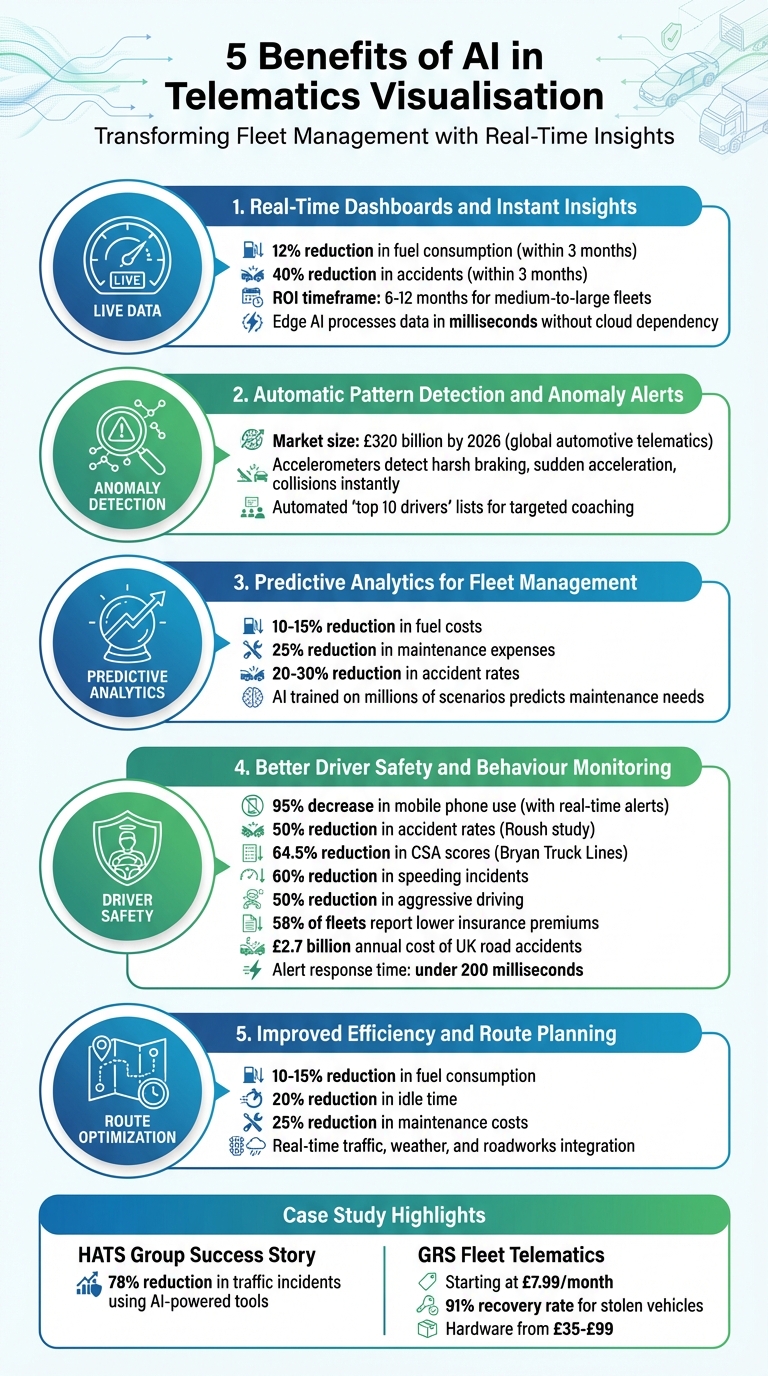
5 Benefits of AI in Fleet Telematics: Key Statistics and ROI
1. Real-Time Dashboards and Instant Insights
Real-Time Data Processing
One of the biggest challenges with traditional telematics systems is the delay in processing data. By the time information is sent to the cloud and analysed, issues like unsafe driving or excessive idling may have already occurred. Enter Edge AI. This technology processes data directly on the device, enabling decisions to be made in a fraction of a second - without relying on cloud servers. For drivers, this means they receive immediate in-cab alerts for issues like fatigue or distraction, making interventions far more effective than reviewing incidents after a trip.
Actionable Visualisations
With on-device processing, data becomes more organised and easier to interpret. AI takes on the heavy lifting, sifting through vast amounts of information and highlighting what really matters. Instead of overwhelming fleet managers with endless raw footage or complicated spreadsheets, AI-powered dashboards categorise critical events like harsh braking or driver distraction.
Zoya Halkevich, Head of the Gurtam Brand, puts it best:
"AI transforms raw video into insights that help fleet owners reduce costs, improve safety, and run smarter operations."
Customised dashboards allow managers to focus on specific metrics, such as safety scores or idle time, making it easier to make informed decisions and deliver targeted coaching sessions.
Operational Efficiency Improvements
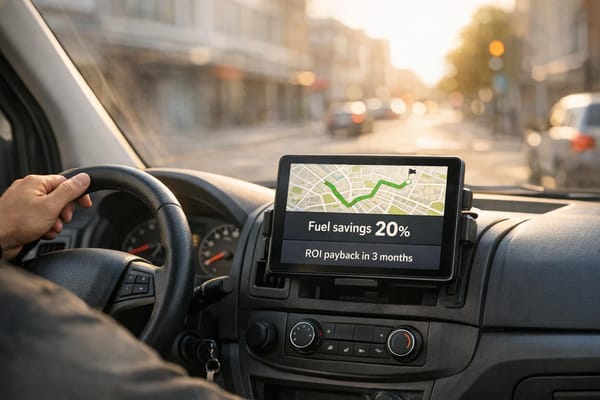
The impact of AI in fleet management is already evident. For example, in 2025, a logistics company introduced an AI-powered video and telematics system. Within just three months, they saw a 12% drop in fuel consumption and a 40% reduction in accidents. For medium-to-large fleets, the return on investment typically occurs within 6 to 12 months.
Real-time monitoring doesn’t just flag issues; it helps identify fuel-wasting behaviours and works alongside dynamic route optimisation to adjust for traffic and weather conditions on the fly. Insurers are also taking note, offering premium discounts to fleets that use AI-powered telematics, acknowledging the reduced risk profiles that come with real-time data.
2. Automatic Pattern Detection and Anomaly Alerts
Real-Time Data Processing
AI and machine learning are transforming how vehicle data is managed. By continuously analysing data from telematics devices - like GPS coordinates, speed, and G-force readings - these technologies provide instant insights. For example, built-in accelerometers can detect unusual G-force activity, immediately flagging events such as harsh braking, sudden acceleration, or collisions. This eliminates the need for managers to manually comb through endless data, allowing them to focus on critical issues as they arise. The result? Faster responses and more efficient problem-solving.
Actionable Visualisations
Complex data becomes easy to understand with AI-driven visualisation tools. These tools convert metrics like vehicle location, speed, trip distances, idling periods, harsh braking, seat belt usage, fuel efficiency, and battery health into straightforward reports. Imagine a system that automatically compiles a "top 10 drivers" list based on speeding incidents - this makes identifying areas for driver coaching a breeze. With such transparency, the system doesn’t just report issues; it sets the foundation for predictive monitoring.
Predictive Capabilities
Going beyond just reporting, machine learning benchmarks individual driver behaviours against overall fleet trends to highlight risks and inefficiencies. This predictive approach helps identify potential problems like engine faults or "ghost codes" before they cause downtime. Additionally, open-platform systems can integrate external data - such as weather updates or remote diagnostics - to provide more context for anomalies like unexpected fuel consumption spikes or mechanical issues. This added layer of intelligence ensures that fleet operations stay ahead of potential disruptions.
Operational Efficiency Improvements
The global automotive telematics market is projected to hit £320 billion by 2026, a testament to how AI is reshaping fleet management. For instance, AI tools can identify patterns of excessive idling, which often go unnoticed but significantly impact fuel costs and engine wear. By addressing these inefficiencies early, managers can cut costs and improve safety. This proactive approach enhances the overall effectiveness of fleet monitoring, making operations smoother and more cost-effective.
3. Predictive Analytics for Fleet Management
Predictive Capabilities
Predictive analytics takes fleet management to the next level by going beyond real-time insights. AI not only monitors current conditions but also predicts potential problems by analysing a combination of historical data and live feeds from GPS, sensors, and IoT devices. By identifying patterns in engine performance and driver behaviour, it can highlight risks using tools like heat maps or timelines. For instance, advanced AI systems, trained on millions of scenarios, can identify which vehicles are likely to need maintenance. This allows fleet managers to schedule repairs ahead of time, helping to prevent expensive breakdowns.
Actionable Visualisations
Predictions are only as useful as their presentation. AI simplifies complex forecasts into interactive dashboards that fleet managers can use immediately. Heat maps might pinpoint areas with potential risks, trend graphs could show expected fuel efficiency for the coming weeks, and route maps can overlay alerts for anomalies. These visual tools make it easier to act on the data, whether it’s addressing a vehicle that might require attention, planning for congestion on specific routes, or recognising when a driver may be approaching fatigue limits. These intuitive visuals help managers make timely and informed decisions.
Operational Efficiency Improvements
The financial benefits of predictive analytics are hard to ignore. With AI-powered telematics, fleets can cut fuel costs by 10–15%, reduce maintenance expenses by 25%, and lower accident rates by 20–30% through better planning and resource management. By shifting from reactive to predictive strategies, fleet managers can minimise downtime, optimise operations, and save money - all while keeping vehicles on the road and running efficiently.
4. Better Driver Safety and Behaviour Monitoring
Real-Time Data Processing
Improving driver safety isn’t just about reducing accidents - it can also make fleets run more efficiently. AI-powered telematics systems analyse driver behaviour instantly, identifying risky actions in real time. For example, AI dash cams use edge computing to process video footage and issue alerts in under 200 milliseconds. These alerts, such as “Maintain distance” or “Mobile phone detected,” are delivered audibly to drivers to encourage immediate corrective action. Systems like PS Visual Intelligence take this further, using a two-step process where truck-side AI flags issues on the spot, and cloud-based AI verifies them to reduce false alarms.
The impact of these systems is impressive. In pilot studies, real-time AI alerts led to a 95% decrease in mobile phone use among drivers. Over a year, Roush reported a 50% reduction in accident rates and achieved a 100% exoneration rate in insurance claims thanks to AI dash cams.
Actionable Visualisations
AI doesn’t stop at issuing real-time alerts - it also translates raw data into actionable insights. Driver scorecards, created from AI-processed data, provide clear visual feedback on performance. These dashboards integrate multi-angle video with telematics data - such as GPS, speed, braking patterns, and accelerometer readings - offering a complete view of driver behaviour. Fleet managers can identify specific behaviours like speeding or harsh braking, while drivers can monitor their own scores and make adjustments.
"By seamlessly combining telematics data and video footage, fleet operators gain a holistic view of vehicle operations in real-time from one cloud-based platform." – Aaron Jarvis, Associate Vice President, Geotab
The results speak for themselves. Bryan Truck Lines used AI-driven coaching and detailed driving analysis to reduce its Compliance, Safety, Accountability (CSA) score by 64.5%. By focusing on AI-categorised video clips, they achieved a 60% reduction in speeding and a 50% drop in aggressive driving within months. With work-related road accidents costing UK businesses an estimated £2.7 billion annually, and 58% of fleets reporting lower insurance premiums after adopting AI video telematics, it’s clear that improving driver safety delivers both safety and financial benefits.
How Fleet Managers Use AI to Automate Reports & Get Instant Data | Geotab Ace
5. Improved Efficiency and Route Planning
AI is transforming route planning, allowing UK fleets to operate more efficiently and make better-informed decisions.
Real-Time Data Processing
AI-powered telematics systems process live inputs from GPS, traffic sensors, and vehicle systems to adjust routes instantly. This means fleets can adapt to live traffic updates, weather disruptions, or roadworks, reducing delays. By pulling data from multiple sources, these systems provide a comprehensive picture of current road conditions. If congestion occurs, they automatically calculate alternative routes based on both live and historical data.
Actionable Visualisations
Interactive dashboards turn telematics data into easy-to-understand insights. These tools display live fleet locations and route efficiency scores, highlighting issues like idling or frequent delays. Managers can use this data to spot underperforming vehicles and figure out where fuel is being wasted or why certain routes take longer than planned. These visual insights directly contribute to better operational performance.
Operational Efficiency Improvements
Smarter routing through AI can deliver notable financial savings. Fleets often see fuel consumption drop by 10–15% and idle time reduced by 20% thanks to real-time monitoring and optimisation. On top of that, cutting unnecessary mileage and wear can lower maintenance costs by as much as 25%. For example, fleets using AI-driven route planning have reported significant reductions in both fuel use and upkeep expenses.
Predictive Capabilities
Machine learning goes a step further by predicting traffic patterns and calculating the best routes before journeys even begin. This proactive approach works hand-in-hand with real-time adjustments, ensuring routes stay optimised throughout the day.
AI Visualisation with GRS Fleet Telematics
GRS Fleet Telematics takes fleet management to another level by combining real-time insights with powerful AI visualisation tools. For just £7.99 per month, this platform transforms raw telematics data into dynamic dashboards that provide actionable information. Fleet managers can easily monitor vehicle locations, driver behaviour metrics such as speeding and harsh braking, and receive instant security alerts - all through easy-to-use visual interfaces.
The system's dual-tracker technology ensures uninterrupted and secure tracking. By using two independent tracking devices, it guarantees continuous location data, even if one tracker is tampered with or fails. When the AI detects unusual activity - like unexpected route changes or suspicious stops - it immediately sends alerts over interactive maps. This setup has contributed to an impressive 91% recovery rate for stolen vehicles across fleets in the UK.
GRS also offers geofencing capabilities, allowing managers to set virtual boundaries around specific areas. If a vehicle crosses these boundaries, the system generates instant visual alerts. In theft situations, the platform displays the vehicle's escape route in real-time, helping recovery teams act quickly and effectively by integrating live data from both trackers.
But it’s not just about security. The AI-powered dashboards also improve operational efficiency. They highlight key metrics like fuel consumption, idle time, and route performance, making it easy to identify underperforming vehicles and areas of resource waste. This complements existing features like real-time monitoring and predictive maintenance, giving fleet managers a comprehensive view of their operations. By streamlining resource allocation and reducing inefficiencies, the platform helps optimise daily fleet activities.
With hardware packages starting at £35 for basic tracking and going up to £99 for advanced options with immobilisation, GRS Fleet Telematics delivers cutting-edge AI visualisation for fleets of all sizes. Its blend of advanced tracking and insightful dashboards ensures better security and smoother operations for UK businesses.
Conclusion
This article has highlighted five major ways AI is reshaping telematics visualisation, revolutionising how fleet managers handle data. Instead of wading through endless spreadsheets and reports, businesses now rely on real-time dashboards that focus on critical metrics like fuel efficiency, driver safety, and maintenance needs. This evolution allows managers to shift from reacting to problems after they occur to proactively addressing them before they escalate into expensive issues.
Case studies have shown impressive results, including fewer traffic incidents and noticeable cost reductions. These real-world successes underline the value of adopting modern tools designed to meet the challenges fleet managers face today.
For UK fleet operators, platforms like GRS Fleet Telematics have become essential for improving security and cutting costs. Starting at just £7.99 per month, GRS Fleet Telematics offers advanced features such as dual-tracker technology and intelligent dashboards. These tools provide the clarity and insights needed to stay competitive in the demanding business landscape of 2026.
Whether you're overseeing a small fleet or managing hundreds of vehicles, AI-powered visualisation simplifies complex data and turns it into actionable insights. By learning from patterns, identifying risks early, and streamlining operations, this technology helps teams achieve more with less effort. In today’s competitive market, adopting these advanced tools isn’t just a good idea - it’s a necessity. For businesses aiming to optimise fleet performance, the real question is: how quickly can you integrate AI visualisation to stay ahead?
FAQs
What fleet data can AI dashboards show in real time?
AI dashboards provide a live view of fleet data, including traffic conditions, vehicle locations, weather updates, driver behaviour, vehicle performance, and route statuses. This wealth of information allows for smarter route planning and boosts overall efficiency in operations.
How does AI predict maintenance issues before breakdowns?
AI uses real-time sensor data - like vibration levels, temperature readings, and fault codes - to spot potential maintenance issues. By comparing this information with established failure patterns, it can detect problems early. This allows for scheduling maintenance ahead of time, helping to minimise the chances of sudden equipment breakdowns.
Will AI driver monitoring improve safety without distracting drivers?
AI-powered driver monitoring systems improve road safety by providing real-time alerts - in under 200 milliseconds - for risky behaviours such as using a mobile phone, drowsiness, or tailgating. These instant notifications allow drivers to adjust their actions immediately, encouraging safer driving habits without adding unnecessary distractions.