Battery-Powered vs Wired Trackers: Key Differences
Compare battery and wired GPS trackers for fleets — installation, power, maintenance, update frequency and long‑term cost.
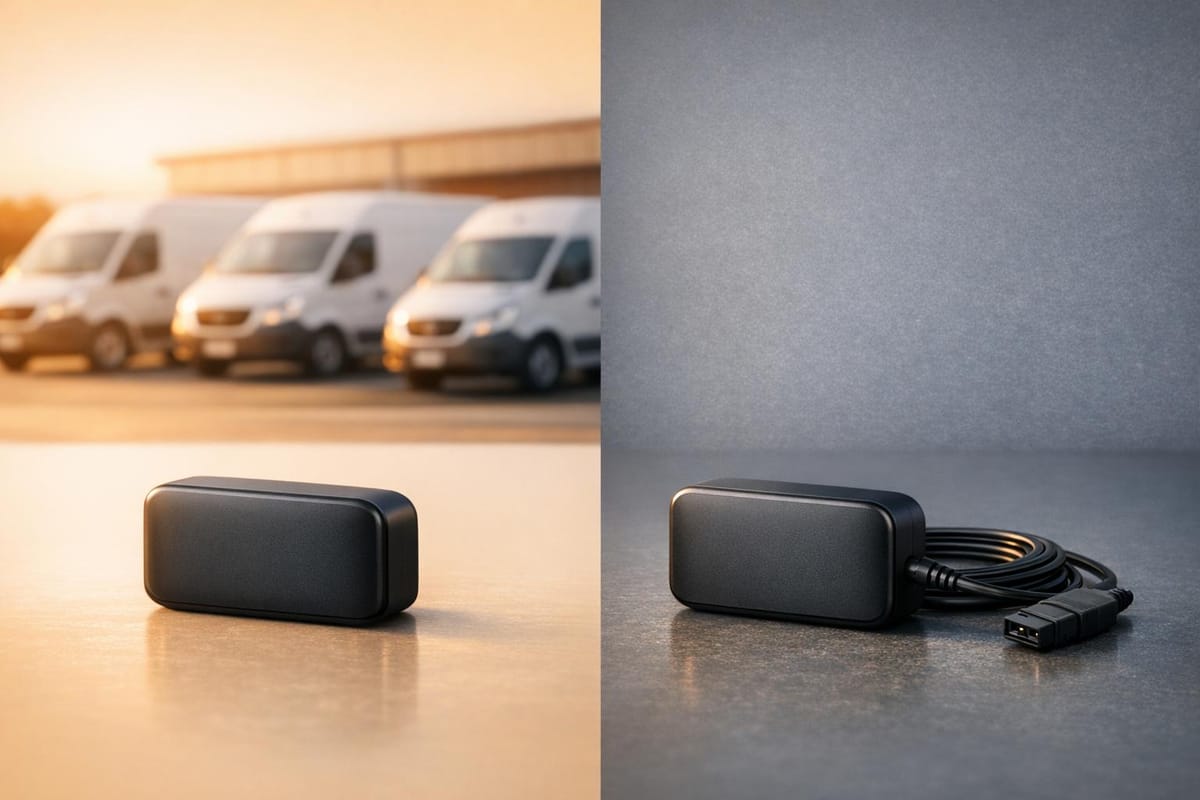
Choosing between battery-powered and wired trackers for fleet management depends on your needs:
- Battery-powered trackers are portable, easy to install, and ideal for assets without a power source (e.g., trailers, containers, seasonal vehicles). However, they require regular battery maintenance and provide location updates less frequently.
- Wired trackers offer real-time tracking, advanced features (like engine diagnostics and remote immobilisation), and minimal upkeep. They are permanently installed and better suited for larger fleets or vehicles requiring continuous monitoring.
Key Factors to Consider:
- Installation: Battery-powered trackers are DIY-friendly; wired trackers need professional setup (£40–£100).
- Power Source: Battery-powered units need recharging/replacement; wired trackers use the vehicle’s power.
- Maintenance: Battery-powered devices need frequent checks; wired systems are mostly hands-off.
- Cost: Wired trackers have higher upfront costs but are more cost-effective for large fleets.
Quick Comparison
| Feature | Battery-Powered Trackers | Wired Trackers |
|---|---|---|
| Power Source | Internal battery | Vehicle’s electrical system |
| Installation | Quick DIY (5–15 mins) | Professional (1–4 hours) |
| Maintenance | High (battery checks/replacement) | Low (minimal upkeep) |
| Update Frequency | Intermittent (12–24 hrs) | Real-time (every 30 secs) |
| Upfront Cost | £35–£99 | £75–£200+ (incl. installation) |
| Best For | Temporary/flexible tracking | Permanent fleet vehicles |
Bottom Line: For smaller, dynamic fleets or non-powered assets, battery-powered trackers are a practical choice. For larger fleets or vehicles requiring advanced features and continuous monitoring, wired trackers are the better option.
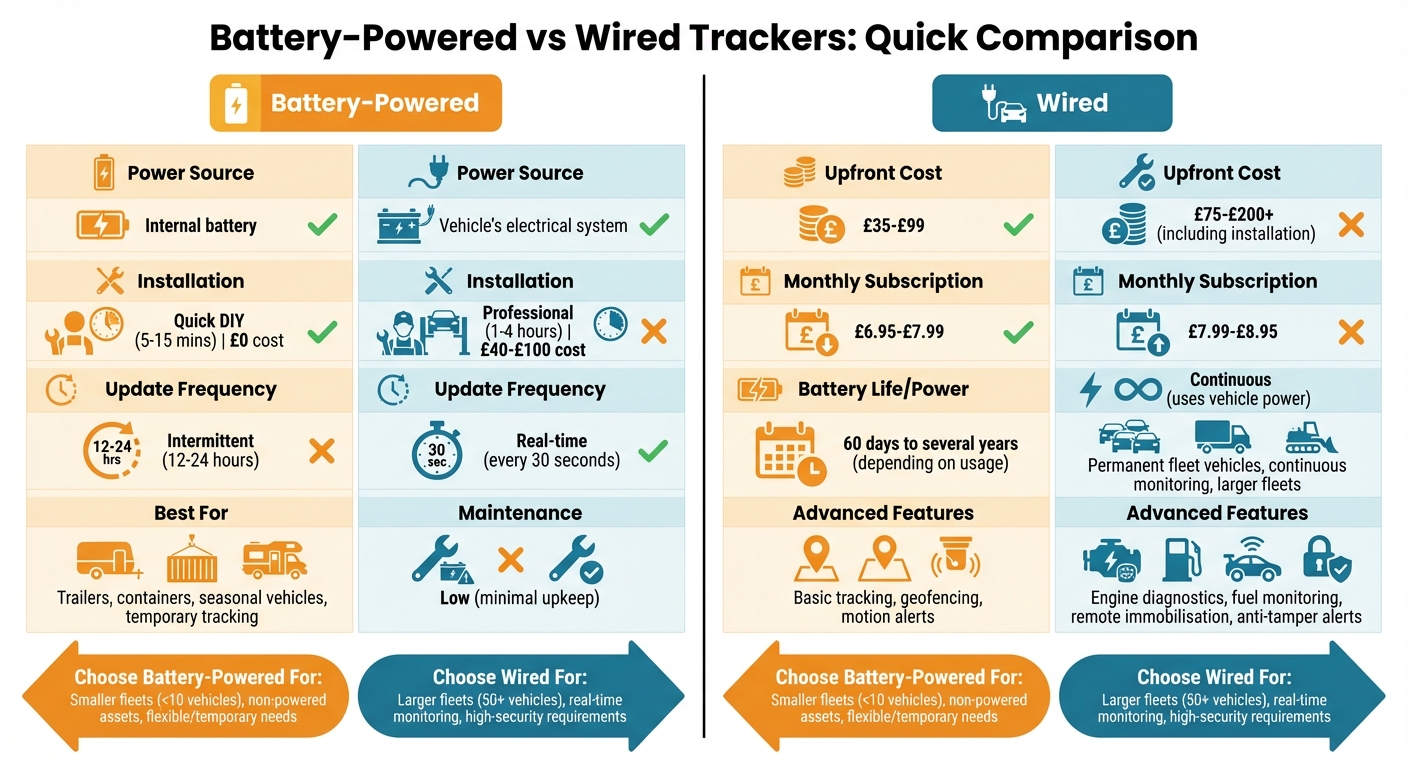
Battery-Powered vs Wired GPS Trackers Comparison Chart
Top 4 BEST GPS Trackers (2025) | Features & Installation | SafeTag Trackers
Battery-Powered Trackers Explained
Battery-powered trackers operate using internal batteries - these can be alkaline, rechargeable, or high-capacity types. Unlike wired trackers, they don't rely on your vehicle's electrical system, giving them the freedom to be used across a wide range of assets, including vans, lorries, trailers, and even construction equipment.
Their compact and discreet design makes them easy to hide, while magnetic mounts allow for quick and tool-free attachment to metal surfaces. This portability and ease of use make them ideal for temporary or flexible tracking needs.
To save battery life, these devices typically send location updates every 12 hours when in motion and every 24 hours when stationary. Users can adjust this frequency to either extend battery life or improve tracking precision, depending on their needs.
Main Features of Battery-Powered Trackers
One of the standout features of these trackers is their simple setup. As ShadowGPS highlights, they can be magnetically attached to any metal surface or hidden within assets without requiring professional installation.
Battery life is heavily influenced by how often the tracker sends updates. For example, less frequent updates can significantly extend the time before a battery needs replacing or recharging. This makes them particularly effective for assets that remain stationary for long periods, such as trailers or seasonal vehicles.
These trackers are especially useful for:
- Non-powered assets like containers or trailers
- Construction equipment spread across multiple locations
- High-value goods needing discreet monitoring
- seasonal vehicles or equipment for rental and leasing not in regular use
- Temporary tracking needs or scenarios where moving trackers between assets is required
Advantages and Disadvantages
One major advantage of battery-powered trackers is their flexibility. They can be transferred between vehicles or assets in seconds, avoiding the hassle and cost of professional installation, which can range from £40 to £100 per vehicle for wired systems.
However, they do require regular maintenance. Battery levels need monitoring, and batteries must be recharged or replaced periodically. For larger fleets, this upkeep can become burdensome. Another limitation is their intermittent location updates, which means they don't provide continuous, real-time tracking. This could be a drawback in situations where instant updates are crucial, such as theft recovery or route optimisation.
Ultimately, battery-powered trackers offer a flexible solution for smaller or more dynamic fleets. They stand out for their portability and ease of use but may not suit every scenario. Up next, we'll explore how wired trackers compare in terms of installation and performance.
Wired Trackers Explained
Wired trackers are directly connected to your vehicle's electrical system, drawing continuous power from the battery. Unlike battery-powered alternatives, these trackers are permanently installed - commonly via the OBD-II port or by connecting to the ACC line. This makes them a long-term solution that isn’t easily removed or transferred between vehicles.
These trackers transmit location data wirelessly, benefiting from optimal antenna placement to ensure strong GPS and cellular reception. In the UK, most commercial vehicles are designed to accommodate wired GPS trackers, allowing for smooth integration with the vehicle's electrical system, ignition, and ground.
Professional installation is required, typically taking one to two hours. During this process, the tracker is linked to the ignition system, unlocking advanced features. While this setup is more complex than battery-powered options, it creates a tamper-resistant solution ideal for high-value fleets or operations requiring enhanced security.
Below, we dive into the key features that make wired trackers stand out.
Main Features of Wired Trackers
By connecting directly to the vehicle's electrical system, wired trackers offer real-time GPS tracking with continuous updates and reliable signal strength. Even in areas with weak reception or adverse weather, these trackers perform consistently, thanks to their protected placement within the vehicle.
Wired trackers also integrate with the vehicle's systems to deliver detailed engine diagnostics. They can monitor metrics like fuel consumption, engine RPM, speed, harsh braking or acceleration, idle times, and PTO usage. For logistics companies operating heavy-duty trucks in the UK, these features support ELD-compliant reporting and help with predictive maintenance to minimise downtime. Many models also include sensors like accelerometers to enhance security.
Most wired trackers are equipped with a backup battery, providing 1.5–2 hours of operation during power outages. These batteries typically require replacement every two to three years. Firmware updates are handled automatically through a cellular connection, so there’s no need for manual intervention to keep the system updated.
Advantages and Disadvantages
Wired trackers may require professional installation, but the benefits are substantial. Their constant power supply eliminates the hassle of battery replacements or recharging, ensuring uninterrupted 24/7 tracking. For large fleets - especially those with 50 or more vehicles - this translates to lower long-term maintenance compared to portable trackers. While annual inspections are recommended to check the connections, these are far less frequent than the ongoing battery management needed for portable devices.
These systems also shine in situations where advanced security is a priority. Many high-end wired trackers include features like remote engine immobilisation, allowing fleet managers to disable a vehicle’s engine remotely - something typically unavailable with battery-powered models. The fixed installation and integration with the vehicle make them highly tamper-resistant, which is especially useful for transporting valuable goods or operating in high-theft areas.
However, there are some downsides. Professional installation adds an upfront cost of around £40 to £100 per vehicle. Additionally, their permanent nature means they lack portability, making them less suitable for temporary tracking needs or seasonal vehicles. The installation process also requires certified technicians to ensure proper positioning and integration, reducing the chances of signal issues or faulty connections.
Installation Requirements Compared
The way you install these two types of trackers - battery-powered and wired - varies quite a bit. Battery-powered trackers are a breeze to set up. You can attach them using magnets or adhesive, and the whole process takes just 5–15 minutes. There’s no need for special tools, making it ideal for a quick DIY job. This simplicity not only saves time but also keeps initial costs low while streamlining ongoing operations with white-label tracking.
On the other hand, wired trackers involve a more complex process. They need to be connected to the vehicle’s electrical system, including the battery, ignition, and ground. This requires specific tools like wire strippers, crimping tools, multimeters, and even soldering kits. The installation time ranges from 1–4 hours depending on the vehicle size - smaller vehicles might take around 30–60 minutes, whereas larger ones can take up to 4 hours. For wired trackers requiring Thatcham certification, professional installation is often necessary, adding an extra £50–£150 to the cost. This certification is particularly important for insurance compliance in the UK.
UK regulations also mandate that wired trackers often need to be installed by Thatcham-certified professionals to meet IVA/TCA standards. This ensures proper integration with UK-specific components like fuse boxes and metric wiring systems.
A fleet trial highlighted the difference in installation times. Drivers installed battery-powered trackers on 10 vans in under 2 hours. In contrast, installing wired trackers on the same fleet required an entire day and certified engineers.
Time and Skills Needed
Here’s a quick comparison of the time, skills, and risks involved in installing each tracker type:
| Aspect | Battery-Powered | Wired |
|---|---|---|
| Installation Time | 5–15 minutes | 1–4 hours |
| Skills Required | None (DIY-friendly) | Electrical expertise |
| Tools Needed | Basic (e.g. zip ties) | Specialised (wire strippers, multimeter, soldering kit) |
| Professional Help | Optional | Typically required |
| Certification | Not needed | Thatcham-approved installer recommended |
| Installation Risks | Low | High (electrical hazards if done incorrectly) |
Next, we’ll dive into how these trackers manage power supply and what their maintenance schedules look like to provide a clearer picture of their overall practicality.
Power Supply and Maintenance
Battery-powered trackers rely on internal alkaline or rechargeable lithium batteries, which means they don't depend on the vehicle's power source. To conserve energy, these devices often use "sleep modes", activating only when motion is detected or at scheduled intervals, such as once or twice per day. While this approach extends battery life, it also means updates are less frequent. Depending on usage and settings, battery life can range from 60 days to several years, though extreme temperatures can significantly shorten it.
Wired trackers, on the other hand, connect directly to the vehicle's battery or fuse box, ensuring a constant power supply. This enables them to provide real-time tracking and advanced diagnostics, such as fuel consumption and engine performance data.
"A hardwired solution offers the highest level of reliability if your main concern is comprehensive data management for regularly driven vehicles." - ShadowGPS
Once installed, wired trackers require minimal attention, making them a "set and forget" solution. In contrast, battery-powered trackers demand regular upkeep - you'll need to check battery levels, recharge or replace the batteries, and adjust reporting settings to balance tracking frequency with battery life. For instance, configuring a battery tracker to send updates only once daily when stationary can significantly extend its lifespan. These distinctions are especially important for fleets aiming to balance reliability with maintenance demands.
Battery Life and Charging
Wired trackers draw power directly from the vehicle's electrical system, eliminating the need for recharging or battery replacements. This makes them ideal for vehicles in constant use, such as van tracker systems for daily drivers or long-haul trucks, as they can handle high-frequency, real-time reporting without power concerns.
Battery-powered trackers, however, require regular monitoring. Depending on how often they report, their batteries may need recharging or replacing every two months to several years. Frequent updates drain the battery faster, so setting the device to report less often - such as every 12–24 hours - can extend its lifespan. Routine checks of the battery status, typically through the tracking platform, become a necessary part of maintenance.
These differences in power and charging needs directly shape the maintenance routines for each type of tracker.
Maintenance Schedules
The maintenance requirements for wired and battery-powered trackers vary significantly. Wired trackers are low-maintenance, needing only monthly functional checks and software updates. There's no need to worry about battery management, making them relatively hands-off.
Battery-powered trackers, however, require more frequent attention. You'll need to regularly check battery levels (weekly or monthly), recharge or replace batteries, and inspect the device to ensure it remains securely mounted. Signal testing is also important, particularly after repositioning the tracker.
The table below highlights the key maintenance differences:
| Maintenance Activity | Wired Trackers | Battery-Powered Trackers |
|---|---|---|
| Battery Replacement | Never (uses vehicle power) | Every 60 days to 2+ years |
| Recharging | N/A | Weekly/monthly, depending on use |
| Software Updates | Monthly | Monthly |
| Signal Testing | Monthly | Weekly/monthly |
| Physical Inspection | During vehicle service | Monthly (check for shifting/tampering) |
| Platform Status Check | Monthly | Weekly (to monitor battery levels) |
"Battery trackers are limited mostly by power management. The constant need to charge or replace batteries adds a maintenance burden." - ShadowGPS
Tracking Performance Compared
Update Frequency and Accuracy
Wired trackers provide updates in real time, typically every 30 seconds or less. This ensures accurate tracking for routing and monitoring drivers, making them ideal for situations where immediate data is critical. On the other hand, battery-powered trackers operate differently. To conserve energy, they use sleep modes, waking only when motion is detected to send a location update before returning to standby. Standard units report their location every 12 hours while moving and every 24 hours when stationary. This approach significantly extends battery life but sacrifices the immediacy found in wired systems. If real-time updates are a must, wired trackers are the better choice.
"In rural or remote areas, hardwired systems demonstrate superior reliability, as they can maintain continuous operation even during extended periods without vehicle use, while wireless units may enter power-saving modes." – ShadowGPS
Beyond update frequency, the features and signal performance of these systems further highlight their differences.
Available Features and Signal Strength
Wired trackers come with a suite of advanced features. By connecting directly to a vehicle’s electrical system or OBD port, they can monitor engine diagnostics, fuel levels, ignition status, RPM, and odometer readings. Many also include internal backup batteries, which trigger alerts if the primary power source is disconnected - adding an extra layer of security.
Battery-powered trackers, in contrast, focus on location tracking and geofencing, with occasional motion alerts. Versions using Bluetooth Low Energy (BLE) are limited in range, typically between 60 and 152 metres, making them less effective for real-time fleet tracking. However, they shine in situations where power sources are unavailable, such as with trailers or construction equipment. Wired systems, in these cases, only work when the towing vehicle is active.
Signal performance also sets these two apart. Wired trackers, with their stable power supply and permanent antennas, maintain consistent connectivity in both urban and rural settings. Meanwhile, battery-powered units may reduce their reporting frequency in remote areas to save power, which can create data gaps. Both types, under optimal conditions, can achieve street-level accuracy within 1–3 metres, though wired trackers tend to sustain this precision more reliably.
| Feature | Wired Trackers | Battery-Powered Trackers |
|---|---|---|
| Update Frequency | Real-time (every 30 seconds or less) | Intervals (12–24 hours or motion-triggered) |
| Signal Reliability | High; consistent in rural/remote areas | Variable; may reduce frequency in remote areas |
| Advanced Features | Diagnostics, fuel monitoring, engine status, RPM | Geofencing, motion alerts, location |
| Data Depth | Location, speed, ignition status, maintenance alerts | Primarily location and basic alerts |
| Anti-Tampering | Backup battery alerts if power is cut | Limited (depends on model) |
These distinctions make it easier to determine which type of tracker is better suited for specific operational needs.
Cost Comparison
Upfront and Running Costs
When it comes to initial costs, both wired and battery-powered trackers fall in the range of £35 to £99 for standard models. However, wired trackers require professional installation, which adds an extra £40 to £100 upfront. On the other hand, battery-powered units can be installed in minutes, so there are no additional installation charges.
Monthly subscription fees are fairly similar. Wired trackers typically cost £7.99–£8.95 per month, while battery-powered units are slightly cheaper at £6.95–£7.99. These fees cover cellular data and platform access. However, battery-powered trackers come with hidden costs. Regularly retrieving, charging, and redeploying these units can lead to increased labour costs - an issue that becomes more pronounced for fleets with 50 or more vehicles. Additionally, over time, you'll need to account for the cost of replacement batteries, charging cables, and adapters.
In contrast, wired trackers draw power directly from the vehicle's electrical system. Once installed, they require no manual intervention, making them a much more cost-effective choice for larger fleets in the long term. Some providers even offer free professional installation when bundled with other services, such as fleet branding, which can eliminate upfront installation costs entirely.
While manufacturers often claim battery-powered trackers can last 3–10 days between charges, real-world use - especially in real-time tracking - typically results in only 3–5 days of battery life. This shorter lifespan means more frequent charging cycles, which can accelerate battery wear and tear.
| Cost Element | Wired Trackers | Battery-Powered Trackers |
|---|---|---|
| Upfront Hardware | £35–£99 | £35–£99 |
| Installation | £40–£100 (Professional) | £0 (Self-installation) |
| Monthly Subscription | £7.99–£8.95 | £6.95–£7.99 |
| Power Maintenance | £0 (Uses vehicle battery) | Ongoing (Charging + batteries) |
| Long-term Value | High (Permanent setup) | Variable (Battery degradation) |
These cost differences make it easier to decide which tracker type suits your fleet's specific needs.
For smaller fleets (fewer than 10 vehicles) or seasonal assets, the lower upfront costs and DIY installation of battery-powered trackers might make them a better fit. However, for larger operations, wired trackers eliminate the logistical challenges and hidden costs of maintaining multiple batteries. When choosing a tracking solution, it's important to weigh cost efficiency against ease of installation and ongoing maintenance requirements.
Which Tracker Type Suits Your Fleet
When to Choose Battery-Powered Trackers
Battery-powered trackers are perfect for situations where temporary or flexible deployment is needed. They work well for managing assets like trailers, containers, or construction equipment that don’t have a constant power source. These trackers are especially useful for assets located in remote areas without access to mains power. Depending on how often they transmit location data, modern battery-powered trackers can last anywhere from 60 days to several years.
For smaller fleets, these trackers offer a straightforward, fee-free plug-and-play setup, making them a great choice for seasonal operations or short-term projects.
When to Choose Wired Trackers
Wired trackers, on the other hand, are ideal for fleets that need continuous, real-time monitoring. They’re particularly useful for vehicles operating in urban areas with higher theft risks or for long-haul fleets where up-to-date location data is crucial. Since wired trackers draw power directly from the vehicle’s battery, there’s no need for regular battery replacements, which helps save on labour and maintenance costs.
For larger fleets, while the initial installation cost ranges between £40 and £100, the long-term savings on maintenance make them a cost-effective option. Wired trackers also offer advanced features like anti-tamper alerts and remote immobilisation - capabilities generally not available with battery-powered alternatives.
GRS Fleet Telematics Solutions
Selecting the right tracker depends on the specific needs of your fleet, and GRS Fleet Telematics offers tailored solutions to meet a variety of operational requirements. They provide three wired tracking plans for UK businesses, each designed with different levels of security in mind:
- Essential plan: Hardware costs £35, with a monthly subscription of £7.99. This plan is perfect for fleets focused on basic location tracking.
- Enhanced plan: Hardware is priced at £79 and includes a secondary Bluetooth tracker as backup. This dual-tracker system ensures protection even if the primary unit is compromised.
- Ultimate plan: Hardware costs £99 and includes both trackers along with remote immobilisation, allowing you to disable a stolen vehicle remotely.
All three plans come with professional installation, offered free when combined with fleet branding services through GRS Fleet Graphics. These wired solutions are designed for fleets where uptime and security are top priorities.
Summary Table: Battery-Powered vs Wired Trackers
The table below highlights the key differences in power, installation, and performance between battery-powered and wired trackers. Use this as a quick guide to determine the best option for your fleet:
| Feature | Battery-Powered Trackers | Wired Trackers |
|---|---|---|
| Power Source | Internal battery | Vehicle battery/fuse box |
| Upfront Device Cost | Low (£40–£80) | Mid-High (£120–£240+) |
| Installation Cost | £0 (self-install) | £80–£160 (professional) |
| Installation Time | 5–15 minutes (plug-and-play) | 30–60 minutes per vehicle |
| Maintenance | High (regular charging or battery replacement) | Low (continuous power supply) |
| Reporting Rate | Intermittent; configurable | Real-time (every 30 seconds or less) |
| Battery Life | Approximately 3–5 days in real-time mode; extended with lower ping frequency | As long as the vehicle battery is active |
| Reliability | Variable; dependent on power management | High; continuous operation |
| Portability | Easy to remove and transfer between assets | Permanent fixture |
| Best For | Ideal for non-powered assets | Ideal for continuously powered vehicles |
| Advanced Features | Basic tracking functionality | Includes advanced functions such as anti-tamper alerts |
| Durability | Requires a high ingress protection rating for outdoor use | Weather-resistant casing |
| Long-Term Cost | Higher (ongoing maintenance labour) | Lower (minimal maintenance required) |
This table provides a clear breakdown of how each tracker type matches different operational requirements. Whether you prioritise portability or advanced features, the comparison simplifies your decision-making process.
Conclusion
Deciding between battery-powered and wired trackers comes down to aligning the right technology with your fleet's specific requirements. Wired trackers provide continuous, real-time monitoring and require minimal upkeep, making them a strong choice for permanent fleet vehicles that need constant tracking and enhanced security. On the other hand, battery-powered trackers bring portability and quick setup, making them ideal for assets without a power source, such as trailers, or for temporary tracking needs where flexibility is a priority.
When making your choice, consider factors like the permanence of your assets, the availability of a power source, and your tracking objectives. For UK fleet managers handling mixed fleets, a hybrid approach often works best. Wired trackers can be installed on core vehicles, while battery-powered options can cover auxiliary assets. This approach balances upfront costs with ongoing maintenance needs while ensuring full visibility across your fleet.
It’s worth noting that cold weather can impact battery-powered trackers, reducing their capacity by 20–40% in winter conditions. Wired systems, however, generally offer consistent performance regardless of the weather, though their backup batteries typically require replacement every 2–3 years. These operational details highlight the importance of selecting the right tracker type to avoid gaps in tracking and maintain reliable fleet management throughout the year.
GRS Fleet Telematics provides tailored solutions to meet these diverse needs. Their van trackers, featuring dual-tracker technology, achieve a 91% recovery rate for stolen vehicles, with subscription pricing starting at just £7.99 per month. Whether your fleet demands the constant monitoring of wired systems or the flexibility of portable trackers, expert advice ensures you choose technology that fits your operations and budget.
Choosing the right tracker transforms fleet management from reactive problem-solving into proactive optimisation. By understanding the core differences between battery-powered and wired systems, you can implement tracking solutions that truly support your business goals without adding unnecessary complexity.
FAQs
Can I use both wired and battery trackers in the same fleet?
Yes, you can mix both wired and battery-powered trackers within a single fleet. Many fleet managers use this approach to improve security, adaptability, and manage costs effectively. Wired trackers are perfect for larger vehicles that require constant power and more advanced security features. On the other hand, battery-powered trackers are portable, simpler to install, and work well for smaller or seasonal fleets. Combining these options allows you to customise tracking based on the specific needs of different vehicles and operations.
How often will I need to recharge or replace a battery tracker?
Battery-powered trackers need their batteries replaced at regular intervals, usually every month or every few months, depending on how they’re used and the device’s design. On the other hand, wired trackers draw power directly from the vehicle’s battery, so there’s no need to worry about charging or replacing batteries.
Will a wired tracker drain my vehicle’s battery?
A wired tracker, when installed correctly, won't have a noticeable impact on your vehicle's battery. It draws power directly from the vehicle's electrical system and is built to run continuously without interfering with the battery's performance.