How AI Predicts Weather for Fleet Safety
AI weather forecasting gives fleets real-time alerts, dynamic routing and predictive maintenance to cut accidents, downtime and costs.
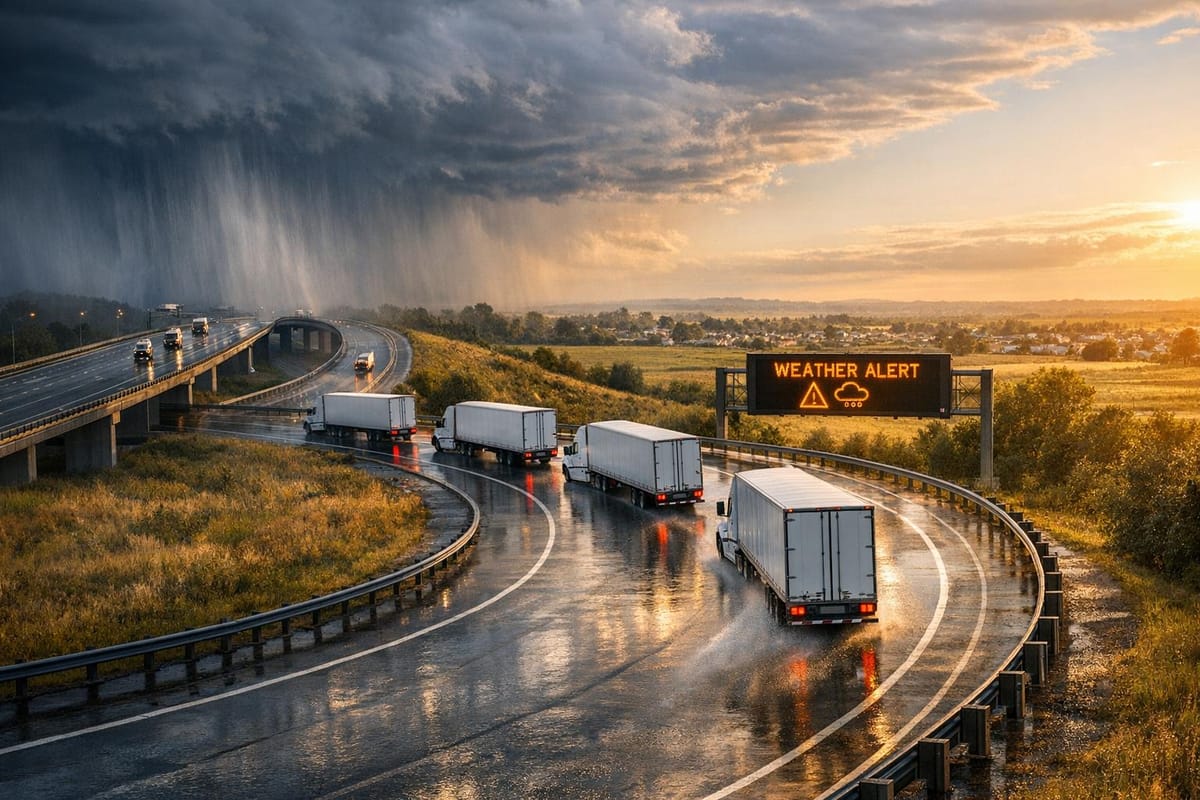
AI-powered weather prediction is transforming fleet safety and efficiency, especially in the UK where unpredictable weather poses constant challenges. Here's how it works and why it matters:
- Faster Predictions: AI models like Google DeepMind's GraphCast generate 10-day forecasts in seconds, far outpacing traditional methods.
- Improved Accuracy: AI outperforms conventional systems in predicting extreme weather, such as hurricanes or flash floods, helping fleets plan better.
- Energy Efficiency: AI weather systems consume far less energy than traditional supercomputers, reducing operational costs.
- Real-Time Alerts: Drivers receive tailored in-cab warnings based on hyperlocal weather data, ensuring safer journeys.
- Route Planning: AI dynamically adjusts routes to avoid hazardous conditions, improving fuel efficiency and delivery times.
- Predictive Maintenance: By analysing weather and vehicle sensor data, AI identifies potential issues weeks in advance, preventing costly breakdowns.
For UK fleet operators, integrating AI weather systems with van tracking solutions ensures safer, more efficient operations while cutting costs. With fewer accidents, reduced maintenance expenses, and better route planning, AI is reshaping how fleets navigate and manage adverse weather.
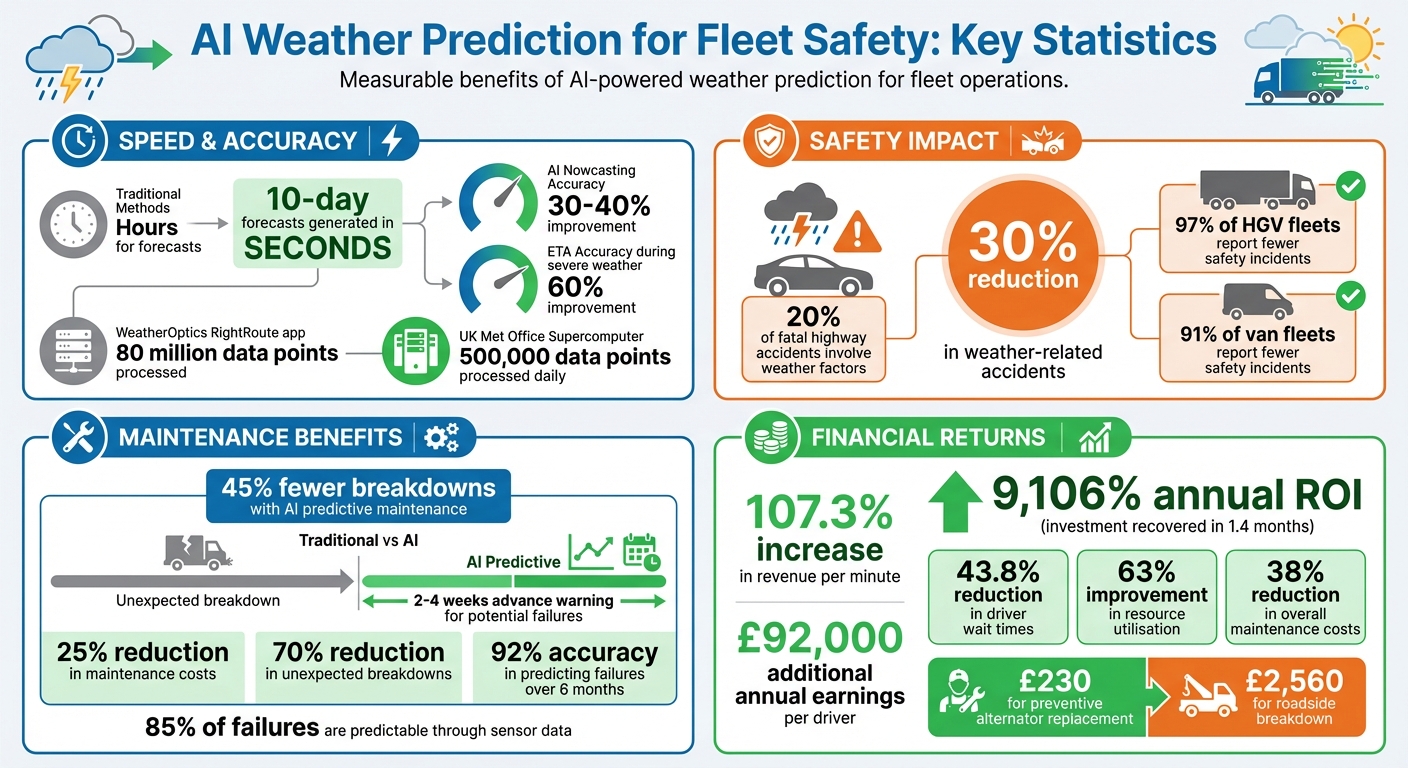
AI Weather Prediction Benefits for Fleet Safety: Key Statistics and ROI
Google’s AI weather model outperforms traditional forecast models
How AI Predicts Weather for Fleets
AI-based weather forecasting takes a different route compared to traditional methods. Instead of solely relying on physics equations, it uses decades of historical data to spot patterns and predict future conditions. For example, Google DeepMind's GraphCast model was trained using the ERA5 dataset, which contains 40 years of global weather data. This allows AI to understand how weather in one area can influence another, such as a storm moving from the Irish Sea to the Midlands.
Data Collection and Integration
AI systems pull data from a variety of sources, including global meteorological networks like weather stations, satellites, buoys, and balloons. When it comes to fleet operations, this data is combined with telematics from vehicles. This includes GPS location, load weight, vehicle height, and onboard sensor readings. The UK Met Office’s supercomputer processes an impressive 500,000 data points daily, and AI models analyse this information at lightning speed.
Cloud-based platforms then deliver this data directly to in-cab devices, providing hyperlocal weather updates tailored to each vehicle's route. In April 2024, companies such as Werner Enterprises and NFI adopted the WeatherOptics RightRoute app, which processes 80 million data points. The result? A 60% improvement in ETA accuracy during severe weather and a 30% drop in weather-related accidents.
This wealth of information feeds into advanced algorithms to deliver precise weather forecasts.
Machine Learning and Pattern Recognition
AI weather prediction relies on Graph Neural Networks (GNNs) to model the atmosphere as a fluid system. These algorithms map out spatial connections, predicting how weather in one area will influence surrounding regions over time. Andrew El-Kadi, a Research Engineer at Google DeepMind, explains:
"Weather patterns are quite local... GraphCast then spots connections between points on Earth, to learn how they affect each other when it comes to forecasting the weather".
AI models refine their accuracy by learning iteratively. They adjust their parameters based on how prior predictions matched actual conditions, which helps them adapt to climate change and identify extreme weather events that older methods might overlook. AI nowcasting models can boost prediction accuracy by 30–40% compared to traditional forecasting techniques. This level of precision provides fleet managers with the real-time, vehicle-specific insights they need to make quick, informed choices, improving both safety and efficiency.
Real-Time Weather Alerts for Drivers
AI technology is reshaping how drivers navigate hazardous weather by analysing patterns and identifying "risk windows" along their routes. This allows drivers to make informed adjustments to ensure their safety. Here's how these alerts work in practical scenarios.
In-Cab Notifications and Geofencing
By integrating GPS with live weather data, telematics systems deliver highly specific in-cab alerts. Geofencing plays a critical role here, creating virtual zones around areas forecasted to experience severe weather. When a vehicle approaches one of these zones, the system automatically sends out warnings. These alerts give drivers time to slow down or take other precautions before entering potentially dangerous conditions.
This precise, real-time system is a key tool for improving fleet safety in the face of unpredictable weather.
Tailored Warnings for Various Weather Conditions
AI doesn’t stop at generic alerts - it goes a step further by tailoring warnings to specific weather threats like rain, snow, ice, fog, or strong winds. Instead of a broad "severe weather ahead" message, drivers receive detailed insights about the type and timing of the hazard.
AI copilots also support dispatchers and safety managers by analysing multiple data sources to identify high-risk situations. This enables them to send targeted coaching messages to drivers, ensuring the guidance is both relevant and practical.
By combining environmental data with driver-specific factors, these systems ensure that alerts are personalised rather than one-size-fits-all - a particularly effective approach for managing fleets in diverse conditions.
For fleet managers in the UK, tools like GRS Fleet Telematics showcase how AI-powered weather alerts can enhance both driver safety and operational performance.
Weather-Based Route Planning
AI has transformed route planning from a simple, fixed process into a dynamic system that adjusts in real time. By analysing weather forecasts, traffic conditions, and road hazards, these systems allow fleets to predict and avoid risks before they arise. Instead of reacting to issues as they occur, dispatchers can now make informed decisions ahead of time, ensuring both driver safety and operational efficiency. Using AI's real-time weather insights, multiple data streams are analysed simultaneously to pinpoint high-risk periods - times when certain routes become dangerous due to adverse weather or heavy congestion.
This shift represents a major step forward for fleet operations. Traditional route planning relied heavily on historical data and manual updates. In contrast, AI-powered systems offer up-to-the-minute visibility, enabling dispatchers to foresee potential disruptions and take pre-emptive action. With accurate forecasting capabilities, route planning has evolved into a proactive and adaptable process.
Avoiding High-Risk Areas
AI systems constantly monitor weather conditions, accident reports, and road surfaces across a fleet's network. When areas of concern - such as heavy rain, icy roads, or dense fog - are detected, the system calculates alternative routes that avoid these hazards while still meeting delivery deadlines. These systems also factor in the driver's workload. For example, driving on narrow country lanes in thick fog requires significantly more focus than cruising on a clear motorway. By accounting for environmental challenges and the human element, AI helps dispatchers assign routes that match both the vehicle's capabilities and the driver's experience.
This predictive rerouting ensures vehicles avoid dangerous areas before they are reached, reducing the need for drivers to make split-second decisions under pressure. The result? Fewer weather-related accidents, less stress for drivers, and overall safer journeys. At the same time, this proactive approach boosts operational efficiency.
Improving Fuel Efficiency and Delivery Times
Weather-aware routing doesn't just improve safety - it also delivers cost and time savings. By steering clear of severe weather, AI systems help reduce fuel consumption by avoiding the stop-start driving typical of congested or hazardous conditions. Maintaining steady speeds leads to better engine performance and less idling, which in turn cuts fuel costs.
Incorporating weather forecasts into route planning also makes delivery schedules more reliable. For example, if morning fog is expected to clear by 10:00, the system might delay a driver's departure rather than sending them into low-visibility conditions. Fleet managers who document these AI-driven adjustments often see benefits beyond the road - insurance underwriters may offer lower premiums for proactive safety measures. With fewer accidents, reduced fuel expenses, and improved on-time performance, the business case for AI-driven route planning becomes hard to ignore.
In the UK, companies like GRS Fleet Telematics are already utilising these AI-powered insights to improve route planning, enhancing safety and operational efficiency across their fleets.
Weather-Based Vehicle Maintenance
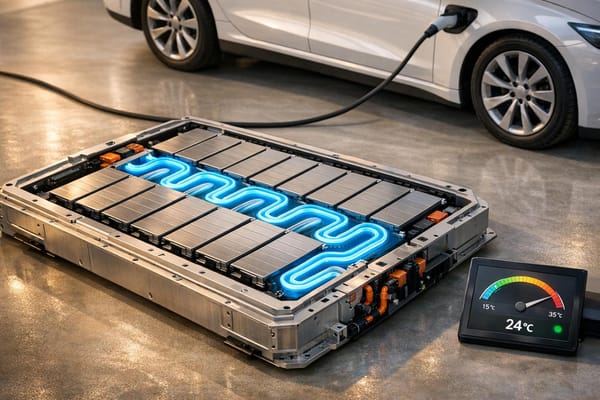
Weather doesn’t just affect road conditions - it also takes a toll on vehicle components. Cold weather can drain battery efficiency, while extreme heat puts extra pressure on cooling systems. These stresses can lead to wear and tear, making it crucial to address potential problems before they escalate. By connecting weather patterns to maintenance schedules, AI helps fleet managers tackle issues weeks before they turn into costly roadside breakdowns.
Traditionally, vehicles were serviced at fixed intervals - like every 10,000 miles or six months - regardless of their actual condition. Now, AI is changing the game with a condition-based approach. By analysing over 50 sensor readings per second - covering everything from engine temperature to battery voltage and vibration patterns - AI establishes a unique baseline for each vehicle. When a sensor detects a deviation from this baseline, especially under challenging weather conditions, the system flags potential failures 2–4 weeks in advance. This early intervention allows for timely, cost-effective repairs, targeting specific weather-induced faults before they worsen.
Identifying Weather-Related Vehicle Issues
AI is particularly adept at catching early signs of weather-related issues. For example, it monitors battery voltage during cold starts and engine temperatures during heatwaves to identify potential problems.
Take this case from March 2026: FleetRabbit's AI tracked a Class 8 lorry and noticed a 3% drop in battery voltage by Day 6. By Day 12, it flagged a "cold-start lag" and issued an alert. The alternator was replaced during a planned overnight stop on Day 18 for about £230. Without this intervention, a roadside breakdown on Day 21 could have cost an estimated £2,560. The table below highlights the sensor patterns that can signal such issues:
| Sensor Signal | Normal Range | Warning | Issue |
|---|---|---|---|
| Battery Voltage | 13.5–14.5 V (running) | Cold-start drop; declining charge rate | Alternator failure, battery degradation |
| Engine Temp | 90–104 °C | Rising by ~3°C per week | Thermostat failure, coolant leak |
| Oil Pressure | 25–65 PSI | Gradual decline or erratic fluctuations | Pump wear, filter blockage |
| Transmission Temp | 79–93 °C | Increasing under normal loads | Fluid degradation, cooler blockage |
AI boasts an impressive 92% accuracy over six months, identifying alternator failures up to 18 days early by detecting subtle drops in charging voltage. Similarly, a weekly rise of just 3°C in engine temperature can indicate thermostat issues or coolant leaks. Around 85% of failures are predictable through sensor data, leaving only 15% to unexpected events.
Scheduling Maintenance Around Weather Conditions
AI doesn’t just detect problems - it also helps plan repairs around weather conditions. With its 2–4 week warning window, fleet managers can time maintenance to coincide with periods of severe weather when vehicles are less likely to be on the road. For instance, if heavy snow is forecast, flagged components can be repaired in advance, reducing the risk and expense of unexpected breakdowns.
Fleet managers have reported 45% fewer breakdowns and a 25% reduction in maintenance costs. The financial benefits are clear: while an AI-flagged alternator replacement costs about £265 (£180 for parts and £85 for labour), a roadside failure could cost over £2,560. In many cases, fleets see a return on investment in just 90 days, as preventing a single breakdown can offset up to a year’s service costs.
AI also integrates seamlessly with workshop management platforms, automatically generating prioritised work orders when a vehicle’s failure risk exceeds a set threshold. Real-time dashboards rank vehicles by condition, helping managers focus on those requiring immediate attention before facing harsh weather or demanding routes. This shift to condition-based maintenance not only trims unnecessary part replacements but also lowers overall maintenance costs by up to 38%. More importantly, it enhances fleet safety by addressing critical issues promptly.
In the UK, companies like GRS Fleet Telematics are already leveraging AI-driven maintenance insights alongside advanced tracking tools. This combination ensures fleet operators stay ahead of weather-related challenges while keeping operations running smoothly.
Measuring the Safety Benefits of AI Weather Prediction
Fewer Weather-Related Accidents
AI-powered weather predictions are making roads safer by delivering faster and more precise warnings. Unlike traditional forecasting methods that can take hours, AI processes data in mere minutes, enabling near-instant updates. This is particularly useful for issuing early warnings about hazardous conditions, helping drivers avoid dangers like flash floods or micro-bursts that conventional models might overlook. The ability to forecast at a neighbourhood level ensures that even localised threats are accounted for.
With AI-driven nowcasting, traffic management and emergency services gain access to minute-by-minute updates. These updates are not just timely - they’re accurate, triggering automated alerts when conditions such as high winds or heavy snow arise. This proactive system ensures that drivers and fleets can act before extreme weather hits, moving people and assets out of harm’s way. This concept of "anticipatory action" doesn’t just enhance safety; it also reduces costs by preventing accidents and disruptions.
Cost Savings and Efficiency Gains
AI weather prediction isn’t just about safety - it’s also a game-changer for efficiency and financial performance. For example, weather-aware AI systems can increase revenue per minute by an impressive 107.3%, translating to approximately £92,000 in additional annual earnings per driver. These systems also cut driver wait times by 43.8% and improve resource utilisation rates by 63.0%. With an annual ROI of up to 9,106%, fleets can recover their initial investment in just 1.4 months.
The financial benefits come from multiple areas. Smarter routing helps reduce fuel consumption and minimises vehicle wear caused by adverse conditions like ice and rain. It also lowers the risk of cargo damage during transit. Tatsuru Kikuchi from The University of Tokyo highlights the economic impact:
"Weather prediction contributes the largest individual productivity gain, with strong correlations between meteorological conditions and demand."
Comprehensive AI systems that combine weather forecasting with tools for demand prediction and route optimisation deliver higher returns than systems limited to route planning alone. While development costs are around £1,000 per driver, annual operating expenses for data processing and maintenance are approximately £200. Professor Penelope Endersby, CEO of the UK Met Office, underscores another benefit:
"AI gets lots of criticism for the energy it's using... but believe me, traditional weather forecasting uses vast amounts of compute and energy. That is the big advantage, much more than any accuracy gain."
For UK fleet operators using platforms like GRS Fleet Telematics, integrating AI weather prediction into existing systems creates a robust solution. This approach not only addresses immediate safety concerns but also drives long-term operational efficiency and profitability. The dual benefits of enhanced safety and cost savings make AI weather prediction a valuable tool for modern fleet management.
Conclusion
AI-driven weather prediction is transforming fleet safety and efficiency across the UK. Considering that weather factors into 20% of all fatal highway accidents, having access to real-time alerts and predictive insights has become indispensable. Fleet operators who have embraced AI systems are already seeing results, with 97% of HGV fleets and 91% of van fleets reporting fewer safety incidents.
Beyond improving safety, these systems also bring tangible efficiency benefits. From optimised routing and lower fuel consumption to predictive maintenance that reduces unexpected breakdowns by over 70%, AI weather solutions help operators cut costs while ensuring reliable service - even when faced with unpredictable British weather.
For fleet managers in the UK, the direction is unmistakable. A growing majority are planning investments in AI and telematics, highlighting the industry's shift toward proactive weather management. Beverley Wise from Webfleet sums it up perfectly:
"AI turns data into actionable insights for proactive risk management".
GRS Fleet Telematics offers a practical way for UK businesses to enhance fleet protection. Their van tracking solutions start at just £7.99 per month, with features like a 91% stolen vehicle recovery rate and dual-tracker technology. These tools not only address weather-related challenges but also everyday security concerns, providing a well-rounded safety system. By combining AI weather intelligence with advanced tracking, fleet operators can take a major step toward optimising their operations.
With proven results, clear cost savings, and quick returns on investment, adopting AI-powered weather prediction is a smart move for fleet operators focused on driver safety and operational efficiency - the core goals these systems are built to achieve.
FAQs
How does AI combine weather data with vehicle telematics?
AI combines weather data with vehicle telematics in real-time through sophisticated algorithms. By analysing weather forecasts and conditions alongside telematics information - such as vehicle location, speed, and driver behaviour - it evaluates how weather affects driving conditions. This capability allows for dynamic route changes to steer clear of hazards, enhance safety, and streamline operations. Fleet operators utilising tools like GRS Fleet Telematics can adapt to shifting weather conditions, lowering risks and improving operational efficiency.
How reliable are AI forecasts for localised UK weather hazards?
AI-powered forecasts for local UK weather hazards have become incredibly dependable due to progress in data analysis and machine learning. By combining real-time information - like traffic patterns, weather updates, and road conditions - these systems provide accurate and timely insights. This helps fleets steer clear of potential dangers, boosting safety on the road.
What does it take to add AI weather alerts to existing fleet systems?
Integrating AI-powered weather alerts into your fleet management system involves combining real-time weather data with machine learning capabilities. To get started, you’ll likely need API integrations, data-sharing protocols, and, in some cases, updates to your existing hardware or software.
Fleet operators play a key role in setting this up. They must configure specific alert thresholds, tailor notifications to meet operational needs, and ensure staff are trained to respond appropriately. The combination of accurate weather data and predictive AI algorithms allows fleets to adjust routes and schedules dynamically, improving safety during hazardous weather events.