AI Route Prediction: ROI for Fleet Operators
AI route prediction reduces fuel, maintenance and planning costs while increasing delivery capacity, on-time performance and ROI for UK fleets.
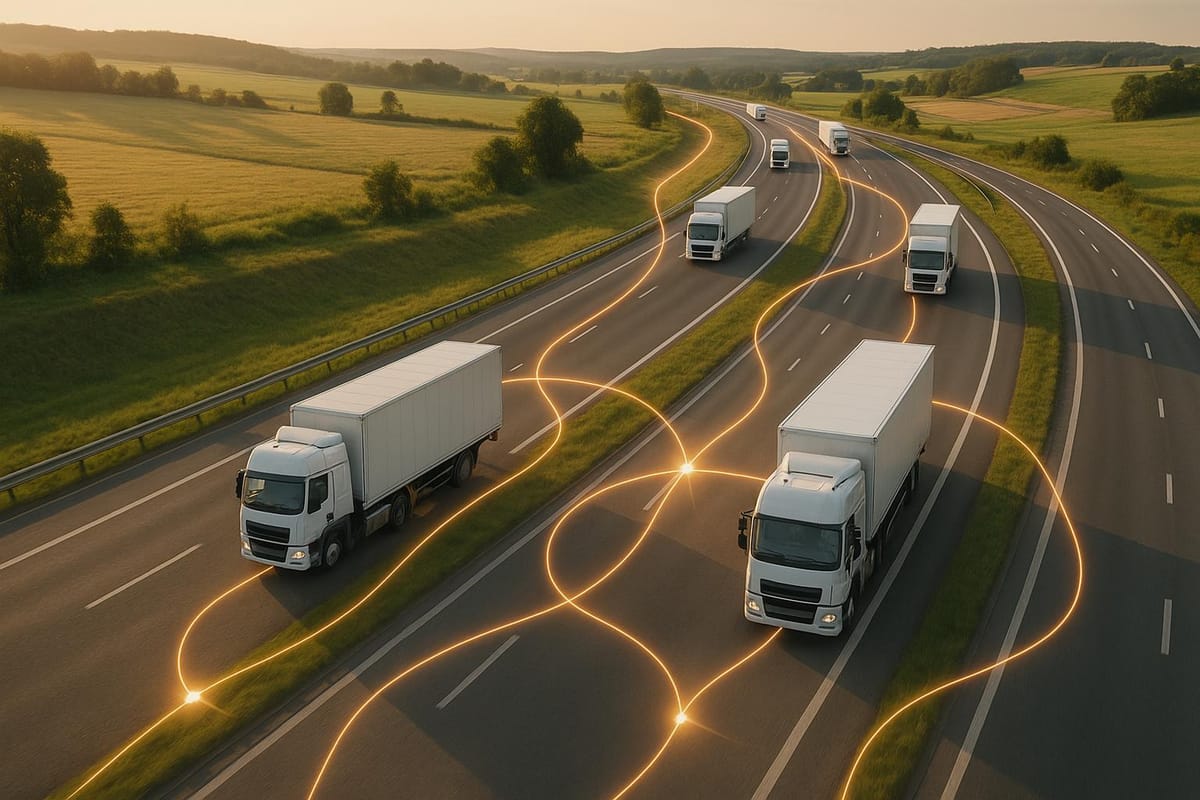
AI route prediction is transforming fleet management in the UK, helping operators cut costs, improve delivery performance, and boost efficiency. By analysing real-time data like traffic, weather, and vehicle status, these systems optimise routes far better than traditional GPS or manual planning. Here's what you need to know:
- Efficiency Gains: Delivery times drop by up to 18%, while vehicle capacity increases by 20–25%.
- Cost Savings: Fuel costs are reduced by 10–15%, and maintenance expenses drop by 12–18%.
- Improved Delivery Rates: On-time deliveries reach 95–99%, with failed attempts cut by 40%.
- ROI Timelines: Most systems pay for themselves within 8–12 months, with some achieving ROI in as little as 0.3 months.
Real-world examples include Tesco and Sainsbury's, which have saved time and money while improving delivery reliability. For mid-sized fleets, annual fuel savings alone can reach £6,000. With increasing regulatory demands and rising customer expectations, adopting AI route prediction is becoming essential for staying competitive.
Five Big Trends in Route Optimization
How AI Route Prediction Technology Works
AI route prediction systems rely on multiple data streams to provide real-time insights for fleet management. These tools help operators make informed decisions, leading to measurable improvements in efficiency and cost savings.
Processing Real-Time Data with AI
AI-powered route prediction tools process a variety of data sources to optimise fleet routes. These include traffic patterns, weather updates, vehicle specifications, driver preferences, and customer requirements. Unlike traditional GPS systems - which often require manual updates to account for changes like roadworks or congestion - AI systems dynamically adjust by analysing fleet behaviour and refining routes in real time.
For example, during peak traffic hours or when unexpected issues like road closures arise, AI systems can instantly recalculate routes for an entire fleet. Tools like GRS Fleet Telematics utilise AI to analyse traffic conditions, delivery schedules, and vehicle performance, creating efficient routes while offering real-time tracking. This allows operators to monitor vehicle locations and respond swiftly to delays or disruptions.
Unlike consumer apps such as Google Maps or Waze, these systems integrate directly with fleet management data. They don’t just track vehicle locations - they assess performance and prioritise pending deliveries. This deeper integration enables a more holistic approach to fleet optimisation.
Benefits of Predictive Route Optimisation
AI route prediction provides a range of operational and financial benefits. One standout advantage is the reduction in fuel costs. By analysing driving behaviours, fleets have reported up to a 15% decrease in fuel expenses. Additionally, optimised routes have been shown to reduce unexpected breakdowns by over 70%, extend the lifespan of vehicle components, and lower maintenance costs by as much as 15%.
Better routing also increases delivery capacity without the need for additional vehicles. For instance, Metro Cash and Carry achieved a 13% reduction in delivery expenses by implementing AI-driven route optimisation. These systems also enhance delivery reliability, with on-time rates consistently reaching between 95% and 99%, while significantly cutting the time spent on route planning.
AI’s ability to improve forecasting further enhances operational efficiency. TIP Trailer Services, which oversees over 70,000 transport units across Europe, saw an 11% potential revenue increase thanks to AI’s predictive capabilities, achieving forecast accuracy rates of 98%. Moreover, AI reduces supply chain errors by 50%, ensuring precise and reliable predictions.
Customer satisfaction also improves as delivery reliability increases. Accurate delivery windows and prompt driver arrivals lead to fewer customer service enquiries. Additionally, the real-time tracking and transparency offered by these systems contribute to improved vehicle security.
Measuring ROI: Financial and Operational Gains
Using the real-time data integrations mentioned earlier, fleet operators across the UK are seeing clear financial and operational improvements. These benefits span a variety of areas, from reduced fuel costs to increased delivery capacity.
Cost Reductions from AI-Driven Optimisation
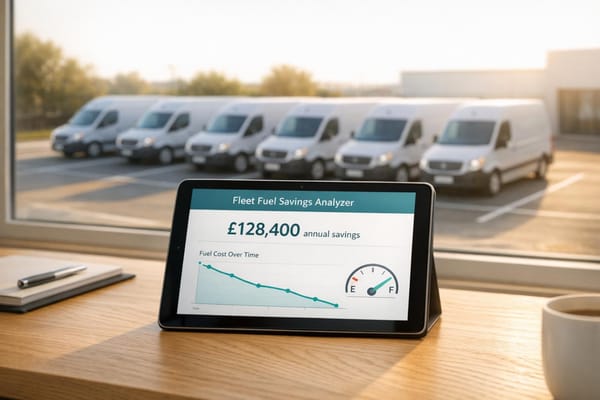
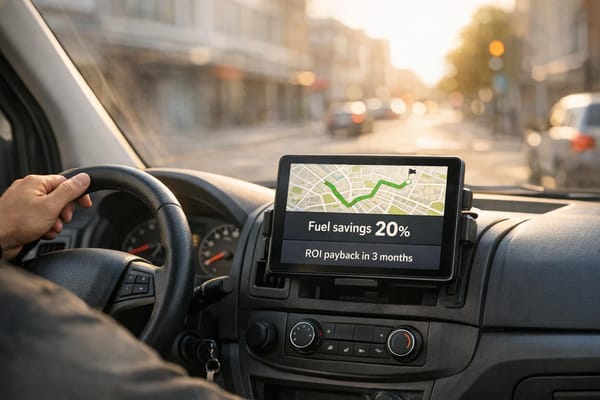
AI systems, powered by real-time data, not only optimise routes but also significantly cut operating costs. Fuel savings are among the most immediate benefits, typically ranging from 10–15%, with some cases reaching up to 20%. For a mid-sized fleet with an annual fuel budget of £50,000, a 12% saving translates to approximately £6,000 per year. In busy cities like London, Manchester, and Birmingham, live traffic data integration has helped fleets save an average of 42 pence per mile.
Maintenance costs also drop thanks to AI's predictive capabilities. By analysing vehicle sensor data, these systems can forecast potential component failures, allowing managers to schedule maintenance in advance. This approach can reduce repair expenses by 12–18%. Combining a 12% reduction in fuel costs (£6,000) with a 15% drop in maintenance expenses adds another £3,000–£4,500 in annual savings for a mid-sized fleet.
AI also slashes planning time by up to 75%, freeing managers to focus on broader strategies. For example, GRS Fleet Telematics users report average monthly savings of £1,224.52, totalling about £14,694.25 annually, with a payback period as short as 0.3 months.
Improving Delivery Efficiency and Cutting Costs
AI-enhanced route prediction doesn't just reduce costs - it boosts delivery performance. Fleet operators often see delivery times drop by 18% and vehicle capacity increase by up to 22%, enabling more deliveries without adding vehicles. For instance, Sainsbury's achieved a 96% on-time delivery rate while cutting last-mile costs by 15%.
Real-time rerouting also reduces failed delivery attempts by up to 40%, saving fuel, driver hours, and avoiding dissatisfied customers. One UK-based builders merchant reported a 25% increase in delivery capacity, along with lower fuel expenses and a 15% improvement in on-time-in-full (OTIF) deliveries.
Regulatory compliance features provide additional financial benefits. AI systems automatically track driver hours, issuing alerts to prevent violations. They also integrate Low Emission Zones (LEZ) and Ultra Low Emission Zones (ULEZ) into route planning using geofencing, helping vehicles avoid restricted areas and the associated fines.
Break-Even Analysis and ROI Timelines
The cost of implementing AI-powered route prediction depends on system complexity and fleet size. Initial investments typically range from £20,000 to over £125,000, with monthly subscription fees remaining affordable. For example, GRS Fleet Telematics offers hardware starting at £35 and monthly service fees from £7.99 per vehicle. Annual maintenance costs average around £20,000.
For mid-sized fleets in the UK, the break-even period is remarkably short. With monthly savings of about £1,224.52, many systems pay for themselves within 0.3 to 12 months, depending on the fleet's size and investment level. In many cases, fuel savings alone can cover the initial costs within the first year.
Case studies further illustrate these efficiencies. A Fortune 500 automotive supply chain company achieved a 250% return on investment within two years, with a 25% reduction in delivery times and a 20% increase in on-time deliveries. TIP Trailer Services, managing over 70,000 transport units across Europe, reported an 11% potential revenue growth thanks to improved forecasting accuracy.
While ROI varies depending on fleet size and operational complexity, mid-sized fleets often see the best returns. Smaller fleets may face longer payback periods but still achieve positive ROI within 8–12 months. Larger fleets, on the other hand, benefit from economies of scale.
To maximise returns, fleet operators should track key performance indicators such as fuel cost per mile, maintenance costs relative to fleet value, total delivery costs, delivery times, failed delivery attempts, planning time, and delivery capacity per vehicle. Establishing baseline metrics and monitoring them regularly allows operators to measure performance accurately and identify areas for further improvement. These measurements pave the way for understanding real-world outcomes through case studies.
Case Studies: AI Route Prediction in Practice
Examining how AI route prediction is applied in real-world scenarios sheds light on how businesses across various sectors solve operational challenges and achieve tangible results. These examples showcase its application in retail, logistics, and other industries, highlighting its ability to deliver measurable returns and operational improvements.
Case Study: Retail Fleet Efficiency Gains
Retail giants Tesco and Sainsbury's have both reaped significant benefits from AI-powered route optimisation. Tesco managed to cut delivery times by 18% while increasing the number of deliveries per vehicle by 22%. Meanwhile, Sainsbury's achieved an impressive 96% on-time delivery rate and reduced last-mile costs by 15%. By employing AI systems that could dynamically adjust routes in response to disruptions like traffic jams or road closures, these companies ensured consistent and timely deliveries.
Case Study: Logistics Implementation Challenges
In the logistics sector, companies often face hurdles such as integration issues and resistance to change. A UK-based builders merchant, struggling with high fuel costs and inconsistent delivery performance, turned to an AI-driven routing system. The results were striking: a 25% increase in delivery capacity and a 15% boost in on-time, in-full (OTIF) deliveries. However, the transition wasn’t without challenges. Drivers were initially hesitant to trust AI-generated routes, and integrating the system with existing infrastructure required effort. To address these issues, the company set clear KPIs and shared real-time performance data with drivers. They also partnered with GRS Fleet Telematics to implement advanced tracking and analytics, ensuring precise route calculations.
Similarly, Metro Cash and Carry achieved a 13% reduction in delivery expenses by adopting AI-driven route optimisation.
Results Across Different Industries
The impact of AI route prediction extends beyond retail and logistics, offering tailored benefits to various industries. For example, TIP Trailer Services, which manages over 70,000 transport units across Europe, reported an 11% potential revenue increase through better one-way rental predictions. They also reduced supply chain errors by 50% and improved forecast accuracy to 98%, significantly enhancing asset utilisation.
In another case, a Fortune 500 automotive supply chain company achieved a 250% return on investment within two years. The company saw a 25% reduction in delivery times and a 20% improvement in on-time deliveries. These gains multiplied over time as the AI system refined its predictions using driver behaviour and historical data.
For operators in highly regulated industries, AI systems offered additional value. Features like automatic tracking of driver hours, with alerts for potential violations, helped prevent compliance issues. Integration of Low Emission Zones (LEZ) and Ultra Low Emission Zones (ULEZ) into route planning allowed companies to avoid regulatory fines, particularly in cities like London, where emissions rules are stringent. This not only ensured compliance but also delivered immediate cost savings by avoiding penalties.
Implementation Considerations for Fleet Operators
Introducing AI route prediction into fleet operations requires careful planning and the right infrastructure. Below, we’ll walk through the practical steps to help fleet operators integrate AI systems effectively and maximise their benefits.
Infrastructure and Integration Requirements
A reliable AI route prediction system starts with dependable hardware. Your vehicles must be equipped with GPS tracking devices to provide real-time data on location, speed, and status - information essential for AI algorithms to calculate routes accurately. For example, GRS Fleet Telematics offers van trackers starting at £7.99 per month, combining primary hardwired GPS units with hidden Bluetooth backups for added reliability.
Onboard diagnostic (OBD) devices are equally important, as they track vehicle performance metrics like fuel consumption and engine diagnostics. On the software side, seamless integration with your existing fleet management platform is critical. AI systems rely on live data from multiple sources, such as Transport for London’s traffic feeds, weather updates, and historical route data. To handle this, you’ll need robust API connections and cloud infrastructure. Modern solutions often feature plug-and-play compatibility, making integration smoother.
However, older systems can pose challenges due to incompatible formats or protocols. Choosing AI platforms with extensive integration options and detailed API documentation can help bridge these gaps. For older vehicles, retrofitting with aftermarket devices is a practical solution.
Driver buy-in is also essential. Training sessions can help drivers understand how AI-optimised routes make their jobs easier by reducing navigation stress and cutting planning time. Highlighting these benefits often helps overcome resistance. Additionally, hybrid systems that store route data locally can ensure smooth operation, even when synchronisation issues arise. Finally, ensure your chosen provider complies with UK data protection laws and uses strong encryption to protect sensitive driver and vehicle data.
Key Performance Indicators for ROI Evaluation
Once the infrastructure is in place, it’s time to evaluate the system’s performance. Start by establishing baseline metrics over 4–8 weeks to measure fuel costs, maintenance expenses, planning time, delivery success rates, and customer satisfaction. These benchmarks will help you set realistic reduction targets, such as cutting fuel costs by 10–15%, maintenance by 12–18%, and planning time by up to 75%.
For instance, a mid-sized fleet with a £50,000 annual fuel budget could save around £6,000 by reducing fuel consumption by 12%.
Key operational metrics to monitor include fuel efficiency, failed delivery attempts (aiming to cut these by 40%), and delivery capacity, which could increase by 20–25% without adding vehicles. Customer-focused KPIs, like on-time delivery rates (targeting 95–99%) and fewer complaints, are equally important - especially since 61% of consumers prioritise quick delivery.
Environmental goals are becoming more relevant too. Metrics like reduced empty miles and lower carbon emissions are crucial for sustainability efforts. AI systems that account for Low Emission Zones (LEZ) and Ultra Low Emission Zones (ULEZ) can also help avoid fines. Track all costs and calculate the payback period - often within 8–12 months - to get a clear picture of your ROI.
Scalability and Long-Term Returns
Once you’ve integrated AI systems and established performance metrics, scaling up becomes the next step to maximise returns. Fleet size significantly influences implementation strategies and long-term gains.
For smaller fleets (under 50 vehicles), manual planning may suffice initially, but as operations grow more complex, the benefits of AI become evident. Mid-sized fleets (50–200 vehicles) typically see notable ROI improvements, with AI reducing planning times from hours to minutes. Initial investments for mid-sized fleets range from £1,750 to £7,000, with payback periods of 6–12 months.
Large fleets (over 200 vehicles) reap even greater benefits. AI systems can boost delivery capacity by up to 25% without adding vehicles. Fixed infrastructure costs are spread across more units, reducing per-vehicle expenses. Implementation for large fleets generally takes 16–24 weeks and includes custom integrations and comprehensive training. Initial costs range from £7,000 to £15,000+, with monthly expenses of £1,600 to £5,000+ per vehicle. Some operators have reported ROI figures as high as 2,965%, with payback periods as short as 0.3 months.
Over time, the value of AI systems continues to grow. As algorithms learn from historical data and driver behaviour, they improve predictive maintenance capabilities, cutting unexpected breakdowns by over 70% and extending vehicle component lifespans. While initial ROI can be realised within months, the cumulative savings and efficiency gains multiply over the years, delivering sustained benefits across the entire fleet.
Conclusion
AI route prediction has become a game-changer for fleet operators across the UK. The numbers speak for themselves: fuel costs can drop by 10–15%, maintenance expenses by 12–18%, and failed deliveries by as much as 40%. For instance, a mid-sized fleet with a £50,000 annual fuel budget could save around £6,000 with a 12% reduction. These cost savings highlight how AI is reshaping fleet management into a more efficient and scalable operation.
The financial appeal of AI adoption is hard to ignore. Most systems pay for themselves within 8–12 months through operational efficiencies alone. Some users, like those of GRS Fleet Telematics, have reported even faster returns - sometimes in just 0.3 months - while achieving ROI figures as high as 2,965%. On top of that, fleets benefit from faster delivery times, increased capacity, and consistently better on-time performance.
But it’s not just about cutting costs. AI profoundly improves daily fleet operations. Planning time can be slashed by up to 75%, allowing managers to focus on more strategic tasks. Delivery capacity can increase by 20–25% without adding vehicles, and on-time delivery rates often hit an impressive 95–99%. These benefits not only save money but also set the stage for sustainable growth and help operators meet evolving regulatory demands.
AI systems also tackle key operational challenges unique to the UK. They can automatically navigate Low Emission Zones, monitor driver hours, and maintain digital compliance records - features that are becoming increasingly valuable as regulations tighten and sustainability goals grow more ambitious.
For fleets still relying on manual planning, the question isn’t if they should adopt AI route prediction - it’s when. With 67% of UK fleet operators expecting telematics to boost productivity by 2025, early adopters are already reaping the rewards. They’re delivering better service, cutting costs, and improving safety records. And with solutions like GRS Fleet Telematics offering hardware starting at £35 and monthly tracking from just £7.99 per vehicle, the technology is more accessible than ever.
Whether you’re managing a small regional fleet or a large national operation, AI route prediction delivers results quickly. These systems don’t just reduce expenses - they help fleets serve customers better, optimise resources, and stay competitive in a demanding market. The time to act is now, as the advantages are too significant to ignore.
FAQs
What makes AI route prediction more effective than traditional GPS systems for fleet management?
AI route prediction takes navigation to the next level by combining advanced algorithms with real-time data to create smarter routes. Unlike traditional GPS, which offers static directions from point A to B, AI systems consider dynamic factors like traffic flow, weather conditions, and delivery schedules to determine the most efficient paths.
The benefits are clear: less time spent on the road, lower fuel costs, and improved fleet productivity. For fleet operators in the UK, adopting AI route prediction can deliver tangible returns by cutting down operational inefficiencies and providing customers with more accurate delivery times - keeping everyone happy and on schedule.
What challenges might fleet operators encounter when adopting AI route prediction technology?
Integrating AI route prediction into fleet operations comes with several advantages, but it’s not without its hurdles. One of the primary concerns is the initial investment. Upgrading existing systems and implementing AI technology can be costly, particularly for smaller businesses with limited budgets. On top of that, staff training becomes essential, as employees need to learn how to use the new tools effectively and make sense of the data they provide - this takes both time and resources.
Another potential issue lies in maintaining the accuracy and dependability of AI-generated predictions. These systems rely heavily on real-time, high-quality data, which means operators may have to invest in advanced tracking equipment to gather the required information. Lastly, there’s often internal resistance to change. To overcome this, organisations need to communicate the long-term benefits clearly, including potential returns on investment, to reassure stakeholders and encourage adoption.
How can fleet operators evaluate the ROI of using AI-powered route prediction systems?
Fleet operators can measure the return on investment (ROI) of AI-driven route prediction systems by focusing on critical performance indicators like fuel savings, shorter delivery times, and better vehicle utilisation. These advanced systems use real-time data to optimise routes, cutting down on unnecessary mileage and helping reduce overall operational costs.
Another important factor to consider is customer satisfaction. Faster and more dependable deliveries can significantly boost service quality, leading to happier customers. By weighing these advantages against the upfront costs and ongoing expenses of the technology, businesses can assess both the financial returns and the efficiency improvements achieved through its adoption.