AI Route Prediction for Multi-Modal Transport
AI-powered route prediction uses real-time GPS, IoT and analytics to cut delays, reduce emissions and make multi-modal transport more reliable.
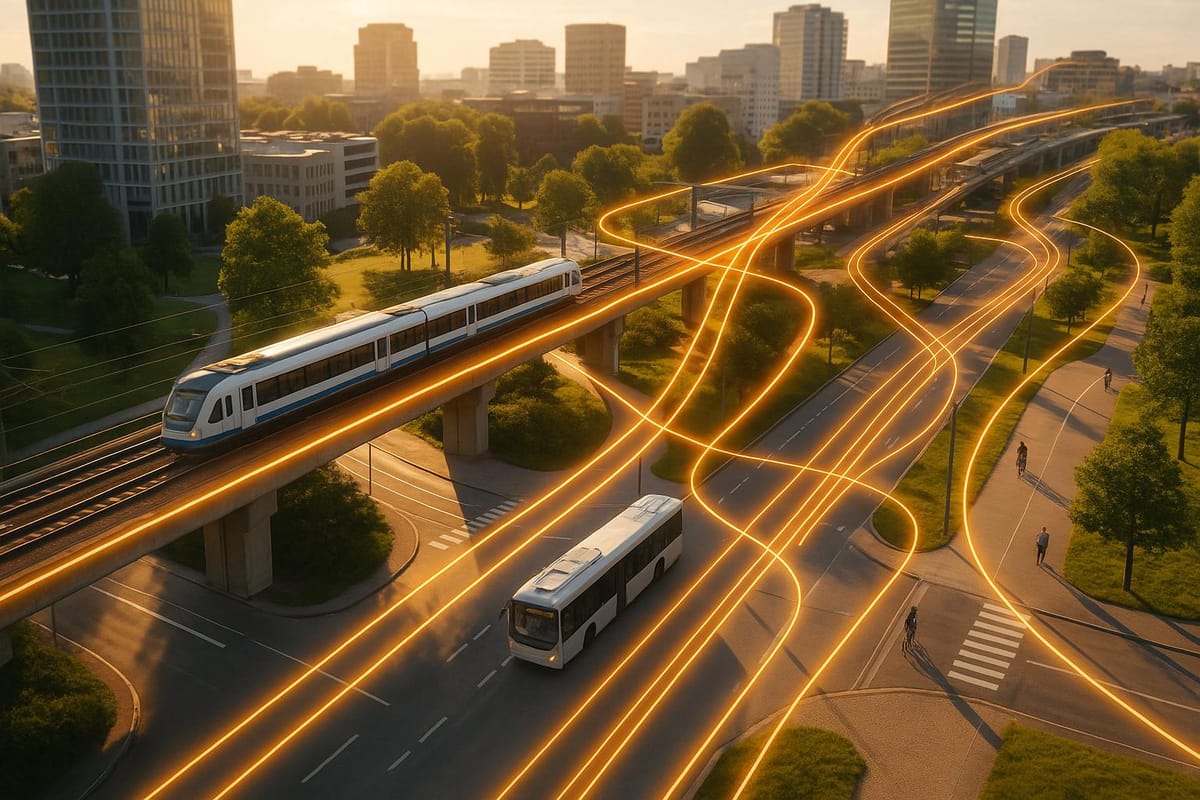
AI is transforming how we travel by integrating real-time data from buses, trains, bikes, and more to create efficient, flexible routes. Traditional static schedules often led to delays, but AI systems now use tools like machine learning and predictive analytics to respond instantly to changing conditions. For example, Transport for London (TfL) improved passenger flow by 30% at Blackhorse Road station using AI-powered monitoring.
Key takeaways:
- Real-time data: AI combines GPS, IoT sensors, and traffic updates to predict optimal routes.
- Dynamic routing: Systems adjust to disruptions like traffic, weather, or demand surges.
- Environmental benefits: Reduced congestion cuts fuel use and emissions.
- Government push: The UK supports AI in transport, with self-driving cars expected by 2026.
AI-powered tools like GRS Fleet Telematics ensure accurate tracking and route optimisation, benefiting both operators and passengers. However, success depends on strong data infrastructure, standardised systems, and continuous performance monitoring.
Smart Mobility: AI & Data Science Powering the Future of Multimodal Transport | Ronghui Liu
AI Technologies for Route Optimisation
Building on the integration of real-time data, advanced AI technologies now play a critical role in multi-modal route optimisation. These systems analyse transport data from various modes - buses, trains, bicycles, and even autonomous vehicles - to suggest the most efficient routes. The key technologies driving this evolution include machine learning, deep learning, predictive analytics, and reinforcement learning, each offering distinct advantages to improve routing decisions.
Machine learning algorithms examine historical trends and current conditions to navigate complex transport networks. Deep learning, on the other hand, processes unstructured data like traffic camera footage and sensor feeds, enabling a deeper understanding of urban traffic patterns. Predictive analytics helps forecast future scenarios, such as travel times or congestion probabilities, while reinforcement learning fine-tunes routing decisions over time through trial and feedback.
Machine Learning for Data Analysis
Machine learning is particularly effective at uncovering patterns in massive datasets - patterns that would be nearly impossible to identify manually. In the context of multi-modal transport, these algorithms synthesise information from sources like GPS trackers, IoT sensors, traffic cameras, weather data, and user feedback to create detailed models of transport network behaviour under varying conditions.
Practical applications show how machine learning can revolutionise operational efficiency. By analysing passenger flow patterns, transport operators can adjust services dynamically, predicting peak travel times and configuring resources accordingly. This not only enhances throughput but also reduces delays.
For these models to work effectively, they rely on diverse data inputs. Key sources include real-time traffic updates, historical travel trends, weather forecasts, vehicle locations, passenger counts, and infrastructure reports. Machine learning systems weigh these factors, recognising how even small changes - like light rain impacting cycling routes differently than bus schedules - can affect optimal routing.
For operators managing mixed fleets, these insights are invaluable. Machine learning can predict congestion hotspots, suggest alternative routes, and adapt recommendations in response to real-time changes. This reduces fuel consumption, shortens travel times, and boosts service reliability. While machine learning uncovers hidden patterns, forecasting future conditions takes journey planning a step further.
Predictive Analytics for Journey Planning
Predictive analytics goes beyond identifying patterns; it forecasts future conditions, enabling transport systems to plan routes proactively rather than reactively. These models estimate travel times, predict congestion, and anticipate demand surges, helping operators adjust schedules and allocate resources more effectively.
This technology combines statistical methods with machine learning, analysing historical data alongside real-time updates. By factoring in elements like weather, scheduled events, and seasonal trends, predictive models deliver more accurate forecasts than those based solely on historical averages.
Transport for London (TfL) employs predictive analytics to estimate journey times and assess congestion risks across different modes of transport. This helps optimise traffic signal timings and reduces bottlenecks. TfL also uses demand forecasts to deploy additional services during expected peak times, smoothing passenger flow and preventing system overloads.
Research further highlights the potential of hybrid predictive models in freight transport. A 2023 study developed a system combining fuzzy logic with artificial neural networks to determine optimal routes based on time, cost, and reliability. This approach successfully balanced multiple factors, demonstrating its value in complex decision-making.
Predictive analytics also supports dynamic pricing and resource management. By forecasting demand, operators can adjust fares during peak times to spread out travel and ease congestion. Similarly, maintenance schedules can be fine-tuned by predicting when vehicles or infrastructure will need servicing.
When integrated with real-time data, predictive analytics enhances routing systems significantly. For example, if a model forecasts congestion on a planned route, alternative paths can be recommended before delays occur. This not only saves time and fuel but also improves the passenger experience. Continuous feedback ensures these models remain effective, particularly in fast-changing scenarios like accidents, roadworks, or major events.
Real-Time Data Integration in Multi-Modal Systems
AI route prediction thrives on the quality and immediacy of the data it receives. Multi-modal transport networks generate an overwhelming amount of information every second - vehicle locations, traffic conditions, weather updates, and passenger movements, to name a few. The challenge lies in merging these diverse data streams to enable AI systems to predict the best routes effectively.
Modern transport systems rely on simultaneous data inputs from numerous sources. GPS devices track vehicle positions, IoT sensors monitor road conditions, traffic cameras identify congestion, and weather stations provide environmental updates. Each of these data streams offers a unique perspective, and only by combining them can AI systems gain the full picture needed for accurate and reliable route predictions.
This process starts with precise tracking tools.
GPS and IoT Sensors
GPS technology is the backbone of real-time location tracking across all transport modes. Vehicles equipped with GPS devices continuously transmit their coordinates, speed, and direction to centralised systems. This constant flow of data allows AI systems to monitor the real-time locations of buses, delivery vans, trains, and even bicycles in shared mobility schemes.
IoT sensors take this a step further by gathering detailed information about the transport network. These devices track everything from traffic light timings to parking availability, road surface conditions, and air quality. They can even identify and classify road users - cyclists, pedestrians, cars, and buses - with an impressive accuracy of up to 97%.
Fleet operators benefit from telematics systems that go beyond basic tracking. For example, GRS Fleet Telematics combines advanced GPS tracking with a backup Bluetooth tracker to ensure uninterrupted data flow, even if the primary system fails. This dual-tracker setup is critical for maintaining reliable data streams that AI systems need for accurate predictions.
Additionally, telematics systems collect a range of operational data, such as driver behaviour, fuel consumption, working hours, and maintenance needs. When this data is integrated into AI systems, it enables route optimisation that accounts not only for traffic conditions but also for vehicle performance and driver habits.
Data Fusion and Infrastructure Requirements
Gathering data is only part of the equation; the real challenge lies in integrating these diverse streams into a single platform that AI systems can process effectively. Achieving this requires substantial infrastructure, both in terms of technology and coordination between stakeholders.
At the core of any successful integration strategy is a centralised platform capable of processing data from multiple transport modes - buses, trains, ride-shares, bicycles, and pedestrian pathways - in real time. This requires robust computational infrastructure and high-speed connectivity, often relying on 5G networks or dedicated IoT systems to ensure low-latency data transmission. Redundancy measures, such as failover mechanisms, are also essential to maintain service continuity during outages.
Standardising data formats is another critical step. Transport operators often use different data structures and communication protocols, which can hinder the AI’s ability to create a unified view of the network. Establishing common standards ensures seamless data sharing, enabling AI systems to compare conditions across modes and recommend optimal routes.
A compelling example of successful data fusion comes from a 2023 trial by Transport for London at Blackhorse Road station on the Victoria Line. AI cameras monitored ticket barriers and dynamically adjusted their operation based on passenger flow. This approach increased passenger throughput by up to 30% and reduced queue times by as much as 90%. The trial’s success hinged on the system’s ability to combine real-time passenger data with barrier control systems, showcasing the transformative potential of integrated data systems.
When done right, data fusion provides a comprehensive operational picture that single-source systems simply cannot match. For example, while GPS data might indicate a road is clear, combining it with traffic camera feeds, weather updates, and historical congestion patterns allows the AI to make far more informed decisions. This multi-source approach also enables cross-validation, where predictions from one data stream are verified against others, significantly reducing errors and boosting reliability.
GRS Fleet Telematics in Real-Time Tracking

For fleet operators, maintaining uninterrupted data streams is essential for AI-driven route prediction. GRS Fleet Telematics provides the infrastructure needed to achieve this, offering real-time monitoring that feeds directly into AI systems.
The platform’s GPS tracking delivers live updates on vehicle location, speed, and operational status, while geofencing capabilities alert operators when vehicles enter or leave designated areas. The dual-tracker system ensures data continuity, with a hidden Bluetooth tracker serving as a backup if the primary GPS device is tampered with or fails. This redundancy is vital for ensuring uninterrupted data flow, which is critical for accurate AI predictions.
Beyond location tracking, GRS Fleet Telematics gathers detailed metrics such as driver behaviour, fuel usage, maintenance schedules, and working hours. This rich dataset allows AI systems to analyse patterns, optimise routes, and make decisions that consider both network-wide conditions and fleet-specific factors. For instance, AI can identify routes that minimise fuel consumption or adjust delivery schedules based on real-time traffic and weather conditions.
With over 35 years of experience, GRS Fleet Telematics provides the robust infrastructure needed to support AI-powered route prediction. By integrating detailed fleet data with broader transport network information, the platform enables dynamic and precise routing across multi-modal transport systems.
Dynamic Route Planning and Adaptive Routing
With real-time data at its core, dynamic route planning shifts transport management from rigid schedules to a system that adapts on the fly. Once AI taps into live data streams, it can adjust routes instantly. Whether it’s a traffic accident, sudden downpour, or an unexpected surge in passengers, AI recalculates routes in real time, optimising travel time, fuel consumption, and passenger comfort - all within seconds.
This marks a major departure from older transport systems, where manual intervention often came too late to prevent delays. AI systems, on the other hand, can process enormous amounts of data and make decisions faster than any human, creating networks that respond seamlessly to real-world conditions.
Real-Time Re-Routing Mechanisms
At the heart of adaptive routing is AI’s ability to spot disruptions and act immediately. Using machine learning, these systems analyse data from GPS trackers, IoT sensors, traffic cameras, and weather stations to detect early warning signs. For instance, when traffic begins to build, the system identifies patterns before they spiral into gridlock.
Traffic congestion is one of the most common triggers for re-routing. By monitoring traffic flow in real time and comparing it to historical trends, AI can suggest alternative routes when speeds drop or queues form. In UK cities, AI-driven traffic management systems have cut congestion by as much as 20% by adjusting traffic signals and redirecting vehicles.
Weather disruptions demand a proactive approach. Instead of waiting for hazardous conditions to cause chaos, AI systems use weather forecasts to anticipate problems. Heavy rain, snow, or strong winds can make certain routes risky, especially for larger vehicles like buses and lorries. By combining weather data with road conditions and vehicle capabilities, AI can steer traffic towards safer options. For example, during severe weather in London, AI systems have prioritised safer routes for buses and emergency services, ensuring both safety and service continuity.
Fluctuating passenger demand is another challenge. Rush hour, special events, or unexpected disruptions can create sudden spikes in transport needs. AI models, using historical passenger flow data and real-time counts from ticket barriers and cameras, can predict these surges. When demand increases, the system can deploy extra vehicles, tweak schedules, or adjust routes to handle the load efficiently. These swift changes not only improve fleet performance but also enhance the passenger experience.
The technical side of these decisions relies on reinforcement learning and deep learning algorithms. These models simultaneously evaluate multiple route options, factoring in traffic conditions, historical congestion patterns, travel times, and fuel use. They continuously improve as they process new data, allowing them to implement route changes within seconds - often before human operators even notice a problem. This prevents minor issues from snowballing into major delays.
For fleet operators, the advantages are clear. Vehicles spend less time stuck in traffic and more time completing their tasks. For example, a delivery van might take a slightly longer but less congested route, saving time overall. Similarly, buses can be redirected around accidents or road closures, maintaining service reliability and reducing passenger wait times. Systems like GRS Fleet Telematics help operators cut delays and improve fuel efficiency.
Cross-modal coordination takes things a step further by optimising the entire transport network. If a train is delayed, AI can adjust bus routes to provide alternative connections, ensuring passengers can still reach their destinations smoothly.
The effectiveness of adaptive routing hinges on high-quality, timely data. GPS tracking pinpoints vehicle locations, IoT sensors monitor road conditions, cameras detect congestion, and weather feeds supply crucial updates. The better the data, the more precise the re-routing.
Dynamic route planning doesn’t just minimise delays - it also reduces fuel consumption by avoiding stop-start traffic, lessens vehicle wear and tear with smoother routes, and improves passenger satisfaction through reliable journey times and clearer service updates.
However, implementing these systems requires careful preparation. Operators need robust data infrastructure to handle large volumes of live information, standardised data formats for seamless integration, and properly trained staff to oversee AI-driven decisions when human input is needed.
As AI technology advances, these systems are becoming even smarter. Current models can identify and classify different road users - cyclists, pedestrians, cars, and buses - with up to 97% accuracy. This detailed understanding of transport environments allows AI to make increasingly nuanced routing decisions, making it an essential tool for managing the complexities of urban mobility across various transport modes.
Implementation and Operational Considerations
Building on the concepts of real-time data and dynamic routing, implementing these systems effectively requires meticulous operational planning. To deploy AI-powered route prediction across various transport modes, a solid and integrated infrastructure is essential.
Start with building a reliable data infrastructure. AI systems rely on processing massive amounts of data from sources like GPS trackers, IoT sensors, traffic cameras, and weather stations. This data must flow seamlessly into centralised platforms to enable swift, algorithm-driven routing decisions. Without dependable data collection, even the most advanced AI models can't provide accurate predictions.
Another critical hurdle is interoperability. Transport operators - whether buses, trains, cycle hire schemes, or taxis - often use outdated systems that don’t communicate well with one another. To overcome this, stakeholders need to agree on standardised data formats and protocols, ensuring smooth integration across different systems.
The quality of data also plays a vital role. Unreliable or outdated information can lead to inaccurate predictions. Organisations must validate data for accuracy, completeness, and timeliness. For example, GPS coordinates should be precise, passenger counts accurate, and service disruption data up-to-date. AI-powered sensors can classify road users with high precision, but maintaining this accuracy requires ongoing monitoring and calibration.
As systems expand, scalability becomes a major consideration. A solution that works for a single bus route may struggle when managing thousands of vehicles across various transport modes. Cloud-based systems can help, offering the flexibility to scale resources up during peak travel times and down when demand is lower. However, scalability must be a priority from the initial design phase.
A robust data infrastructure forms the backbone for system integration and real-time responsiveness.
Centralised Platforms for System Integration
Once data and interoperability challenges are addressed, centralised platforms serve as the operational hub for multi-modal transport systems. These platforms integrate data from buses, trains, trams, bikes, scooters, and even autonomous vehicles into a unified system. This allows for coordinated operations and provides passengers with seamless journey planning.
Typically, platform architecture includes three main layers:
- The data aggregation layer collects information from GPS systems, IoT sensors, and camera networks across all transport modes.
- The intelligent processing layer uses machine learning algorithms to analyse this data, identify patterns, and generate route predictions.
- The user-facing layer provides passengers with journey options via apps, websites, or station displays.
Transport for London (TfL) offers a prime example of this integration. By leveraging an extensive network of cameras and sensors, TfL monitors movement across buses, the Underground, Overground, Docklands Light Railway, trams, and road networks. This real-time data allows them to adjust operations dynamically, resulting in smoother passenger flow and reduced queues across the network.
Centralised platforms also need to handle ticketing and payment integration. Passengers should be able to plan, book, and pay for journeys involving multiple transport modes through a single interface. This requires payment systems capable of processing transactions across operators and distributing revenue fairly.
Providing real-time updates is another crucial function. Passengers need accurate, up-to-the-minute information on schedules, availability, and traffic conditions. For instance, if a bus route is diverted or a train is delayed, the platform must instantly recalculate journey options and notify affected passengers. Achieving this level of responsiveness requires seamless data flow between all system components.
Establishing governance frameworks is essential to manage these complex platforms. Clear agreements must outline data ownership, access rights, quality standards, and mechanisms for resolving disputes. Without such frameworks, data sharing can break down, undermining the system’s effectiveness.
With integration frameworks in place, tailored telematics solutions can ensure reliable operations.
GRS Fleet Telematics in Implementation
For road-based transport fleets, telematics systems provide the essential data layer that AI systems depend on. Real-time tracking, location data, and operational insights feed directly into route prediction algorithms, enabling dynamic adjustments that make multi-modal systems responsive.
GRS Fleet Telematics offers scalable and reliable solutions to meet these needs. The system provides continuous GPS tracking, speed data, and vehicle status updates. This real-time visibility ensures that AI-recommended routes are followed and delivering the intended benefits.
The platform’s dual-tracker technology adds an extra layer of reliability. While the primary tracker maintains constant communication with the central platform, a secondary Bluetooth backup ensures data continuity if the main tracker encounters issues. This redundancy is particularly valuable for multi-modal systems where data gaps can disrupt routing decisions.
Route planning features are designed to integrate with broader multi-modal platforms. For example, when a delivery van operates in an area served by buses and trams, the system can consider public transport schedules and traffic conditions to suggest optimal routes, reducing delays and fuel consumption.
The white-label option allows organisations to customise the telematics interface to align with their broader system design. Transport authorities or private operators can rebrand the interface, creating a cohesive experience for staff managing different transport modes.
At a cost of £7.99 per vehicle per month, the subscription model makes it affordable to scale telematics coverage across large fleets. This price includes SIM and data costs, platform access, and account management support, simplifying budgeting for multi-modal implementations.
Telematics also plays a key role in performance monitoring. By comparing predicted journey times with actual travel data, operators can identify areas where AI algorithms need refinement. For example, if a route predicted to save 10 minutes still results in delays, operators can investigate whether traffic patterns have shifted or whether the model needs retraining.
To maximise effectiveness, telematics solutions must integrate seamlessly with platforms used by various transport operators. Standardised data formats and APIs allow vehicle tracking information to combine with data from trains, buses, and other modes. This transforms isolated tracking systems into components of a coordinated, responsive transport network.
Phased Implementation Approach
Rolling out these systems typically follows a phased approach:
- Assessment and Planning (2–4 months): Audit existing systems and define requirements.
- Infrastructure Development (4–6 months): Establish data collection systems and integrate APIs.
- Pilot Deployments (3–6 months): Test the system in limited areas and train staff.
- Gradual Rollout (6–12 months): Expand coverage incrementally, depending on scale.
Throughout this process, organisations must focus on change management, ensuring staff are trained to work with AI-driven systems and addressing concerns about the role of human judgement in decision-making.
While the upfront effort and investment are substantial, the long-term benefits include improved efficiency, lower fuel costs, happier passengers, and more reliable services.
Performance Metrics and System Evaluation
Once AI route prediction systems are up and running, tracking their performance becomes a top priority. To truly assess their value, you need clear, measurable benchmarks. With multi-modal transport - covering buses, trains, trams, bikes, and vans - evaluation gets more complex. It’s not just about how well each mode operates individually but also how smoothly they work together. For example, a system might excel at optimising routes but fail if passengers face long waits at transfer points or if real-time updates are unreliable.
Performance evaluation in this context builds on earlier discussions about real-time data integration and dynamic routing. It focuses on both the numbers and the human experience, offering a complete picture of how these systems perform.
KPIs for Evaluating AI Route Prediction
Key performance indicators (KPIs) are crucial for assessing how well AI route prediction systems are working. Here are some of the most important ones:
- Travel time reduction: Systems often achieve reductions of 15–25%, making journeys quicker and more efficient.
- Fuel efficiency: Improvements of 10–20% (measured in litres per 100 kilometres) can significantly cut costs.
- Service reliability: Tracking on-time performance ensures services meet schedules.
- Passenger wait times: Reducing delays at intermodal hubs improves the overall travel experience.
A standout example comes from Transport for London (TfL). At Blackhorse Road station, a trial led to a 30% increase in passenger throughput and a 90% drop in queue times. These kinds of metrics highlight the tangible benefits of optimised routing.
Cost savings are another key advantage. By cutting fuel, maintenance, and labour expenses, optimised systems offer a strong return on investment. However, these savings must be weighed against implementation costs, such as software licences, hardware (like GPS devices and IoT sensors), staff training, and integration efforts. For instance, cutting fuel consumption by 15% across a fleet can lead to substantial yearly savings, which can offset the costs of maintaining an AI-powered system.
Data accuracy plays a pivotal role in system success. In London, AI-powered sensors have achieved a 97% accuracy rate in classifying road users, from cyclists to buses. This high accuracy supports better infrastructure planning, ensuring that route predictions remain reliable.
Another critical metric is processing latency - the lag between data collection and system response. Even minor delays can undermine real-time optimisation, making continuous monitoring of this factor essential.
Customer satisfaction metrics also matter. Surveys and feedback can reveal how passengers perceive journey planning accuracy, real-time updates, and overall travel improvements. Meanwhile, modal shift metrics - tracking increases in public transport use over private vehicles - offer insights into both environmental benefits and the system’s ability to make multi-modal travel more appealing.
Using Telematics for Monitoring and Optimisation
Telematics data is the backbone of effective performance evaluation. These systems provide operational insights that validate AI predictions and identify areas for improvement. GPS tracking, vehicle speed, and status updates feed directly into evaluation frameworks, allowing organisations to compare predicted outcomes with real-world results.
Take GRS Fleet Telematics, for example. It offers real-time monitoring capabilities for road-based fleets, tracking vehicle location, speed, and status. This data forms a robust foundation for assessing whether AI-recommended routes are delivering the intended benefits.
Fleet analytics tools add another layer of insight, offering detailed reports on fuel consumption, maintenance needs, and other performance metrics. Operators can use this information to refine AI models. For instance, if a route designed to save 10 minutes consistently results in delays, the system can be retrained with updated data.
Telematics also integrates seamlessly with multi-modal platforms. Imagine a delivery van operating in an area with buses and trams. The system can factor in public transport schedules and current traffic conditions to suggest the best routes. Telematics data then verifies whether these suggestions are actually improving efficiency.
Driver behaviour monitoring is another key feature. Tracking speed and eco-driving habits not only boosts fuel efficiency but also enhances safety. If drivers aren’t following AI recommendations, it might signal the need for additional training or system adjustments.
Geofencing capabilities further streamline operations. By setting virtual boundaries, operators can ensure vehicles stick to optimised routes, improving delivery times and reducing fuel consumption. Telematics also supports predictive maintenance by monitoring vehicle health and scheduling repairs before breakdowns occur, preventing disruptions to optimised routes.
To keep improving, telematics systems need to integrate smoothly with platforms across different transport modes. Standardised data formats and APIs make it possible to combine vehicle tracking data with real-time updates from buses, trains, and other systems. This creates a cohesive, responsive network rather than isolated tracking systems.
Benchmarking against industry standards is another valuable practice. Conducting these evaluations quarterly or bi-annually can reveal performance gaps and highlight areas for improvement. Automated data quality checks also help by identifying anomalies, missing data, or sensor failures that could compromise predictions. A/B testing further refines the system, showing which algorithms or routing strategies work best in specific situations.
For organisations using GRS Fleet Telematics, the white-label option allows customisation of the interface. This creates a unified experience for transport staff while maintaining comprehensive performance monitoring.
Conclusion
AI route prediction is transforming the way multi-modal transport systems function across the UK. With tangible results - such as reducing journey times by approximately 15% and cutting costs by around 10% - this technology is already delivering clear benefits. These improvements translate into faster deliveries, lower fuel expenses, and more dependable services for both passengers and operators, setting the stage for broader operational gains.
Take Transport for London as an example. AI-powered sensors on their network achieve a 97% accuracy rate in classifying road users. This data feeds directly into infrastructure planning, supporting the ambitious goal of shifting 80% of London’s journeys to walking, cycling, or public transport within the next two decades. It’s not just theory - AI is already making a noticeable impact in real-world applications.
For fleet operators managing road-based vehicles, combining telematics with AI has proven to be a game-changer. Real-time GPS tracking, route optimisation, and driver behaviour monitoring provide AI with the data it needs to make precise predictions. Tools like GRS Fleet Telematics continuously collect and validate this data, allowing operators to refine their strategies and align AI recommendations with actual outcomes. This integration mirrors the adaptive routing systems discussed earlier, helping to create a seamless multi-modal transport network.
Looking ahead, the future of AI in transport hinges on thoughtful implementation. With the UK government pushing for seamless multi-modal integration and the potential introduction of self-driving vehicles under the Automated Vehicles Act by 2026, AI is set to play a central role in the evolution of transport systems. Advanced machine learning models, such as those using reinforcement learning, promise to deliver even more sophisticated routing solutions for increasingly complex networks. Incorporating geospatial data will further enhance these systems, factoring in not just traffic but also environmental conditions and social priorities.
The real challenge lies in execution. Transport operators need to invest in essential infrastructure, from GPS feeds and IoT sensors to centralised platforms capable of processing data from multiple transport modes. Clear KPIs must be established, with continuous performance monitoring and system adjustments based on real-world insights. For organisations managing vehicle fleets, tools like GRS Fleet Telematics offer the capabilities needed to track and measure these metrics effectively.
AI has already shown its worth by improving efficiency, reliability, and passenger satisfaction. As technology advances and infrastructure evolves, the potential for AI to create smarter, more efficient, and more sustainable transport systems will only expand. Organisations that prioritise building strong data foundations and integrating AI will be best placed to lead the way in this rapidly advancing landscape.
FAQs
How does AI help optimise routes in multi-modal transport systems?
AI plays a key role in boosting the efficiency and dependability of multi-modal transport systems. By processing massive amounts of data, it can predict the best possible routes, taking into account factors like traffic flow, weather conditions, and up-to-the-minute transit schedules. This ensures smooth transitions between various transport modes.
Using advanced algorithms, AI helps cut down travel time, trim costs, and lower environmental impact. For businesses, this translates to streamlined logistics and smarter resource management, which contribute to more efficient and eco-friendly operations.
What challenges can arise when implementing AI-driven route prediction in transport networks?
Implementing AI-driven route prediction in transport networks comes with its fair share of challenges. A major hurdle is data integration. Transport systems often pull information from a variety of sources - GPS data, traffic reports, and public transport schedules, to name a few. Merging these disparate data streams into a single, cohesive system while ensuring accuracy and consistency is no small feat. Without reliable data, predictions can quickly fall apart.
Another stumbling block is dealing with real-world variables. Things like sudden weather changes, unexpected road closures, or spikes in passenger demand can throw even the most advanced AI models off course. To tackle this, models need constant updates and fine-tuning to keep up with these unpredictable factors and deliver dependable results.
Lastly, there’s the issue of infrastructure limitations. Many existing transport networks rely on older systems that may not be compatible with AI technologies. In such cases, significant upgrades - or even entirely new systems - might be required to make the most of AI’s potential. These upgrades can be costly and time-consuming, adding another layer of complexity to the process.
How do AI technologies like machine learning and predictive analytics optimise transport routes?
AI technologies, including machine learning and predictive analytics, are transforming how transport routes are optimised. Machine learning analyses massive datasets - like traffic conditions, weather updates, and historical travel data - to determine the most efficient routes. Meanwhile, predictive analytics takes this a step further, forecasting potential delays and offering alternative routes.
When these technologies work together, multi-modal transport systems can adjust in real-time. This not only boosts efficiency but also cuts costs and improves the overall travel experience. For businesses managing vehicle fleets, tools such as advanced van tracking systems add another layer of precision, ensuring smoother operations and dependable route planning.