AI Route Optimisation Saves Fuel
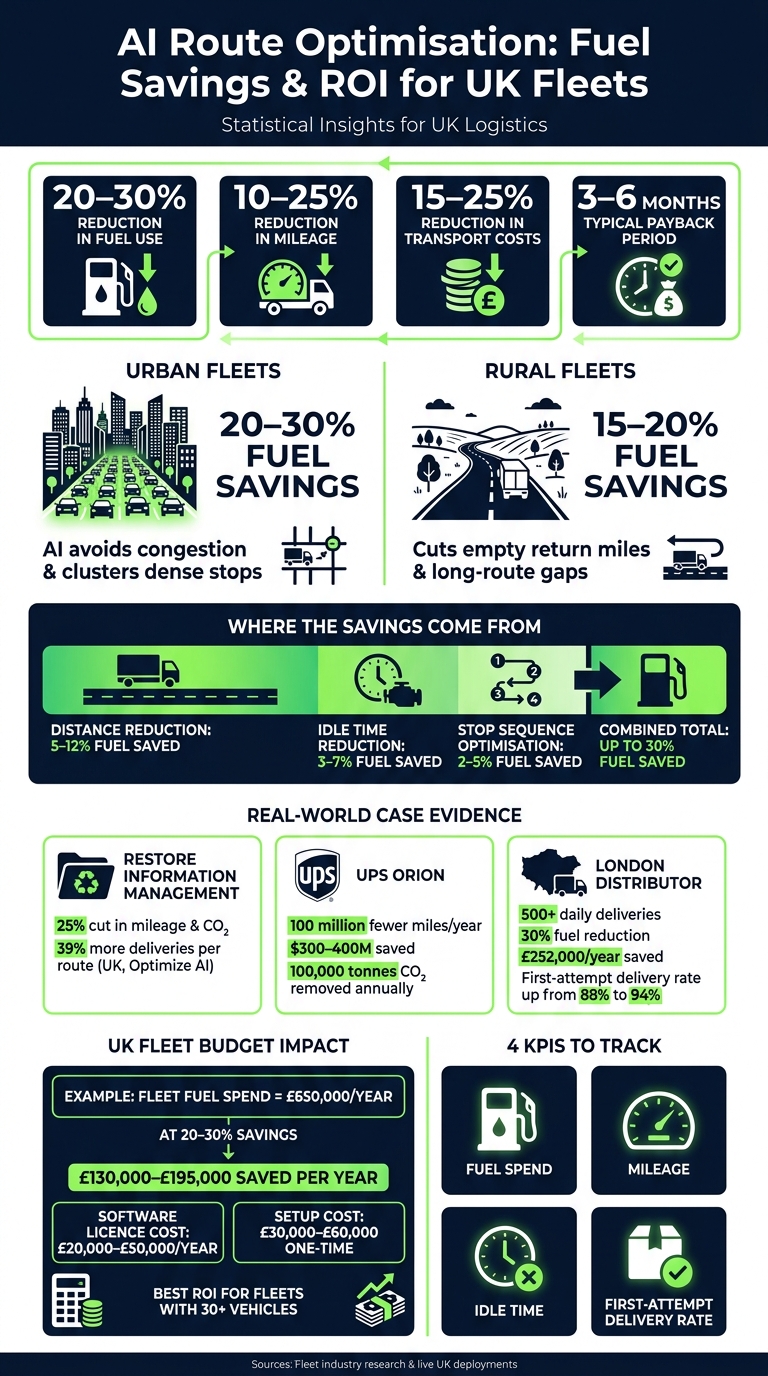
AI route optimisation can cut fleet fuel use by 20–30%, reduce mileage and costs, and often pays back in 3–6 months for UK fleets.
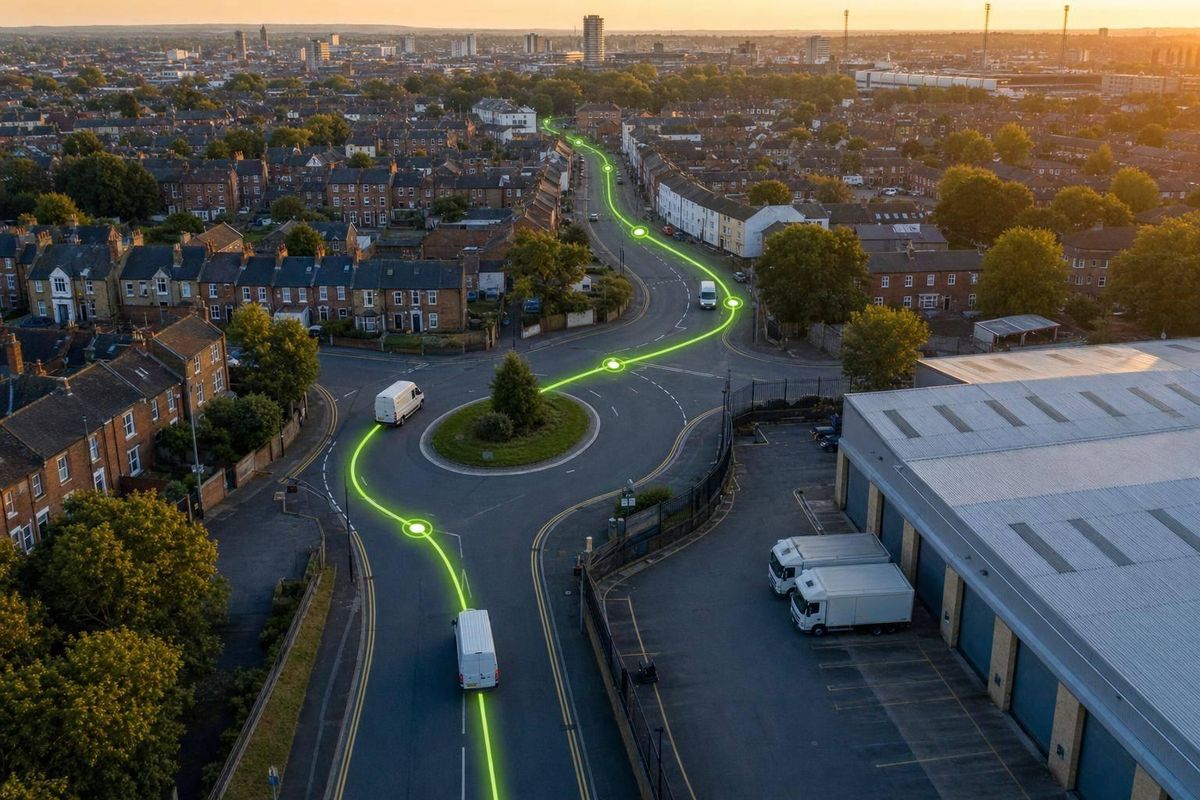
Yes - AI route optimisation can cut fleet fuel use by about 20–30% in many cases. If I run a fleet, that can mean fewer miles, less idling, lower CO₂ output, and lower fuel spend, often with payback in 3–6 months.
Here’s the short version:
- Fuel use often falls by 20–30%
- Mileage often drops by 10–25%
- Transport costs often drop by 15–25%
- Urban fleets often see the biggest cuts because traffic and stop density give AI more to work with
- Rural fleets still save fuel, often by cutting empty return miles
- The best results usually come from combining route planning with telematics and driver data
Put simply, AI route optimisation does more than tell a driver how to get from A to B. It plans across the whole fleet, checks traffic, delivery windows, vehicle loads and driver hours, then updates routes through the day. That helps cut waste that burns fuel with no return.
A few figures make the case clear:
- A fleet spending £650,000 a year on fuel could save £130,000–£195,000 a year at a 20–30% reduction
- Restore Information Management reported 25% cuts in mileage and CO₂, plus 39% more deliveries per route
- UPS reported 100 million fewer miles a year, with cost savings of $300–400 million
What matters most to me is that the fuel savings usually come from plain things I can measure:
- shorter routes
- better stop order
- less idling
- fewer empty trips
- tighter load planning
- closer tracking of planned vs actual driving
If I want to judge whether it will work for my fleet, I’d look at four numbers first: fuel spend, mileage, idle time, and first-attempt delivery rate. That gives a clear baseline before any rollout.
The article below breaks that down into the research, the day-to-day reasons fuel use falls, and what UK fleets should track to see if the savings show up on the road.
AI Route Optimisation: Fuel Savings & ROI for UK Fleets
Route Optimization: Cut Fleet Costs 30% with AI Traveling Salesman Solvers
sbb-itb-499a7f0
Documented fuel savings from AI routing
Research and live rollouts point in the same direction: AI route optimisation often cuts fuel use by 20–30% and mileage by 10–25%. Transport costs also tend to fall by 15–25%, with payback often landing within 3–6 months. The exact result depends on things like route density, traffic levels and stop patterns.
Typical results across studies
The same trend shows up across different fleet types, vehicle classes and regions. That said, operating pattern still matters.
Urban fleets usually land at the top end, with 20–30% fuel savings, because AI can do a strong job of steering vehicles away from congestion and grouping stops in dense postcodes. Rural fleets more often see 15–20% savings, mainly from cutting empty return miles and shrinking the gaps between longer routes.
The savings can climb further when AI routing is used alongside telematics-based driver behaviour tracking. Cutting distance on its own usually accounts for 5–12% in fuel savings. Add idle time reduction at 3–7% and stop sequence optimisation at 2–5%, and total savings can reach 30%.
Case evidence from large fleets
Live fleet results sit well within those ranges. Restore Information Management used Optimize AI across four UK sites and cut mileage and CO₂ by 25%, while deliveries per route increased by 39%.
UPS's ORION handles 250,000 routing requests a day. It has led to 100 million fewer miles a year, saved an estimated $300–400 million in costs, and removed 100,000 metric tonnes of CO₂ each year.
Put simply, the gains come from three things working together: fewer miles, less idling and better stop sequencing.
What the savings mean for UK fleet budgets
Percentages help, but pounds make the case much easier to judge. If a UK fleet spends £650,000 a year on fuel, a 20–30% reduction works out at £130,000–£195,000 a year.
For mid-sized UK fleets, software licences usually sit between £20,000 and £50,000 a year, with setup costs of £30,000 to £60,000. That’s why the case tends to look strongest for fleets with 30+ vehicles. At that size, the savings often overtake rollout costs pretty fast.
Why AI routing reduces fuel use day to day
Those fuel savings usually come from a few plain, repeatable things. Once you see them, it becomes much easier to spot where fuel is slipping away now and where AI pulls some of that waste back.
Fewer miles, less idling and better route timing
AI keeps re-optimising multi-stop routes as conditions change on the road. It works against live traffic and delivery constraints, then adjusts routes mid-journey using live traffic data.
That makes a difference in daily fleet work. Engine idling alone can use up to 2 litres of fuel per hour and produce more than 5 kg of CO₂. And traffic jams do more than slow drivers down. They burn fuel while the vehicle gets nowhere useful. By routing vehicles around known pinch points in real time, AI cuts down both idling and those extra diversions that a static GPS just can't see coming.
The same idea carries over to stop order and loading. Small route tweaks can trim wasted miles that build up across the day.
Better stop sequencing and load planning
Live traffic is only part of the picture. AI also cuts fuel by removing dead mileage from the stop order itself.
Without route optimisation, it's common for routes to zig-zag across postcodes just to meet time windows. That adds miles with no upside. AI groups nearby stops into clusters and sets the order so drivers move through an area in a cleaner path instead of doubling back.
Load planning matters too. When the system matches vehicles to jobs by capacity and makes sure they leave full rather than half empty, fewer trips are needed to move the same volume. One of the clearest places this shows up is on empty return legs. A vehicle going back to depot with nothing on board is just cost, plain and simple.
Stronger results when telematics and driver data are combined
Routing savings stand out even more when telematics shows what happened on the road.
Route optimisation gives the most fuel-efficient plan. But if a driver accelerates harshly or leaves the engine idling, fuel use climbs above what the AI model expected. That chips away at the savings on paper. Pair routing with eco-driving analytics, speeding alerts and harsh braking data, and the picture gets much clearer.
Telematics helps close the gap between planned fuel use and actual fuel use. Put the two data sets together, and fleet managers can see whether the savings came from shorter routes, smoother driving, or a bit of both.
What the research means for UK fleets and the role of telematics
Key factors for UK fleet operators
Those route gains hit hardest in the UK, where congestion, CAZ rules and failed drops can eat into margins fast. Urban congestion, Clean Air Zones in cities like London, Birmingham, Bristol and Leeds, and the cost of failed first-attempt deliveries - £5–£10 per retry in urban areas - all add pressure to fleet budgets. AI routing helps by steering drivers around traffic, supporting CAZ compliance and ordering stops in a smarter way.
Rural fleets deal with a different problem. On longer inter-town runs, the biggest gains often come from cutting empty return mileage, with savings of 15–20% often reported. In both urban and rural settings, the case is strongest when savings are tracked in plain business terms: litres saved, miles cut, pounds recovered and CO₂ reduced per route.
The same pattern appears in UK fleet deployments. A mid-sized London distributor handling 500+ daily deliveries across zones 1–4 put AI routing in place in Q2 2024. Within three months, fuel spend dropped by 30%, saving £252,000 a year, while first-attempt delivery rate climbed from 88% to 94%.
How GRS Fleet Telematics supports measurement and rollout
The next step is measuring the result, so operators can show whether routing savings turn up in actual fuel use. GRS Fleet Telematics provides GPS tracking, fuel-efficiency data and driver-behaviour monitoring. That helps operators compare planned and actual routes and check savings against fuel consumed in practice.
That feedback loop matters. Idling can use up to 2 litres of fuel per hour, so even short spells in traffic can wipe out part of the gain from a better route plan. Geofencing adds another level of control, letting managers track route compliance and support compliance in CAZ areas and specific delivery zones.
A sensible place to start is a four-week pilot in one depot or region - around 10–30% of fleet volume. Compare mileage, fuel use and idle time against the pre-AI baseline, and you get a clear picture of what the system is delivering.
Conclusion: the evidence and the business case
Taken together, the studies and live rollouts point in the same direction: AI route optimisation tends to cut fuel use by 20–30%. In UK deployments, teams have reported 25% drops in mileage and CO₂.
Key takeaways for fleet decision-makers
These savings don’t come from one change alone. They come from route choice, driver behaviour, and schedule control all working in step. Add routing to telematics, and you can check that planned routes are being followed while spotting what’s still draining fuel, such as idling and detours.
ROI should be tracked through the numbers that matter day to day:
- fuel spend
- mileage
- emissions
- first-attempt delivery rates
To show the savings on the road, fleets need route data and fuel data in one place. GRS Fleet Telematics can support route and fuel-use tracking.
FAQs
How does AI routing save fuel?
AI route optimisation cuts fuel use by using machine learning and predictive algorithms to plan the most efficient routes in real time.
It looks at traffic, weather, and vehicle capacity to reduce wasted miles and idling time. It can also organise stops in a smarter order, steer drivers away from congestion, and spot driving habits that burn more fuel than they should. With precise tracking data, GRS Fleet Telematics also supports real-time rerouting, helping fleets cut fuel use by up to 25%.
Will it work for a small fleet?
Yes. AI-based route optimisation can work very well for small fleets. It can help cut fuel and labour costs by 10 to 25 per cent.
In plain terms, it helps you plan better routes, reduce wasted miles, and react to changes as they happen. That means less time on the road, less fuel burned, and fewer hours lost to poor scheduling.
For small and medium-sized businesses, that can make a big difference. Many often see a return on investment within 3 to 6 months.
What should I track before rollout?
Before you roll out an AI-based route optimisation system, set a clear performance baseline first. Measure your current miles per delivery using GPS data. Then track fuel use, overtime hours, and the average number of stops on each route.
It’s also worth spending 2 to 3 months on data quality. Clean up your address database and make sure your telematics system delivers consistent, gap-free GPS data.