AI Route Optimisation: Cost vs Efficiency Analysis
Compare UK-focused low-cost telematics and enterprise AI route optimisation: costs, fuel savings, delivery performance and ROI timelines.
AI route optimisation is reshaping fleet management, offering smarter ways to plan routes and reduce costs. For UK operators, it means better fuel savings, fewer failed deliveries, and improved delivery times. Two main options dominate the market: GRS Fleet Telematics and general AI solutions. Here's a quick breakdown:
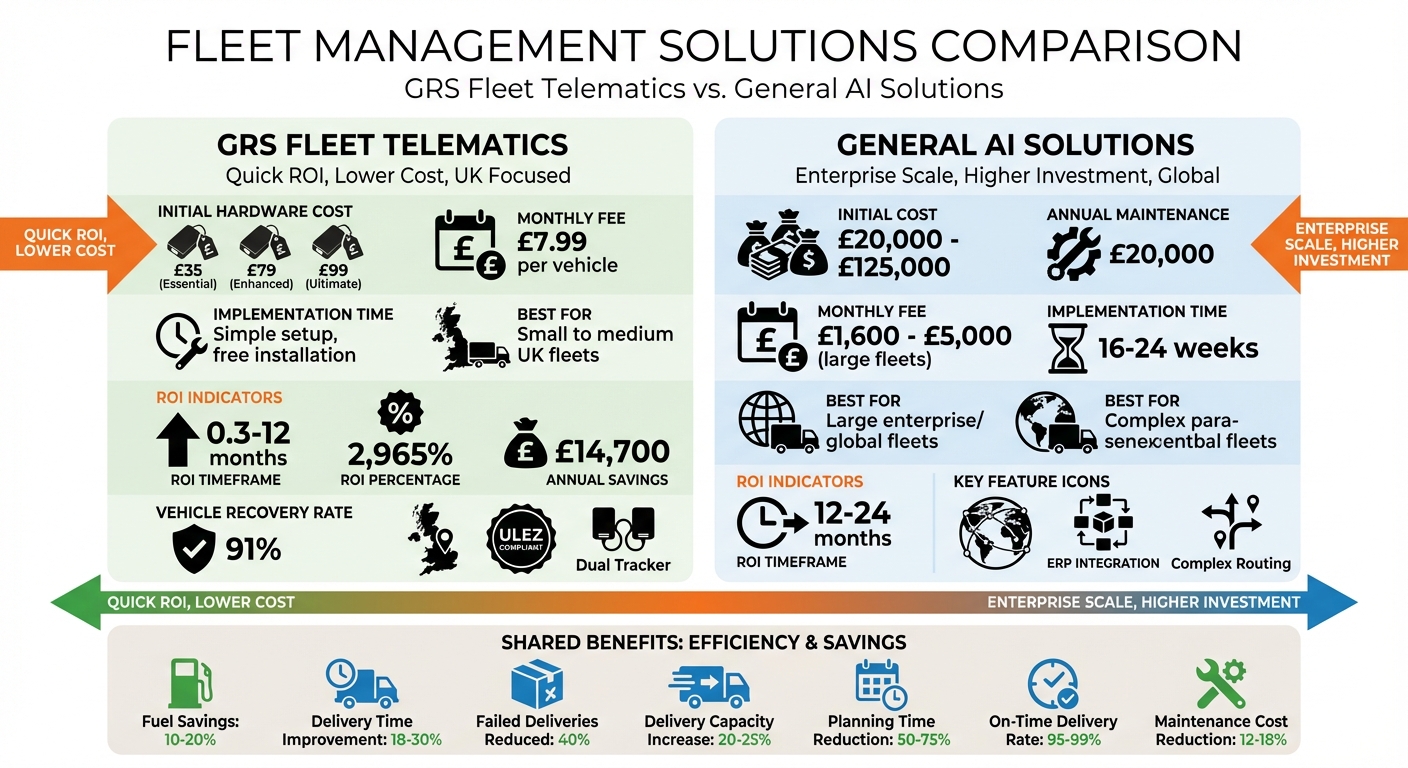
- GRS Fleet Telematics: Affordable (£35 hardware, £7.99/month per vehicle), tailored for UK fleets, with features like dual trackers, ULEZ compliance, and fast ROI (as short as 0.3 months). Best for small to medium fleets.
- General AI Solutions: Costlier (£20,000–£125,000 upfront, £20,000/year maintenance), suited for large fleets with complex needs. Offers advanced integration but longer ROI (12–24 months).
Key Benefits of AI Route Optimisation:
- Fuel savings: 10–20%
- Delivery times improved by up to 18–30%
- Failed deliveries reduced by 40%
- Increased delivery capacity: 20–25%
Whether you’re a small business or a large enterprise, choosing the right system depends on your budget, fleet size, and operational goals.
GRS Fleet Telematics vs General AI Solutions: Cost and ROI Comparison
1. GRS Fleet Telematics
Initial Costs
GRS Fleet Telematics offers a range of affordable options to suit different needs. The Essential tracker is priced at £35, the Enhanced tracker (which includes hidden Bluetooth backup) costs £79, and the Ultimate tracker - featuring dual trackers and remote immobilisation - is available for £99. On top of this, there’s a monthly charge of £7.99 per vehicle, which covers SIM data, platform access, and account management.
For comparison, typical general AI systems demand an upfront investment of £20,000–£125,000, with annual maintenance costs of around £20,000. GRS’s pricing model significantly lowers the barrier to entry, making it a practical choice for businesses looking to optimise their fleet operations without breaking the bank.
Operational Savings
This system isn’t just about tracking - it’s a money saver. Fuel costs drop by 10–15% thanks to optimised routing, while predictive maintenance features reduce repair costs by 12–18% and minimise vehicle wear and tear. For a mid-sized fleet, these fuel savings alone can add up to about £6,000 per year.
Overall, users can save an impressive £1,225 per month - or £14,700 annually. The dual-tracker technology also boasts a 91% recovery rate for stolen vehicles, which helps mitigate insurance risks and potential asset loss. On top of that, the system reduces failed delivery attempts by up to 40%, thanks to real-time tracking and more precise estimated arrival times. This directly cuts down the costs associated with redeliveries.
Efficiency Gains
Beyond cost savings, GRS Fleet Telematics is a game-changer for efficiency. It automates routing, slashing planning time by 75%. Delivery capacity can increase by 20–25% without needing additional vehicles, while delivery times are reduced by up to 18%. On-time delivery rates consistently stay between 95% and 99%.
The system also integrates UK-specific regulatory features, such as geofencing for Low Emission Zones (LEZ) and Ultra Low Emission Zones (ULEZ). This helps operators avoid hefty fines in cities like London. Additionally, real-time eco-driving analytics provide drivers with feedback to reduce harsh braking and idling, further cutting fuel consumption.
Return on Investment (ROI)
With an astonishing ROI of 2,965%, GRS Fleet Telematics delivers measurable value. The payback period depends on fleet size - small fleets typically see ROI within 8–12 months, while mid-sized and large fleets may achieve it in as little as 0.3 months.
The low upfront costs and immediate benefits, such as reduced fuel expenses and streamlined planning, make this system accessible for fleets of all sizes in the UK. To maximise ROI, fleet operators are encouraged to track baseline metrics - like fuel costs per mile and failed deliveries - for 4–8 weeks before implementing the system. This ensures accurate measurement of improvements and helps highlight the system’s impact.
Revolutionizing Transportation with AI-Powered Route Optimization
2. General AI Route Optimisation Solutions
Unlike specialised options like GRS Fleet Telematics, these platforms are designed to handle a broad range of fleet sizes and complexities.
Initial Costs
General AI route optimisation systems come with a higher upfront investment compared to simpler tracking tools. Costs typically range from £20,000 to over £125,000, depending on the fleet's size and complexity. This price includes hardware, software, integration, and training.
For larger fleets, the implementation process can take anywhere from 16 to 24 weeks, often requiring customised integrations with systems like enterprise resource planning (ERP) and warehouse management platforms. Hardware options range from simple plug-and-play devices to advanced hardwired units offering features like remote immobilisation. Additionally, annual maintenance costs for mid-to-large fleets average around £20,000, covering system updates, technical support, and ongoing optimisation. While the initial costs may seem steep, they often lead to measurable savings in day-to-day operations.
Operational Savings
Just like GRS Fleet Telematics, general AI systems deliver considerable operational savings by cutting down on fuel use, maintenance costs, and delivery failures. These platforms replace manual planning, which is 20–40% less efficient than algorithm-based routing. Real-time rerouting helps fleets avoid accidents, roadworks, and congestion, minimising delays across the entire operation.
AI-optimised routes can reduce fuel costs by 10–20% and lower maintenance expenses by 12–18%, thanks to reduced mileage and predictive alerts. Predictive maintenance alone can cut unexpected breakdowns by over 70%. Overall, transportation costs are reduced by 15–25%, and failed delivery attempts drop by 40% due to more accurate estimated arrival times.
Efficiency Gains
AI systems analyse hundreds of variables simultaneously, including real-time traffic, weather, vehicle specifications, and customer time windows. This reduces route planning time by 50–75%, allowing staff to focus on strategic tasks. Delivery times improve by 18–30%, while vehicle capacity utilisation increases by 20–25%, all without requiring additional assets.
These systems ensure consistently high on-time performance, a marked improvement over manual planning. Integration with warehouse management systems synchronises picking sequences with delivery routes, ensuring vehicles are loaded in the most efficient order. Additionally, optimised routes contribute to a 2–15% reduction in CO₂ emissions, helping fleets meet environmental targets and comply with UK Low Emission Zone regulations.
Return on Investment (ROI)
The combined savings and efficiency improvements pave the way for a strong return on investment. The payback period for general AI solutions typically falls between 12 and 24 months, depending on the fleet's size and complexity. Although the initial costs are considerable, the savings from reduced fuel consumption, lower maintenance expenses, and improved delivery capacity often justify the investment. To measure ROI accurately, fleet operators should track baseline metrics - such as fuel cost per mile and failed delivery rates - for 4–8 weeks before implementation. This provides a clear benchmark for assessing improvements and validating the investment.
Advantages and Disadvantages
After evaluating cost structures and efficiency benefits, let’s delve into the practical upsides and downsides of each option. The decision between GRS Fleet Telematics and general AI route optimisation systems hinges on factors like fleet size, budget, and operational goals.
GRS Fleet Telematics stands out for its affordability and UK-specific compliance features. Starting at just £35 for hardware and a monthly fee of £7.99 per vehicle, it’s a budget-friendly option for fleets of all sizes. Its dual-tracker security system boasts an impressive 91% recovery rate for stolen vehicles. Plus, its geofencing capabilities simplify navigation through London's Congestion Charge, ULEZ, and LEZ zones - ensuring regulatory compliance without extra effort. Users have reported rapid returns, with payback periods as short as 0.3 months and ROI figures reaching up to 2,965%. However, there’s a catch: it’s designed mainly for the UK market and requires hardware installation, making it less suitable for international operations.
On the other hand, general AI solutions cater to large-scale, enterprise-level fleets with complex scheduling requirements. These platforms can manage thousands of vehicles simultaneously and integrate seamlessly with ERP systems. But the benefits come at a price - implementation costs range from £20,000 to over £125,000, with monthly fees between £1,600 and £5,000 for sizeable fleets. The setup process, taking 16–24 weeks, can be a hurdle for smaller operators, and the payback period typically spans 8–12 months.
Here’s a quick comparison of the two options:
| Feature | GRS Fleet Telematics | General AI Solutions |
|---|---|---|
| Implementation | Simple setup; free installation | 16–24 weeks |
| Scalability | Small to large UK fleets | Enterprise/global fleets |
| Unique Strength | Dual-tracker security (91% recovery) | Complex ERP integration |
For UK-based fleets needing fast deployment and robust security, GRS Fleet Telematics offers excellent value. Meanwhile, larger organisations with global operations and advanced ERP systems might find the higher investment in general AI platforms worthwhile.
Conclusion
Choosing the right AI route optimisation solution depends on your fleet size, operational scope, and budget.
For smaller fleets with fewer than 50 vehicles, affordable options like GRS Fleet Telematics stand out. With a modest £7.99 monthly fee and a hardware cost of £35, businesses can see a return on investment (ROI) within 8–12 months. This is achieved through reduced fuel consumption and more efficient route planning. Medium-sized fleets, managing 50–200 vehicles, typically face upfront costs between £1,750 and £7,000. However, these systems can deliver payback in as little as 6–12 months, with planning times dropping from hours to minutes and delivery capacity increasing by 20–25% - all without adding extra vehicles. For large fleets exceeding 200 vehicles, the initial investment ranges from £7,000 to over £15,000. Despite the higher costs, these operations benefit from economies of scale, with some reporting payback periods as short as 0.3 months and achieving impressive on-time delivery rates of 95–99%.
The cost-effectiveness and operational benefits of these solutions clearly vary depending on fleet size. UK businesses, in particular, find GRS Fleet Telematics highly advantageous due to its quick deployment, compliance with local regulations, and robust security features. Its UK-specific tools, such as ULEZ and LEZ navigation, coupled with a dual-tracker system boasting a 91% recovery rate, make it an excellent choice for companies seeking immediate efficiency improvements without the complexity of enterprise-level systems. On the other hand, larger organisations with global operations and existing ERP infrastructures may prefer more comprehensive AI platforms, though these come with significantly higher costs.
To ensure your investment pays off, monitor key performance metrics to track improvements and validate your decision.
FAQs
What should small UK fleets consider when choosing an AI route optimisation system?
Small UK fleets should weigh a few important factors when picking an AI route optimisation system to ensure it genuinely improves operations.
Cost and savings: Choose a system that promises noticeable reductions in fuel consumption and maintenance expenses. For example, cutting fuel costs by 10–15% can translate into a quick return on investment, often within a few months. Make sure the subscription fees are in line with these savings to maintain predictable budgeting.
Integration and real-time data: The system should work smoothly with your current telematics, like GRS Fleet Telematics trackers, and use live updates - such as traffic conditions, weather, and vehicle performance - to adjust routes dynamically. Features like predictive analytics and real-time recalculations can further optimise efficiency.
UK-specific compliance: Ensure the platform meets UK regulations, including ULEZ requirements and driver-hour rules. A user-friendly interface that simplifies scheduling and provides precise ETAs can boost delivery reliability while cutting down on planning time.
By keeping these priorities in mind, small fleets can select a system that improves efficiency, stays within budget, and meets UK regulatory standards.
How does AI route optimisation help improve delivery times and cut costs?
AI-powered route optimisation taps into real-time data like traffic conditions, weather updates, delivery schedules, and vehicle performance to map out the most efficient routes. By cutting down on unnecessary mileage and reducing fuel consumption, businesses can slash transport costs by an estimated 10%–20%. On top of that, streamlined routes can boost delivery times by as much as 30%, leading to improved punctuality and happier customers.
For businesses in the UK, this doesn't just translate to noticeable cost savings. It also means smoother operations and a smaller carbon footprint - a win for both the bottom line and the planet.
What environmental benefits can AI route optimisation bring to fleet management in the UK?
AI-driven route optimisation is proving to be a game-changer for fleet operators in the UK, especially when it comes to environmental impact. By analysing real-time data - like traffic patterns, weather conditions, and vehicle performance - it identifies the most efficient routes, cutting mileage by up to 25% and fuel consumption by as much as 30%. The result? A noticeable reduction in carbon emissions, helping businesses align with sustainability goals and meet regulations such as the Ultra-Low Emission Zone (ULEZ).
But the benefits don’t stop at lower emissions. Efficient routing also reduces engine idling and eliminates unnecessary detours, which contributes to less nitrogen oxide being released into the atmosphere. This improvement is particularly crucial for enhancing air quality in densely populated urban areas. Additionally, optimised routes mean less wear and tear on vehicles, extending their lifespan and cutting back on frequent repairs or replacements.
With advanced tools like GRS Fleet Telematics’ tracking devices, businesses can make the most of these eco-friendly advantages. Not only do they support greener operations, but they also deliver substantial cost savings, proving that sustainable practices can go hand in hand with financial efficiency.