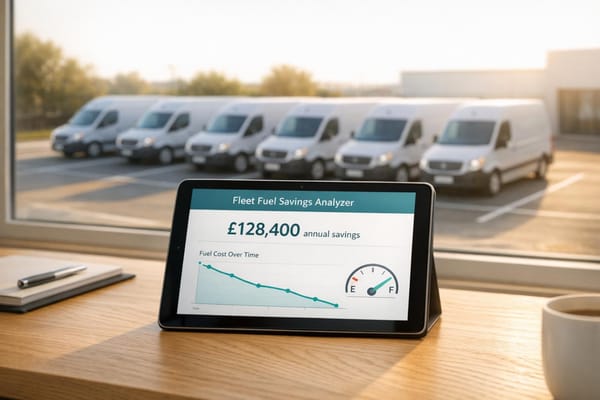
AI Predictive Maintenance for Construction Fleets
AI predictive maintenance forecasts equipment failures to cut downtime, reduce repair costs and extend the life of vehicles, plant and site tools.
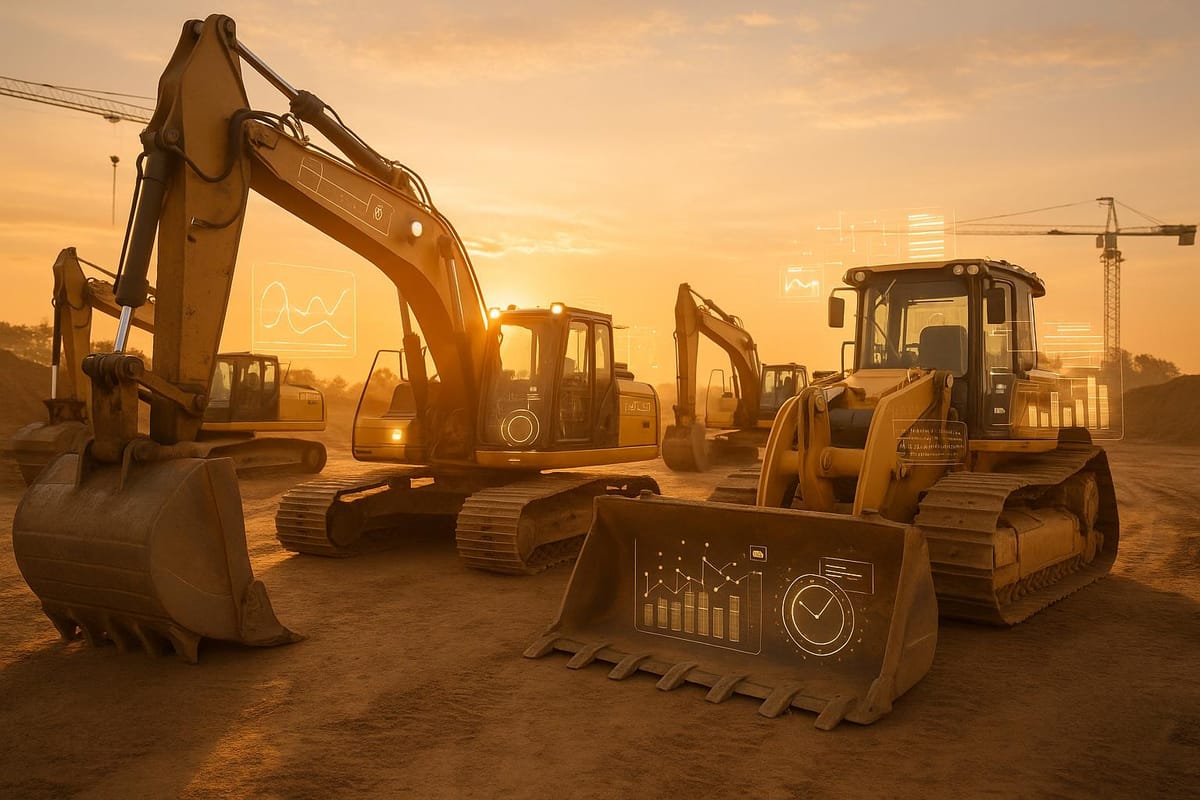
AI predictive maintenance is transforming how UK construction fleets manage their vehicles and machinery. By using real-time data, such as vibration, temperature, and fault codes, combined with machine learning, this approach predicts equipment failures before they happen. This reduces downtime, cuts emergency repair costs, and extends the lifespan of critical components.
Key takeaways:
- Road vehicles (vans, pickups, HGVs): AI helps prevent breakdowns, improves fuel efficiency, and ensures compliance with safety regulations.
- Heavy machinery (excavators, cranes): Early fault detection minimises costly project delays and protects high-value assets.
- Auxiliary equipment (generators, compressors): Monitoring ensures reliability during critical tasks and reduces unnecessary servicing.
UK construction firms report maintenance cost savings of up to 40% within the first year, alongside fewer breakdowns and improved safety. Starting with high-impact assets, like heavy machinery, and gradually expanding to other equipment is the most effective way to implement this system. Success depends on high-quality data, proper integration, and staff training to act on AI insights.
AI Agents for Predictive Maintenance in Construction Fleets 🚧
1. Road Vehicles (Vans, Pickups, HGVs)
Road vehicles are the backbone of UK construction logistics, responsible for transporting materials, tools, and crews to project sites. A van breaking down on the M25 or an HGV failing to deliver concrete on time can throw entire schedules into chaos. To avoid such disruptions, AI-driven predictive maintenance is becoming an essential tool, using telematics data to keep fleets running smoothly.
Data Availability and Integration
Modern road vehicles are treasure troves of data, making them ideal for AI analysis. Engine Control Units (ECUs) monitor critical performance metrics, while OBD-II and CAN-bus systems provide standardised diagnostic data. Additional inputs from tyre sensors, fuel cards, and digital logs further enrich the dataset.
For AI predictive maintenance to work effectively, these diverse data streams must converge on a single platform. When combined with workshop records, this unified dataset enables machine-learning models to detect patterns indicating potential failures. For instance, they can identify early signs of turbocharger wear, injector misfires, or gradual declines in brake performance.
Providers like GRS Fleet Telematics offer continuous, high-quality data feeds, including real-time GPS, vehicle usage, and driver behaviour. When integrated with AI platforms, these feeds enable fleets to transition from basic tracking to condition-based servicing. Instead of relying on guesswork, managers can schedule maintenance based on actual vehicle usage and wear patterns. GRS’s dual-tracker technology, which boasts a 91% recovery rate for stolen vehicles, further reduces downtime by ensuring assets remain available for proactive servicing.
By linking telematics units and OEM data sources with AI platforms and fleet maintenance systems, companies can automate work orders and align processes with UK compliance standards. This seamless integration delivers clear cost and efficiency gains, as outlined below.
Key Benefits and Cost Savings
The financial advantages of AI predictive maintenance are hard to ignore. UK construction firms using these systems report maintenance cost reductions of up to 40% in the first year. These savings primarily come from better-timed interventions, shifting maintenance from costly emergency repairs to planned, in-house servicing during downtime.
AI also extends the lifespan of critical components. By identifying early warning signs, it enables timely maintenance of brakes, tyres, clutches, and DPF systems based on their actual condition, not arbitrary mileage intervals. This approach minimises unnecessary part replacements and labour costs, while also reducing vehicle downtime.
Fuel efficiency improves as well. AI can detect engine issues, improper tyre pressures, and excessive idling, helping fleets cut fuel consumption and emissions. For construction vehicles operating in low-emission zones, early detection of DPF or emissions-related faults is essential for avoiding breakdowns and compliance fines.
Safety is another major benefit. AI can identify patterns that precede critical failures, such as brake malfunctions, tyre blowouts, or steering problems - issues that are particularly dangerous for HGVs on motorways or vans navigating busy urban areas. Proactively addressing these risks not only reduces accidents but also ensures compliance with duty-of-care regulations during audits.
Downtime Reduction and Operational Impact
Unplanned downtime is a costly challenge in construction logistics, but AI predictive maintenance significantly reduces this risk. By analysing real-time data from sensors and telematics, AI can detect early warning signs - like abnormal temperatures, recurring fault codes, or unusual loads - days or even weeks before a failure might occur.
This foresight allows fleet managers to schedule repairs at convenient times, such as evenings, weekends, or between projects, rather than during peak working hours. For example, early signs of alternator wear can be addressed during off-peak maintenance, avoiding disruptions during critical operations. Similarly, an HGV with a developing cooling system issue can have repairs completed overnight, preventing breakdowns during vital deliveries.
These operational improvements ripple across entire projects. Reliable, just-in-time deliveries ensure construction sites stay on schedule, enabling crews to work efficiently and critical operations like crane lifts or concrete pours to proceed without delays. Over time, higher vehicle utilisation rates and more predictable logistics contribute to on-time, on-budget project completion - key for maintaining client trust and securing repeat business.
UK fleets adopting condition-based maintenance report fewer emergency repairs and reduced replacement costs, creating a smoother logistics chain that protects both project timelines and profit margins. This proactive approach is proving invaluable for the construction industry, where every minute counts.
2. Heavy Plant and Off-Road Machinery (Excavators, Cranes, Loaders)
Heavy plant and off-road machinery are among the most expensive and indispensable assets on UK construction sites. When a tower crane stalls mid-lift or an excavator breaks down during groundwork, the entire project can come to a standstill. Unlike road vehicles, which often have alternatives available, the failure of a single excavator or crane can halt dozens of workers and set schedules back by days. This is where AI predictive maintenance proves invaluable, as the cost of unexpected downtime far outweighs the investment in monitoring technology.
Data Availability and Integration
Heavy plant machinery produces a wealth of data, making it highly suitable for AI analysis, though integrating these systems presents unique challenges compared to road vehicles. Modern excavators, cranes, and loaders come equipped with telematics systems that monitor key metrics such as engine load, RPM, hydraulic pressure, temperature, and operating hours. They also generate hydraulic flow data, which can highlight issues like valve sticking, pump wear, or hose weaknesses before they become visible problems - critical insights unique to this type of equipment.
The real challenge lies in consolidating these diverse data streams into a unified platform. Many UK construction companies achieve this by combining original equipment manufacturer (OEM) telematics with retrofit IoT sensors for older or rented machinery. These third-party sensors send data via cellular networks to the same central system used for newer machines. Middleware then standardises the data, enabling consistent cross-brand analysis.
This integrated approach is especially beneficial for contractors managing equipment across multiple sites. By combining heavy plant data with workshop records, duty cycle metrics, and error logs, machine-learning models can differentiate between normal operational wear and signs of impending failure. For example, AI can detect gradual increases in hydraulic temperature on an excavator or unusual vibration patterns in a crane’s slew bearing - issues that might go unnoticed during routine inspections but signal a potential breakdown.
Many firms already use telematics for their road fleets, and extending this to heavy plant provides a comprehensive view of all assets. Once integrated, these systems allow AI to deliver significant operational improvements and cost reductions.
Key Benefits and Cost Savings
The financial argument for AI predictive maintenance is particularly strong for heavy plant due to the high costs associated with downtime and repairs. Unlike road vehicles, where breakdowns cause logistical inconveniences, heavy plant failures can halt entire projects and lead to costly component replacements.
- Condition-based servicing: AI enables maintenance schedules tailored to each machine’s actual usage. Instead of servicing an excavator every 250 hours regardless of workload, AI analyses real-time data to determine when maintenance is genuinely needed. This prevents unnecessary servicing of lightly-used equipment while ensuring heavily-used machines receive timely care.
- Early fault detection: AI can identify issues like rising vibrations in a loader’s transmission or abnormal pressure spikes in a crane’s hydraulics, allowing technicians to address problems before they escalate. This approach protects expensive components such as engines and hydraulic pumps, extending their lifespan and avoiding emergency replacements that can cost tens of thousands of pounds.
- Reduced emergency costs: Construction sites often face long wait times and high fees for urgent repairs, especially in remote areas. By identifying potential issues in advance, AI allows for scheduled maintenance during regular working hours, avoiding overtime charges and expedited shipping costs for parts.
Safety is another area where AI delivers financial benefits. Monitoring critical systems - such as crane brakes, lifting components, and structural integrity - helps prevent accidents that could lead to injuries, site shutdowns, or investigations by the Health and Safety Executive (HSE). For equipment governed by lifting operations regulations, early detection of anomalies reduces the risk of costly incidents.
Downtime Reduction and Operational Impact
When heavy plant machinery breaks down, the ripple effects can be extensive. For instance, a tower crane failure might delay concrete pours, postpone steel deliveries, and leave follow-on trades idle. While the daily hire cost of a large crane might exceed £1,000, the true cost includes project disruptions that escalate expenses and push back timelines.
AI predictive maintenance changes this dynamic by offering early warnings of potential failures. Continuous monitoring of sensor data allows systems to detect problems days or even weeks before they become critical. For example, a gradual increase in vibration from an excavator’s undercarriage or a rise in a loader’s hydraulic temperature can trigger alerts, giving managers time to plan repairs during low-impact periods.
This proactive approach enables smarter scheduling. Repairs can be arranged for evenings, weekends, or quieter project phases, minimising disruption. An excavator showing early signs of hydraulic pump wear can be swapped out between tasks, with a replacement machine ready to step in. This foresight ensures minimal downtime and keeps critical activities on track.
For plant-hire companies, AI monitoring provides additional advantages. Continuous health tracking ensures equipment is delivered to client sites in top condition and remains operational throughout the hire period. If AI flags a high risk of failure, backup machines can be deployed pre-emptively, avoiding penalties and reputational damage from breakdowns. This reliability boosts utilisation rates and strengthens relationships with contractors.
The benefits also extend to workforce productivity. Reliable machinery allows site managers to plan confidently, knowing that excavators, cranes, and loaders will be available as needed. This predictability improves coordination among subcontractors, optimises labour use, and keeps projects running smoothly. Over time, fewer unexpected stoppages lead to better client satisfaction and a stronger reputation for delivering projects on time and within budget. AI predictive maintenance, therefore, serves as a powerful tool for enhancing performance across all construction assets.
3. Auxiliary Equipment (Generators, Compressors, Attachments)
Auxiliary equipment like generators, compressors, and hydraulic attachments often doesn’t receive the attention it deserves when it comes to maintenance. Yet, on UK construction sites, these tools are just as critical as heavy machinery. Imagine a generator failing during a concrete pour or a compressor breaking down mid-shift. The ripple effects can halt entire site operations, much like a broken excavator would. Despite their lower individual value, these tools are responsible for a significant portion of equipment-related downtime. A single generator failure can render all power tools inoperable in a specific area. This is where AI predictive maintenance steps in, applying data-driven insights to ensure these essential tools remain operational, minimising disruptions.
Data Availability and Integration
Integrating AI monitoring into auxiliary equipment helps extend their reliability and lifespan. Modern generators and compressors increasingly come equipped with telematics or CAN-bus interfaces, making it easier to feed operational data into predictive maintenance systems.
- Generators: These can provide data on run hours, load percentage, fuel consumption, oil pressure, coolant temperature, vibration levels, and start-stop events via IoT sensors and telematics modules.
- Compressors: Data like discharge pressure, air temperature, duty cycle, motor current, and vibration readings can highlight issues like leaks, bearing wear, or valve failures.
- Hydraulic Attachments: Monitored through the carrier machine's telematics, they offer insights into hydraulic pressure, oil temperature, flow rates, and impact frequency - key for spotting seal wear, over-pressure, or misuse.
In the UK, this data is typically captured using rugged sensors, CAN-bus interfaces, and telematics units, with information uploaded via 4G to cloud platforms for analysis. These platforms normalise the data, integrate it into maintenance workflows, and use AI models to identify anomalies and predict remaining useful life. Alerts and recommended actions are then sent to Computerised Maintenance Management Systems (CMMS), generating work orders, reserving parts, and assigning technicians automatically.
For firms already using fleet telematics for vans and heavy plant, incorporating auxiliary equipment is often a matter of adding compatible telematics modules. Solutions like GRS Fleet Telematics enable seamless integration, allowing managers to monitor all assets - mobile generators, compressors, and more - on a unified dashboard. This consolidated view improves coordination and simplifies maintenance planning.
However, challenges do exist. Older equipment may lack built-in sensors, requiring retrofitting with vibration, temperature, or power-quality sensors. Data quality issues such as noisy signals or miscalibrated sensors can hinder AI accuracy, but these can be resolved through standardised naming conventions, initial calibration, and automated data validation. Connectivity gaps, common on remote or underground sites, can be mitigated by buffering data locally on telematics units and syncing when a connection becomes available. Ensuring data security and compliance is also critical, with encrypted communications and secure cloud hosting being essential to protect sensitive maintenance data.
Key Benefits and Cost Savings
AI-driven maintenance brings measurable benefits to auxiliary equipment, mirroring the successes seen with road vehicles and heavy machinery. The cost savings are substantial, primarily by reducing emergency breakdowns and unnecessary preventive tasks.
For example, consider a site experiencing three generator failures annually, each costing £4,000 in repairs and associated disruptions. If AI monitoring reduces this to one failure per year, the direct saving is £8,000 - excluding productivity improvements. Other benefits include extended equipment life, reduced fuel consumption from optimised usage, and lower spare-parts inventory, all contributing to a better return on investment.
AI excels at spotting inefficiencies or early signs of failure before they escalate. For instance, it can detect changes in a compressor’s power draw or vibration patterns in a generator’s alternator, allowing for timely interventions. This proactive approach avoids costly expedited shipping for parts and overtime labour while ensuring maintenance occurs during off-peak hours or shift changes.
Condition-based servicing is another advantage. Instead of rigid schedules, AI analyses real-time data to determine when servicing is genuinely needed. Lightly-used equipment avoids unnecessary maintenance, while heavily-used machines get the attention they require. AI platforms can also prioritise alerts, helping site managers focus on critical issues - like potential bearing failures - without being overwhelmed by minor anomalies.
For UK contractors, predictive maintenance supports compliance with CDM and PUWER regulations, enhancing site safety by identifying hazards like electrical faults, overheating, or leaks before they become dangerous. This reduces risks such as fires, explosions, or HAVS-related injuries, protecting both workers and operations.
Downtime Reduction and Operational Impact
By predicting failures and enabling planned maintenance, AI significantly reduces downtime. Early detection of issues - like bearing wear in compressors or coolant problems in generators - allows repairs to be scheduled at convenient times, avoiding unexpected disruptions.
On-site, this translates to smoother operations. Power tools remain functional, pneumatic tools avoid downtime, and critical activities like concrete pours stay on schedule. Over the course of a project, these improvements enhance programme adherence, reduce delay claims, and create safer, more predictable workflows.
Take the example of a contractor who fitted generators with IoT sensors. AI detected abnormal vibration trends, indicating alternator bearing wear. The team scheduled repairs during a planned night-time power switchover, avoiding a costly daytime outage that previously caused days of disruption and thousands of pounds in losses. Similarly, compressors with AI monitoring can flag leaks or overheating, enabling timely interventions that improve reliability and reduce energy costs.
When auxiliary equipment is integrated into fleet telematics systems, such as those offered by GRS Fleet Telematics, managers gain a comprehensive view of location, utilisation, and health data. This allows for smarter maintenance planning, such as aligning servicing with nearby van routes to save fuel and labour. By clustering maintenance tasks and optimising spare-parts inventory, firms can reduce downtime and travel costs, ensuring construction sites run efficiently from start to finish.
Advantages and Disadvantages
AI-driven predictive maintenance offers a range of benefits for construction fleets, but its value depends heavily on the type of asset being monitored. Each category - road vehicles, heavy machinery, and auxiliary equipment - comes with its own set of opportunities and hurdles. Factors like data availability, asset importance, and operational needs shape how effective predictive maintenance can be. For UK contractors, understanding these nuances is key to making informed decisions about where to start and how to manage expectations when rolling out these programmes. Let’s break down the specifics for each category.
Road vehicles - such as vans, pickups, and HGVs - are relatively straightforward to integrate into predictive maintenance systems. Fleets already using telematics can often expand into predictive maintenance by adding analytical tools, rather than starting from scratch. The benefits are clear: fewer breakdowns, lower fuel costs, and improved compliance with UK road safety and licensing standards. Maintenance can also be scheduled around project timelines and driver availability, maximising vehicle uptime and profitability. However, there are challenges too. Retrofitting older vehicles that lack modern CAN-bus or OBD-II systems can be expensive, and ongoing costs for data subscriptions can pile up. Remote worksites with poor mobile coverage may limit real-time monitoring, and drivers may resist the perceived intrusion of these systems if the rollout isn’t handled carefully. Additionally, workshop teams need time and training to adapt to interpreting alerts and incorporating them into their workflows.
When it comes to heavy plant and off-road machinery - like excavators, cranes, and loaders - the stakes are even higher. Unplanned failures in these machines can halt entire projects, idling crews and delaying critical milestones. Predictive maintenance systems can monitor key indicators such as vibration, hydraulic pressure, and temperature to detect wear early, allowing repairs to be scheduled during downtime. This reduces penalties for equipment hire, overtime costs, and emergency call-outs, while extending the lifespan of high-value components like hydraulic pumps and undercarriages. Safety is another major benefit - catching structural or hydraulic issues early helps prevent accidents and ensures compliance with UK regulations like LOLER and PUWER. Yet, there are hurdles here too. Installing ruggedised sensors in tough environments can be complex and costly. The variety of systems used by different manufacturers makes it difficult to standardise data for analysis, and poor connectivity on remote sites can delay insights. If the AI models aren’t set up correctly, they might generate false alarms, causing unnecessary stoppages and technician visits.
For auxiliary equipment, predictive maintenance focuses on keeping operations smooth and minimising disruptions. For large, critical units like generators or compressors, this approach can be highly effective. Monitoring factors like load, temperature, and fuel usage helps predict failures in crucial components, avoiding power outages that could bring a site to a standstill. It also ensures servicing is done only when needed, cutting waste and aligning with sustainability goals. For attachments like hydraulic breakers or tilt rotators, analysing usage data can prevent premature wear and extend their lifespan. However, smaller items - such as portable generators or compressors - often lack built-in telemetry, making retrofitting sensors a costly choice for lower-value equipment. Managing data from numerous small assets can also increase administrative overhead. In some cases, simple visual inspections or time-based maintenance may remain more practical than full AI integration.
Comparison of Fleet Categories:
| Fleet Category | Data Integration Complexity | Cost‑Effectiveness (Typical UK Use) | Operational Impact in Construction |
|---|---|---|---|
| Road vehicles (vans, pickups, HGVs) | Low to medium – existing telematics systems and OBD/ECU data simplify AI integration. | High – savings from reduced breakdowns, better fuel efficiency, and extended vehicle life often outweigh costs. | High – fewer breakdowns and better scheduling improve reliability and customer satisfaction. |
| Heavy plant and off‑road machinery | Medium to high – diverse OEM systems require additional tools for data standardisation. | Very high – avoiding costly delays and ensuring optimal use of expensive machinery justifies the upfront investment. | Very high – fewer project delays and better asset utilisation lead to significant productivity gains. |
| Auxiliary equipment (generators, compressors, attachments) | High per unit – many items lack telemetry, requiring retrofitting and maintenance of sensors. | Mixed – highly effective for critical units but less so for smaller, low-value items. | Moderate to high – smoother operations and reduced over-servicing help improve overall site efficiency. |
Across all asset types, common obstacles include gaps in data quality, such as incomplete service records or inconsistent fault codes, which can undermine the accuracy of AI models. Privacy concerns and fears of surveillance may arise with road vehicles, while heavy machinery demands regular sensor calibration and validation to handle harsh conditions. For auxiliary equipment, the sheer number of smaller assets means maintenance teams must prioritise which items to monitor, focusing on those with the greatest operational impact.
UK construction firms adopting AI predictive maintenance have reported maintenance cost reductions of up to 40% within the first year, alongside decreased downtime and improved safety measures. These results are most achievable when focusing initially on critical assets like cranes, excavators, and primary generators, before expanding to road vehicles and smaller equipment. Success depends on building a strong data foundation, managing change effectively, investing in staff training, and using predictive insights to optimise maintenance schedules. This approach ensures contractors can maximise the benefits while avoiding potential pitfalls.
Conclusion
AI-driven predictive maintenance brings tailored advantages to every construction fleet, helping UK managers optimise resource use. For heavy plant and off-road machinery - like excavators, cranes, and loaders - the impact on reducing downtime is often the most pronounced. A single breakdown of these critical machines can bring an entire site to a standstill, racking up substantial daily costs. Road vehicles, such as vans, pickups, and HGVs, typically show the clearest savings in maintenance expenses and reduced breakdowns, as previously highlighted. Meanwhile, auxiliary equipment like generators and compressors benefits from improved reliability and extended lifespan, as condition-based servicing avoids unnecessary maintenance and prevents severe failures that manual checks might overlook. These distinctions highlight the importance of a focused, strategic approach to implementation.
For UK managers, the logical starting point is heavy plant equipment, where failures can disrupt entire projects and result in significant delays and costs. These assets, while fewer in number, are vital to project safety, timelines, and outcomes. Prioritising a small set of high-value, heavily used machines - such as excavators, cranes, or piling rigs on major projects - makes sense. Installing sensors for vibration, temperature, and hydraulic pressure, all connected to an AI platform, can provide actionable insights. A pilot programme lasting three to six months can generate clear before-and-after data on downtime, repair costs, and failure rates, quickly demonstrating whether the investment pays off.
Once the benefits are evident in heavy plant, extending predictive maintenance to road vehicles becomes a natural progression. Many UK construction firms already use telematics systems for fleet tracking and security. Adding predictive analytics to these existing systems - monitoring engine health, braking efficiency, and fuel usage - requires minimal additional investment and delivers quicker returns. For example, GRS Fleet Telematics provides advanced tracking features, dual-tracker security, and detailed usage statistics for UK fleets. By integrating AI analytics with this telematics data, managers can shift from basic tracking to proactive measures like predicting component wear, identifying risky driving behaviours, and scheduling maintenance precisely when needed. This approach also retains benefits like theft recovery and route optimisation.
Auxiliary equipment can follow as part of a phased integration, often leveraging existing site power or telematics infrastructure. Focus initially on essential assets where unexpected failures could jeopardise safety or project schedules.
To gauge success, track key performance indicators (KPIs) that measure the most tangible benefits. For heavy plant, monitor unplanned downtime, emergency repairs, and project delays caused by equipment failure. For road vehicles, focus on roadside breakdowns, repair costs, and missed deliveries or site visits due to faults. For auxiliary equipment, assess availability and the frequency of breakdowns. Comparing these metrics before and after implementation - and across different asset categories - helps pinpoint where AI delivers the greatest financial returns.
However, achieving success requires more than just the technology. Consistent telematics installation, training operators on fault reporting, and adapting workshop processes to act on AI alerts are all essential. High-quality data integration is critical, as emphasised throughout this discussion. Site teams must trust AI recommendations, scheduling short, planned stoppages for inspections or minor fixes rather than risking major failures. Assign clear responsibilities, train staff in using AI tools, and embed predictive tasks into existing workflows. Without these procedural and cultural shifts, even the most advanced AI systems will struggle to reach their full potential.
FAQs
How does AI predictive maintenance enhance safety and ensure compliance for construction fleets?
AI predictive maintenance, combined with advanced tools like GRS Fleet Telematics, plays a key role in boosting safety and ensuring compliance. By constantly monitoring critical aspects such as driver behaviour, vehicle speed, and location, it can detect potential safety risks early. This allows issues to be addressed before they escalate, helping to prevent accidents and keeping vehicles in top working condition.
On top of that, detailed performance reports make it easier to meet industry regulations. These reports highlight upcoming maintenance needs and track service schedules, ensuring nothing gets overlooked. This forward-thinking approach minimises downtime while supporting safer, more efficient fleet operations.
How can a construction firm get started with AI predictive maintenance for their fleet?
To successfully implement AI predictive maintenance, a construction company should begin by evaluating its current maintenance practices. This involves pinpointing key issues such as frequent equipment breakdowns or escalating repair expenses. Following this, the next step is to collect and digitise essential data from vehicles and machinery. This might include usage patterns, service records, and sensor readings.
With the data in place, the company can adopt an AI-powered maintenance platform tailored for fleet management. Such a system can analyse the collected data, anticipate potential failures, and suggest preemptive maintenance actions. Ensuring staff are trained to use the platform and regularly reviewing its performance will help achieve a seamless integration and sustained benefits.
For businesses in the UK, tools like GRS Fleet Telematics offer comprehensive tracking and monitoring capabilities, making it easier to enhance efficiency while reducing downtime.
How does AI predictive maintenance improve the reliability of auxiliary equipment like generators and compressors on construction sites?
AI-driven predictive maintenance plays a key role in keeping generators, compressors, and other essential equipment on construction sites running smoothly. By analysing performance data in real time, these systems can spot patterns and irregularities that may signal wear, overheating, or other potential problems.
This forward-thinking method helps prevent sudden breakdowns, cuts down on expensive repair costs, and increases the longevity of machinery. For construction fleets, the benefits are clear: projects remain on track, operations run more efficiently, and both time and money are saved in the process.