AI-Powered Fleet Cost Analysis: Guide
Reduce UK fleet costs with AI: route optimisation, predictive maintenance, driver coaching and utilisation tracking to cut fuel, repairs and insurance.
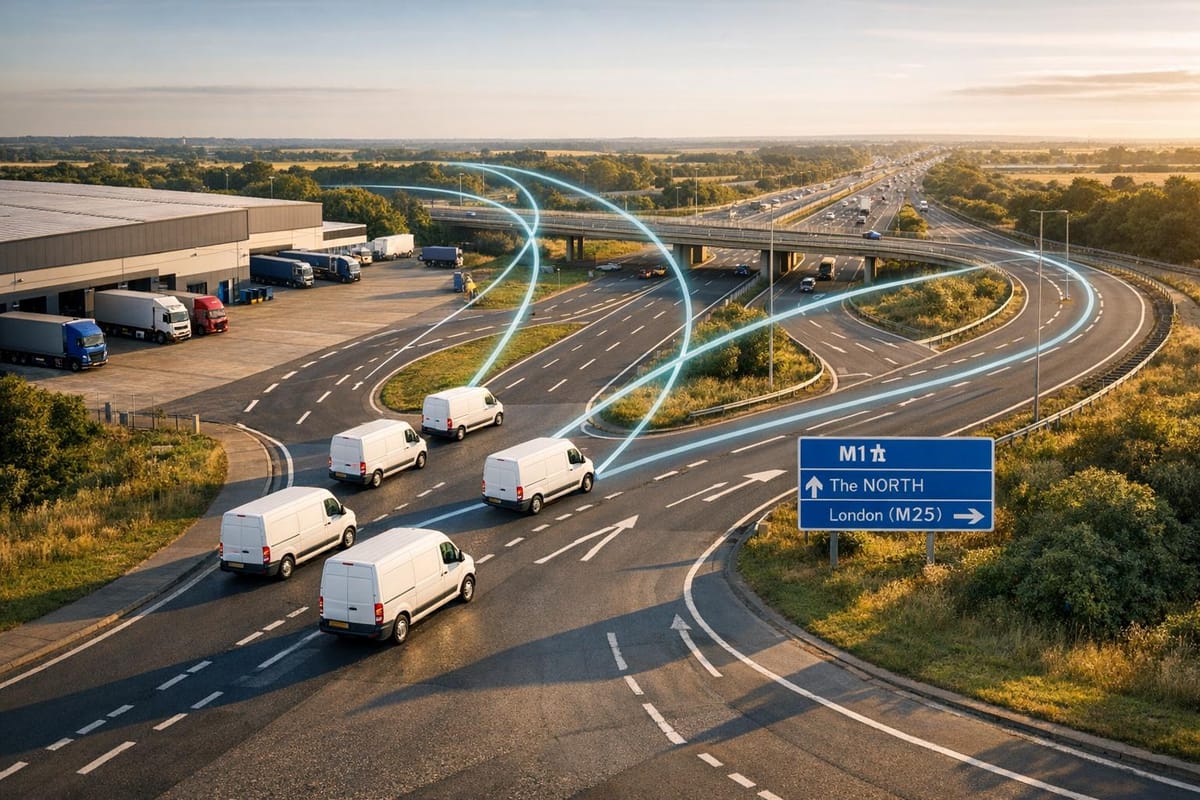
Managing fleet costs in the UK is becoming increasingly complex due to rising fuel prices, Clean Air Zone (CAZ) charges, and regulatory requirements like SECR. Traditional methods, such as spreadsheets, are no longer effective for handling the large volumes of data generated by modern fleets. AI offers a practical solution by analysing data from telematics, fuel cards, and vehicle sensors to identify inefficiencies and reduce expenses.
Key Takeaways:
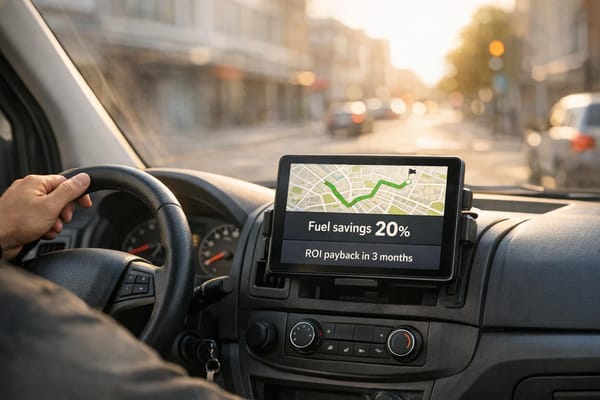
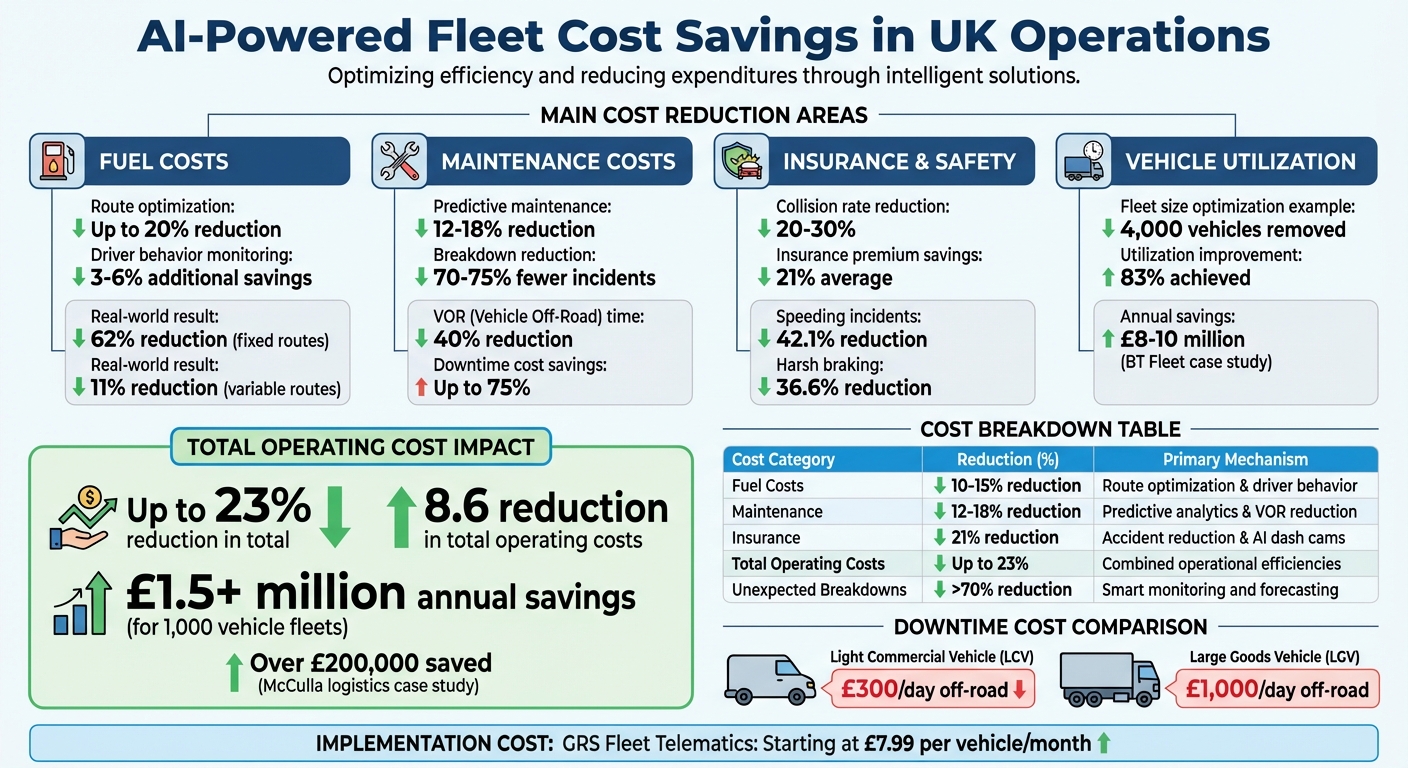
- Fuel Savings: AI-driven route optimisation can reduce fuel costs by up to 20%, while driver behaviour monitoring can save an additional 3–6%.
- Maintenance Cost Reductions: Predictive maintenance helps avoid costly breakdowns, cutting downtime expenses by up to 75%.
- Insurance Premiums: Improved driver safety through AI can lower collision rates by 20–30%, reducing insurance costs.
- Vehicle Utilisation: AI identifies under-used vehicles, helping optimise fleet size and save on leasing costs.
By integrating AI tools, fleet operators can track key metrics like fuel consumption, maintenance needs, and driver performance. Platforms like GRS Fleet Telematics offer solutions starting at £7.99 per vehicle per month, providing actionable insights to cut costs and improve efficiency. With AI, fleets can better navigate challenges like ULEZ charges and maximise savings across all major cost areas.
AI Fleet Management Cost Savings: Fuel, Maintenance, and Insurance Reductions
Predictive Maintenance to Revolutionize Fleet Management
Main Cost Areas in UK Fleet Operations
Knowing where your money goes is the first step to managing it effectively. Fleet operators in the UK face four primary areas of expense, each driven by specific factors. Beyond fuel prices, maintenance and repairs can eat into budgets through parts, labour, and the less obvious cost of downtime. Driver behaviour impacts multiple cost areas, influencing fuel consumption, tyre wear, and even insurance premiums. Lastly, how well vehicles are utilised determines whether you're getting the most out of your assets or paying for vehicles that sit idle. These key areas - fuel consumption, maintenance, driver performance, and vehicle utilisation - highlight opportunities where AI can help cut costs.
Fuel Costs and Consumption Tracking
Fuel is often the biggest expense for UK fleets. For example, a fleet of 20 vehicles travelling 50,000 miles annually could face fuel costs of around £280,000 per year. Inefficient driving habits such as idling, speeding, or poor route planning can inflate these costs. Just an hour of idling each day can waste approximately £3, adding up to £720 annually. AI can monitor fuel usage by matching fuel card transactions with odometer readings to calculate miles per gallon (MPG). The most accurate way to track this is through full-refill consumption analysis, which measures usage between complete refuels. AI also categorises vehicles by type (car, van, or HGV) and duty cycle (urban or motorway driving) to set realistic performance benchmarks, ensuring city-bound vans aren't unfairly compared to motorway vehicles.
Maintenance and Repair Expenses
Maintenance costs go far beyond paying for parts and labour. The real financial burden is downtime. When a Light Commercial Vehicle (LCV) is out of action, it costs £300 per day, while a Large Goods Vehicle (LGV) racks up £1,000 daily. Duncan Webb from BT Fleet summed it up:
"One day off-road costs £300 for a LCV and £1,000 for a LGV. When you consider the total cost of transport from a group perspective, this is the right thing to do."
Starting in 2022, BT Fleet began using telematics, fuel, and maintenance data to move from reactive repairs to proactive part replacements. By replacing wear-and-tear components early, they extended vehicle lifecycles and avoided expensive breakdowns. AI also analyses sensor data to predict potential failures, helping to reduce downtime and its associated costs.
Driver Behaviour and Insurance Costs
Driving habits like harsh braking, rapid acceleration, and speeding don't just increase fuel consumption - they also wear out tyres, raise accident risks, and drive up insurance premiums. Using telematics and dash cams, AI provides real-time monitoring to identify these behaviours. This enables targeted coaching, which can reduce fuel costs by 3–6% and cut collisions by 20–30%. AI-powered video systems take it a step further by detecting signs of fatigue or distraction, such as a driver’s eyes closing or head nodding. This proactive approach not only prevents accidents but also gives insurers clear evidence, which can help lower premiums and defend against fraudulent claims.
Vehicle Utilisation and Idle Time
Under-utilised vehicles are a drain on resources. If a van is sitting idle or running its engine while stationary, you’re paying for depreciation, insurance, and fuel without any return. AI tracks vehicle usage to identify under-utilised assets and monitors how often engines run while stationary. Between 2022 and 2024, BT Fleet used this data to remove 4,000 under-utilised vans from its fleet, boosting utilisation to 83% and saving between £8 million and £10 million in leasing costs. AI also tracks delays at depots or disposal sites, helping managers address bottlenecks caused by suppliers or customers.
How AI Analyses Fleet Data to Reduce Costs
AI constantly reviews fleet data to uncover patterns, anticipate potential problems, and streamline operations. By tapping into a vehicle's CAN Bus and ECU, it gains access to real-time data on engine performance, fuel usage, and diagnostic codes. Tools like accelerometers and GPS tracking also provide insights into driving habits, such as harsh braking, rapid acceleration, and sharp cornering. Below, we explore how AI uses real-time data processing, predictive maintenance, and route optimisation to cut costs effectively.
Real-Time Data Processing and Pattern Detection
AI keeps a close eye on fleet activity as it unfolds, identifying unusual trends like excessive fuel consumption or unexpected vehicle movements. Geofencing technology sets up virtual boundaries around specific areas, sending alerts whenever vehicles enter or leave these zones. This not only curbs unauthorised vehicle use but also improves dispatch coordination. Additionally, analysing idle time helps pinpoint when engines are running unnecessarily, addressing fuel wastage.
For theft prevention, dual-tracker telematics systems - equipped with hidden backup devices - have proven highly effective, achieving a 91% recovery rate for stolen vehicles. These tools ensure fleets remain secure while minimising loss-related expenses.
Predictive Maintenance Forecasting
Instead of relying on fixed service schedules or waiting for components to fail, AI examines historical maintenance records and live sensor data - such as vibration, temperature, and tyre pressure - to predict when parts might wear out. This proactive approach enables fleet managers to plan repairs during downtime, avoiding costly emergency breakdowns and service interruptions. Automating these processes can save around 26 man-hours per vehicle annually.
One European trucking company demonstrated the benefits of such systems, achieving a 15% reduction in fuel costs and significantly cutting maintenance expenses by using sensors to monitor vehicle performance and driver behaviour. Predictive maintenance not only keeps fleets running smoothly but also complements other efficiency measures like route optimisation.
Route and Fuel Optimisation
AI combines location technology, machine learning, and predictive analysis to refine routes. These systems adapt in real time, accounting for traffic, weather, and roadworks to minimise delays and reduce idling. For example, a study on Australian council trucks revealed that optimised routes led to a 62% drop in fuel consumption on predictable daily routes and an 11% reduction on less predictable ones.
AI also factors in specific vehicle characteristics, such as how steep inclines or cold weather can impact the range of electric vehicles (EVs) more than traditional petrol or diesel models. Petros Kaplanidis, Product Manager at HERE, highlighted this with a practical example:
"A fully loaded EV consumes more energy than an empty one, so optimising delivery orders to reduce weight earlier in the route can extend range."
GRS Fleet Telematics: AI Features for Cost Reduction
GRS Fleet Telematics offers an intelligent blend of advanced tracking hardware and AI-driven analytics, designed to help UK fleet operators tackle cost challenges head-on. By transforming data like vehicle location, speed, and engine diagnostics into actionable insights, the platform shifts fleet management from reactive problem-solving to proactive cost control. Starting at an affordable £7.99 per vehicle per month, it provides tools to cut fuel waste, deter theft, and streamline maintenance expenses. These features directly align with the cost-saving strategies discussed earlier, turning raw data into practical solutions.
Dual-Tracker Technology with AI Monitoring
To enhance security, GRS Fleet Telematics uses dual-tracker technology. This system combines a primary wired tracker with a concealed secondary device, creating a robust defence against theft and supporting high recovery rates. Meanwhile, AI monitoring continuously analyses vehicle data to identify unusual patterns, such as potential fuel theft or early signs of mechanical issues, in real time. These instant alerts empower fleet managers to address problems before they escalate into more expensive repairs or losses.
Eco-Driving Analytics and Fuel Reports
AI-powered analytics focus on identifying driving behaviours that unnecessarily inflate fuel costs - such as harsh braking, rapid acceleration, and excessive idling. These behaviours often account for 30% to 40% of operating expenses. The system provides real-time driver feedback through instant alerts, helping drivers correct habits like speeding or distracted driving. Managers also receive detailed fuel reports to target inefficiencies effectively. In fact, AI-driven safety systems have demonstrated significant results, reducing speeding incidents by 42.1% and harsh braking by 36.6% within the first year.
Custom Dashboards for Cost-Per-Mile Analysis
GRS Fleet Telematics employs CAN Bus integration to access a vehicle's Electronic Control Unit (ECU), delivering precise data on fuel usage and engine diagnostics. The platform calculates cost-per-mile by dividing total costs - both fixed and variable - by the distance travelled, helping managers identify the most expensive vehicles or routes. Predictive maintenance, powered by AI, analyses engine data to forecast potential component failures weeks in advance. For example, logistics company McCulla saved over £200,000 in a year by adopting AI-driven safety and telematics tools. Brian Beattie, McCulla's operations director, highlighted how the system's visibility allowed the company to uncover inefficiencies that would have otherwise required a significant increase in pallet volume to offset.
Measured Cost Savings from AI Implementation
Businesses that have integrated AI into their fleet operations are seeing real, measurable cost savings. The benefits span multiple areas, with data confirming that AI transforms raw vehicle data into actionable cost reductions. These outcomes build on earlier findings about AI's impact on route planning and predictive maintenance.
Fuel Reduction Results
AI-powered tools for route optimisation and driver coaching are delivering fuel savings in the range of 10–15%. These systems dynamically adjust routes based on real-time factors like traffic, weather, and roadworks, while also monitoring driver habits such as harsh braking and idling.
Take the example of a study published in Science Direct in September 2024. Two Australian council trucks tested AI-driven route planning, and the results were impressive. One truck, operating on a fixed daily route, cut its fuel consumption by 62% in just one month. The second truck, which followed less predictable routes, still achieved an 11% reduction in fuel use. Similarly, a European trucking firm reduced its fuel costs by 15% using sensors that tracked vehicle performance and provided real-time coaching to drivers on speed and efficiency.
Beyond fuel savings, AI can reduce overall fleet management costs by as much as 20%, while slashing rerouting times by up to 90%.
Maintenance Cost Reductions
AI doesn’t just save on fuel - it also cuts maintenance expenses. Predictive maintenance systems help fleets avoid costly emergency repairs, reducing maintenance costs by 12–18%. Since roadside fixes are four times more expensive than scheduled shop repairs, shifting to a proactive approach leads to significant savings.
For instance, The AA tested its AI tool, Vixa Pro, on its fleet in early 2026. The results? A 40% reduction in Vehicle Off-Road (VOR) time over nine months. According to Ryan Naughton, Head of B2B Connected Car at The AA, the system used vehicle health data to detect issues early and ensure parts were ordered in advance. AI-driven maintenance also decreases breakdown rates by 70–75% and boosts vehicle uptime by 10–30%.
"Receiving proactive data on our vehicle health has reduced VOR time by roughly 40% in the past nine months." – Ryan Naughton, Head of B2B Connected Car, The AA
Another example comes from a North American food and beverage fleet managing 50,000 vehicles. In 2024, they used Uptake’s AI to identify cylinder head issues early, converting £50,000 engine replacements into £3,000 pre-emptive fixes. Across 80 trucks, this saved the company £1 million in just four months. A U.S.-based waste management company also saw massive savings using Digital Twin technology to monitor radiator health, achieving a 90% reduction in radiator-related repairs and saving £2,000 per incident by avoiding catastrophic failures.
Total Operating Cost Savings
When you combine fuel optimisation, predictive maintenance, and improved driver safety, fleets can achieve up to 23% reductions in total operating costs. These savings are particularly impactful because fuel alone can account for up to 40% of fleet expenses, while maintenance represents around 11%. AI also helps lower insurance premiums by an average of 21%, thanks to accident prevention features.
In October 2025, Motive reported that UK companies managing fleets of 1,000 vehicles saved over £1.5 million annually on fuel, insurance, and safety costs after adopting their AI-powered platform. These savings are especially critical for electric vehicle fleets, which face repair costs up to 25% higher than petrol vehicles and take 14% longer to service.
| Cost Category | Potential AI-Driven Reduction | Key Driver |
|---|---|---|
| Fuel Costs | 10–15% | Route optimisation & driver behaviour |
| Maintenance | 12–18% | Predictive analytics & VOR reduction |
| Insurance | 21% | Accident reduction & AI dash cams |
| Total Operating Costs | Up to 23% | Combined operational efficiencies |
| Unexpected Breakdowns | >70% | Smart monitoring and forecasting |
These savings make AI an attractive investment, even for smaller fleets. For example, McCulla reported annual savings exceeding £200,000 in 2025 - a figure that, according to Operations Director Brian Beattie, would have required a massive increase in pallet volume to achieve through traditional means.
How to Implement AI Cost Analysis in Your Fleet
Turning cost-saving potential into measurable results requires a well-organised plan. Fleet operators need to integrate AI tools with existing systems, calculate expected returns, and ensure the technology can adapt to their specific operations. By following this structured approach, your fleet's data can directly translate into cost savings.
Data Integration Process
The foundation of effective AI cost analysis lies in clean, consistent data. To get started, gather 12 months of historical records, including fuel card transactions, telematics data, maintenance logs, and Clean Air Zone (CAZ/ULEZ) invoices. This baseline helps identify where AI can make the most significant impact. Next, integrate your telematics platform with fuel cards and Original Equipment Manufacturer (OEM) data to synchronise key details like odometer readings, route information, idling patterns, and refuelling records. Creating a "master" data file with information such as Vehicle Registration Marks, fuel card numbers, tank capacities, and odometer priorities will help streamline the process.
Data cleaning is a critical step. Reconcile fuel litres to odometer miles and remove anomalies like ghost fills, duplicates, or card misuse. A variance of up to 2–3% in fuel reconciliation is acceptable. For accurate MPG analysis, use the tank-to-tank method, calculating efficiency per fill when a tank is nearly full, or rely on rolling weekly or monthly metrics. Standardise all units (e.g., converting kilometres to miles) and adjust timestamps for GMT/BST changes. Segment your fleet by vehicle class (car, van, HGV), duty cycle (urban vs. motorway), and route type to help the AI identify specific patterns for each category. This level of detail sets the stage for meaningful insights.
ROI Calculation Method
The next step is to calculate your return on investment (ROI) using the baseline data you've collected. Compare installation and subscription costs with projected savings in areas like fuel, maintenance, and accident reduction to create a solid business case. Set SMART targets, such as cutting idle time by 30% or reducing diesel consumption per 100 kilometres by 5% within six months. Track key performance indicators (KPIs) such as MPG, idling rates, fuel consumption by vehicle class, and total cost of ownership. Total costs should include finance, depreciation, maintenance, tyres, insurance, road charges, and CAZ/ULEZ fees.
Make sure your metrics align with recognised standards, such as FORS Fuel Management guidance or DVSA Earned Recognition. Stay on top of regulatory changes too - non-compliant vans, for instance, will face a ULEZ charge of £12.50 per day from 2025. For electric vehicles, track kWh usage from charging sessions against odometer miles to assess efficiency accurately.
Scaling for Different Fleet Sizes
Once you've defined your ROI, scale your approach to match your fleet's size. AI cost analysis needs to be adaptable, as the priorities for a small fleet differ from those of a larger operation. For smaller fleets, quick wins like driver coaching can deliver immediate results, while larger fleets may benefit more from strategies like route optimisation or predictive maintenance. When choosing a solution, think about how your needs might evolve and set clear success criteria before rolling out the technology on a larger scale.
For example, GRS Fleet Telematics offers scalable solutions starting at £7.99 per vehicle per month, making AI-driven cost analysis accessible to fleets of all sizes. Beyond direct savings, scaling AI should also address broader challenges, such as risk management and staying compliant with regulations.
Even simple measures can have a big impact. Regular tyre pressure checks can cut down on hidden fuel drag, while low-rolling-resistance tyres can save around 7–8% on motorway fuel consumption. Don’t forget to check if your fleet qualifies for the Plug-in Van & Truck Grant, available until 31st March 2026. By tailoring your AI strategy to your fleet’s specific needs, you can maximise the cost-saving opportunities already discussed.
Conclusion
By leveraging real-time insights and predictive analytics, AI-powered cost analysis is reshaping fleet management in the UK. Instead of reacting to issues as they arise, operators can now adopt a proactive, data-driven approach. Through the integration of tools like GPS tracking, IoT sensors, and machine learning, fleets can achieve measurable reductions in fuel consumption and maintenance costs, as highlighted earlier in this guide.
Beyond operational savings, AI plays a key role in ensuring compliance with regulations. For fleets navigating Clean Air Zone charges, ULEZ fees, or SECR reporting, AI provides the transparency needed to meet these requirements while managing costs effectively. Whether you're overseeing a small fleet of 5 vans or a large operation with 500 vehicles, solutions like GRS Fleet Telematics offer AI-driven tools starting at just £7.99 per vehicle per month, making advanced fleet management accessible to businesses of any size.
AI’s benefits extend far beyond cost reductions. It enhances resource allocation, optimises route planning, and streamlines vehicle maintenance. For example, real-time driver coaching can cut fuel costs by up to 15%, while targeted training programmes have been shown to reduce collision rates by 20–30%. Over time, these improvements stabilise costs per mile and increase vehicle longevity.
With the Plug-in Van & Truck Grant available until 31st March 2026, there’s no better time to plan your transition to lower-emission operations using actionable data. The takeaway is clear: AI doesn’t just identify cost-saving opportunities - it ensures these savings are realised on an ongoing basis. For UK operators grappling with rising fuel prices, stricter emissions standards, and tighter profit margins, AI offers a critical edge. By adopting the strategies outlined in this guide, fleet managers can make smarter decisions that lead to sustained efficiency and profitability.
FAQs
How can AI help lower fuel and maintenance costs for fleets?
AI plays a crucial role in cutting fuel costs by optimising routes in real time. By helping vehicles avoid traffic jams and unnecessary detours, businesses can save up to 42p per mile in urban areas. It also reduces idling time and ensures vehicles are used more efficiently, significantly cutting down on wasted fuel.
When it comes to maintenance, AI leverages predictive analytics to spot potential problems before they escalate into expensive breakdowns. This forward-thinking approach not only trims repair costs but also extends the lifespan of fleet vehicles, keeping overall operating expenses in check.
How can fleet managers effectively use AI to reduce costs?
To make the most of AI for cutting costs, fleet managers should begin by using advanced telematics systems. These systems collect real-time data on factors like vehicle usage, fuel consumption, traffic conditions, and maintenance requirements. With this information, AI can pinpoint areas where savings are possible - whether it’s through smarter route planning, cutting down on idle time, or handling loads more efficiently.
In addition, integrating AI-driven tools that adapt routes and schedules based on live updates can make a big difference. This not only helps reduce fuel and maintenance costs but also boosts overall fleet performance. It’s equally important for teams to be trained in understanding AI insights and acting on them, such as making quick decisions to reroute vehicles or tweak schedules.
Lastly, setting clear, measurable targets and routinely reviewing AI-generated reports can help track improvements and fine-tune strategies over time. By choosing scalable AI solutions that meet UK regulations, managers can achieve lasting cost reductions while staying aligned with industry standards and sustainability goals.
How can AI help fleet operators comply with UK environmental regulations like ULEZ and SECR?
AI offers practical solutions for fleet operators in the UK, especially when it comes to navigating regulations like the Ultra Low Emission Zone (ULEZ) and Streamlined Energy and Carbon Reporting (SECR). With AI-powered tools, fleets can plan routes that steer clear of restricted areas, cut down emissions, and use fuel more efficiently.
These tools also keep an eye on vehicle performance, delivering useful insights to help businesses stay compliant. This not only avoids costly fines but also supports more environmentally conscious operations. In short, AI simplifies meeting regulatory demands while boosting the overall efficiency of fleet management.