AI-Powered Delivery Updates: Benefits for Fleets
AI delivery updates use real-time tracking and predictive analytics to improve ETAs, cut fuel costs, reduce complaints and boost fleet efficiency.
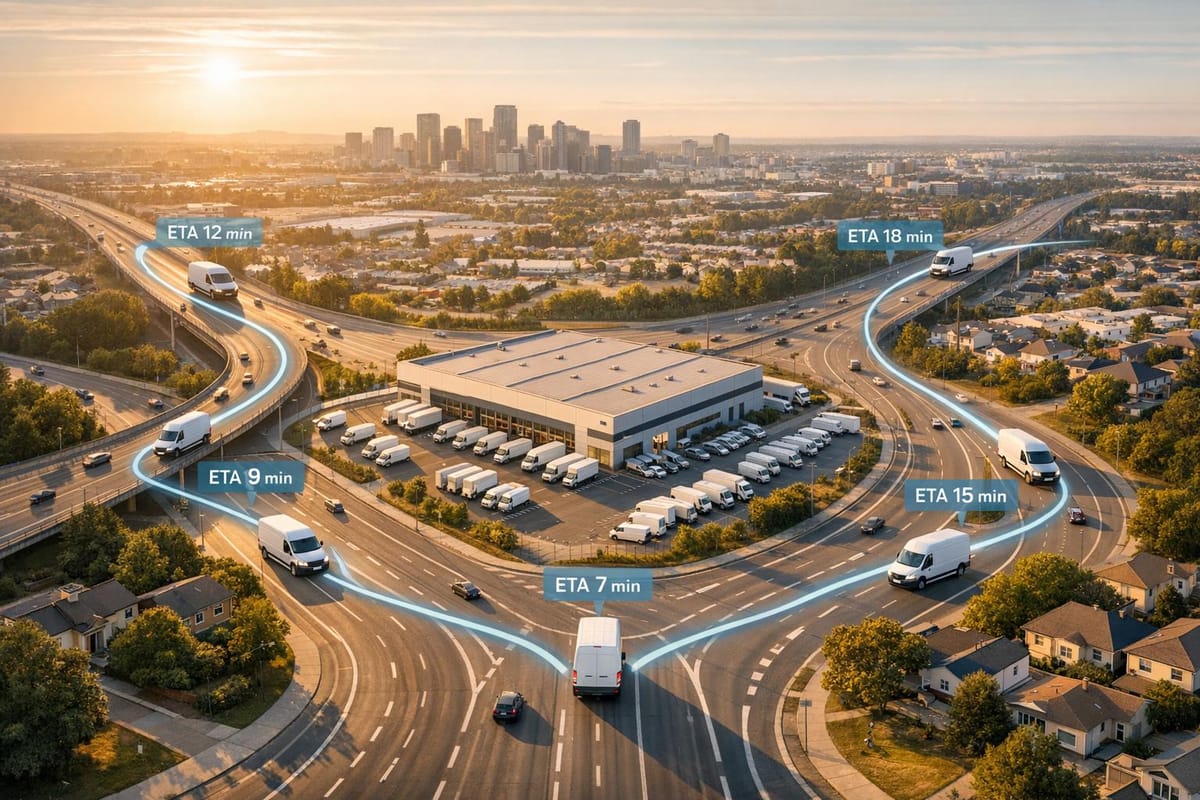
Fleet operators face growing challenges as consumer expectations for delivery precision rise. AI-powered systems are transforming how deliveries are managed by providing accurate, real-time updates and improving efficiency. These systems use live data, such as traffic and weather, to predict arrival times with up to 95% accuracy, offering customers narrow delivery windows and the ability to adjust schedules on the fly. Key benefits include:
- Real-time updates: Dynamic notifications inform customers of precise ETAs, reducing missed deliveries.
- Predictive analytics: Advanced forecasting minimises delays and vehicle breakdowns.
- Customer engagement: Two-way messaging allows easy rescheduling and communication.
- Efficiency improvements: Fuel savings of 10–15% and a 30% reduction in customer complaints have been reported.
AI is redefining fleet management, helping businesses meet modern delivery demands while cutting costs and improving customer satisfaction.
How AI is revolutionising delivery, logistics, and supply chains
1. AI-Powered Delivery Communication Systems
AI-powered delivery systems are changing how fleets interact with customers by processing over 1,000 metrics per second using GPS trackers and telematics. This constant flow of data allows for precise, real-time tracking and updates, building customer confidence and improving the flexibility of delivery services.
Real-Time Updates
Gone are the days of vague delivery windows. AI systems now provide customers with highly specific notifications. For instance, "Follow My Parcel" alerts let customers know when a courier is just 20 minutes away, giving them the chance to make last-minute adjustments. These updates are made possible by continuous tracking of vehicle locations, traffic conditions, and even weather. If something unexpected happens, like roadworks or an accident, the system recalculates the estimated arrival time (ETA) and informs the customer immediately, ensuring full transparency throughout the process.
Predictive Analytics
AI forecasting takes delivery planning to the next level by analysing historical data alongside current conditions. It factors in things like traffic patterns, average delivery times for specific industries, and seasonal trends to create more accurate delivery windows. This proactive approach helps avoid disruptions. For example, Royal Mail has reduced roadside breakdowns by 25% thanks to AI predictions, making delivery updates more reliable and efficient.
Customer Engagement
AI systems also improve how customers engage with delivery services. Two-way messaging allows customers to reply directly to automated texts to reschedule deliveries or update instructions within the same conversation thread. Over time, these systems learn individual preferences, such as favoured delivery times or specific access details, reducing the need for repetitive instructions. Additionally, customer response tracking helps support teams quickly identify and address potential issues.
Operational Efficiency
AI-driven route optimisation is another game-changer. These systems can process up to 120 stops in seconds, prioritising deliveries based on urgency, distance, and live traffic data. Routes are continuously adjusted to avoid congestion and unnecessary detours, leading to notable savings. Fleets have reported up to a 12% reduction in fuel costs. Driver safety has also improved, with real-time monitoring enabling early interventions that have cut accident costs by 15%. Many companies see a return on investment within six to 24 months, with fuel savings often covering the initial implementation costs within the first year.
One example of these advancements is GRS Fleet Telematics, which integrates cutting-edge AI tracking into its van monitoring solutions. This technology allows UK fleet operators to provide precise, real-time updates, boosting both operational efficiency and customer satisfaction.
2. Conventional Delivery Notification Methods
Before AI reshaped fleet communications, the industry heavily relied on traditional systems. These methods often revolved around manual processes, van tracker systems, and reactive communication. While they served their purpose for a time, their limitations highlight the stark contrast with AI-driven alternatives.
Real-Time Updates
When it comes to real-time updates, traditional systems fall noticeably short. They lack the ability to provide accurate, up-to-the-minute visibility. Fleet managers often find themselves guessing the location and status of drivers, while customers are left with vague delivery windows like "between 9am and 5pm". Data sharing across the fleet is also sluggish, hindered by isolated systems that don't communicate efficiently. Notifications, when sent, are usually delayed or reactive - triggered only after an issue arises rather than preemptively addressing potential problems based on live conditions. This lack of transparency often leads to frustrated customers flooding call centres with "Where is my package?" queries, driving up operational costs.
Predictive Analytics
Traditional delivery systems rely on fixed schedules and historical data rather than integrating live information. This approach often fails to adapt to dynamic factors like fluctuating traffic, unexpected weather events, or road closures. Maintenance alerts, too, are outdated - scheduled based on mileage or time rather than the actual condition of vehicle components. This reactive approach misses opportunities to address potential breakdowns before they happen, leading to costly disruptions.
Customer Engagement
Customer communication in conventional systems is minimal at best. Many retailers provide just one shipping update during the entire delivery process, even though 73% of UK shoppers check their delivery status multiple times while waiting for their package. Outdated systems contribute to delays and idle time, leaving customers in the dark and increasingly frustrated.
Operational Efficiency
Traditional delivery management often leans on manual processes for planning and scheduling. These labour-intensive methods struggle to cope as fleets grow larger and more complex. Manual dispatching is not only slower but also prone to errors. The consequences are significant: last-mile delivery - the final leg of the journey to the customer - can account for over 50% of total shipping costs. These inefficiencies ripple through operations, increasing costs and negatively affecting customer satisfaction.
Such challenges underline the pressing need for AI-driven solutions in modern fleet management, offering the precision and adaptability that traditional methods simply cannot match.
Advantages and Disadvantages

AI-Powered vs Conventional Delivery Systems: Key Performance Metrics Comparison
AI-powered delivery communication offers a level of efficiency and precision that traditional methods can't match. Building on earlier discussions about AI’s dynamic routing capabilities, let’s break down how this technology stacks up against conventional systems.
Traditional delivery systems rely on fixed schedules and manual oversight. In contrast, AI recalculates routes and ETAs in real time, using live traffic updates, weather conditions, and IoT sensor data and van tracking solutions. The result? AI systems can predict delivery times with an impressive 95% to 98% accuracy within a narrow 15-minute window, a stark improvement over the broad timeframes common with older methods. Fleets using AI report deliveries that are 15–30% faster, save 10–15% on fuel, and complete 20–25% more deliveries each day.
Customer communication also takes a leap forward. Instead of reactive responses, AI enables proactive engagement. Automated updates reduce the need for customer service calls by up to 25%, as customers receive precise, real-time notifications rather than needing to chase information. Additionally, two-way messaging allows customers to provide delivery instructions or reschedule directly within the same thread, cutting down on unnecessary phone calls.
Here’s a quick comparison of how AI-powered systems differ from conventional methods across key areas:
| Criteria | Conventional Notification Methods | AI-Powered Communication Systems |
|---|---|---|
| Real-Time Updates | Static; slow to react to traffic | Dynamic; recalculates ETAs instantly using live traffic, weather, and IoT data |
| Update Accuracy | Lower; often results in missed windows | High; 95–98% accuracy with narrow 15-minute delivery windows |
| Predictive Analytics | Reactive; maintenance based on fixed schedules | Proactive; forecasts traffic and flags maintenance issues early |
| Customer Engagement | Manual notifications; high volume of support calls | 24/7 AI agents; automated updates; reduces service calls by 25% |
| Operational Efficiency | Manual planning (hours); higher fuel waste | Automated optimisation (minutes); 10–15% fuel savings and 20–25% more deliveries per day |
Nadeem Raza, CEO of Microlise, summarised the situation perfectly:
Companies that haven't yet embraced AI to manage their road haulage fleets are already falling behind competitors using smart tools to optimise routes, boost efficiency and make their services more appealing to customers.
The numbers back this up. As machine learning models gather more journey data, their predictions and efficiency only get better. The divide between AI-enabled fleets and traditional systems grows wider every day, making it clear why AI-powered communication is reshaping the future of fleet management.
Conclusion
AI-driven updates are transforming fleet management by cutting down complaints, increasing customer loyalty, and streamlining operations through real-time, optimised routing. Features like accurate 20-minute arrival notifications and the ability for customers to redirect deliveries on the fly are driving higher first-attempt delivery rates. This kind of efficiency aligns perfectly with advanced tracking systems, creating a smoother delivery process.
To fully benefit, fleet operators need to ensure their systems integrate seamlessly and can scale effectively. Starting with impactful features like automated ETAs and real-time rescheduling is a smart move. But none of this works without reliable data. As Oliver Facey from DHL Express pointed out:
Data has sometimes been described as the 'Life Blood' of DHL, well it's now more important than ever.
Accurate tracking data is the backbone of system reliability.
GRS Fleet Telematics provides the tracking infrastructure that makes these AI systems possible. With real-time tracking starting at £7.99 per month and dual-tracker technology, GRS delivers precise location data and ETAs. Their 91% vehicle recovery rate and 24/7 support ensure dependable tracking even in tough situations - essential for meeting customer expectations. Once the tracking foundation is in place, the focus shifts to refining operational protocols.
Clear handoff processes are vital for handling queries that AI cannot address. It's also important to align the AI agent's tone with your brand's identity and ensure staff are trained to manage smooth transitions between automated and human support. Fleets adopting these strategies are seeing measurable improvements in delivery performance and operational efficiency.
The gap between AI-enabled fleets and traditional operators continues to grow. With a solid tracking system and thoughtful implementation, AI-powered delivery communication becomes a game-changer, reducing complaints, boosting efficiency, and strengthening customer loyalty.
FAQs
How can AI-powered systems enhance delivery accuracy and efficiency for fleet operators?
AI-driven systems are transforming delivery operations by using real-time data and advanced analytics to fine-tune routes on the go. These systems take into account factors like traffic conditions, weather patterns, vehicle health, and delivery schedules, enabling instant route adjustments. The result? Fewer delays and more timely deliveries. Plus, this approach can significantly cut fuel costs - saving up to 42p per mile in urban areas - and reduce unnecessary mileage, making operations more efficient overall.
On top of that, AI improves delivery accuracy, achieving on-time delivery rates as high as 95–99% while slashing failed deliveries by up to 40%. These tools also help fleets stay compliant with UK regulations, such as Low Emission Zones (LEZ) and Ultra Low Emission Zones (ULEZ), avoiding costly fines and supporting greener operations. By optimising route planning, managing loads more effectively, and improving vehicle usage, AI-powered systems make fleet management more dependable, economical, and ready to scale.
How does predictive analytics help fleets avoid delivery delays?
Predictive analytics leverages real-time data - like traffic updates, weather conditions, and vehicle performance metrics - to fine-tune routes and foresee potential hiccups in delivery schedules. This means fleet operators can adjust their plans ahead of time, keeping deliveries running smoothly.
By spotting trends and predicting problems before they arise, predictive analytics empowers fleets to make smarter decisions. The result? Fewer delays, lower costs, and improved overall efficiency. This forward-thinking method is a game-changer for fleet management, boosting day-to-day operations and keeping customers happy.
How does AI-powered communication improve delivery services for fleets?
AI-driven communication is reshaping delivery services by providing real-time updates and fostering better customer interaction. With AI-powered telematics systems, fleet operators can automatically inform customers about delivery progress, estimated arrival times, or unexpected route changes. This reduces uncertainty and keeps customers informed every step of the way.
What’s more, AI supports two-way communication, making it easier for customers to reschedule deliveries, share specific instructions, or resolve queries without hassle. This tailored approach not only minimises complaints but also strengthens trust and loyalty, as customers appreciate a service that’s both responsive and dependable. By simplifying communication and boosting customer satisfaction, AI gives fleets a competitive edge in a crowded marketplace.