How AI Improves Multi-Region Delivery Efficiency
AI-driven routing and telematics reduce delivery times, cut fuel and maintenance costs, and improve on-time performance for multi-region fleets.
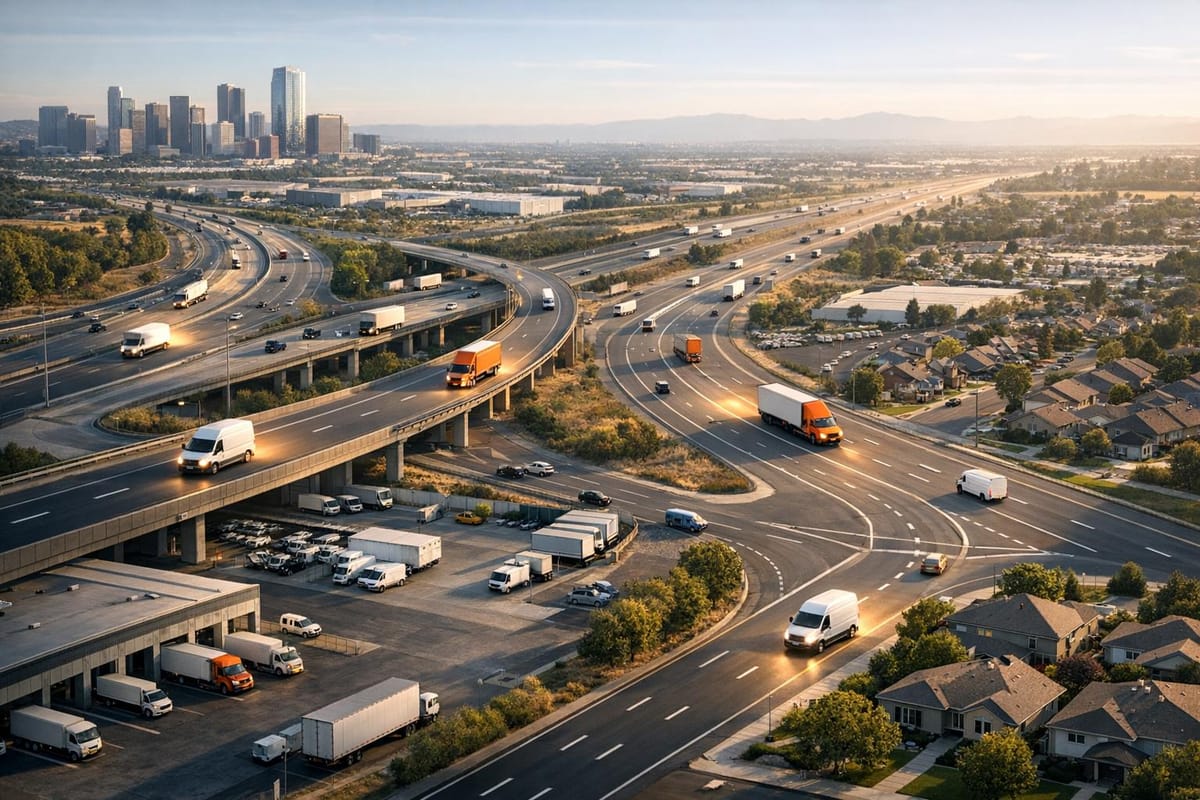
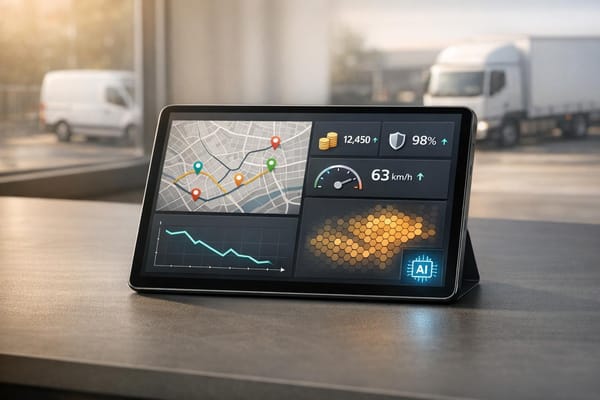
AI is transforming delivery operations by solving key challenges like inefficient routes, fuel waste, and missed delivery windows. Using real-time data, predictive analytics, and automation, AI helps businesses:
- Reduce delivery times by up to 18%.
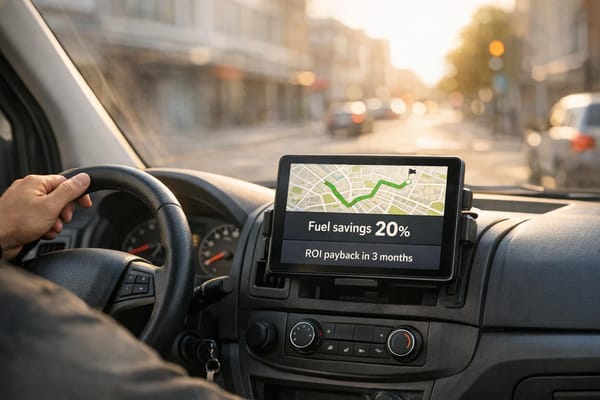
- Cut fuel costs by 10–20%.
- Achieve on-time delivery rates as high as 96–99%.
- Optimise vehicle capacity usage by 20–25%.
AI-powered tools dynamically adjust routes based on live traffic, weather, and regional regulations, ensuring smoother delivery processes. Companies like Tesco and Sainsbury's have reported measurable gains, such as increased deliveries per vehicle and reduced last-mile costs. By integrating systems like GRS Fleet Telematics, businesses can further streamline operations, comply with regulations, and minimise downtime through predictive maintenance.
In short, AI offers a smarter, faster way to manage multi-region deliveries, improving efficiency while reducing costs.
AI & Machine Learning Use Cases for Route Optimisation
AI-Powered Route Optimisation
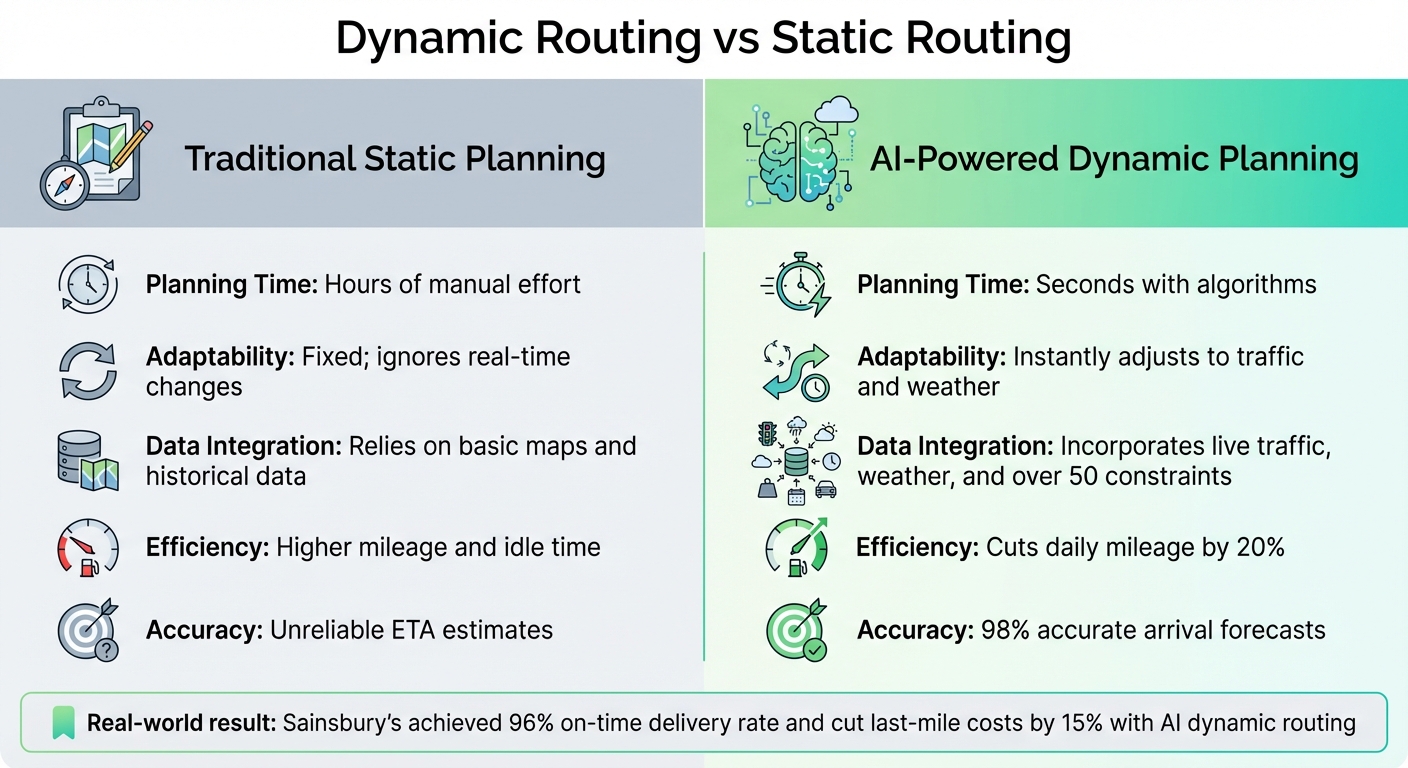
Dynamic vs Static Route Planning: AI-Powered Delivery Efficiency Comparison
AI has revolutionised multi-region deliveries, with advanced route planning at its core. Unlike traditional static methods, AI analyses a wide range of factors - like traffic conditions, weather updates, vehicle capabilities, delivery timeframes, and driver schedules - to craft the most efficient routes in just seconds.
For instance, AI can trim daily mileage from 120 miles to 96 without compromising delivery schedules. A great example is DFS, which teamed up with Satalia to overhaul its home delivery operations, boosting fuel efficiency by 18%. Similarly, Metro Cash and Carry reduced overall delivery costs by 13% thanks to AI-powered route optimisation.
Dynamic Routing vs Static Routing
Dynamic routing has redefined how deliveries are planned. Unlike static routes, which are manually prepared each morning and quickly become outdated due to unexpected events like accidents or heavy rain, dynamic routing uses AI to adapt routes in real time.
| Feature | Traditional Static Planning | AI-Powered Dynamic Planning |
|---|---|---|
| Planning Time | Hours of manual effort | Seconds with algorithms |
| Adaptability | Fixed; ignores real-time changes | Instantly adjusts to traffic and weather |
| Data Integration | Relies on basic maps and historical data | Incorporates live traffic, weather, and over 50 constraints |
| Efficiency | Higher mileage and idle time | Cuts daily mileage by 20% |
| Accuracy | Unreliable ETA estimates | 98% accurate arrival forecasts |
Sainsbury's provides a compelling example of dynamic routing in action. By adopting AI systems that adjust to traffic and road closures, they achieved a 96% on-time delivery rate while cutting last-mile delivery costs by 15%. These systems don’t just plan routes - they continuously recalculate them as conditions evolve throughout the day.
This ability to adapt dynamically is further enhanced by integrating real-time data.
Using Real-Time Data
Real-time data takes route optimisation to the next level. AI systems thrive on detailed, high-quality information, pulling from live traffic sensors, weather updates, GPS tracking, and historical trends, such as recurring delays at specific customer locations.
This constant flow of information enables proactive decision-making. For example, if congestion builds up on the M6, the system reroutes vehicles before delays even occur.
"The more information you have, the more accurate your route predictions can be. And the more information you have, the more you can optimise those routes." – Alex Osaki, Product Marketing Manager, HERE
AI also handles UK-specific challenges that manual planning often overlooks. It automatically avoids Low Emission Zones and Ultra Low Emission Zones, ensures compliance with driver working hour regulations, and respects road weight restrictions. By factoring in over 50 variables, AI delivers a level of precision that human planners simply cannot consistently achieve.
Implementing AI-Driven Delivery Systems
Assessing Your Operational Needs and Goals
Start by pinpointing the specific issues in your current operations, such as high fuel consumption, inconsistent delivery performance, or time-consuming manual route planning.
To understand where you stand, collect baseline metrics over a 4–8 week period. Track key data points like fuel cost per mile, failed delivery attempts, maintenance expenses, and the hours spent on route planning. These numbers are essential for evaluating whether AI is truly improving your operations.
Next, take stock of your data sources - systems like ERP, WMS, and TMS - and ensure your vehicles are equipped with GPS and OBD devices to provide real-time data for AI algorithms. Define specific, measurable goals to guide your efforts. For example, instead of aiming to "improve efficiency", set targets like "reduce fuel costs by 15%" or "achieve a 96% on-time delivery rate".
Once you’ve mapped out your operational metrics and data infrastructure, you’ll be ready to select the AI tools that best suit your needs.
Choosing the Right AI Tools
Look for AI solutions that integrate seamlessly with your existing systems through robust APIs. The ideal tools should connect to your current platforms without requiring a complete overhaul. Also, prioritise solutions with user-friendly interfaces - overly complex systems can discourage adoption and lead to errors during operation.
Scalability is another key factor, especially if you operate across multiple regions. Choose platforms that can grow with your needs. Costs can vary widely: GPS trackers typically start at £35, with monthly service fees from £7.99 per vehicle. For mid-sized fleets (50–200 vehicles), initial investments range from £1,750 to £7,000, while larger fleets (200+ vehicles) may spend £7,000 to £15,000 or more.
With the right tools in place, you can move on to testing and scaling your AI system.
Testing and Scaling AI Solutions
Start with a pilot programme in a single region. This controlled rollout allows your team to get comfortable with the new software without disrupting daily operations. For example, Tesco used AI for route optimisation and saw an 18% reduction in delivery times and a 22% increase in deliveries per vehicle.
Monitor key performance indicators (KPIs) like fuel cost per mile, maintenance costs, and delivery capacity per vehicle. Many AI fleet management systems recoup their costs within 8–12 months. A successful pilot will confirm whether AI can improve delivery efficiency across regions.
If the pilot meets your goals, scale the system gradually, following the same governance frameworks. Provide thorough training for dispatchers and drivers so they can trust and effectively use AI-generated routes. A well-trained team is crucial for maximising the benefits of your new system.
The Role of GRS Fleet Telematics in Multi-Region Operations
Key Features of GRS Fleet Telematics
GRS Fleet Telematics provides essential data to support AI-driven route optimisation across multiple regions. By monitoring vehicle location, speed, and status in real time, it delivers the critical inputs needed for efficient route planning.
The system employs a dual-tracker setup, combining a hardwired GPS unit with a hidden Bluetooth backup. This ensures uninterrupted tracking and contributes to an impressive 91% vehicle recovery rate.
There are three subscription packages available:
- Essential (£35): Offers basic real-time tracking.
- Enhanced (£79): Includes Bluetooth backup for added reliability.
- Ultimate (£99): Adds engine immobilisation for enhanced security.
Additional features include tracking driver hours and integrating LEZ/ULEZ geofencing. These geofencing capabilities notify operators of route deviations, helping to avoid fines and ensuring compliance with local traffic regulations. The system can also recalculate routes in real time, adapting to changes and maintaining operational efficiency.
These features create a solid framework for integrating AI into multi-region fleet operations.
How GRS Fleet Telematics Enhances AI Integration
GRS Fleet Telematics takes AI integration to the next level by offering seamless data connectivity and advanced functionality.
The platform provides the live data AI systems rely on for optimal performance. By integrating real-time traffic updates from sources like Transport for London and incorporating weather data, the system enables AI algorithms to adjust routes instantly. For example, it can reroute deliveries to avoid roadworks on the M25 or adapt to sudden weather changes in the Midlands, all without manual input.
Additionally, the system uses vehicle sensor data to predict maintenance needs before issues arise. This predictive approach helps cut repair costs by 12–18%, ensuring vehicles remain operational and reducing downtime.
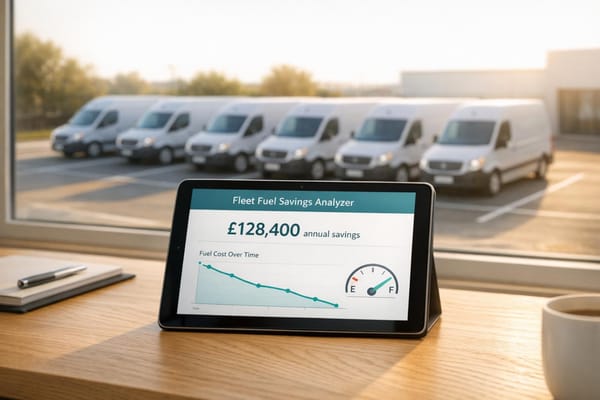
For larger businesses, white-label solutions and open APIs allow GRS Fleet Telematics to integrate directly with existing ERP and CRM systems. This streamlined connection ensures AI tools can access comprehensive fleet data without requiring staff to juggle multiple platforms. On average, users save £1,224.52 per month - equivalent to about £14,694.25 annually - with a return on investment of 2,965% and payback periods as short as 0.3 months.
Measuring Efficiency Gains with AI
Key Performance Indicators for Multi-Region Deliveries
Tracking the right metrics is essential to understanding how AI improves your delivery operations. One critical metric is the On-Time Delivery Rate, calculated as (on-time deliveries ÷ total deliveries) × 100. AI systems typically achieve impressive rates of 95–99%, while cutting failed delivery attempts by up to 40%.
Another key measure is Cost Per Delivery, which reflects operational efficiency. Thanks to AI-driven route optimisation, fuel costs often drop by 10–20%, and maintenance expenses decline by 12–18%. Deliveries Per Hour is another useful gauge for productivity improvements, while Vehicle Capacity Utilisation measures how effectively your vehicle space is used. AI can boost vehicle capacity usage by 20–25%.
Safety is also a priority. The Accident Rate, calculated as (total accidents ÷ total miles driven) × 1,000,000, helps assess the impact of AI on driver safety. Telematics data, which tracks behaviours like speeding, hard braking, and rapid acceleration, can identify risky driving habits that affect both safety and fuel efficiency. For those focusing on sustainability, metrics like Fuel Efficiency (in miles per gallon) and carbon emissions per delivery are crucial for tracking environmental improvements.
Together, these metrics provide a solid foundation for evaluating how AI impacts your delivery network and calculating its return on investment.
Calculating ROI of AI Implementation
The efficiency improvements mentioned above directly translate into measurable returns on your AI investment. The first step is to establish baseline metrics. Track your current performance - such as fuel costs, maintenance expenses, planning time, and delivery success rates - for 4–8 weeks before implementing AI. This creates a benchmark for comparison.
Next, calculate your total investment. This includes hardware costs (e.g., GPS devices starting at £35 per vehicle), monthly service fees (from £7.99 per vehicle), and any integration or training expenses. For mid-sized fleets, initial investments typically range from £20,000 to £125,000, depending on the complexity of the system. Once AI is in place, track savings across multiple areas: fuel costs often drop by 10–20%, maintenance expenses fall by 12–18%, and planning time can be reduced by up to 75%.
Most AI-powered route prediction systems pay for themselves within 8–12 months, with some businesses seeing results even sooner. For instance, Sainsbury's achieved a 96% on-time delivery rate while reducing last-mile delivery costs by 15% through AI-enhanced route optimisation. Similarly, Tesco cut delivery times by 18% and increased deliveries per vehicle by 22%. A Fortune 500 automotive supply chain company reported a 250% return on investment within two years, along with a 25% reduction in delivery times.
For logistics companies, where profit margins typically range from 3–5%, AI can boost EBIT by 1–2% - a meaningful gain in a highly competitive industry. These examples highlight the tangible benefits AI can bring, making it a worthwhile investment for businesses aiming to optimise their operations.
Conclusion: Improving Delivery Efficiency with AI
AI is reshaping multi-region delivery, turning static, manual planning into a dynamic, real-time process. By analysing factors like traffic, weather, and vehicle status all at once, it shifts operations from reactive problem-solving to proactive planning. The results? Delivery times reduced by up to 18%, vehicle capacity boosted by 20–25%, and on-time delivery rates consistently hitting between 95% and 99%.
The secret to success lies in effective human-AI collaboration. While AI excels at crunching numbers and evaluating millions of route options in seconds, experienced dispatchers bring critical judgement and qualitative insights to the table. Together, they not only cut operational costs but also help reduce environmental impact.
Advanced tools make this integration even smoother. GRS Fleet Telematics, for example, is a game-changer for businesses in the UK. With hardware starting at just £35 and monthly service fees as low as £7.99 per vehicle, it provides the real-time data backbone that AI systems rely on. Its dual-tracker technology ensures uninterrupted monitoring with an impressive 91% recovery rate, while automated compliance features tackle UK-specific challenges like ULEZ zones and driver hour regulations.
The financial perks are just as striking. Most businesses see a return on investment within 8–12 months, and some achieve it in as little as 0.3 months. A phased rollout is often the best approach - track baseline metrics over 4–8 weeks to prove the value and gain driver support before scaling up. Monitoring these metrics is critical to understanding the true impact of AI-driven changes.
Real-world examples, such as Sainsbury's and Tesco, highlight the transformative potential of these approaches.
FAQs
How does AI help optimise delivery routes in real time?
AI uses real-time data like traffic conditions, weather updates, vehicle performance, and delivery priorities to fine-tune routes on the go. By constantly recalculating and reordering journeys, it helps cut down travel time, lower fuel usage, and save on costs - all while ensuring deliveries stay on schedule.
It’s also designed to handle surprises, such as road closures or unexpected delays, allowing businesses to stay efficient and keep their customers satisfied.
What are the costs and benefits of using AI to improve delivery efficiency?
Implementing AI to boost delivery efficiency does come with initial costs, but the long-term savings can be well worth it. For UK businesses, the upfront investment typically starts at £7,000 to £30,000 for a discovery phase. Moving to a pilot project could cost between £25,000 and £80,000, while a full-scale rollout may exceed £80,000, depending on how complex the integration is. Simpler solutions are available from as little as £5,000, while more advanced AI platforms can climb beyond £50,000.
Once in place, AI can lead to notable cost reductions. For instance, route optimisation can cut fuel expenses by 10–15% and bring down maintenance costs by 12–18%. For a mid-sized fleet, this could translate to annual savings of around £6,000. Automation also slashes manual labour costs and boosts overall efficiency, with many businesses recouping their investment within 8–12 months. Affordable tools like GRS Fleet Telematics, which offers van tracking from just £7.99 per month, can further refine operations by providing real-time data to optimise routes and allocate resources more effectively across different regions.
How does AI help businesses comply with regional delivery regulations?
AI is transforming fleet management in the UK, helping businesses navigate the maze of regional transport regulations. By processing real-time data - like traffic conditions, weather updates, vehicle emissions, and legal restrictions - AI systems can adjust delivery routes on the fly. For instance, they can reroute vehicles to avoid areas like Ultra Low Emission Zones (ULEZ) or ensure drivers stick to legal working-hour limits. The result? Operations run smoothly, fines are minimised, and deliveries stay on track.
On top of that, AI-powered telematics platforms play a crucial role in UK GDPR compliance. These systems monitor the handling of personal data, such as driver and customer information, flagging any cross-border data transfers that need additional safeguards. They also create audit trails and enforce consent-based data processing. This means businesses can confidently expand their operations across different regions while staying fully aligned with legal standards.