How AI Improves Load Balancing for Mixed Fleets
AI and telematics improve routing, reduce empty miles, cut costs and emissions, and optimise load allocation across mixed EV and ICE fleets in the UK.
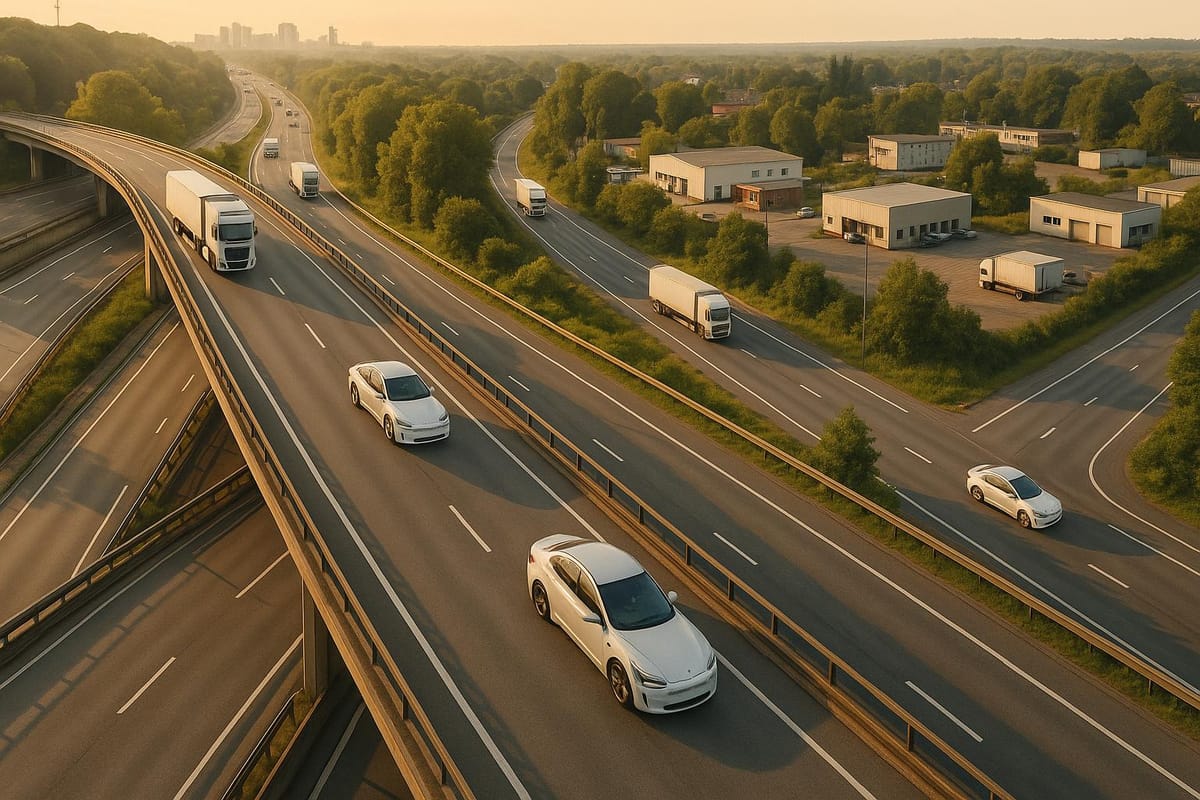
AI is reshaping how UK fleets manage diverse vehicles like diesel lorries and electric vans. Mixed fleets face unique challenges: varying vehicle capacities, emission zone restrictions, and fragmented telematics systems. AI tackles these issues by analysing vast data to optimise routes, reduce empty miles, and balance workloads.
Key benefits include:
- Better efficiency: AI reduces empty trips and improves vehicle usage by 10–20%.
- Lower costs: Operators save 8–15% on operating expenses and 5–12% on fuel.
- Real-time adjustments: AI adapts to traffic, delays, and last-minute changes.
- Environmental gains: CO₂ emissions drop by 10–25% in fleets with electric vehicles.
- Improved safety: AI monitors driver behaviour and schedules maintenance proactively.
For UK operators, integrating AI with telematics tools like GRS Fleet Telematics (£7.99/month) simplifies fleet management and boosts productivity. By using predictive analytics and dynamic routing, AI ensures smoother operations, fewer delays, and cost savings.
How AI Addresses Load Balancing in Mixed Fleets
Load Balancing Challenges in Mixed Fleets
Managing load distribution across mixed fleets is far more complex than dealing with single-type fleets. The main hurdle is vehicle diversity - each type of vehicle comes with its own set of operational quirks, capabilities, and limitations, all of which need to be managed simultaneously.
For instance, electric vehicles require carefully planned charging stops due to their limited range, while hybrids switch between power sources. On top of this, vehicles have different payload capacities, and traditional routing systems often fall short. A route optimised for a diesel truck may not work for an electric van that needs a recharge or a hybrid vehicle carrying mixed loads.
Fragmented data systems caused by contracts with multiple OEMs further complicate things. These systems often use incompatible telematics and maintenance protocols, forcing fleet managers to rely on manual processes prone to errors.
Urban operations in the UK add another layer of difficulty. Cities like London and Birmingham enforce ultra-low-emission zones, and congestion charges vary depending on vehicle specifications. These regulations make manual load balancing even more challenging.
Another issue is a lack of real-time visibility. A vehicle may seem available on paper but could be due for maintenance, or a driver might be approaching their legal driving hours limit. Without integrated data, dispatchers are left making decisions based on incomplete information. This leads to uneven workload distribution, inconsistent schedules, and impacts on both productivity and driver satisfaction. The absence of standardised protocols only amplifies these inefficiencies.
These challenges highlight the need for AI-driven solutions to revolutionise fleet management.
AI Solutions for Fleet Optimisation
AI offers a fresh approach to tackling these issues, shifting fleet management from reactive troubleshooting to proactive, data-driven decision-making. Instead of relying on rigid, pre-set rules, AI systems adapt by learning from past performance and adjusting their recommendations based on what actually works.
At the heart of AI-powered load balancing is constraint layering. This involves mapping out every limitation - vehicle capacity, delivery windows, driver hours, fuel or charging needs, and access restrictions. The system then evaluates countless combinations, adjusts delivery sequences, and resolves conflicts in real time. For example, if a last-minute delivery request comes in or traffic conditions change, the AI recalculates schedules automatically, ensuring the fleet keeps running efficiently.
Hybrid AI and reinforcement learning are increasingly used to optimise mixed fleets. These systems learn from diverse route data to identify the best strategies for different vehicle types. In fact, 46% of trucking companies already utilise these methods.
Predictive analytics takes things a step further by using historical data to anticipate delays, cancellations, maintenance needs, and even driver performance. This allows fleet managers to move from reacting to problems to preventing them.
AI systems also excel in route optimisation. They can simulate thousands of route options, balancing travel time, fuel efficiency, and reliability. For load planning, AI tools analyse incoming freight to ensure vehicles operate at full capacity, avoiding empty trips. These tools can also spot demand spikes, suggesting adjustments like advancing or delaying shipments to smooth out schedules. For mixed fleets, this means aligning specific vehicle capabilities - like payload or range - with the most suitable deliveries.
Real-time optimisation ensures the system adapts throughout the day. If disruptions occur, such as delayed deliveries or unexpected stops, the AI dynamically rebalances routes. For instance, if an electric vehicle is running low on charge, the system might reroute it to a charging station and reassign its remaining deliveries to a diesel vehicle with spare capacity.
Integration with telematics data further enhances these capabilities. Real-time data from tracking devices provides insights into vehicle location, fuel consumption, battery status, driver behaviour, and overall vehicle health. Systems like GRS Fleet Telematics, used in the UK, offer advanced tracking features, including dual-tracker technology and a 91% recovery rate for stolen vehicles. This level of integration gives fleet managers a complete picture, enabling smarter, real-time load allocation.
AI-assisted dispatch centres also free up managers to focus on strategic tasks rather than manual data entry. These systems provide recommendations that managers can review and tweak based on business priorities, reducing mental strain while keeping human oversight for complex decisions.
Interestingly, 95% of commercial transportation companies report that AI has significantly increased the value of IoT data collected from their devices. By turning raw telematics data into actionable insights, AI helps make smarter, more efficient load balancing decisions across mixed fleets.
AI Techniques That Improve Load Balancing
Predictive Demand and Capacity Forecasting
AI-based techniques are reshaping how UK fleet operators manage load balancing, with methods like predictive forecasting, dynamic routing, and telematics integration making operations more efficient. Predictive models, in particular, are changing the way fleets plan their daily activities by estimating workload before it even arrives. These models analyse historical delivery data, seasonal trends, customer behaviour, and external factors such as weather or promotional events to predict parcel volumes by postcode, time of day, and day of the week.
By combining demand data with fleet-specific details - such as vehicle types, capacities, depot locations, and driver schedules - these models can forecast future capacity needs and pinpoint areas of under- or over-utilisation. For example, machine learning can predict parcel volumes and stop density, while clustering algorithms help identify high-demand urban zones.
This forecasting capability is especially valuable for managing seasonal peaks in the UK. Fleet managers can allocate additional 3.5-tonne vans or 7.5-tonne rigid trucks to high-volume areas and position electric vehicles (EVs) on shorter, urban routes. Such strategies improve vehicle fill rates and minimise under-utilised runs.
Accurate forecasts also allow planners to align fleet capacity with expected demand before the day begins. This results in better load factors - measured in kilograms or parcels per vehicle - leading to more efficient runs and fewer half-empty journeys. AI tools can even identify backhaul opportunities or return loads, reducing empty miles and improving overall fleet utilisation. Studies show that using AI to detect demand spikes and smooth schedules significantly cuts empty miles and enhances tender acceptance rates.
For mixed fleets, including EVs, forecasting ensures that these vehicles are assigned to predictable, shorter routes. This makes the most of their battery capacity without risking range limitations, while longer or uncertain routes are handled by internal combustion engine (ICE) vehicles. These predictive insights set the stage for dynamic, real-time routing.
Dynamic Routing and Real-Time Optimisation
Dynamic routing systems take fleet management to the next level by continuously recalculating routes based on real-time data. These systems consider factors like traffic conditions, incidents, and last-minute orders while adhering to constraints such as driver hours and vehicle capacities. They evaluate countless route combinations, adjusting sequences and reassigning stops when disruptions occur, all while meeting customer time windows.
For mixed fleets, dynamic routing also takes into account vehicle-specific factors such as EV range, charging schedules, low-emission zone restrictions, and weight or access limits for different vehicle types. If a delay threatens delivery performance, the system can redistribute stops to nearby vehicles with spare capacity, ensuring time windows are met without adding overtime.
This adaptive approach is particularly useful for UK operations, where challenges like M25 traffic, urban roadworks, or last-minute changes are common. Rather than reacting to issues, the system continuously tests solutions, keeping operations on track.
In mixed EV and ICE fleets, specific AI capabilities enhance routing. Range-aware routing models EV energy usage by factoring in route topography, traffic, payload, and even weather, ensuring EVs stay within their battery range. Charging and fuelling optimisation schedules charging stops during off-peak times or when drivers are already paused, while ICE vehicles follow efficient fuelling patterns. Regulatory compliance ensures non-compliant vehicles avoid Clean Air Zones or weight-restricted areas, assigning EVs or lighter vans to those routes instead. The system also balances multiple objectives, such as cost, time, emissions, and reliability, prioritising low-emission vehicles for city deliveries while keeping ICE vehicles for long-haul routes.
Research shows that AI-driven routing for mixed fleets can lower operating costs and boost utilisation compared to simple allocation rules. To complement these adjustments, telematics data provides the detailed insights needed for precise load balancing.
Integration with Telematics Data
Telematics data offers real-world insights into vehicle and driver performance, which are crucial for refining AI models. Metrics like GPS traces, speed patterns, idling times, energy consumption, and customer-site dwell times feed into these systems, improving the accuracy of forecasts and operational decisions. For example, telematics can reveal postcode-specific challenges, such as longer stop durations due to security checks, which helps fine-tune service time predictions.
By centralising telematics data - often through aftermarket or cross-OEM platforms - fleet managers can overcome the fragmentation typically seen in mixed fleets. This unified approach allows AI models to optimise load assignments and routes across all vehicle types, improving efficiency.
Key telematics metrics include real-time location and ETA deviations, which can trigger route adjustments when delays occur. Stop dwell times help create more realistic schedules, reducing the risk of overloading routes. Data on fuel and EV energy consumption per route aids in cost and emissions planning, while driver behaviour indicators like harsh braking or speeding highlight areas for potential route improvements. Additionally, data on vehicle health and utilisation hours supports predictive maintenance, ensuring vehicles aren’t overworked as they approach service thresholds.
In the UK, systems like GRS Fleet Telematics provide detailed tracking and security data for vans. When integrated with AI planning tools, these systems enable smarter routing, better utilisation analysis, and risk-aware load balancing, giving fleet managers a comprehensive view of their operations. This integration ensures real-time load allocation is optimised across the entire fleet, regardless of vehicle type.
Measured Results of AI in Mixed-Fleet Operations
Better Utilisation and Lower Costs
AI has proven to be a game-changer for mixed-fleet operations, especially when it comes to load balancing. Studies show load factor improvements of 10–20% when AI tools analyse freight schedules, vehicle capacities, and historical data to optimise shipments. This reduces the number of under-utilised or empty trips, consolidating partially filled vehicles and ensuring the fleet operates more efficiently.
For fleets that combine internal combustion engine (ICE) and electric vehicles (EVs), AI optimisation models have delivered operating cost reductions of 8–15%, while simultaneously improving utilisation. These systems allocate the ideal vehicle type to each route and time frame, moving beyond manual scheduling or simple rotations. The result? Higher payloads per kilometre, fewer vehicles dispatched daily, and a reduction in total vehicle-kilometres travelled for the same workload.
Distance savings are also noteworthy. Operators using AI-driven tools report 5–15% fewer kilometres driven, particularly in urban multi-drop operations. These systems minimise "deadhead" trips by pairing outbound and return loads and smoothing out demand spikes. This not only reduces empty runs but also lowers peak fleet requirements. In mixed fleets, AI assigns shorter urban routes to EVs and consolidates longer trips onto fewer ICE vehicles, further cutting total mileage.
These operational gains directly impact costs. AI optimisation helps fleets achieve fuel savings of 5–12%, thanks to shorter routes, reduced idling, and smoother driving. Labour costs also drop, as fewer vehicles and shifts are needed, and dispatchers experience productivity boosts of 20–30% when transitioning from manual planning to AI-assisted systems. Annual savings can range from £5,000 to £60,000, driven by fuel efficiency, fewer vehicle-kilometres, and increased dispatcher efficiency.
To track these benefits, consistent data collection is crucial. Advanced telematics platforms monitor trip distances, fuel or energy use, load factors, stop times, driving behaviour, and maintenance events, segmented by vehicle type and route. For UK operators, solutions like GRS Fleet Telematics offer robust tracking and security hardware, providing the foundation for AI optimisation and helping measure improvements in utilisation, theft prevention, and recovery outcomes.
These cost and efficiency gains are just the beginning. They pave the way for substantial environmental and service quality improvements.
Environmental and Service Quality Benefits
AI-driven routing and optimisation don't just save money - they also help the planet. By reducing vehicle-kilometres and idling, fleets see CO₂ and NOx emissions drop by 8–15%.
In mixed fleets, AI models assign jobs strategically between EVs and ICE vehicles, achieving fleet-wide CO₂ reductions of 10–25%, depending on how many EVs are in use and the electricity grid's energy mix. Fewer empty miles and higher load factors further reduce emissions per tonne-kilometre, improving the overall environmental footprint of transport operations. For UK fleets navigating Clean Air Zone charges and working toward net-zero goals, these reductions are a win-win - helping with compliance while saving costs.
Service quality also gets a boost. AI-powered tools improve on-time delivery rates by dynamically adjusting routes in response to traffic, delays, or last-minute changes. Operators report fewer failed or rescheduled visits, as the system continuously rebalances stops to meet time constraints. By predicting potential delays based on location, customer history, and driver performance, AI reduces the need for urgent manual interventions, improving reliability and customer communication. This translates to better customer satisfaction, especially in time-sensitive sectors like same-day delivery and field services.
These operational enhancements aren't just about meeting deadlines - they also contribute to safer driving and longer-lasting vehicles.
Safety and Asset Longevity
AI-powered fleet platforms are transforming safety by using computer vision, driver monitoring, and predictive analytics. These tools detect fatigue, distraction, and risky behaviours in real time, issuing in-cab alerts and coaching drivers to improve. Organisations using these systems report fewer collisions, less severe incidents, and a reduction in high-risk driving events, which in turn lowers insurance and claims costs.
Predictive risk scoring identifies high-risk drivers and routes, enabling targeted interventions before accidents happen. For mixed fleets, AI-based route planning avoids sending vehicles down high-risk roads, narrow urban streets, or gradients unsuitable for certain vehicles, further enhancing safety. These technologies, including AI dashcams and advanced driver-assistance systems, are now widely adopted across commercial fleets.
AI also promotes better workload distribution. By balancing driving hours, stop counts, and route difficulty across the driver pool, it reduces fatigue and burnout, particularly in dense urban operations. Drivers benefit from more predictable schedules and fewer extreme days, which not only improves well-being but also reduces fatigue-related incidents. Over time, this leads to safer driving habits, reinforced by in-cab coaching.
On the maintenance side, predictive analytics - supported by telematics and sensor data - ensures fewer breakdowns, higher uptime, and more efficient workshop scheduling. This not only keeps vehicles on the road but also enhances safety by reducing the risk of roadside failures.
Implementation Guidance for UK Fleet Operators
Using Telematics Solutions
AI-driven load balancing can transform fleet operations, but it relies heavily on accurate, real-time data. This is where telematics systems come in. These tools collect essential information - like vehicle location, fuel usage, driver habits, and performance metrics - which AI uses to make smarter decisions about routing and load distribution. Without this data, AI simply can’t deliver its full potential.
However, many UK fleet operators face a common hurdle: managing a mixed fleet with vehicles from different manufacturers. Each brand often uses its own telematics systems and data formats, leading to fragmented information that complicates AI integration. The solution? Aftermarket platforms designed for cross-OEM compatibility. These systems consolidate data from all vehicles into one interface, streamlining fleet management regardless of the vehicle brand or system architecture.
For example, GRS Fleet Telematics offers a suite of features tailored for UK fleets. These include real-time GPS tracking, fuel analytics, maintenance scheduling, and driver behaviour monitoring. This data feeds into AI systems, enabling dynamic adjustments to improve efficiency and safety. With insights like speed tracking, geofencing alerts, and eco-driving analytics, fleet managers can optimise operations across diverse vehicles. Plus, these platforms are cost-effective, making it easier to establish a strong data foundation.
Integration is another critical piece of the puzzle. AI systems perform best when they connect seamlessly with tools like Electronic Logging Devices (ELDs), load boards, and carrier systems. By learning from each dispatch cycle, the AI refines its forecasting and routing capabilities over time. To make this work, your telematics system should allow real-time data sharing through programmatic access or export features. Interestingly, 95% of commercial transport organisations report that AI has significantly increased the value of IoT data, unlocking deeper insights and predictive abilities.
Switching from manual planning to AI-assisted control centres can also revolutionise operations. Dispatchers can shift their focus from repetitive data entry to strategic decision-making, turning reactive management into proactive optimisation. These technical advancements lay the groundwork for broader organisational changes.
Organisational Readiness
Technology alone won’t solve operational challenges. For AI to truly enhance fleet performance, organisations must align their processes and people with the new tools. Before deploying AI load-balancing systems, fleet managers should set clear, measurable KPIs - like vehicle utilisation rates, fuel costs per mile, and on-time delivery percentages - to track the technology’s impact.
Operational roles and responsibilities need to be clearly defined. For instance, who ensures data quality? Who validates AI recommendations? And who steps in when AI outputs don’t align with real-world conditions? Establishing these protocols upfront prevents confusion and ensures accountability.
Upskilling the workforce is equally important. Staff must learn how to interpret AI-generated insights, override decisions when necessary, and manage the system effectively. Drivers and dispatchers should see AI as a tool that complements their expertise, not as a replacement for their judgement.
A culture of continuous learning is key. AI systems improve over time through feedback loops, but this means initial results may not reflect their full potential. Expect a learning phase of around 3–6 months as the system adapts to your fleet’s unique patterns.
Collaborating with external experts can also accelerate the transition. Around 29% of carriers partner with transport software vendors, and 25% work with IoT device providers to support their digital transformation. Vendors familiar with UK regulations, like DVSA compliance tracking, can help bridge knowledge gaps and ensure a smoother rollout.
Once internal processes are in place, the focus can shift to fine-tuning data and algorithms to maximise the benefits of AI.
Addressing Limitations and Risks
One of the biggest challenges UK fleets face is inconsistent data standards. Mixed fleets often generate fragmented data, making it difficult to integrate and analyse information in real time. To tackle this, implementing strong data governance practices is essential. This could mean adopting standardised data formats, conducting quality checks before integration, and creating data dictionaries to ensure consistency across vehicle types. Without these measures, AI systems may struggle to deliver accurate recommendations.
A phased approach to implementation can help mitigate risks. Start with vehicles or routes where data consistency is highest, demonstrate the value of AI optimisation, and then expand to more complex scenarios. For instance, trialling AI with a single depot or a specific vehicle type can provide measurable results and build confidence for broader adoption.
Algorithm reliability is another concern. Poor decisions at scale can have significant consequences, so it’s crucial to test AI systems under various conditions. This includes stress-testing for disruptions like traffic, breakdowns, or last-minute changes. Running the AI system alongside existing methods during the initial phase allows you to validate its recommendations and make necessary adjustments.
UK-specific factors must also be considered when configuring AI models. Urban congestion patterns, driver hours regulations, regional emissions standards, and Clean Air Zone requirements all impact how the system should be calibrated. AI models trained on international data may overlook these nuances unless explicitly adjusted.
It’s important to manage expectations. While 80% of transportation organisations track ROI on IoT initiatives, only 15% report returns above 50%. This underscores the need for realistic goals. Instead of aiming for dramatic transformations, focus on steady, measurable improvements in efficiency to justify the investment.
Finally, clear policies around data ownership and governance are crucial. Under UK data protection laws, it’s essential to clarify who owns the data generated by AI systems, how it’s stored, and who has access. Planning for a transition period where legacy systems run alongside new AI tools can also reduce risks. This parallel operation allows teams to compare AI recommendations with historical performance, providing a safety net during the early stages of deployment.
Conclusion
AI-powered load balancing is reshaping fleet management for UK operators. Instead of relying on manual planning or reacting to issues as they arise, AI introduces a dynamic, real-time system that adjusts to changing conditions. This shift brings clear advantages, such as deeper operational insights and the ability to predict and respond more effectively.
The benefits are substantial: reduced operating costs, better vehicle utilisation, lower emissions, improved driver satisfaction, and enhanced safety. These improvements stem from integrating AI with telematics systems, like those offered by GRS Fleet Telematics, creating a seamless connection between data and actionable results.
To make the most of these advancements, operators need a solid foundation - reliable data, clear protocols, and skilled teams. Earlier strategies highlighted how organisational readiness and data integration play a crucial role in achieving goals like efficiency, safety, and reducing environmental impact. Interestingly, while 80% of transportation organisations track ROI on IoT projects, only 15% expect returns above 50% - a reminder that success often comes from steady, measurable progress.
For those managing mixed fleets - whether a combination of electric and ICE vehicles, various manufacturers, or differing sizes and payloads - GRS Fleet Telematics offers an affordable solution. Starting at just £7.99 per month, their system provides real-time GPS tracking, fleet analytics, and route planning. This reliable data platform enables AI to turn scattered information into meaningful insights, driving efficiency, safety, and profitability across operations.
The tools are ready, the business case is clear, and the competitive edge will go to those who act now. By investing in telematics infrastructure and preparing their organisations, UK fleet operators can harness these proven advantages and stay ahead in an evolving industry.
FAQs
How does AI enhance telematics systems to optimise mixed fleet management?
AI is transforming telematics systems for mixed fleet management, making operations smarter and more efficient. With real-time monitoring, businesses can track vehicles accurately and securely, ensuring better oversight. AI-powered route optimisation helps cut down on fuel usage and travel time, while driver behaviour analysis plays a key role in boosting safety and operational efficiency.
Moreover, AI-driven fleet analytics empowers businesses to make informed decisions based on data, enhancing overall performance and cutting costs. These tools are especially useful for mixed fleets, where diverse vehicle types and purposes demand customised management approaches.
How does AI tackle the challenges of load balancing in mixed fleets?
AI tackles some of the biggest hurdles in load balancing for mixed fleets by intelligently managing uneven workloads, adjusting to unexpected changes in vehicle availability, and factoring in differences in driver behaviour. It also takes real-time traffic conditions into account, paving the way for smarter routes and smoother fleet operations.
With AI in the mix, businesses can better allocate resources, cut down on delays, and boost overall efficiency. This helps mixed fleets run smoothly, even in challenging and fast-changing situations.
How can UK fleet operators adopt AI-powered load balancing systems effectively?
AI-powered load balancing systems are transforming how UK fleet operators manage their resources. By using these systems, businesses can allocate resources more efficiently, cut costs, and boost overall productivity, especially when dealing with mixed fleets. However, to make this shift seamless, it's crucial to begin by evaluating your fleet's unique requirements and pinpointing where AI can deliver the greatest impact.
A key step is investing in advanced telematics solutions, such as cutting-edge tracking devices. These tools lay the groundwork by providing the essential data that AI systems rely on to operate effectively. Equally important is ensuring your team is trained to use these systems and interpret the insights they generate. This knowledge empowers your staff to harness the full potential of AI-driven tools.
With AI in the mix, fleet operators can make smarter, data-informed decisions that not only enhance operational performance but also elevate customer satisfaction.