AI-Driven Route Optimisation for Fleets
AI-powered route planning that cuts fuel and maintenance costs, speeds deliveries, boosts vehicle utilisation and ensures UK compliance.
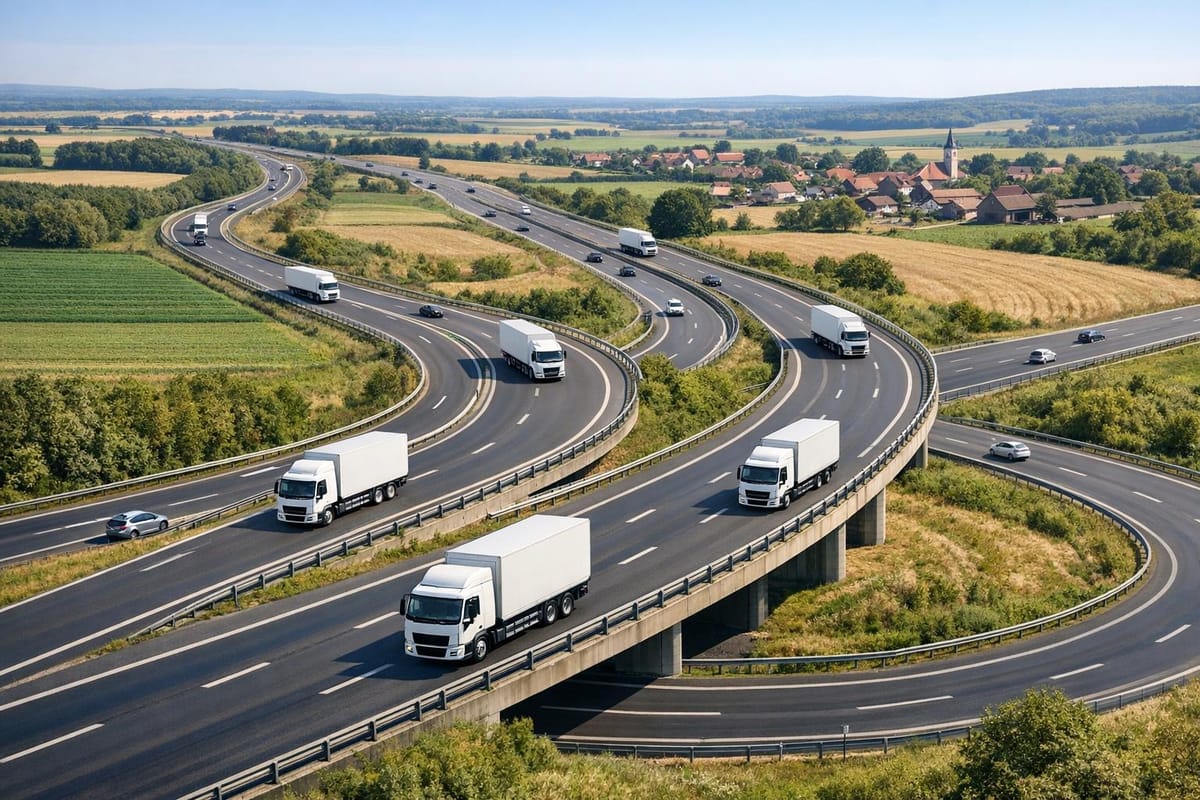
AI-driven route optimisation is transforming fleet management in the UK. By using artificial intelligence and machine learning, fleets can cut fuel costs by 10–15%, reduce delivery times by 18%, and increase vehicle delivery capacity by up to 25%. It processes live traffic, weather, and operational constraints to calculate the most efficient routes in real time. Companies like Tesco and Sainsbury's have already seen improved delivery performance and cost savings.
Key Benefits:
- Fuel Savings: Up to 20%.
- Delivery Efficiency: 95–99% on-time rates.
- Reduced Maintenance Costs: 12–18% lower.
- Improved Security: 91% recovery rate for stolen vehicles.
AI tools also help fleets comply with UK-specific regulations like ULEZ and LEZ, while cutting carbon emissions by reducing mileage and idling time. Initial investments often pay off within 6–12 months, making this a practical solution for fleets of all sizes.
For fleet managers, starting with a pilot programme and integrating AI with existing systems can deliver measurable improvements quickly. The time to upgrade is now.
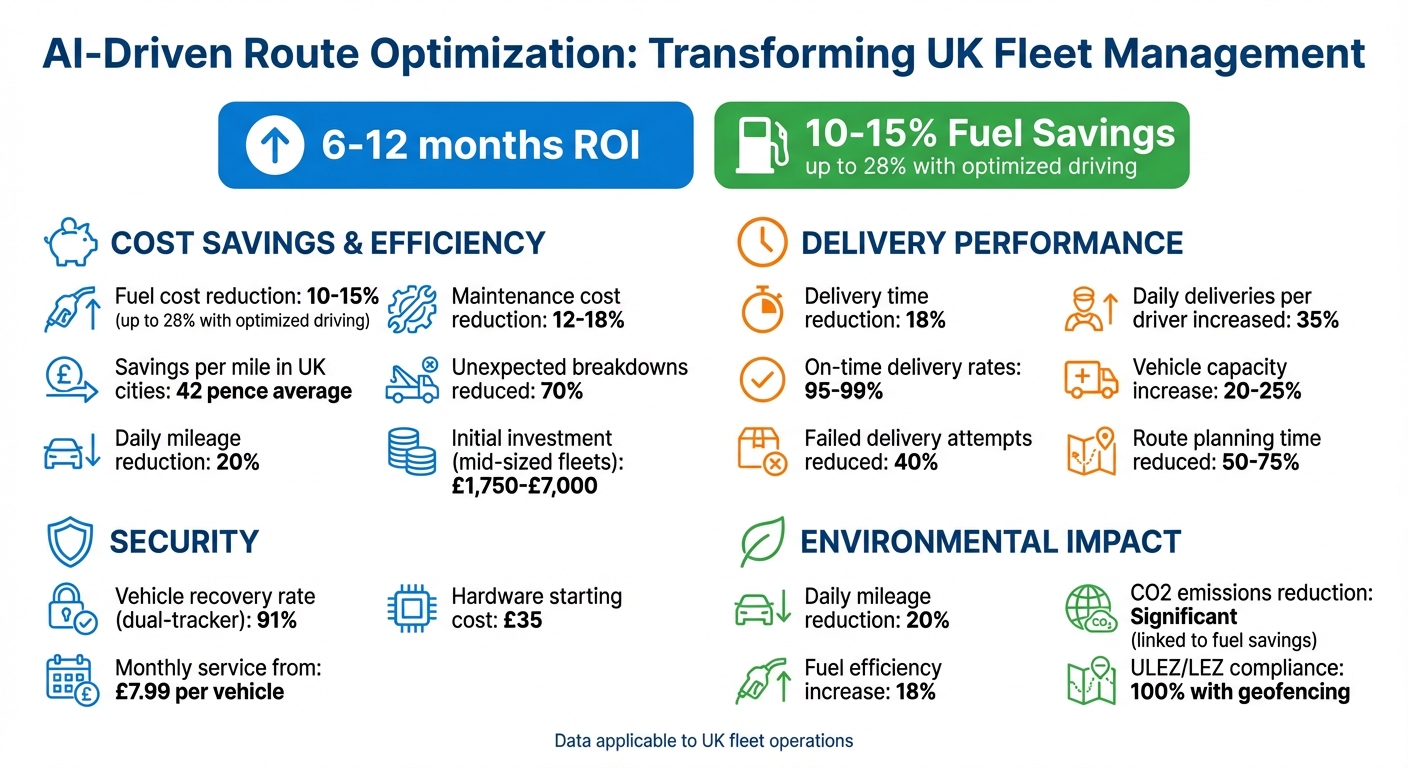
AI Route Optimization Benefits for UK Fleets: Key Statistics and ROI
AI & Machine Learning Use Cases for Route Optimisation
How AI-Driven Route Optimisation Works
To grasp why AI-driven route optimisation surpasses traditional methods, it’s essential to understand how these systems function. At their core, they combine comprehensive data collection with advanced algorithmic processing to make lightning-fast decisions. Let’s explore the types of data that power this technology.
Data Inputs for Route Optimisation
AI systems rely on three main types of data to function effectively:
- Static data: Includes vehicle specifications, bridge heights, and fixed road restrictions.
- Dynamic data: Covers live traffic updates, weather conditions, and temporary roadworks.
- Operational data: Encompasses driver schedules, customer delivery windows, and vehicle capacity constraints.
This data is collected through various technologies. GPS devices track location and speed in real time, while onboard diagnostic (OBD) systems monitor engine health and fuel consumption. API integrations bring in external information, such as weather forecasts and traffic updates from sources like Transport for London.
"The more information you have, the more accurate your route predictions can be. And the more information you have, the more you can optimize those routes."
– Alex Osaki, Product Marketing Manager, HERE
Algorithm Analysis and Real-Time Adjustments
Once the data is collected, AI algorithms - often powered by GPUs - analyse millions of data points to identify patterns and improve decision-making. Unlike traditional GPS systems that focus solely on distance and speed limits, these AI models incorporate machine learning to study historical fleet behaviour. They account for details like unique acceleration patterns by vehicle type and adjust estimated arrival times based on individual driver habits.
The standout feature of AI is its ability to continuously optimise. When unexpected events occur - such as a new delivery request or an accident - the system recalculates routes in seconds. It uses predictive analytics to anticipate delays and even flag potential maintenance needs. Thanks to GPU-accelerated processing, routing calculations are up to 120 times faster than traditional methods, delivering exceptional accuracy even in complex scenarios. For perspective, a single van with 24 stops has 620 sextillion possible route combinations, highlighting the sheer complexity that AI handles with ease.
Benefits of AI-Driven Route Optimisation for Fleets
AI-powered route optimisation offers UK fleet operators a host of tangible benefits, going well beyond simply finding the fastest way from point A to point B. By leveraging advanced algorithms, this technology delivers improvements in three key areas: cutting costs, enhancing fleet security, and reducing environmental impact.
Cost Savings and Efficiency
Smarter routing powered by AI can slash fuel consumption by 10–15%, with some operators reporting savings as high as 28% when combining shorter routes with optimised driving behaviours. For fleets operating in major UK cities, integrating live traffic data can save an average of 42 pence per mile, while daily mileage reductions of around 20% lead to noticeable drops in fuel expenses.
AI also helps lower vehicle maintenance costs by 12–18% and reduces unexpected breakdowns by over 70% through predictive analytics that flag potential component failures. This means fewer interruptions and more time spent on the road generating revenue. On top of that, optimised fleets can achieve a 35% increase in daily deliveries per driver and a 40% reduction in failed delivery attempts, thanks to more accurate estimated times of arrival (ETAs). For mid-sized fleets, initial investments - ranging from £1,750 to £7,000 - can often pay for themselves in just two to three months through fuel savings alone.
Better Fleet Security and Asset Use
AI, when combined with advanced tracking systems, significantly boosts fleet security while improving vehicle utilisation. For example, GRS Fleet Telematics employs a dual-layer security approach that combines hardwired GPS units with hidden Bluetooth backup trackers, achieving an impressive 91% recovery rate for stolen vehicles.
Real-time geofencing adds another layer of protection, sending instant alerts if a vehicle strays from designated zones or operates outside authorised hours. Additionally, engine immobilisation systems can prevent theft attempts by disabling the vehicle remotely. Beyond security, AI-driven route optimisation enhances vehicle utilisation by improving load planning and stop sequencing, increasing capacity by 20–25%. The technology also ensures compliance with UK regulations, such as monitoring driving hours and avoiding fines by incorporating geofencing for ULEZ and LEZ zones. With hardware options starting at just £35 and monthly services from £7.99 per vehicle, solutions like those offered by GRS Fleet Telematics are accessible even to smaller operators.
Environmental Impact and Carbon Reduction
AI-driven route optimisation plays a crucial role in reducing a fleet's environmental footprint. By cutting daily mileage by 20% and improving fuel consumption by 10–15%, operators can significantly lower their carbon emissions. Enhanced driving patterns and shorter routes further boost fuel efficiency by 18%.
The technology also helps fleets comply with UK-specific environmental regulations, such as London's ULEZ and Clean Air Zones in cities like Manchester and Birmingham, by automatically factoring these restrictions into route planning. Real-time traffic data integration reduces fuel-wasting idling during congestion, while "empty miles" are minimised by optimising return journeys. Predictive analytics identify fuel consumption trends, allowing managers to address inefficiencies proactively. Additionally, planning time is cut by 50–75%, reducing the energy spent on administrative tasks.
| Environmental Metric | Measurable Improvement |
|---|---|
| Daily Mileage | 20% reduction |
| Fuel Consumption | 10–15% reduction |
| Fuel Efficiency | 18% increase |
| Planning Time | 50–75% reduction |
How to Implement AI-Driven Route Optimisation
Review Your Current Operations
Begin by gathering operational data - such as fuel consumption, maintenance costs, planning times, and delivery success rates - over a period of 4 to 8 weeks. This will give you a solid baseline to measure improvements against.
Next, audit your existing hardware, including GPS and OBD devices, as well as manual planning workflows. AI has the potential to reduce planning time by up to 75%. Ensure that your ERP, CRM, or telematics systems allow for seamless data exchange by supporting open APIs or modular architectures. Don’t forget to review compliance with UK-specific regulations, such as driver hours and Low Emission or Ultra Low Emission Zones (LEZ/ULEZ), to avoid potential fines.
Once you’ve established your baseline and reviewed your current setup, you’ll be ready to select tools and partners that integrate effectively with your systems.
Choose the Right Tools and Partners
Look for platforms that offer strong API connections and cloud infrastructure to handle real-time data exchange between your telematics, ERP, and CRM systems. Choose a provider that supports essential hardware like GPS and OBD devices, offers compatibility with older vehicles, and includes UK-specific compliance features such as ULEZ and congestion charges.
For example, GRS Fleet Telematics delivers UK-focused solutions with hardware starting at £35 and monthly service fees from £7.99 per vehicle. Their dual-tracker security system, which combines a hardwired GPS unit with a hidden Bluetooth backup, boasts a 91% recovery rate for stolen vehicles. Before committing to a provider, have your IT team review their API documentation to confirm compatibility with your existing systems.
To secure driver support, schedule training sessions to demonstrate how AI can simplify navigation and reduce planning stress. Once integration requirements are clear, you can move forward with a pilot programme.
Run a Pilot Programme and Scale Up
Start small by testing the system with a subset of vehicles under real-world conditions. Set clear goals, such as reducing mileage by 10% or improving on-time delivery in full (OTIF) rates by 15%. Closely monitor the pilot’s performance, comparing the results to your baseline data to track improvements in fuel savings, delivery efficiency, and planning time.
After refining the system and resolving any technical issues, proceed with a phased rollout. For mid-sized fleets (50–200 vehicles), initial investments typically range from £1,750 to £7,000, with most systems breaking even within 6 to 12 months. Larger fleets (200+ vehicles) may require 16 to 24 weeks for full implementation, which includes custom integrations and comprehensive staff training.
As you scale up, transition from traditional batch processing - where routes are planned one day at a time - to continuous optimisation. This allows routes to adjust in real time as new orders come in, ensuring maximum efficiency. With this approach, on-time delivery rates often reach between 95% and 99%.
Measuring Success: Performance Metrics for Fleet Optimisation
Once your AI system is up and running, it's essential to track specific metrics to assess its impact, confirm the return on investment, and identify areas for further improvement.
Efficiency Metrics
Start by keeping an eye on fuel cost per mile, a key indicator of efficiency. With AI, you could see a reduction of 10–15%, which translates to savings of up to 42 pence per mile in high-traffic areas like busy UK cities. Delivery performance is another important area to monitor. Look at on-time delivery rates, which typically improve to between 95% and 99% when the system is fully operational. Additionally, track failed delivery attempts, which can drop by as much as 40%, and measure route planning time, often reduced by up to 75%.
Another useful metric is delivery capacity per vehicle, as AI-powered fleets can handle 20–25% more stops per day without adding extra vehicles. Maintenance costs are also worth noting, with expenses often decreasing by 12–18%, and unexpected breakdowns dropping by over 70%. To get the most out of these metrics, compare them to your baseline data from the initial review period, typically 4–8 weeks after implementation. Beyond efficiency, it's also crucial to monitor security metrics to protect your fleet.
Security and Vehicle Recovery Rates
Fleet security is a priority, and vehicle recovery rates are a key measure of success. Compare your performance against the industry benchmark for dual-tracker systems, which recover 91% of stolen vehicles. Track how quickly stolen vehicles are recovered and analyse any trends in theft attempts across your operations. These insights will help ensure that your fleet remains secure. Once security is addressed, you can turn your attention to environmental performance.
Environmental Metrics
Reducing mileage is one of the most effective ways to improve environmental outcomes. Optimised routing can cut total mileage by up to 20%. Similarly, reducing CO2 emissions is directly tied to lower fuel consumption and fewer miles driven. Use telematics data to monitor idle time, as cutting down on unnecessary engine running can significantly reduce emissions.
For UK fleets, tracking LEZ (Low Emission Zone) and ULEZ (Ultra Low Emission Zone) entries is particularly important. AI systems equipped with geofencing can ensure 100% compliance, helping you avoid unauthorised zone entries. Finally, measure the reduction of empty miles - the distance vehicles travel without carrying a load. Minimising these trips not only lowers costs but also helps decrease your carbon footprint.
Conclusion
Main Points
AI-driven route optimisation is changing the game for UK fleets, moving operations from outdated manual planning to smart, data-driven strategies. The financial advantages are hard to ignore: fleets can typically cut fuel costs by 10–15% and reduce maintenance expenses by 12–18% using predictive analytics and optimised routing. Operationally, the improvements are just as compelling. Delivery times drop by 18%, while vehicle capacity utilisation jumps by 20–25%, all without the need to expand the fleet. Most systems deliver a return on investment within just 8–12 months.
AI also tackles critical challenges around security and compliance. Advanced dual-tracker systems boast a 91% recovery rate for stolen vehicles, and automated geofencing ensures compliance with ULEZ and CAZ regulations, helping fleets sidestep hefty fines. There’s a meaningful environmental impact too, as optimised routes cut down overall mileage and significantly reduce empty miles. For UK fleet managers grappling with rising fuel prices, stricter emissions rules, and growing customer demands, AI-driven route optimisation is no longer a luxury - it’s becoming a necessity.
The advantages are clear, and the time to act is now.
Next Steps for Fleet Managers
Fleet managers need to take practical steps to integrate AI into their operations. Start by gathering baseline data over a 4–8 week period, focusing on metrics like fuel costs per mile, delivery success rates, and time spent on planning. This will serve as a benchmark to evaluate the impact of any AI solution you choose. When researching platforms, look for those offering real-time recalculations and smooth integration with your existing systems.
A pilot programme is a smart way to begin. Test the system with a portion of your fleet to identify any potential integration issues and to showcase measurable results to stakeholders. For fleets in the UK needing both advanced routing and enhanced security, combining AI optimisation with comprehensive tracking systems, such as GRS Fleet Telematics, is a robust option. With hardware starting at £35 and monthly costs as low as £7.99 per vehicle, it’s a cost-effective solution for fleets of all sizes. The technology is proven, the benefits are measurable - start your implementation now to stay ahead of the competition.
FAQs
How long does it take for AI-driven route optimisation to provide a return on investment for fleet operators?
AI-powered route optimisation can pay off fast. Many fleet operators notice clear benefits within 8 to 12 months, and some even see results in as little as 10 days.
This technology cuts fuel expenses, boosts delivery efficiency, and reduces vehicle wear and tear. These cost savings quickly outweigh the initial investment, offering a smart, budget-friendly approach to fleet management.
What data is essential for AI-driven route optimisation?
AI-powered route planning depends on a mix of data sources to work efficiently. Real-time GPS and location tracking play a key role in pinpointing current vehicle positions, while historical journey data helps identify patterns and fine-tune future routes. By incorporating live traffic updates and road conditions, the system can adjust for congestion or closures on the fly. Meanwhile, weather forecasts help steer clear of delays caused by bad weather.
Other crucial inputs include vehicle metrics, such as fuel levels and diagnostics, and driver details, like working hours and compliance records. Delivery-specific factors, like time-sensitive drop-offs and load capacities, are also factored in to build routes that are both efficient and reliable, tailored to the specific demands of your fleet.
How does AI-driven route optimisation enhance fleet security and ensure compliance with UK regulations?
AI-powered route optimisation enhances fleet security by keeping track of real-time vehicle data, such as location, speed, and driver behaviour, and comparing it against established safety rules. If a vehicle veers off its designated route, exceeds speed limits, or enters areas flagged as high-risk, the system immediately sends alerts and may propose safer alternative routes. This helps minimise risks such as accidents or unauthorised vehicle use. Moreover, all data is securely logged, providing a reliable record for audits, investigations, or insurance claims.
The system also supports compliance with UK regulations by incorporating requirements like avoiding Ultra Low Emission Zones (ULEZ), ensuring maximum driving hours are not exceeded, and adhering to restrictions based on vehicle types. It handles data securely in line with UK GDPR, offering audit trails to ensure transparency and legal compliance. By blending security measures with regulatory adherence, AI-driven optimisation enables fleets to safeguard assets, meet legal obligations, and streamline operations.