AI Delivery Scheduling: ROI for Fleet Operators
AI route optimisation cuts fuel and maintenance costs, raises on‑time delivery to 95%+, and shortens payback for UK fleets.
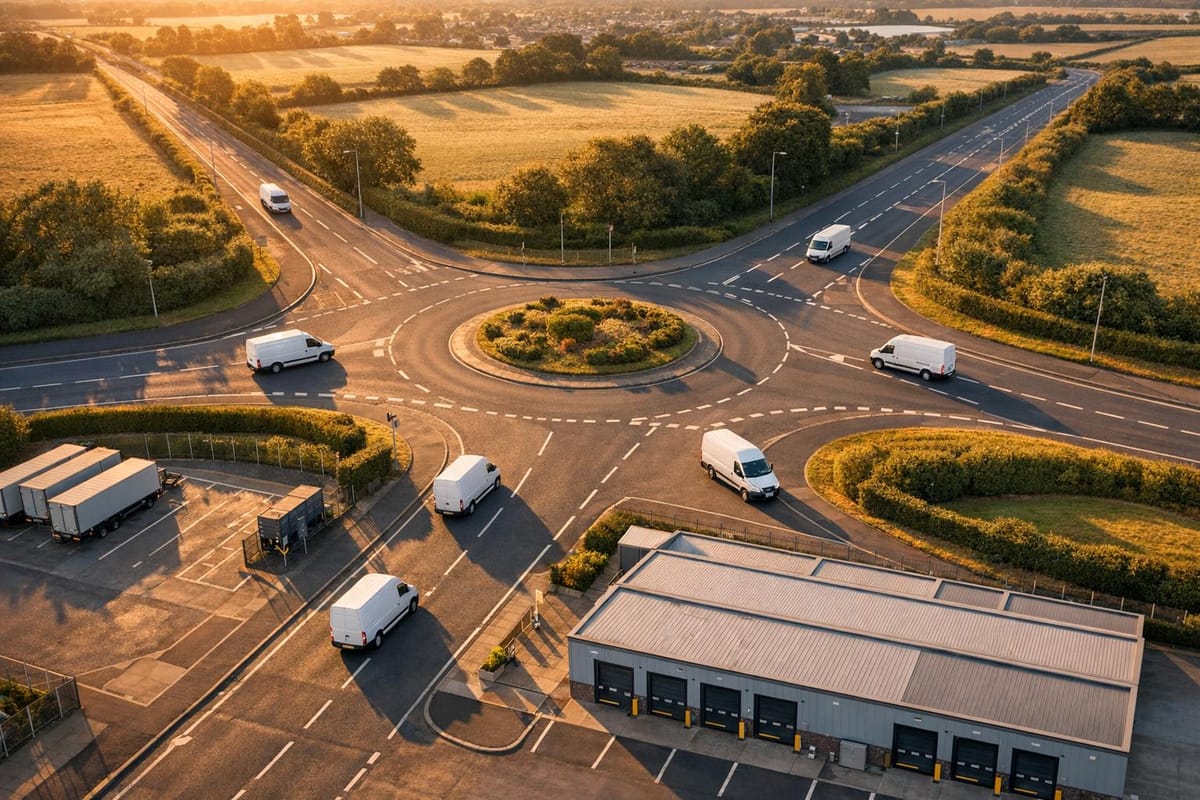
Fleet operators in the UK are increasingly turning to AI delivery scheduling to cut costs, improve efficiency, and maintain reliable service. Here's why it works:
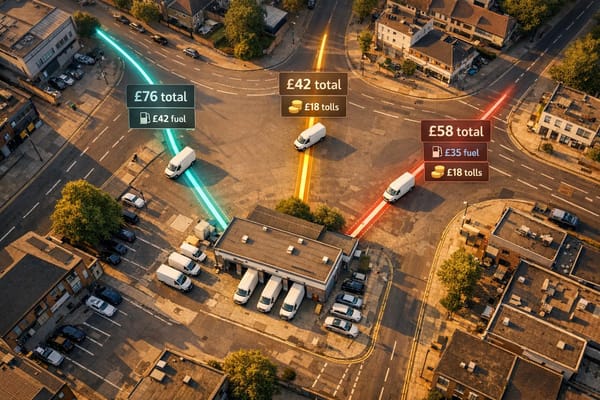
- Fuel Savings: AI-driven route optimisation reduces fuel consumption by 15–25%, saving operators thousands of pounds annually.
- Time Efficiency: Manual route planning that takes hours is completed in under a minute with AI, freeing up dispatchers for other tasks.
- Improved Delivery Accuracy: On-time delivery rates increase to over 95%, while failed deliveries drop by 4%.
- Cost Reductions: Predictive maintenance powered by AI lowers unplanned breakdowns by 40–70%, reducing downtime and repair costs.
- Affordable Integration: AI systems work seamlessly with van tracking solutions, with subscription plans starting at just £7.99 per month.
For UK SMEs, these systems deliver a payback period of just 3–6 months and ROI figures as high as 850% within 18 months. Whether it's saving on fuel, cutting mileage, or boosting delivery capacity, AI scheduling is helping fleets operate smarter and leaner.
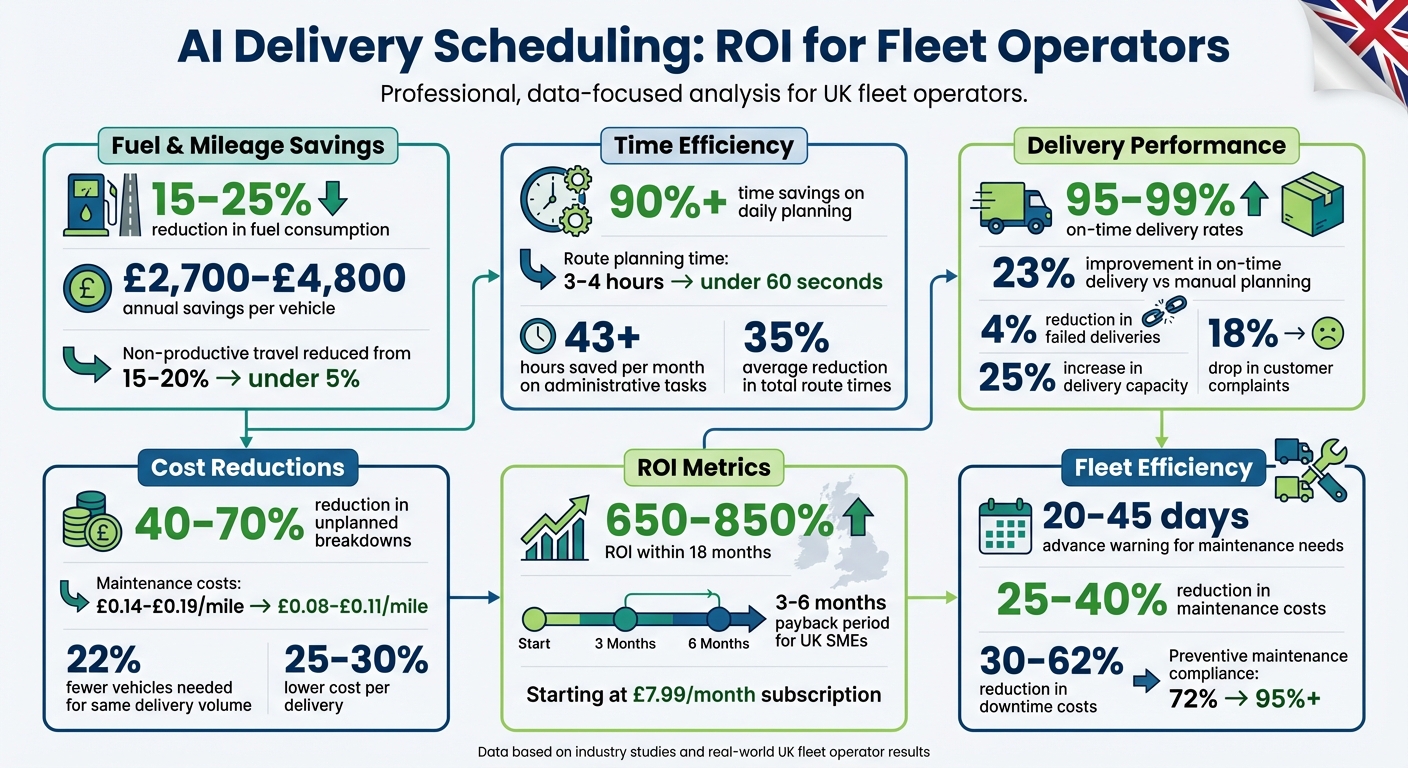
AI Delivery Scheduling ROI Benefits for UK Fleet Operators
AI for Fleet Management 🚛 | How AI is Revolutionizing Logistics & Transportation
ROI Metrics and Industry Data
AI delivery scheduling is proving to be a game-changer for fleet operators, significantly cutting costs and improving efficiency. Studies reveal that AI-powered fleet management systems can reduce fuel and labour costs by 10–25% for smaller logistics companies. These savings are primarily driven by three key factors: smarter routing, faster planning, and improved resource allocation. Let’s break down the numbers to see how AI is transforming fuel use, delivery reliability, and operational efficiency.
Fuel and Mileage Savings
One of the biggest advantages of AI is its ability to cut down on non-productive travel - the unnecessary mileage that often results from inefficient manual planning. Typically, 15–20% of a driver's route is wasted on such travel, but AI systems reduce this to under 5%. For a fleet covering 18,000 miles a week, this means a reduction of about 2,700 miles each week. Parker Gawne, Founder at Syntora, highlights the efficiency:
It cuts daily route planning time from several hours down to under one minute.
These improvements in routing not only save on fuel but also boost delivery accuracy.
Delivery Accuracy and Reduced Downtime
AI-driven systems deliver a 23% improvement in on-time delivery rates compared to manual planning, while customer complaints drop by 18% on average. Failed deliveries are reduced by 4%, thanks to more precise routing and dynamic re-routing capabilities. This directly impacts costs - fewer failed deliveries mean lower expenses for redelivery and higher customer satisfaction. AI also enables fleets to operate with 22% fewer vehicles while maintaining the same delivery volume. This reduction helps cut down on insurance, maintenance, and depreciation costs. Vikram Reddy, CTO at APPIT Software Solutions, summarises the benefits:
AI-optimised fleets achieve 25–30% lower cost per delivery.
Beyond improving delivery accuracy, AI significantly reduces the time spent on daily operations.
Time Savings in Planning and Operations
Manual planning for a 10-vehicle fleet typically takes 3–4 hours each day. With AI, this process is completed in under 60 seconds - a time saving of over 90%. This allows dispatchers to focus on more strategic tasks like customer service. Beyond route planning, AI automation saves more than 43 hours per month on tasks such as scheduling and accounting. Overall, total route times are reduced by an average of 35%, achieved through a mix of planning optimisation (15%), traffic avoidance (12%), and efficient sequencing (8%).
For operators in the UK, where urban logistics can be particularly challenging, these time savings are invaluable. What’s more, the technology is surprisingly affordable, with custom AI route optimisation available for under £40 per month in compute costs.
Case Studies: ROI in Practice
AI-powered delivery scheduling isn’t just a theoretical improvement; it’s already delivering measurable results for UK fleet operators. These systems have shown returns of 650–850% within 18 months, thanks to improvements in fuel efficiency, maintenance, and safety costs. For fleets grappling with rising operational expenses, this proves that AI is a practical, results-driven solution available right now. Let’s break down how these benefits play out in real-world scenarios.
Fuel Efficiency and Route Optimisation
AI-driven route optimisation has been a game-changer for fuel savings. Fleet operators report cutting fuel consumption by 15–25%, which translates to annual savings of £2,700–£4,800 per vehicle. Maintenance costs also see a significant drop, going from £0.14–£0.19 per mile to just £0.08–£0.11 per mile with predictive AI systems.
Companies like GRS Fleet Telematics play a key role here, providing tracking data that feeds into AI systems. This enables dynamic routing adjustments, which not only save on fuel but also reduce wear and tear, keeping maintenance costs lower. Plus, these systems help minimise theft-related disruptions, further improving efficiency.
Delivery Accuracy and Theft Recovery
AI scheduling doesn’t just save money; it also boosts reliability and security. UK fleet operators have reported a 25% increase in delivery capacity and a 15% improvement in on-time, in-full (OTIF) rates. This means more deliveries are completed on schedule, keeping customers happy.
On the security side, GRS Fleet Telematics offers dual-tracker technology with an impressive 91% recovery rate for stolen vehicles. This combination of improved delivery accuracy and robust theft protection ensures smoother operations and better outcomes for fleet managers.
Cost Savings for UK SMEs
For small and medium-sized businesses in the UK, the benefits of AI scheduling are even more pronounced. By integrating AI with advanced tracking solutions, SMEs can achieve quick cost savings and faster returns. Typically, these systems deliver a payback period of just 3–6 months, with maintenance costs reduced by 25–40% and downtime costs slashed by 30–62% due to fewer unexpected breakdowns.
AI platforms also offer predictive maintenance, identifying potential component failures 20–45 days ahead of traditional diagnostics. This allows repairs to be scheduled during planned downtime, avoiding costly disruptions.
| GRS Tracker Plan | Hardware Cost | Monthly Subscription | Key Features |
|---|---|---|---|
| Essential | £35 | £7.99 | Single wired tracker, real-time tracking |
| Enhanced | £79 | £7.99 | Primary tracker + Bluetooth backup, dual protection |
| Ultimate | £99 | £7.99 | Both trackers + immobilisation, maximum security |
Take, for instance, a 10-vehicle fleet choosing the Enhanced plan. The total first-year investment would be £1,748.80, including hardware and subscription costs. With annual savings per vehicle ranging from £2,700 to £4,800, the fleet could see total savings of £27,000–£48,000. That’s a return on investment in just 3–6 months. GRS Fleet Telematics also sweetens the deal by offering free installation when paired with fleet branding services, making it even easier for SMEs to see rapid financial benefits.
How to Implement AI Delivery Scheduling
Introducing AI delivery scheduling doesn’t mean overhauling your entire system. Instead, it works alongside your existing telematics setup, keeping disruption to a minimum. For most UK fleet operators, the process is straightforward and can be completed in less than a week.
Integration with Existing Telematics Systems
Start by ensuring your current telematics hardware is compatible with APIs. Companies like GRS Fleet Telematics make this easy with their dual-tracker technology. These trackers plug directly into OBD ports or CAN-bus systems, making them instantly compatible with most UK van models. Once installed, the system automatically syncs GPS data, vehicle telemetry, and scheduling details - eliminating the need for manual data entry.
The setup process involves configuring a dashboard and linking APIs, which can typically be done in just a few days without affecting fleet operations. Once the system is live, it automates data flow for routes, achieving on-time delivery rates of 95–99%. Operators in the UK have also reported cutting planning time by 75%, thanks to seamless integration with warehouse systems. With subscription plans starting from £7.99 per month, even smaller fleets can adopt this technology without breaking the bank.
Monitoring ROI and Performance Metrics
Use built-in KPI dashboards to track ROI. Key metrics include fuel savings (aiming for a 10–23% reduction), delivery accuracy (95%+ on-time rates), reduced downtime (40% fewer breakdowns), and mileage efficiency (up to 20% less mileage per day). GRS Fleet Telematics offers real-time analytics, allowing operators to compare current performance against baseline data. Automated reports provide a clear view of savings, both in monetary terms and as percentages.
Live monitoring tools track fuel consumption, route deviations, and delivery ETAs. AI alerts flag issues like traffic delays or signs of driver fatigue, helping operators respond quickly. Preventive maintenance compliance often improves significantly, jumping from 72% to over 95%, while repair times drop from 18–36 hours to just 6–12 hours. Many UK fleets see measurable ROI within weeks, with fuel savings alone often covering costs within the first year. These benefits scale efficiently, regardless of fleet size.
Scalability for UK Fleet Operators
AI delivery scheduling adapts to fleets of all sizes, whether you’re managing 10 vans or 200 vehicles. For smaller fleets (10–50 vans), GRS’s plug-in trackers typically deliver ROI in 6–8 weeks, increasing capacity by 20–25% without the need for additional vehicles. Larger fleets benefit from enterprise-level APIs that handle complex routing while maintaining on-time delivery rates of 95–99%. Payback periods for these systems range from just a few weeks to 12 months.
The system also ensures compliance with UK regulations, including drivers’ hours rules and working time directives, reducing the risk of penalties. For urban operations, it automatically routes compliant vehicles through Low Emission Zones, diverting older models to avoid fines - an essential feature for navigating UK cities.
Conclusion
AI-powered delivery scheduling transforms fleet efficiency with measurable results. Industry data reveals that optimised routing can cut fuel costs by 10–20%, boost on-time delivery rates to 95–99%, and lower operational expenses, enabling most UK operators to see a return on investment within 6–24 months. These improvements often allow fleets to expand delivery capacity by 20–25% without adding more vehicles. GRS Fleet Telematics makes this level of optimisation accessible, offering dual-tracker technology starting at just £7.99 per month. This technology integrates seamlessly with AI scheduling platforms, delivering real-time GPS data and vehicle telemetry to streamline routes effectively.
These figures aren't just projections - they're backed by real-world results. For instance, Royal Mail has reported nearly 25% fewer roadside breakdowns thanks to predictive maintenance tools, while Yodel has achieved a 95% on-time delivery rate using intelligent routing systems. These examples highlight how the right mix of tracking hardware and AI scheduling software can deliver similar benefits across the logistics sector.
For UK SMEs, the advantages are even more pronounced. By adopting these systems early, businesses can navigate challenges like Low Emission Zones and rising fuel costs more effectively. Early adopters enjoy more reliable service, reduced operating expenses, and better safety records, which not only enhance customer satisfaction but also lower insurance premiums. AI scheduling systems handle complex routing demands and adapt instantly to real-time changes, all while ensuring compliance with UK drivers' hours regulations. This gives early implementers a strong competitive edge, helping them save on fuel, minimise downtime, and increase capacity ahead of their competitors.
FAQs
What data do I need to get started with AI delivery scheduling?
To get started with AI delivery scheduling, you'll need access to several key types of data: real-time traffic updates, weather conditions, vehicle status, delivery locations, and driver behaviour. By combining this information, you can enable dynamic route adjustments and optimise schedules on the fly. This approach helps streamline operations and boosts overall efficiency.
How do I calculate ROI for my fleet before rolling it out?
To figure out your ROI, start by estimating potential cost savings and efficiency improvements based on your fleet data. This could include things like fuel consumption, delivery times, and maintenance costs. Many AI systems can cover their costs within 8–12 months, with some delivering ROI in as little as 0.3 months.
For example, AI solutions often lead to fuel savings of 10–15% and maintenance cost reductions of 12–18%. To assess ROI, compare these projected savings against the total costs of implementing AI technology, which might include software, telematics, and hardware expenses.
Will AI scheduling keep my routes compliant with UK drivers’ hours and Low Emission Zones?
AI-powered scheduling plays a key role in keeping UK drivers compliant with regulations, such as drivers’ hours rules and Low Emission Zone (LEZ) requirements. By making real-time adjustments to routes, it ensures that schedules align with legal limits on driving times and rest periods. Additionally, it helps vehicles navigate through Ultra Low Emission Zones (ULEZ), avoiding fines and reducing environmental impact. This approach not only supports legal compliance but also boosts operational efficiency.