5G and Van Trackers: Transforming Fleet Management
How 5G van trackers transform fleet management: sub-second tracking, lower latency, improved security, AI analytics, fuel savings and vehicle recovery rates.
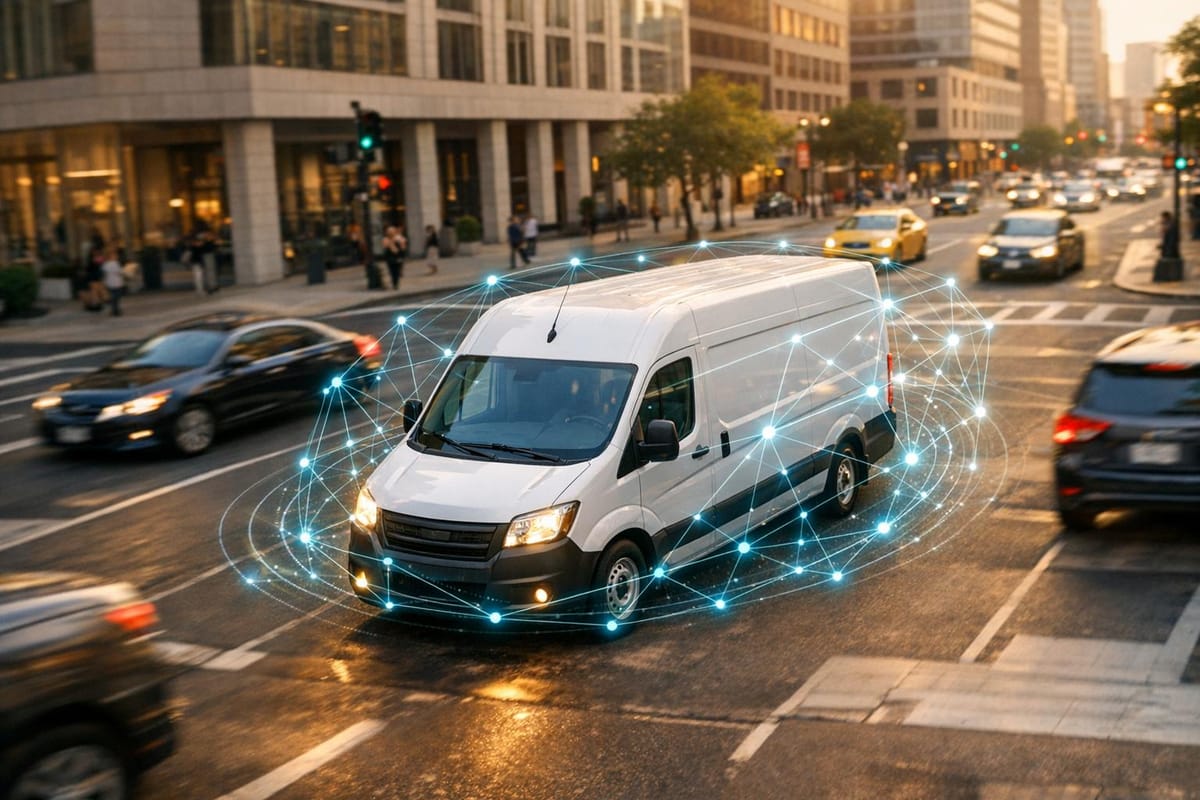
Fleet management is entering a new era with the arrival of 5G technology. Compared to 4G, 5G offers far faster speeds (up to 20 Gbps), ultra-low latency (under 1 millisecond), and the ability to connect 1 million devices per square kilometre. These features improve real-time tracking, data accuracy, and security for van fleets.
Key benefits of 5G van trackers include:
- Real-time updates: Near-instant location tracking with sub-second accuracy.
- Enhanced connectivity: Reliable performance even in dense areas or large fleets.
- Improved security: Instant geofencing alerts and remote immobilisation.
- Cost savings: Up to 25% fuel savings and 30% fewer accidents with advanced telematics.
For businesses, 5G trackers like those from GRS Fleet Telematics combine cellular and satellite systems, achieving a 91% vehicle recovery rate. Subscription plans start at £7.99 per vehicle per month, making advanced tracking tools accessible for fleets of all sizes. With 4G networks gradually phasing out, upgrading to 5G ensures your fleet stays efficient and secure.
1. 5G Van Trackers
Connectivity and Speed
5G van trackers bring a massive leap in performance, offering speeds and device support up to 100 times faster than 4G. This boost means vehicles, sensors, and IoT devices can share data seamlessly, eliminating delays and bottlenecks in fleet operations.
With an impressive reliability rating of 99.999%, 5G ensures constant connectivity, even for critical tasks. For example, a 2019 trial by SoftBank on the Shin-Tomei Expressway showed 5G reduced end-to-end data arrival times by about 50 milliseconds compared to 4G/LTE. This improvement highlights its potential to enhance coordination and safety in fleet management.
Real-Time Tracking
5G slashes latency to as low as 5 milliseconds, compared to the 30–50 milliseconds typical of 4G networks. This near-instantaneous data transfer allows fleet managers to monitor vehicle locations in real time, with maps reflecting a van’s position almost immediately.
Additionally, 5G supports Cellular Vehicle-to-Everything (C-V2X) technology, enabling direct communication between vans, roadside infrastructure, other vehicles, and cloud systems. A notable example is the 5G CAL Project at Nissan Sunderland, where a private 5G network powered autonomous 40-tonne trucks for parts distribution. This showcased the low latency and high bandwidth necessary for safe and efficient drive-by-wire operations. Together, these advancements revolutionise fleet management, ensuring precise and interconnected operations.
Data Accuracy and Analytics
The high data capacity of 5G unlocks advanced capabilities like AI-driven diagnostics and integration with sophisticated sensors. This includes handling large files, high-definition video streams, and even LiDAR technology for enhanced monitoring and analytics. Pilot projects have already demonstrated measurable efficiency improvements with 5G-powered analytics.
"5G is here to provide that... it can mean the difference between one sensor per shipping container and a sensor on every item in the container, down to pallet and individual goods level." – UKTIN
For businesses using systems like GRS Fleet Telematics' dual-tracker technology, 5G enhances both the primary hardwired unit and the backup tracker. This ensures precise location data can be sent instantly to law enforcement, speeding up vehicle recovery.
Security and Theft Prevention
The speed and reliability of 5G take theft prevention to the next level, shifting from reactive responses to proactive strategies. Features like instant geofencing alerts and layered security measures - including motion sensors and remote immobilisation - allow businesses to act before theft occurs. This real-time communication between trackers, cloud systems, and recovery teams creates a robust security network.
These advancements set the stage for a closer look at how 5G compares to 4G van trackers in the next section.
2. 4G Van Trackers
Connectivity and Speed
While 4G technology might not match the advanced capabilities of 5G, it remains the go-to option for van trackers across the UK, offering dependable roaming coverage. That said, 4G trackers do have some constraints, particularly in data transfer speeds, which can occasionally lead to delays when monitoring vehicles on the move.
Real-Time Tracking
Most 4G trackers update vehicle locations every 60 seconds, with a typical accuracy range of 5–10 metres. In ideal conditions, this precision can improve to as close as 2 metres. However, GPS glitches can sometimes cause minor discrepancies, such as vehicles appearing to "jump" between streets on a digital map.
Data Accuracy and Analytics
Although 5G excels in managing large volumes of data, 4G van trackers still perform well by leveraging multi-GNSS systems. These combine data from GPS, GLONASS, and Galileo satellites to ensure consistent location accuracy. Beyond tracking, the data is processed to generate insights for improving routes, analysing fuel consumption, and identifying periods of idling. If cellular coverage drops, the device temporarily stores data locally and syncs it once the connection is restored. Most systems maintain detailed journey logs for a minimum of 100 days, with some extending access to up to a year.
Security and Theft Prevention
Although 4G lacks some of the advanced security features of 5G, it still offers essential tools to safeguard fleet vehicles. Geofencing alerts fleet managers if a van exits a designated area, and remote immobilisation allows engines to be disabled during theft attempts. Some systems combine cellular tracking with satellite or Bluetooth backups to strengthen security. However, slower communication speeds can be a drawback during active theft situations. These limitations highlight the potential for 5G to bring significant improvements to fleet security and management.
How Does 5G Technology Enhance Car Trackers? - Talking Tech Trends
Pros and Cons
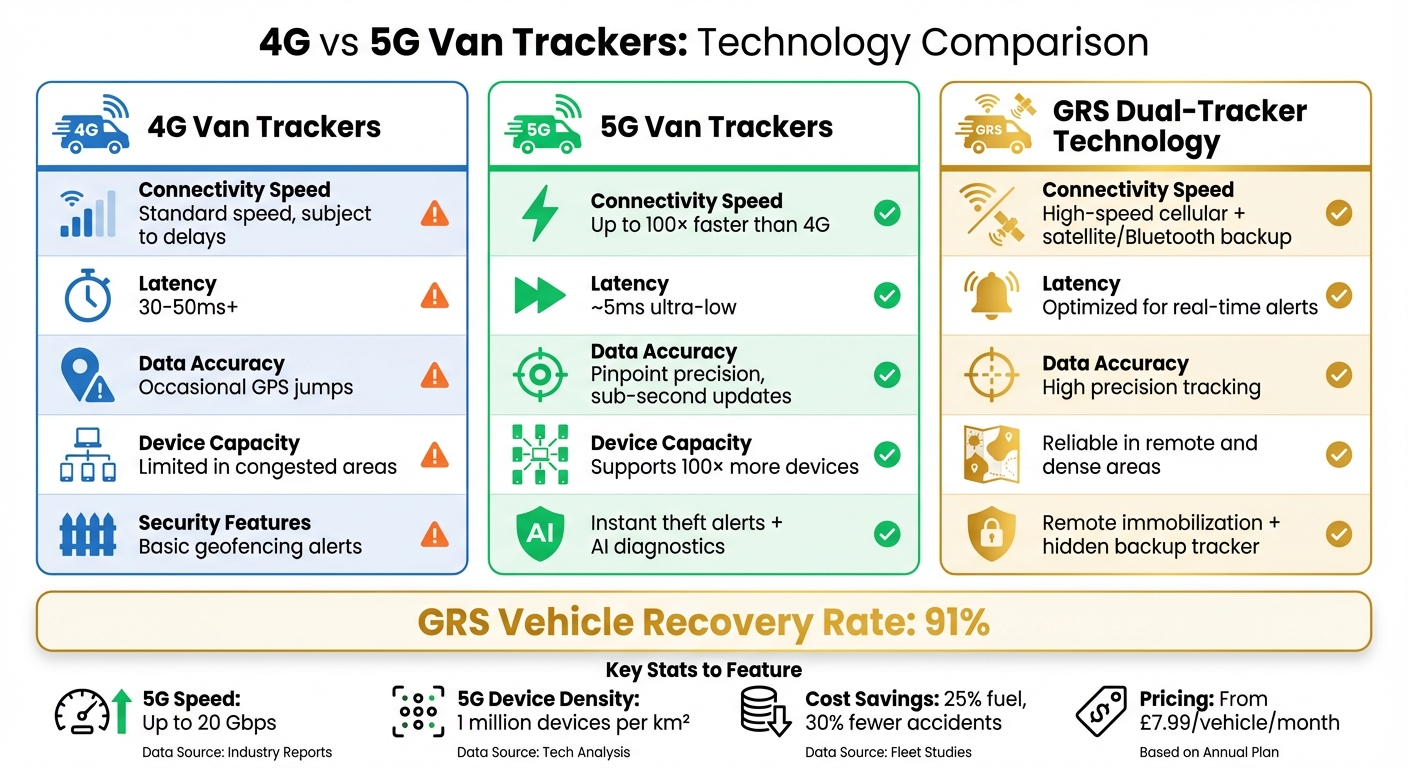
4G vs 5G Van Tracker Technology Comparison Chart
Here’s a breakdown of how 4G, 5G, and GRS Dual-Tracker Technology compare:
| Feature | 4G Van Trackers | 5G Van Trackers | GRS Dual-Tracker Technology |
|---|---|---|---|
| Connectivity Speed | Standard; subject to delays | Up to 100 times faster than 4G | High-speed cellular + satellite/Bluetooth backup |
| Latency | 30–50ms+ | ~5ms (ultra-low) | Optimised for real-time alerts |
| Data Accuracy | Occasional GPS "jumps" | Pinpoint precision; sub-second updates | High precision |
| Device Capacity | Limited in congested areas | Supports 100 times more devices | Reliable in remote and dense areas |
| Security Features | Basic geofencing alerts | Instant theft alerts and AI diagnostics | Remote immobilisation and hidden backup tracker |
This table highlights the strengths and limitations of each technology, showing how they cater to different fleet management needs.
When it comes to speed and responsiveness, 5G stands out with its ultra-low latency of around 5ms and the ability to connect up to 100 times more devices than 4G. This makes it perfect for managing large fleets in busy urban areas. However, 4G trackers still hold their ground in regions where 5G coverage is sparse, offering reliable performance for everyday tracking tasks.
Security is where GRS’s dual-tracker system truly excels. By combining cellular tracking with satellite or Bluetooth backups, it ensures vehicles remain traceable even if the primary tracker is tampered with. This redundancy plays a key role in GRS’s 91% vehicle recovery rate, which far surpasses traditional single-tracker systems.
"5G provides unprecedented reliability and low latency to seamlessly track real-time positions from vehicles on a sub-second basis." – Thorsten Lutz, EU Solution Architect, Panasonic TOUGHBOOK
For fleets preparing for the future, investing in 5G-compatible hardware is a smart move, especially as older networks gradually phase out. GRS caters to various budgets with three pricing options: Essential (£35), Enhanced (£79, includes Bluetooth backup), and Ultimate (£99, adds immobilisation). These plans allow businesses to balance advanced features with cost-efficiency.
Ultimately, the combination of 5G and GRS’s dual-tracker technology is reshaping fleet management, offering unmatched speed, reliability, and security for modern operations.
Conclusion
The transition from 4G to 5G marks a major step forward for fleet management in the UK, offering faster speeds, lower latency, and stronger connectivity. These advances enable real-time tracking, predictive maintenance, and quicker theft alerts, paving the way for a new era of fleet technology. These improvements not only enhance current operations but also open the door to future innovations.
5G brings capabilities that were previously unattainable with older networks. For example, Cellular Vehicle-to-Everything (C-V2X) communication allows vehicles to interact seamlessly with traffic systems and other vehicles. Meanwhile, AI-driven predictive maintenance can detect potential mechanical issues before they escalate into costly breakdowns. With projections showing that over 70% of UK fleet operators will adopt GPS tracking or telematics by 2025, those who embrace 5G early are likely to gain a competitive edge.
The benefits go beyond connectivity. Real-time tracking and driver monitoring can cut fuel consumption by up to 15% and reduce maintenance costs by 20%. Adding dual-tracker systems - combining primary cellular trackers with hidden backups - can push stolen vehicle recovery rates to as high as 91%. This layered approach ensures visibility even if thieves attempt to disable tracking devices, providing an extra layer of security.
Upgrading to 5G-compatible hardware is no longer optional for fleets looking to stay ahead. With 3G networks already retired and 4G gradually becoming outdated, investing in 5G technology helps future-proof operations and avoids hardware becoming obsolete. Companies like GRS Fleet Telematics offer affordable solutions, with hardware starting at £35 and software subscriptions from £7.99 per vehicle per month, ensuring these advanced tools are accessible to fleets of all sizes.
FAQs
How does 5G enhance the accuracy and reliability of van tracking compared to 4G?
5G technology takes van tracking to the next level with its lightning-fast data transmission and minimal latency, allowing for real-time updates with pinpoint location accuracy. This eliminates the delays and GPS hiccups that were common with 4G networks.
Thanks to 5G, fleet managers can rely on instant tracking, making operations smoother and vehicle monitoring far more dependable. This advanced connectivity is a game-changer for businesses needing detailed, accurate data to fine-tune routes, boost security, and react quickly to any unexpected events.
How do 5G van trackers enhance vehicle security and prevent theft?
5G van trackers take vehicle security to the next level with dual-tracker technology, ensuring uninterrupted connectivity even in areas where signals are weak. This means you'll receive real-time alerts if your vehicle moves unexpectedly, offering an extra layer of protection against theft.
Features like geofencing add another level of control. You can set up virtual boundaries, and if your vehicle crosses them, you'll get an instant notification. Some trackers even come with remote immobilisation, letting you disable the vehicle remotely if there's any unauthorised access. Together, these tools provide a robust system to keep your fleet safe and secure.
What are the costs of upgrading to 5G van trackers for fleet management?
Upgrading to 5G van trackers comes with both upfront hardware expenses and ongoing subscription fees. These devices are often more advanced, incorporating dual-tracker technology for better reliability. Hardware costs typically fall between £34 and £179 per device, with a one-time professional installation fee of £145 - although some premium packages may include this service. Monthly subscription plans start at £7.99 per vehicle, with a small additional charge for 5G connectivity.
While the costs for 5G trackers may be slightly higher, the benefits are hard to ignore. They offer real-time tracking, lower latency, and improved data accuracy, all of which can help streamline operations. The overall expense will vary depending on factors such as fleet size, hardware choices, and additional services, but the upgrade is designed to stay budget-friendly for UK businesses.